
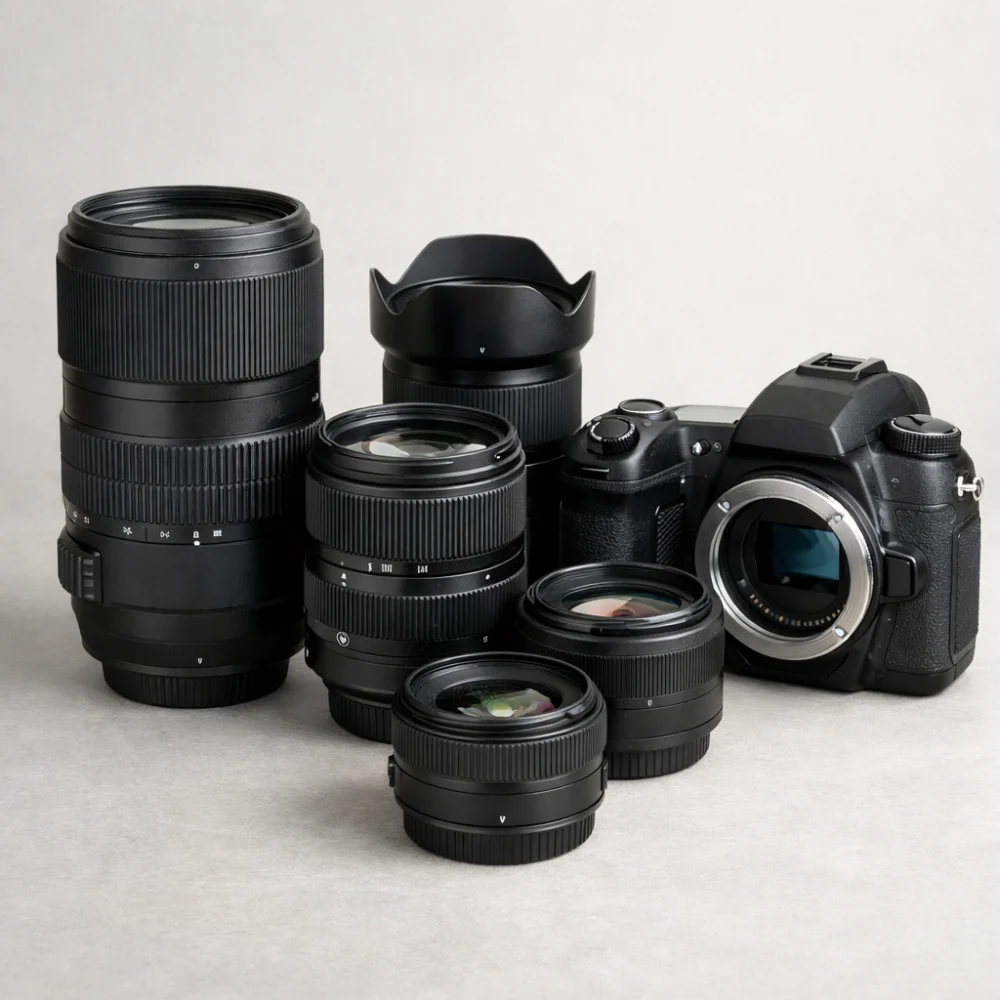
Tamron makes lenses for different camera systems and shooting needs, so the main challenge is not simply choosing a lens, but choosing the right one for your camera and your kind of photography.
If you are comparing Tamron options, focus first on mount compatibility, then on focal length, aperture and any stabilisation or autofocus features that matter to you. That gives you a practical way to separate everyday zooms, wider lenses, telephoto choices and specialist options.
Because lens names can look similar across mounts and generations, it is worth slowing down before you buy. Specifications vary by model, so always check the individual product page before buying.
What should you look for in a Tamron camera lens?
Start with compatibility, because the wrong mount will not fit your camera. After that, compare focal length, aperture and whether you need a compact everyday zoom, a low-light lens, a wide-angle option or a longer reach for distant subjects. The best choice is usually the one that matches your camera system and the way you actually shoot, rather than the one with the most impressive-sounding name.
| Feature | What it means | Why it matters | What to check |
|---|---|---|---|
| Mount compatibility | The lens must fit your camera body. | A lens can only be used if the mount matches your camera system. | Check the exact mount name on the product page and compare it with your camera body. |
| Focal length | The field of view and how much of a scene the lens captures. | It affects whether the lens suits landscapes, portraits, travel or distant subjects. | Look for the focal length range or fixed focal length and think about what you photograph most often. |
| Aperture | How much light the lens can let in. | It influences low-light usefulness and depth of field, though the practical benefit depends on the model. | Check the aperture figure shown on the product page and weigh it against size and cost. |
| Zoom or prime | Zoom lenses cover a range; prime lenses have one focal length. | Zooms are flexible, while primes often suit buyers who want a single view and a simpler kit. | Choose based on whether flexibility or a fixed view matters more to you. |
| Stabilisation and autofocus | Lens features that can help with handholding and focusing. | Useful for many buyers, but the benefit depends on the specific lens and camera body. | Check the product page for the exact features included. |
Key decision criteria explained
Camera mount and system
The most important filter is whether the lens is made for your camera mount. Tamron lenses are sold for different camera systems, and two lenses with similar names may still belong to different mounts. A mount mismatch is the easiest buying mistake to avoid, so check the camera body first, then match the lens to it.
Focal length and subject choice
Focal length is a practical way to think about what you photograph. Shorter focal lengths are often used when you want a wider view, while longer focal lengths are used when you want to fill the frame with something further away. If you mainly shoot one type of subject, that narrows the field quickly; if you want one lens for mixed use, a versatile zoom may make more sense.
Zoom range versus fixed focal length
A zoom lens gives you flexibility, which is useful for travel, events and general use. A prime lens gives you one focal length, which can simplify the choice and suit buyers who prefer a particular perspective. The trade-off is straightforward: flexibility on one side, simplicity and specialisation on the other.
Aperture and low-light use
Lens aperture affects how much light reaches the camera, but it is not just a numbers game. A wider aperture can help in dimmer conditions and may give more background blur, though it can also come with a different balance of size, weight and cost. If you are comparing two lenses for the same job, the aperture can be as important as focal length.
Size, weight and carrying comfort
Some buyers are trying to keep a kit light and easy to carry, while others are happy to accept a larger lens if it suits the subject. This matters for travel, day trips and handheld shooting, especially if the lens will live on the camera most of the time. A compact choice may be easier to use often, even if it is less ambitious on paper.
Types and variants you may see
Within this category, shoppers will usually be comparing a few broad lens styles rather than entirely different product families.
- Standard zoom lenses suit general-purpose use and are often chosen as an everyday option.
- Wide-angle lenses are useful when you want a broader scene, such as interiors or landscapes.
- Telephoto lenses are chosen when the subject is further away and you want more reach.
- Prime lenses suit buyers who want a single focal length and a simpler decision.
- Specialist or accessory items in the category may include lens-related products, so check carefully whether you are buying a lens itself or a related accessory.
The naming can be confusing because lens families and mount versions may appear similar. Always read the full product title and product page details before comparing.
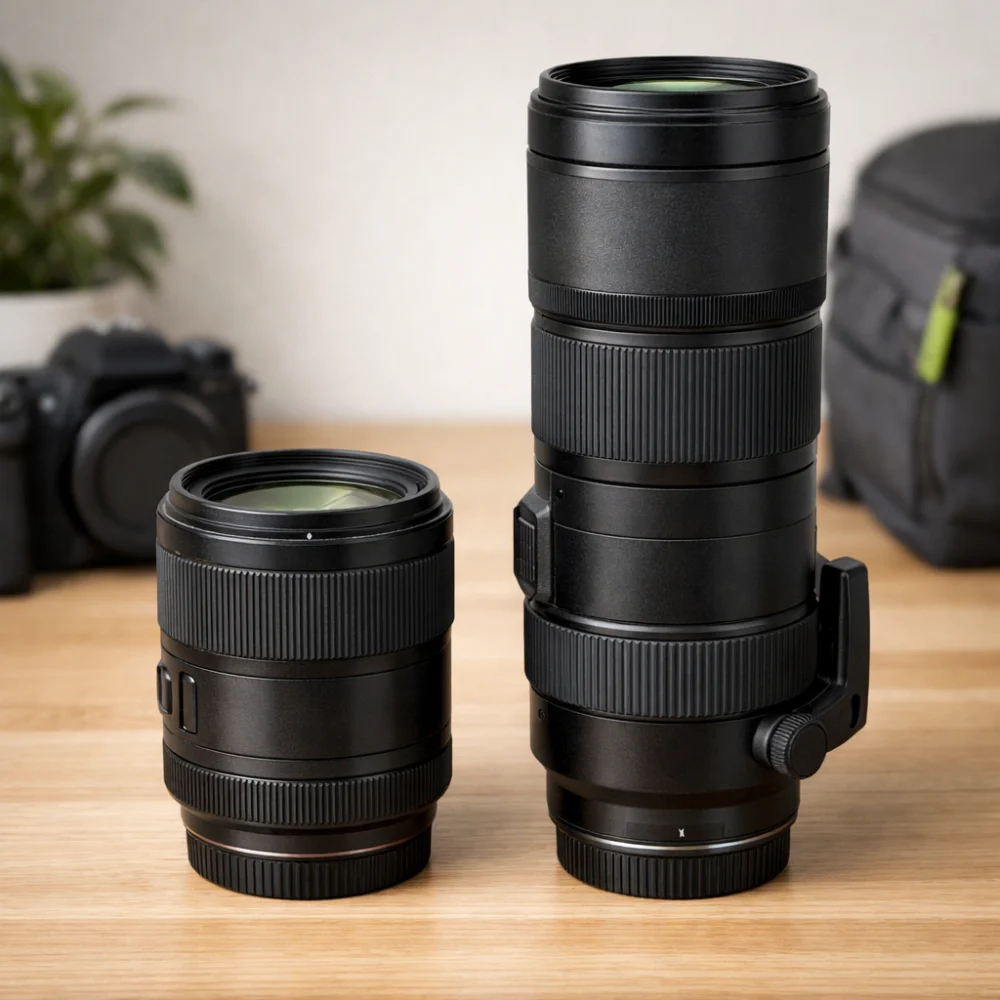
Which Tamron lens suits different buyers?
| Buyer need | What to prioritise | What to be cautious about |
|---|---|---|
| Everyday photography | A versatile focal range and straightforward handling. | Do not assume one zoom range will cover every subject equally well. |
| Travel and day trips | Weight, size and a useful all-round range. | A heavier lens may be less convenient to carry often. |
| Low-light or subject separation | Ap aperture choice and the practical balance with size. | Do not judge solely by a single specification without checking the whole design. |
| Longer-distance subjects | Enough reach for the distance you expect. | Longer lenses can be less convenient if most of your subjects are close by. |
| Budget-conscious upgrading | The minimum set of features you genuinely need. | Extra features are not helpful if they do not match how you shoot. |
Common mistakes and misunderstandings
- Checking the name but not the mount. A familiar model name does not guarantee it fits your camera body.
- Choosing only by zoom range. Reach is useful, but focal length alone does not tell you whether the lens suits your subject.
- Assuming every lens of the same series is interchangeable. Mount version, generation and feature set can differ.
- Overlooking weight and size. A lens that stays at home is not much use, even if it looks ideal on paper.
- Mixing up lenses and related accessories. Some category listings may include caps, hoods or other items, so check the item description carefully.
Safety and suitability caveats
Lens buying is mostly about suitability rather than safety, but it still pays to check the practical details. Make sure the lens is intended for your camera system and for the way you want to use it, and remember that a product title alone is not enough to confirm full compatibility. If you are unsure about a mount, the individual product page is the place to verify it.
Maintenance, storage and lifespan considerations
Any lens benefits from sensible care. Keep the front and rear elements protected when not in use, store the lens in a dry place and avoid carrying it loose where it can be knocked around. If you plan to change lenses outdoors often, think about how easy the lens will be to keep clean and how convenient its caps and hood will be in everyday use.
How to compare options efficiently
- Confirm your camera mount and rule out anything that does not fit.
- Decide whether you need a zoom, a prime or a more specialised focal length.
- Compare aperture, size and weight against the way you actually shoot.
- Check any stabilisation or autofocus features that matter to you.
- Read the full individual product page before deciding.
Summary buyer decision checklist
- Does the lens match your camera mount?
- Is the focal length suitable for your main subjects?
- Do you want a zoom for flexibility or a prime for simplicity?
- Is the aperture appropriate for your usual shooting conditions?
- Will the size and weight suit how you carry and use your camera?
- Have you checked the full product page for the exact model details?
Frequently asked questions
How do I know if a Tamron lens will fit my camera?
Check the camera mount named on the product page and compare it with your camera body. That is the first and most important compatibility check. If the mount does not match, the lens is not the right choice.
Should I choose a zoom lens or a prime lens?
Choose a zoom if you want flexibility across different scenes without changing lenses often. Choose a prime if you prefer one focal length and want a simpler decision around a specific kind of shooting. There is no universal answer; it depends on how varied your photography is.
Why does aperture matter so much?
Aperture affects how much light the lens can take in, which can matter in dim conditions and when you want more control over background blur. It should be weighed alongside size, weight and price rather than considered on its own. A wider aperture is not automatically the right answer for every buyer.
Are all Tamron lenses suitable for the same kind of photography?
No, they are made for different tasks and camera systems. Some are better suited to everyday use, while others are designed for wider views, longer reach or other specific needs. Start with your subject matter and then narrow the lens choice from there.
What should I check if I am buying for travel?
Look at the lens size, weight and how versatile the focal range is for your trip. A lens that is easy to carry is more likely to get used, which often matters more than having the broadest possible specification. Balance convenience against the subjects you expect to shoot.
Can I judge a lens from its product title alone?
Not reliably. Product titles can be similar across different mounts, generations and feature sets. Use the title as a starting point, then confirm the exact details on the product page.

