
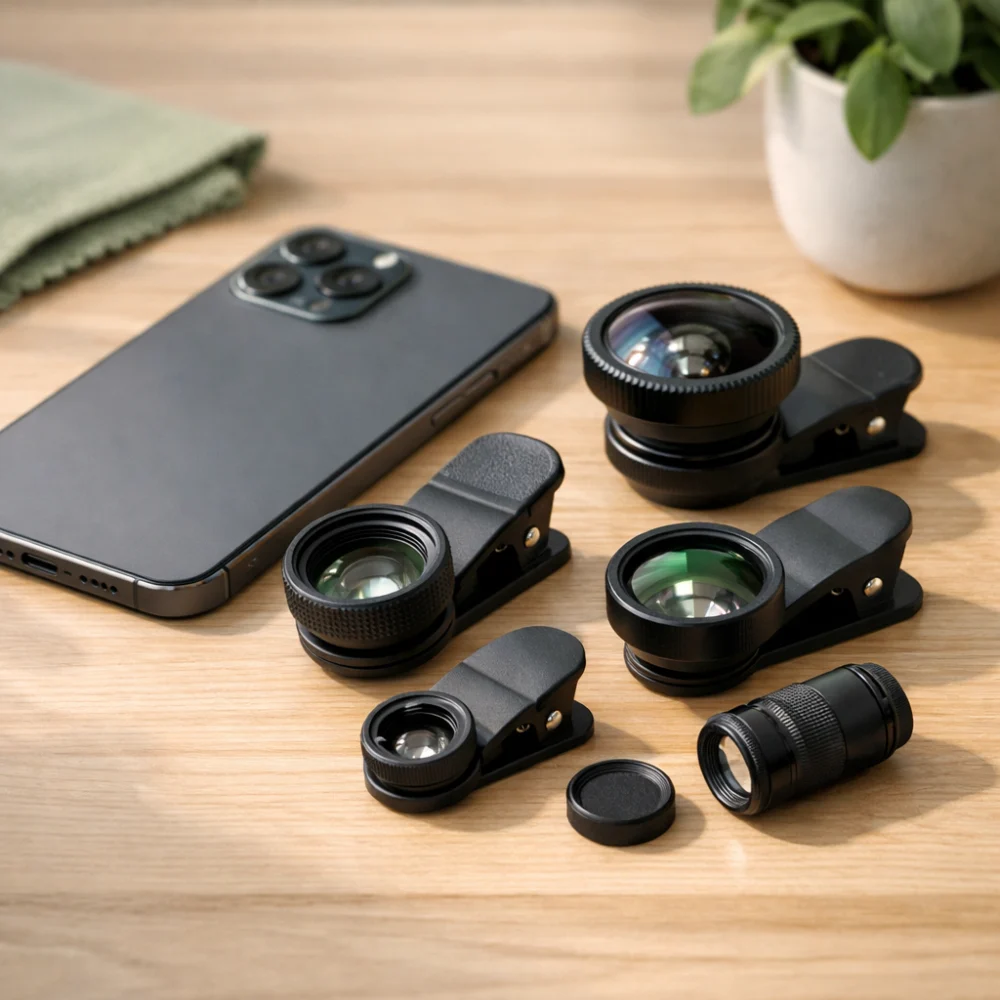
Smart phone lenses are aimed at people who want more flexibility from a phone camera without moving to a separate camera system. They can be useful for travel, hobbies, casual content creation and close-up detail, but the right choice depends on what you want to photograph and how much convenience you are willing to give up.
Because these lenses attach to a phone, the buying decision is not just about optical style. Fit, alignment, mounting method and how often you will actually carry the lens all matter as much as the label on the box.
If you are comparing options for the first time, it helps to start with the kind of shot you want to improve most: wider scenes, distant subjects or close detail. From there, you can narrow the choice before worrying about kit extras or multi-lens bundles.
What should you look for in a smart phone lens?
Start with the kind of image you want to make, then check whether the lens format suits your phone and your shooting habits. A simple clip-on lens can be convenient for occasional use, while a more specific attachment may suit buyers who want a particular effect more often. The main trade-off is usually between flexibility and ease of use.
Specifications vary by model, so always check the individual product page before buying.
| Feature | What It Means | Why It Matters | What To Check |
|---|---|---|---|
| Lens type | The optical effect the attachment is designed to give | Determines whether it is better for wider scenes, detail or distant subjects | Look for the type that matches your main use, rather than buying a broad kit for one job |
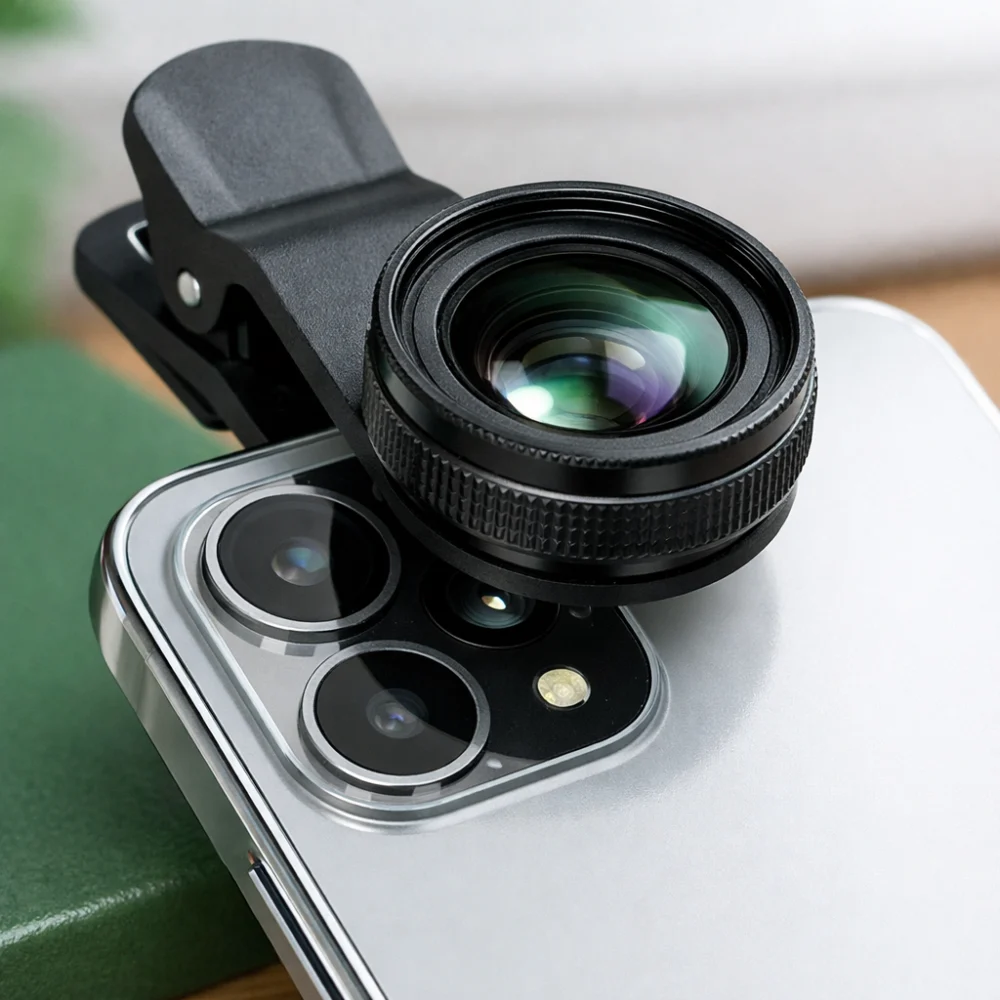
| Mounting method | How the lens attaches to the phone | Affects ease of setup and how securely the lens stays aligned | Check whether it uses a clip, case or other mounting approach |
| Compatibility | Whether the lens can physically line up with your phone camera | Some phone designs are easier to use than others | Read the compatibility notes carefully and compare them with your phone model and camera layout |
| Kit format | Whether the lens is sold alone or as part of a set | Sets can offer variety, but not every buyer will use every piece | Think about whether you need one specific lens or several options |
| Portability | How easy the lens is to carry and set up | More portable options are more likely to be used regularly | Consider size, storage and how often you will take it out with you |
| Image consistency | How reliably the lens stays centred and usable in practice | Alignment issues can affect the final result more than buyers expect | Look for practical fitting details and any guidance on use with your phone camera layout |
Key decision criteria explained
Choose the lens for the job
Smart phone lenses are usually bought to solve one specific problem. A buyer who wants to capture more of a scene will think differently from someone who wants to photograph distant details or small objects. The most important question is not how many lenses are in the package, but which effect you will actually use.
Check mounting and alignment
With phone lenses, the attachment method affects more than convenience. If the lens does not sit cleanly over the right camera, the result may be cropped, soft or awkward to use. That is why the way the lens mounts to the phone matters as much as the lens type itself.
Think about everyday handling
If you want a lens for holidays, family days out or casual content creation, quick setup may matter more than technical variety. If you enjoy experimenting, you may accept a little extra fuss in exchange for more options. The better choice is the one you are likely to use often.
Decide whether a kit is worth it
Some buyers want one lens for a single purpose; others want a set that covers more situations. Kits can be practical if you are still learning what you prefer, but they can also include items you rarely use. A smaller, more focused purchase may be better if you already know the effect you want.
Common lens types and what they suit
Smart phone lens listings often focus on the photographic effect rather than a strict technical family. That means the main variations usually come down to what the lens is trying to do.
- Macro-style lenses help with close-up detail and small subjects. They suit people who want to photograph textures, flowers, objects or other near subjects, but they usually need careful positioning.
- Telephoto-style lenses are for bringing distant subjects closer in the frame. They suit travel or outdoor use, but they may be less convenient if you want quick, spontaneous shots.
- Wide-angle-style lenses help you include more of a scene. They are useful for group shots, interiors and landscapes, but the wider view may also make edge distortion more noticeable.
- Multi-lens kits combine several effects in one package. They suit buyers who want flexibility, though a kit is only worthwhile if more than one lens will genuinely get used.
Which type suits which buyer?
| Buyer need | What to prioritise | Why |
|---|---|---|
| Travel and sightseeing | Portability and a lens type that matches the scenes you usually take | You are more likely to carry and use a simple setup |
| Close-up hobby photography | Stable mounting and a close-focus style lens | Alignment and working distance matter more when shooting small details |
| General everyday use | Ease of attachment and minimal fuss | Convenience often matters more than a wide feature set |
| Experimenting with different looks | A kit with more than one lens type | Useful if you are still learning which effect you prefer |
| Occasional special shots | A single focused lens rather than a large bundle | Buying for one clear job can be simpler and better value |
Common mistakes and misunderstandings
- Buying for the number of lenses rather than the use case. More pieces do not automatically mean a better result. It is often better to choose the one effect you will actually use.
- Ignoring the phone camera layout. Some phones have camera bumps or multiple rear cameras that can make alignment awkward. Check the product page for compatibility guidance.
- Assuming all clip-on styles feel the same. Some are quicker to fit, while others may feel more secure. The attachment method affects everyday use more than buyers expect.
- Expecting a lens to replace a dedicated camera lens. Phone lenses can improve what your phone can do, but they remain attachment accessories with practical limits.
Safety and suitability caveats
Smart phone lenses are generally low-risk accessories, but suitability still matters. Make sure the lens will not interfere with your phone case, buttons or camera arrangement, and avoid forcing a mount that does not sit properly. If a listing gives compatibility notes, treat them as important buying information rather than small print.
Specifications vary by model, so always check the individual product page before buying.
Maintenance, storage and lifespan considerations
Most smart phone lenses benefit from careful handling and clean storage. Keep lens surfaces free from dust and fingerprints, and store the accessory where it will not rattle around with keys or other hard items. If the lens uses a clip or mount, check that moving parts still feel secure over time.
If you expect to carry it often, portability matters as much as optical style. A lens that is easy to pack and quick to fit is more likely to be used regularly than one that feels awkward to retrieve or align.
How to compare options efficiently
- Decide what you want the lens to help you photograph.
- Choose the lens type that matches that job.
- Check how it attaches and whether your phone layout is likely to work well with it.
- Compare whether a single lens or a kit makes more sense for your use.
- Read the product page carefully for compatibility notes and any model-specific details.
Summary buyer decision checklist
- What kind of shot do I want the lens to improve?
- Will I use a single lens or a multi-lens kit?
- Does the mounting method suit my phone and my patience level?
- Are there compatibility notes for my phone model or camera layout?
- Is portability important for how I will actually use it?
- Do I understand the trade-off between convenience and flexibility?
Frequently asked questions
Are smart phone lenses worth it?
They can be worthwhile if you want a particular shooting effect that your phone camera does not give you easily. They are less compelling if you only want a simple, always-ready solution and do not want extra setup.
Should I buy a single lens or a kit?
Buy a single lens if you already know the look or use case you want. Choose a kit if you are still exploring and think you will use more than one type.
Will a phone lens fit every smartphone?
Not necessarily. Fit depends on the phone’s camera layout, case design and the mounting style used by the accessory, so compatibility checks are important.
What matters more, the lens type or the mount?
Both matter, but the mount can decide whether the lens is practical day to day. Even a suitable lens type is frustrating if it is awkward to align or keep in place.
Are these lenses mainly for photography or video?
They can be used for both, but the right choice depends on how you work. If you move quickly or shoot casually, convenience may matter more than a more specialised effect.
Do I need a case with a phone lens?
Some attachments are designed to work with a particular mounting approach, while others may be used more flexibly. Check the individual product page to see whether a case, clip or other mounting method is expected.
How do I choose between portability and flexibility?
Choose portability if you want to take the lens everywhere and use it often. Choose flexibility if you are happy to carry a slightly more involved setup in exchange for more shooting options.

