
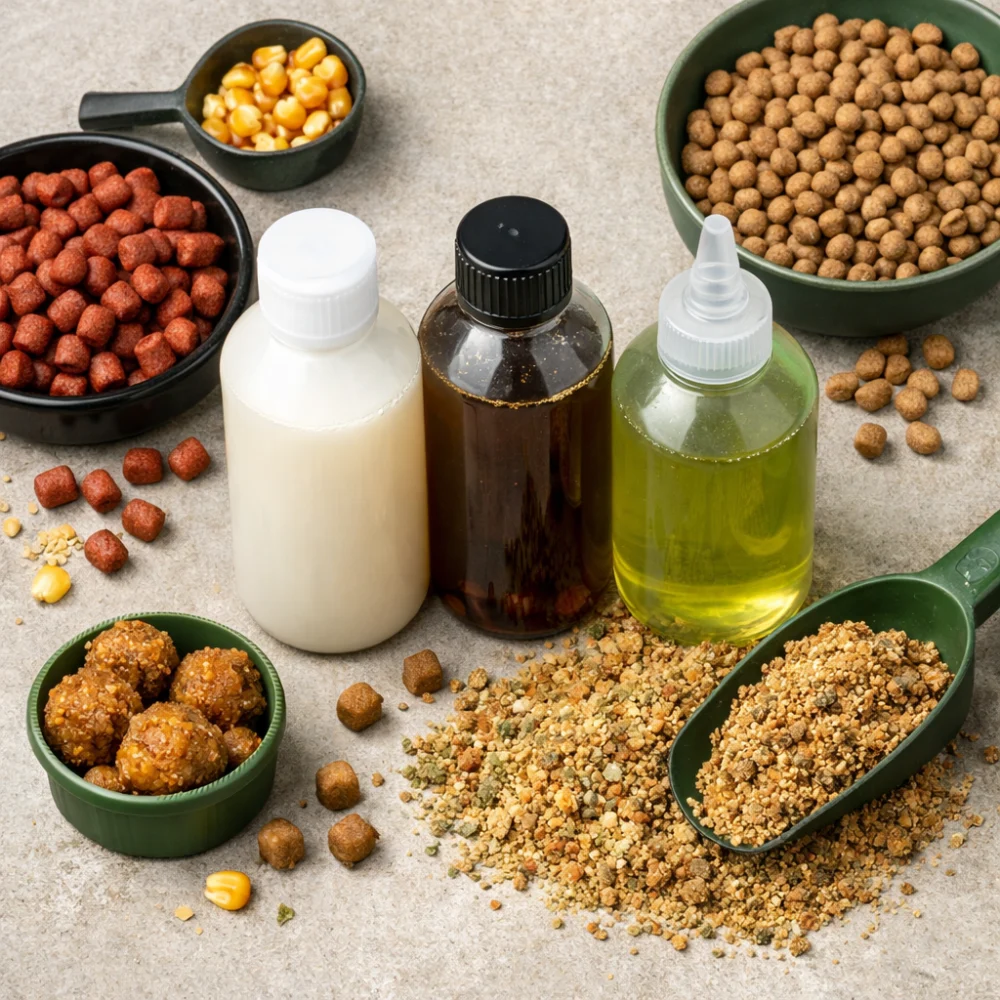
Fishing liquid attractants are used to add scent, flavour or food signals to bait, pellets, groundbait or hookbaits. They are a small part of the overall bait choice, but the wrong type can make mixing awkward or give you a result that does not suit your method.
This guide helps you compare liquid attractants by use case rather than by marketing wording. It focuses on how the liquid is intended to be used, what it is compatible with and which details are worth checking on the product page.
If you are new to liquid attractants, the main decision is usually not about finding one universal option. It is about choosing a liquid that matches your bait base, fishing situation and how much control you want over application.
What should you look for in a fishing liquid attractant?
The most useful starting point is to match the liquid to the bait or feed you plan to use it with. Some liquids are made to soak into pellets or groundbait, while others are better as a coating, dip or additive. The main trade-off is usually between convenience and control: a ready-to-use liquid is simple, but a more concentrated or targeted option may let you fine-tune the amount you apply.
Specifications vary by model, so always check the individual product page before buying.
| Feature | What it means | Why it matters | What to check |
|---|---|---|---|
| Intended use | Whether the liquid is for bait, pellets, groundbait, hookbaits or all-round use | Helps you avoid a product that does not suit your feeding plan | Look for the stated application and any usage notes on the product page |
| Consistency | How thick or runny the liquid is | Affects how well it coats bait and how easily it mixes | Check whether it is described as a dip, glug, liquid food or additive |
| Flavour or scent profile | The general profile the liquid is meant to create | Can influence whether it complements your bait choice | Read the flavour description and avoid assuming all liquids are interchangeable |
| Application method | How the liquid is meant to be used | Some products are designed for soaking, while others are added in smaller amounts | Check directions, especially if the product is concentrated |
| Pack size | How much liquid is supplied | Useful for deciding whether the product is for occasional use or regular sessions | Compare the container size against how often you fish |
| Compatibility | What bait base or fishing style the liquid is intended to work with | Prevents mismatches between the attractant and your chosen bait | Check whether it is suited to pellets, boilies, groundbait or hookbaits |
Key decision criteria explained
How you plan to use it
Start with the job you want the liquid to do. A bait soak, a hookbait dip and a feed additive are not always used in the same way, even if the labels sound similar. If you want a simple routine, choose a product that matches one clear purpose rather than trying to cover every use at once.
How it interacts with your bait
Different baits absorb liquid in different ways. Pellets, boilies and groundbait may behave differently, so the same attractant can produce a different result depending on the base material. If the bait already carries a strong profile, a complementary liquid may be easier to work with than a completely different scent direction.
Strength and concentration
Some anglers prefer a stronger, more concentrated attractant because it allows careful dosing. Others want a milder product that is harder to over-apply. The useful question is not simply whether the liquid is strong, but whether it gives you the level of control you want for the way you fish.
Texture and ease of application
A thinner liquid may spread quickly, while a thicker one may cling better to bait. That can matter if you are coating pellets, preparing a hookbait or treating a small amount of feed. Think about whether you want fast coverage or a heavier coating that stays in place longer.
Container size and value for use
Pack size is worth checking because liquid attractants are often used gradually. A larger bottle may make sense if you use the same style of bait often, while a smaller bottle can be more practical if you like to vary your approach. Do not compare volume alone; compare it against how much you typically use in a session.
Common product types and variants
Within this category, the most common differences are in the way the liquid is designed to be used rather than in highly technical features.
- Dips and glugs: usually used to coat or soak bait. They suit anglers who want a straightforward way to add attraction, but they may not be the best choice if you want precise control over dilution.
- Liquid additives: intended to be mixed into bait or feed. They can be useful when you want more even distribution, though the correct amount depends on the product guidance.
- Food-style liquids and extracts: often chosen by anglers who want a liquid that supports the bait itself rather than just covering it. They are worth considering if you want a more integrated approach.
- Flavour-led liquids: chosen for a particular scent or taste profile. These are helpful when you already know the style of bait you prefer and want to build around it.
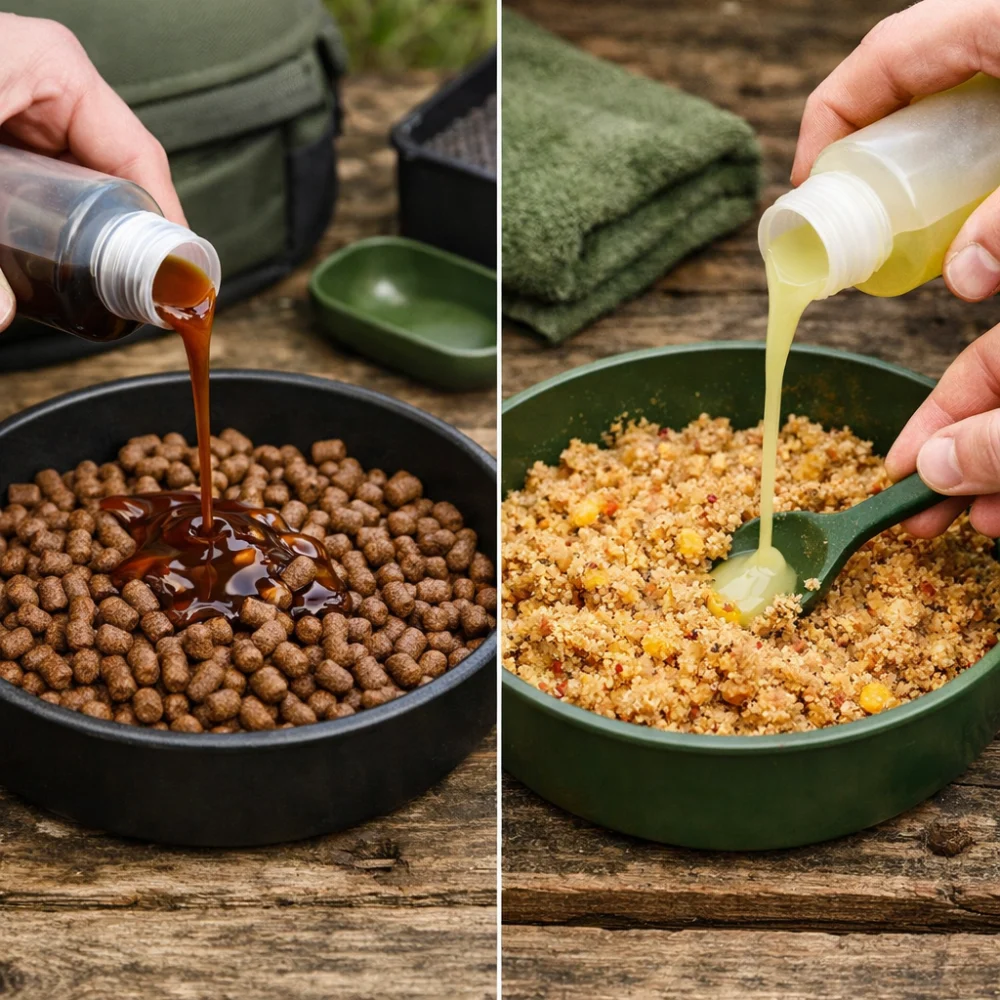
These are broad category differences, not fixed rules. A product label may use more than one description, so the individual page matters more than the wording alone.
Which type suits which buyer?
| Buyer need | What to prioritise | Why it helps |
|---|---|---|
| Beginner looking for an easy start | A clear, simple application method and straightforward use notes | Reduces guesswork and makes the product easier to use consistently |
| Angler matching a specific bait | Compatibility with pellets, groundbait, boilies or hookbaits | Helps the liquid work with the bait you already plan to use |
| Anyone who fishes different venues | A versatile formula that can suit more than one setup | Gives flexibility without needing several separate products |
| Buyer wanting fine control | Concentration, dosing guidance and ease of layering | Makes it easier to adjust the amount used from session to session |
| Regular user building a bait routine | Pack size and repeat usability | Helps the bottle last in line with how often you fish |
Common mistakes and misunderstandings
- Choosing by scent name alone: a familiar flavour description does not tell you how the liquid is intended to be used. Check the application notes as well as the name.
- Assuming all liquids work the same way: some are made for soaking, some for mixing and some for dipping. The wrong use can make the result less effective or more awkward to prepare.
- Ignoring bait compatibility: a good liquid for one bait base may be less useful with another. Check the suggested bait type rather than relying on general appeal.
- Overlooking concentration: stronger does not always mean better. A product that is easier to control may suit more anglers than a heavily concentrated option.
- Comparing only container size: a larger bottle is not automatically better value if you will not use it often. Think about how the product fits your fishing habits.
Safety and suitability caveats
Use the product only as intended for fishing bait preparation or bait treatment. If you are combining it with other bait products, check the individual product page for any usage notes or restrictions. Keep the bottle closed when not in use and store it safely away from food and children.
Maintenance, storage and lifespan considerations
Liquid attractants are usually simple to store, but they still benefit from being kept sealed and upright. Avoid leaving them in hot cars or in direct sun for long periods, as storage conditions can affect how convenient they are to use. If the product is meant to be mixed with bait, only prepare what you need for the session so you are not carrying unused treated bait unnecessarily.
How to compare options efficiently
- Decide what you want the liquid to do: coat, soak, mix in or add a scent layer.
- Check whether it suits the bait you plan to use most often.
- Compare the concentration, texture and application guidance.
- Look at pack size in relation to how often you fish.
- Choose the product whose use case is clearest, not the one with the most persuasive wording.
Summary buyer decision checklist
- Have I chosen a liquid that suits my bait type?
- Does the product page explain how it is meant to be used?
- Am I clear on whether it is a dip, additive or all-round liquid?
- Does the concentration level suit how much control I want?
- Is the container size sensible for how often I fish?
- Have I checked for any bait compatibility notes or usage guidance?
Frequently asked questions
What is the difference between a dip and a liquid attractant?
A dip is usually used to coat or soak bait, while a liquid attractant may also be intended for mixing into feed or using in other ways. The label and product notes matter more than the name alone. If you want a straightforward option, choose the product that clearly matches your intended use.
Can I use the same liquid with pellets and boilies?
Sometimes, but not always in the same way. Different bait bases absorb and carry liquid differently, so the result can vary. Check whether the product information mentions the bait type you plan to use.
Do stronger-smelling liquids always work better?
Not necessarily. A strong scent can be useful in some situations, but control and compatibility matter too. A product that matches your bait and can be applied consistently is often a better choice than one that simply sounds powerful.
How do I know how much to use?
Follow the product guidance on the page or packaging, because concentration varies by model. Some liquids are intended for light application, while others are designed to be used more generously. It is better to start with the stated guidance than to assume a standard amount.
Is a bigger bottle always better value?
Only if you will use it often enough to justify the size. A large bottle can be practical for regular sessions, but a smaller one may suit an angler who likes variety or fishes less frequently. Compare the size against your actual usage, not just the price impression.
What should I check before mixing a liquid into bait?
Check the intended use, the bait type it suits and any guidance on dosing or soaking time. That helps you avoid over-wetting the mix or choosing a product that is not designed for that purpose. If the page is unclear, favour the option with the most specific usage information.

