
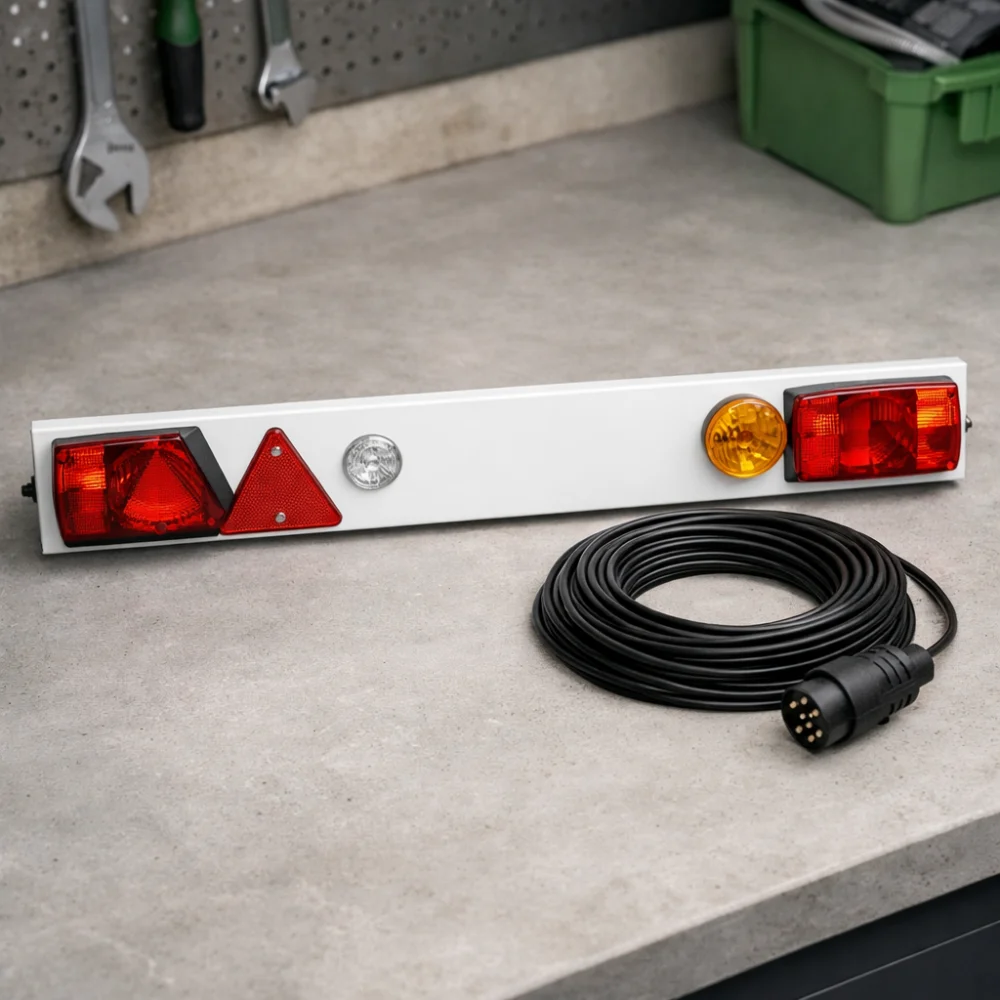
Trailer light boards are a practical way to add rear lighting, reflectors and a visible wiring connection when towing. They are commonly used for trailers, but the right choice depends on the size of the board, the connector, the cable length and how the board will be mounted.
If you are replacing a worn board or buying one for a new trailer, the main challenge is usually compatibility rather than looks. A board that seems simple on paper can still be awkward if the cable is too short, the plug does not match your vehicle, or the mounting arrangement does not suit your trailer.
This guide focuses on the buying decisions that matter most so you can compare options quickly and avoid the most common mismatch issues.
What should I look for in a trailer light board?
Start with fit and connection, then work through the lighting layout and how the board will attach to your trailer. For most buyers, the most important checks are the board width, the cable length, the plug type and whether the board can be mounted in a way that suits the trailer body. Specifications vary by model, so always check the individual product page before buying.
| Feature | What it means | Why it matters | What to check |
|---|---|---|---|
| Board size | The overall width and physical layout of the board | It affects fit on the trailer and how visible the lights are | Measure the available rear space and compare it with the product dimensions |
| Cable length | How far the lead reaches from the board to the vehicle connection | Too short can make fitting difficult; too much excess can be untidy | Check the distance from the trailer position to the socket on the towing vehicle |
| Plug type | The connector used to link the board to the vehicle electrics | The board needs to match the towing setup you already have | Confirm the connector format on both the vehicle and the board |
| Mounting method | How the board is fixed in place | Some trailers suit a more permanent mount, while others need a removable board | Look for mounting holes, hanging points or other fixing details |
| Light format | Whether the board uses different lamp styles | It affects appearance, visibility and the way the board is maintained | Check the listing for the light type and any replacement considerations |
| Reflectors and marker layout | The arrangement of reflective and rear-facing elements | These help define the board’s visibility and overall compliance with the trailer setup | Check what is included on the board, not just the headline description |
Which details matter most when choosing one?
Trailer width and board proportions
The board should suit the trailer it is being used on, both visually and practically. A board that is too wide can be awkward to store or mount, while one that is too small may not suit the rear profile of the trailer. Think about how the board will sit behind the load area and whether it needs to be moved on and off regularly.
Cable length and routing
Cable length is easy to overlook, but it often makes the difference between a neat fit and a frustrating one. A longer cable may suit larger trailers or less direct routing, while a shorter cable can be tidier on compact setups. Check how the cable will travel from the board to the towing connection so it does not stretch or hang loose.
Connector compatibility
The plug must suit the towing vehicle and the trailer wiring arrangement. If you already have a socket fitted to the vehicle, match the board to that system rather than assuming an adaptor will solve every problem. If the setup is mixed or older, it is worth confirming the connector type before ordering.
Fixed or removable use
Some buyers want a board that stays on the trailer, while others prefer something that can be removed after use. A removable board can be helpful if the trailer is stored separately, but it may need more careful handling. A fixed arrangement can be simpler day to day, provided it fits the trailer design.
What types of trailer light board are there?
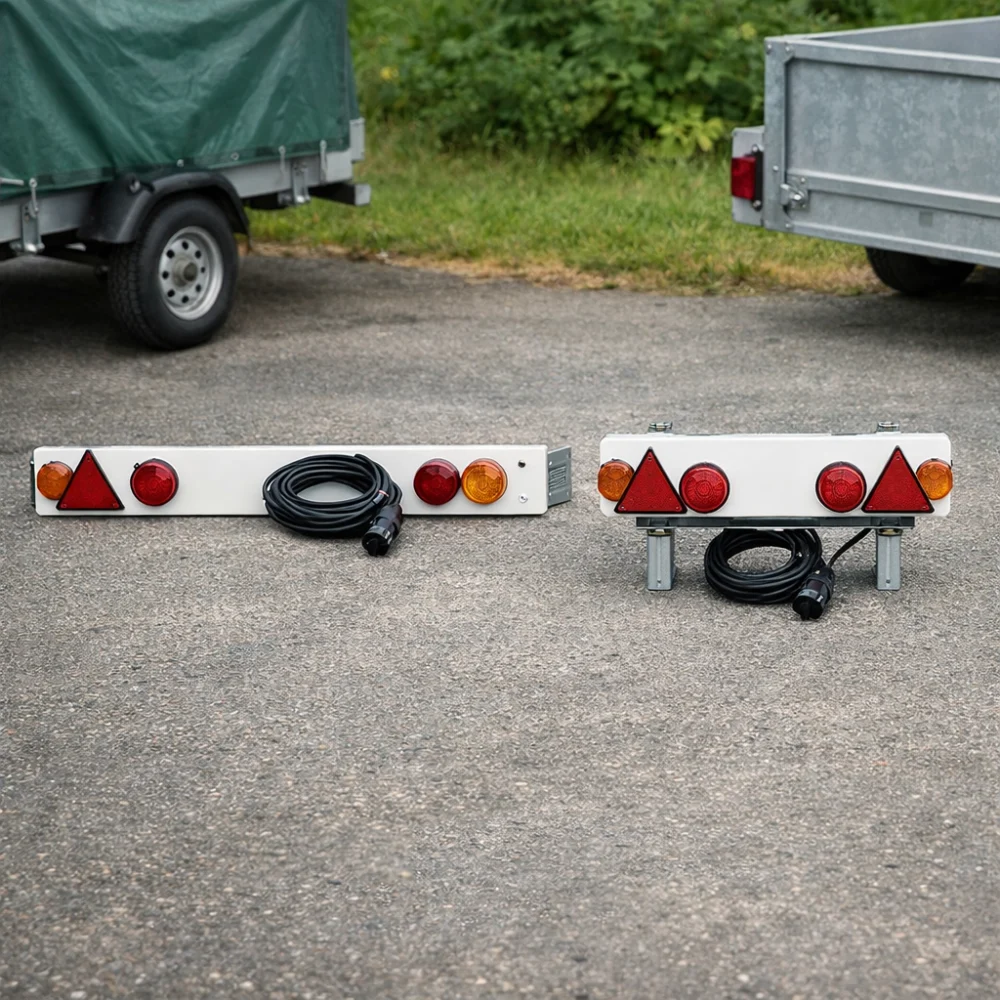
The main variations are usually practical rather than decorative. You may see boards that differ by length, lighting arrangement, cable length or the way they are intended to mount. Some are suited to small general-purpose trailers, while others are better suited to larger or more specialised towing setups.
In simple terms:
- Compact boards can suit smaller trailers or users who want an easier-to-handle setup.
- Longer boards may be more suitable where the trailer is wider or the rear layout needs more spread.
- Boards with a longer cable can help where the towing connection sits further away from the rear of the trailer.
- Boards with mounting holes or fixed points may suit more permanent trailer installations.
The right variant depends less on trend and more on how the trailer is built and how often the board will be fitted or removed.
How different buyers can narrow the choice
| Buyer need | Useful features to prioritise | Why this helps |
|---|---|---|
| Replacing an existing board | Match the size, plug type and cable length | This reduces the chance of reworking the trailer wiring or mounting |
| Buying for a new trailer | Consider the full rear layout, mounting method and wiring route | You can choose a board that suits the trailer design from the start |
| Occasional towing | Simple handling and easy connection | A straightforward board can be easier to store and put on when needed |
| Regular towing | Robust fit, tidy cable routing and suitable mounting | Frequent use makes comfort of fitting and reliability more important |
| Compact storage needs | Removable design and manageable board size | It is easier to store between uses if the board is not bulky |
Common mistakes to avoid
- Choosing by light appearance alone. The more important question is whether the board fits the trailer and the towing connection.
- Ignoring the cable route. A board can be the right size but still awkward if the lead is too short or poorly positioned.
- Assuming all plugs are the same. Connector type should be checked carefully before you buy.
- Forgetting how the board will be mounted. A board that lacks the right fixing method may not suit your trailer body.
- Not checking what is included. Some listings focus on the board itself, while installation details or fixings can vary.
Safety and suitability checks
Trailer lighting is a functional item, so suitability matters more than style. Make sure the board is appropriate for the trailer size and for the towing setup you already use. If you are unsure about wiring, connector type or trailer fit, check the product information carefully before buying rather than relying on a rough match.
Care, storage and long-term use
A trailer light board is usually easier to keep in good condition if it is stored clean and dry when not in use. Check how exposed the lights and cable will be during use, and whether the board needs to be handled carefully when removing it from the trailer. If the board will be used outdoors often, it is worth thinking about how easy it will be to wipe down and store without stressing the wiring.
How to compare options efficiently
- Confirm what you need the board to do and what trailer it will be used on.
- Check the board size, cable length and plug type first.
- Compare the mounting method with your trailer’s rear layout.
- Look at the light and reflector arrangement for practical visibility.
- Read the individual product page carefully before deciding.
Summary buyer decision checklist
- Does the board suit the trailer size and rear layout?
- Is the cable long enough for your towing setup?
- Does the plug type match the vehicle connection?
- Is the mounting method suitable for how you will use it?
- Will it be easy to store, fit and remove if needed?
- Have you checked the individual product page for any model-specific details?
Frequently asked questions
Do I need a trailer light board or separate trailer lights?
That depends on the trailer and how it is set up. A light board is often a simpler option when you want a complete rear lighting unit in one place. Separate lights can suit some trailers better, but they may need a different mounting approach and wiring arrangement.
How do I know which cable length to choose?
Measure the route from the rear of the trailer to the vehicle socket rather than estimating in a straight line. The cable needs enough reach to connect comfortably without strain, but not so much that it becomes difficult to manage. If the route is awkward or the trailer is wider, a longer lead may be more practical.
Is plug compatibility important?
Yes, because the board has to connect properly to the towing vehicle. Even if the board looks suitable, the wrong connector type can make it unsuitable for your setup. Check the product page carefully and compare it with the socket already fitted to the vehicle.
Can I use the same board on different trailers?
Sometimes, but only if the size, mounting arrangement and connector suit each trailer. A board that transfers easily between trailers can be convenient, yet it still needs to fit each setup properly. If you expect to swap it often, ease of fitting becomes a useful feature to prioritise.
What should I check if I am replacing an old board?
Match the old board as closely as possible in size, cable length, plug type and mounting arrangement. That gives you the best chance of a straightforward replacement. It is also worth checking whether the old board was awkward for any reason, so you can improve on it rather than repeat the same issue.
Are all trailer light boards the same?
No, the practical details can vary quite a lot even when the products look similar. Size, connector type, cable length and mounting method all affect whether a board is suitable. That is why it helps to compare the product page details instead of treating every board as interchangeable.

