
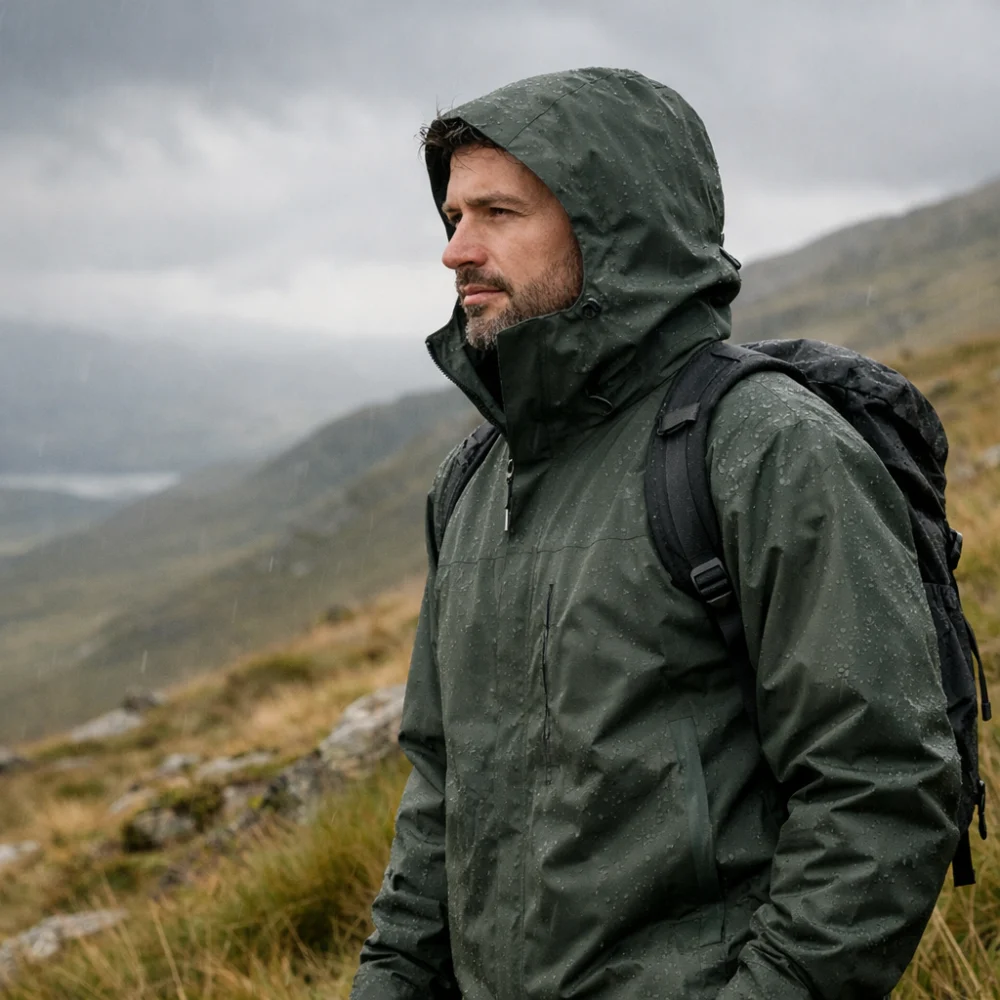
Men’s Gore-Tex jackets sit in the technical end of walking outerwear, so the main decision is rarely just “waterproof or not”. Buyers usually need to weigh weather protection, breathability, weight, durability and how the jacket will work with the layers they already wear.
This guide is for anyone comparing shell jackets for hill walking, hiking and general outdoor use. It focuses on the choices that matter at category level, so you can narrow the options before checking individual product pages.
Because jacket designs vary, the same fabric family can be used in different constructions and feature sets. Specifications vary by model, so always check the individual product page before buying.
What should I look for in a men’s Gore-Tex jacket?
Start with the conditions you expect to face most often. If you mainly want reliable wet-weather protection for walking, focus on waterproofing, hood design and how well the jacket lets moisture escape when you are active. If you expect colder or more exposed conditions, think about room for layering, cuff and hem adjustability and whether the cut suits your movement.
The best starting point is usually a balance between protection and comfort. A more feature-rich jacket may feel reassuring, but a simpler shell can be lighter, easier to pack and more versatile for active use.
| Feature | What it means | Why it matters | What to check |
|---|---|---|---|
| Weather protection | How well the jacket is designed to keep rain and wind out | Important for staying dry and comfortable on exposed walks | Look for the level of protection described on the product page and whether the jacket is intended as a shell |
| Breathability | How readily moisture can move away from your body during activity | Helps reduce clamminess when hiking uphill or working hard | Check how the jacket is described for active use and whether ventilation features are included |
| Fit and layering room | How the jacket sits over base layers, fleece or insulation | Affects comfort, mobility and whether you can wear it year-round | Check fit notes, sizing guidance and whether the cut is close, regular or roomier |
| Weight and packability | How easy the jacket is to carry when it is not being worn | Useful if you want a jacket that can stay in your pack until needed | Compare the overall design purpose and any mention of packable construction |
| Hood and adjusters | How well the hood, cuffs and hem can be tightened or shaped | Helps keep wind and rain out and improves fit over layers | Check whether the hood is helmet-compatible if that matters, and look for adjustment details |
| Durability | How robust the jacket is likely to feel in use | Important if you walk often, carry a pack or use the jacket in rougher conditions | Look at fabric description, reinforcement details and intended use rather than assuming all shells are the same |
Key decision criteria
Waterproof performance and intended use
Men’s Gore-Tex jackets are usually chosen as protective shells for wet and windy weather, but the practical question is how much protection you need in real use. A daily commuter-style waterproof and a hillwalking shell may both keep out rain, yet they can feel very different in movement, ventilation and bulk. Think about whether you need a jacket for steady walking, exposed ridges or occasional use in a pack.
Breathability and exertion level
Breathability matters more as your pace and elevation gain increase. If you tend to heat up quickly, look for a jacket that is described as suited to active use and consider ventilation features if they are listed. The trade-off is that a more protective, heavily built jacket may feel less airy, while a lighter shell may be easier to wear on the move.
Fit, cut and layering
A jacket that fits over a base layer may feel fine in the shop, but still be awkward once you add a fleece or midlayer. Check the cut carefully if you plan to wear the jacket across seasons. A closer fit can reduce bulk, while a roomier cut may feel more useful for colder days and more flexible layering.
Features that improve real-world comfort
Useful features are often simple ones: an adjustable hood, cuff tabs, hem drawcords and pockets placed so they remain usable with a pack. These details do not matter equally to every buyer, but they can make a jacket much easier to live with. If you do not need extra complexity, a cleaner design may be easier to wear and lighter to carry.
Product types and variants
Within this category, the biggest differences are usually in construction and intended use rather than in radically different product types. Some jackets are built as lighter shells for fast-moving days or easier packing, while others are aimed at more demanding mountain use with a stronger emphasis on coverage and durability. Some models may also lean towards minimalist styling, while others include more adjustment and pocketing.
The main limitation of a lighter jacket is that it may offer less of the reassuring, hard-wearing feel some buyers want. The main limitation of a more feature-rich jacket is usually extra weight, bulk or cost. Choose the balance that matches how often you will wear it and how much weather exposure you expect.
Who should choose which kind of jacket?
| Buyer need | What to prioritise | Why |
|---|---|---|
| Frequent hill walking | Reliable weather protection, good hood control and room for layers | Conditions can change quickly, so comfort in wind and rain matters |
| Lightweight or packable preference | Lower bulk and simpler design | Useful if the jacket spends a lot of time in a rucksack |
| Mixed-season use | Versatile fit and enough room for insulation underneath | Helps the jacket work across warmer and cooler outings |
| Higher exertion hikes | Breathability and ventilation | Supports comfort when you are working hard uphill or moving fast |
| Rougher outdoor use | More durable-feeling construction and practical features | Better suited to regular wear and carrying a pack |
Common mistakes and misunderstandings
- Assuming every waterproof jacket feels the same. Shells vary a lot in cut, weight and comfort, so compare the overall design rather than the fabric name alone.
- Buying too close a fit. A jacket that works over a T-shirt may feel restrictive once you add a fleece or warmer layer.
- Overlooking hood and cuff adjustment. Small fit details often make a bigger difference in wet weather than extra styling features.
- Choosing based only on packability. A very light jacket may be easy to carry, but it still needs to suit the walking conditions you actually face.
Safety and suitability caveats
Choose a jacket that suits the weather and activity you expect, rather than assuming one shell will cover every situation. If you walk in changeable conditions, make sure the jacket works as part of your layering system and gives you enough room to move. For very wet, cold or exposed days, the details on the product page matter more than the category name alone.
Maintenance, storage and lifespan considerations
Even a well-chosen jacket will need sensible care if you want it to keep performing well. Follow the care guidance for the individual product, store it dry and avoid packing it away damp for long periods. Over time, dirt, repeated wear and frequent washing can affect how a jacket feels and performs, so it is worth choosing one that suits how often you plan to use it.
How to compare options efficiently
- Decide where and how you will use the jacket most often.
- Choose the general level of protection and comfort you need.
- Compare fit, layering room and hood adjustment across shortlisted options.
- Check any details that affect packability, durability and pocket layout.
- Read the individual product page carefully before deciding.
Summary buyer decision checklist
- Will I use it mostly for walking, hiking or general outdoor wear?
- Does the fit allow the layers I actually wear?
- Is breathability important for my pace and terrain?
- Do I want a lighter shell or a more feature-rich jacket?
- Are hood, cuff and hem adjustments practical for my use?
- Have I checked the individual product page for the exact construction and fit notes?
Frequently asked questions
Are men’s Gore-Tex jackets mainly for heavy rain?
They are commonly bought for wet weather, but that is only part of the picture. Many buyers also want wind protection, reliable layering and a jacket that works for active walking. The right choice depends on how much time you spend outdoors and how hard you usually work uphill.
Do I need a very lightweight jacket for hiking?
Not necessarily. Lightweight jackets are convenient if you want something easy to carry, but some buyers will prefer a slightly more substantial shell for comfort, durability or a better fit over layers. Think about how often the jacket will actually be worn, not just how small it packs away.
How important is breathability?
It becomes more important as your activity level rises. If you walk briskly or climb steep ground, a jacket that manages moisture well can feel more comfortable than one that focuses only on rain protection. Specifications vary by model, so always check the individual product page before buying.
Should I size up for layering?
If you expect to wear a fleece or insulated midlayer underneath, that is often worth considering. Too little room can restrict movement and reduce comfort, while too much room can feel bulky or draughty. The best choice is the one that suits your normal layering system.
What jacket features matter most for walkers?
For most walkers, hood adjustment, cuff control, hem adjustment and a sensible fit matter more than extra styling details. These features help the jacket perform in changing weather and stay comfortable over longer days. Pocket placement can also matter if you wear a backpack.
Can I use one jacket for all seasons?
Some buyers do manage that, especially if they mainly want a shell to go over changing layers. The key is choosing a fit and feature set that works in both milder and colder conditions. If you walk in very different weather through the year, flexibility may matter more than any single feature.

