
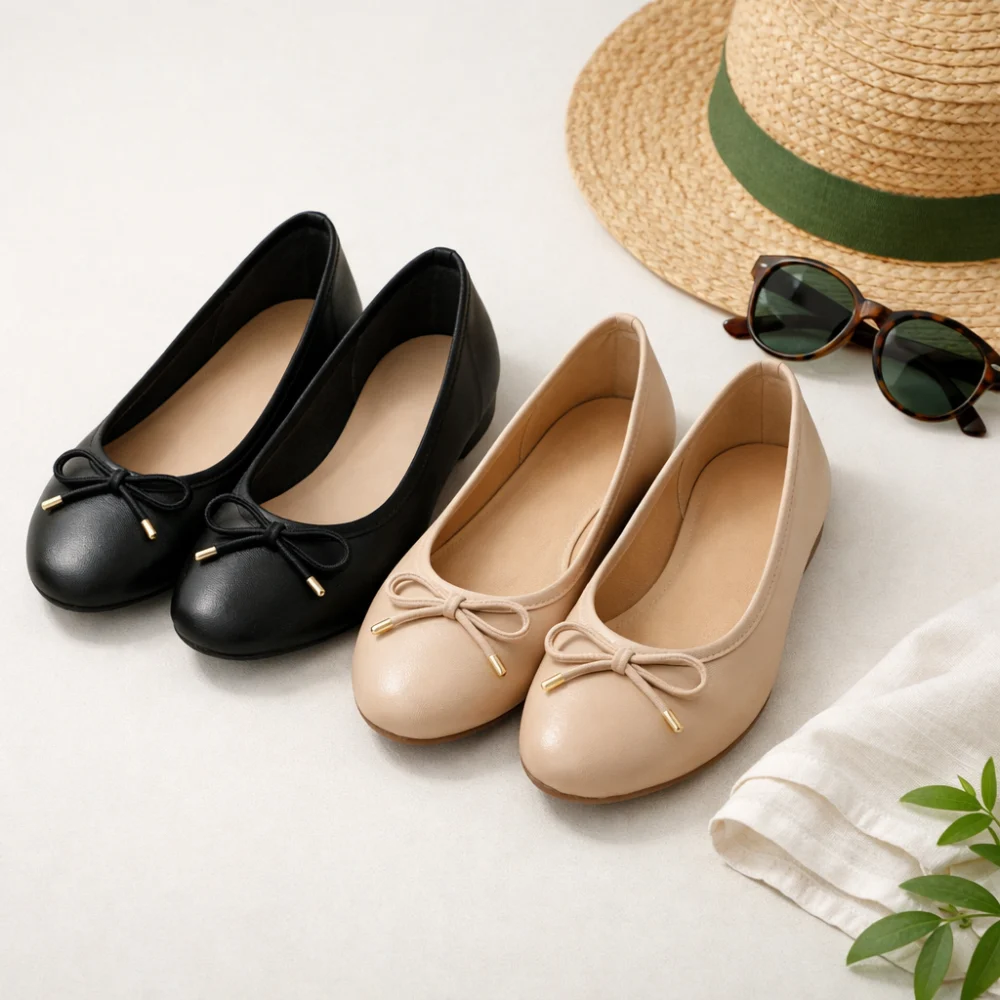
Women’s flat ballet shoes are a simple summer footwear choice when you want something light, easy to slip on and more polished than a sandal or trainer. They can work for everyday wear, short journeys, days out and occasions where you want a neat finish without a heel.
The best pair depends on how much support you want, how secure the shoe feels on your foot and how formal or casual you need it to look. Because ballet flats vary a lot in shape, material and finishing, it helps to compare comfort and fit first rather than choosing on appearance alone.
Specifications vary by model, so always check the individual product page before buying.
What should I look for in women’s flat ballet shoes?
The most useful starting point is fit. A ballet flat should hold your foot securely without pinching the toes, slipping at the heel or pressing across the instep. After that, think about the upper material, sole feel, toe shape and how much structure the shoe has, because these are the features that most affect comfort and wearability.
If you want a pair for regular everyday use, a more stable fit and a slightly more substantial sole may matter more than decorative details. If you mainly want something for occasional wear or a smarter outfit, you may be more interested in a slimmer profile and a lighter look.
| Feature | What it means | Why it matters | What to check |
|---|---|---|---|
| Fit | How the shoe holds the foot at the heel, toe and instep | Good fit reduces rubbing, slipping and discomfort | Shape, width feel, toe room and whether the shoe looks secure on the foot |
| Material | The upper and lining used to make the shoe | It affects softness, breathability, appearance and how the shoe feels at first wear | Whether the material seems suited to regular use, occasional wear or a dressier look |
| Sole feel | How flexible, thin or supportive the sole is | This changes comfort on longer walks and how protective the shoe feels underfoot | Whether the sole looks suitable for the amount of walking you expect |
| Toe shape | The front profile of the shoe | It influences style, toe space and comfort | Whether you prefer a rounded, almond or more tapered finish |
| Style details | Bows, trim, shine, cut-outs or similar design features | These affect how formal, casual or decorative the shoe looks | Whether the details suit the outfits you plan to wear them with |
Key decision criteria
Comfort and fit
Comfort is usually the deciding factor with ballet flats because the style leaves little room to disguise a poor fit. Look for enough room at the toes, a secure heel and a shape that matches your foot rather than forcing it into a narrow profile. If you are between sizes or have wider feet, the product page details matter more than the general category name.
Material and finish
The upper affects both appearance and feel. Smoother finishes can look smarter, while softer or more flexible materials may feel easier from the first wear. The trade-off is that a more delicate finish may be less forgiving of scuffs, while a sturdier finish may feel less soft initially.
Sole and support
Flat shoes vary in how substantial they feel underfoot. Some are very light and flexible, which can suit short wear periods, while others offer a bit more structure. If you expect to be on your feet for longer, the way the sole and footbed feel is worth checking carefully.
Toe shape and coverage
Toe shape changes both comfort and style. A rounder toe often gives a roomier feel, while a more tapered shape can look neater or dressier but may feel less spacious. Coverage also matters in warmer weather, because a more open cut may feel cooler even within the same flat-shoe style.
Occasion and outfit matching
Ballet shoes can sit anywhere from casual to smart, but not every pair suits every setting. A plain design is often easier to wear with different outfits, while decorative touches can make the shoe feel more specific. Choose the level of detail that matches how often you plan to wear them.
Types and style variations
Within this category, the main differences are usually in finish, silhouette and detailing rather than in construction. Some pairs are plain and minimal, while others use bows, sheen, pattern or textured materials to create a more dressed-up look. The basic trade-off is that simpler designs are often easier to pair with different outfits, while more decorative styles can stand out more but be less versatile.
Some ballet flats are designed to look especially lightweight and easy to fold or pack, while others aim for a slightly more structured everyday feel. If you want one pair for varied wear, versatility is often more useful than novelty styling.
Which kind suits different needs?
| Buyer need | What to prioritise | Why it helps |
|---|---|---|
| Everyday wear | Secure fit, comfortable toe room and a practical sole feel | Helps the shoes feel wearable for more than just short outings |
| Smarter outfits | Clean finish, simple detailing and a shape that looks neat | Makes the shoes easier to wear with occasion clothes or dressier casual wear |
| Frequent walking | More stable feel and a sole that seems suitable for longer use | Reduces the chance of the shoes feeling too flimsy for regular movement |
| Wide or less typical foot shapes | Shape, width feel and toe room | Fit matters more than style details when the shoe has to feel comfortable all day |
| Occasional or backup wear | Simple styling and lightweight convenience | Useful when the shoes are mainly for short periods or special occasions |
Common mistakes to avoid
- Choosing by appearance only. A pretty flat can still rub or slip if the shape does not suit your foot.
- Ignoring toe room. Ballet flats often look slim, but the inside shape still needs enough space for comfortable wear.
- Assuming all flats are equally practical. Some are best for short, light use, while others are better suited to everyday wear.
- Overlooking the sole feel. A very thin or very soft sole may look elegant but may not suit longer periods on your feet.
- Not checking the finishing details. Bows, trims and shine can change how formal the shoe looks and how easy it is to match.
Safety and suitability considerations
Flat ballet shoes are generally a low-risk purchase, but suitability still matters. Check that the shoe feels secure enough for the way you plan to use it, especially if you expect to walk more than a little. If you have particular comfort needs, focus on the product page details for shape, materials and fit rather than assuming all flats will feel the same.
Care, storage and wear over time
How long a pair lasts depends on how often you wear it, the materials used and how much the shoe is exposed to scuffs, moisture and general wear. Keeping them clean and stored carefully can help maintain their appearance, especially for lighter colours or more delicate finishes. If you plan to wear the same pair often, a more robust finish may be worth considering over a purely decorative one.
How to compare options efficiently
- Start with the main use: everyday wear, occasional wear or a smarter outfit.
- Check fit-related details first, including toe room, heel hold and overall shape.
- Compare the material and sole feel to judge comfort and durability trade-offs.
- Look at style details only after the practical fit points make sense.
- Use the individual product page to confirm the details that matter most to you.
Summary buyer checklist
- Does the shape look likely to suit your foot?
- Is there enough toe room for comfortable wear?
- Does the heel area look secure enough?
- Is the sole feel suited to how much walking you expect?
- Do the material and finish match your intended use?
- Will the style work with the outfits you already wear?
- Have you checked the individual product page for the details that matter most?
Frequently asked questions
Are flat ballet shoes comfortable for all-day wear?
They can be, but comfort depends heavily on the specific pair and your foot shape. A flat that feels fine for short periods may not suit long days on your feet, especially if the toe shape is narrow or the sole is very light.
What is the difference between ballet flats and other flat summer shoes?
Ballet flats usually have a more closed, streamlined shape than sandals or sliders. That makes them a good choice when you want a neater look, but it can also mean less airflow and less openness around the foot.
Should I size up in ballet flats?
Not automatically. The right size depends on the individual shoe shape, the material and how much toe room it offers. If you are unsure, check the product page carefully for fit clues rather than relying on the category name alone.
Do simple designs wear better than decorative ones?
Often, simple designs are easier to match and can feel more versatile. Decorative details do not necessarily mean a shoe is less practical, but they may make the shoe more outfit-specific.
Are ballet flats suitable for walking longer distances?
Some can be, but many are chosen more for neat appearance and light wear than for long-distance walking. If walking comfort is a priority, look closely at the sole feel, overall structure and fit.
What should I check if I have wider feet?
Focus on toe room, width feel and whether the shoe shape looks too tapered. A flatter style can still be uncomfortable if the front is too narrow for your foot shape.

