
Jump Starters
Jump starters help you restart a vehicle with a flat battery without needing another car. Whether you’re commuting, heading on a UK road trip, packing for a camping holiday or keeping an emergency kit in the boot, a portable jump starter can give you extra reassurance when your battery lets you down.
Our jump starters range is designed for practical vehicle emergency use. From compact battery booster packs to portable jump starters with useful extras, you can choose an option that suits your vehicle type, engine size, storage space and how often you travel.
- Jump Starters
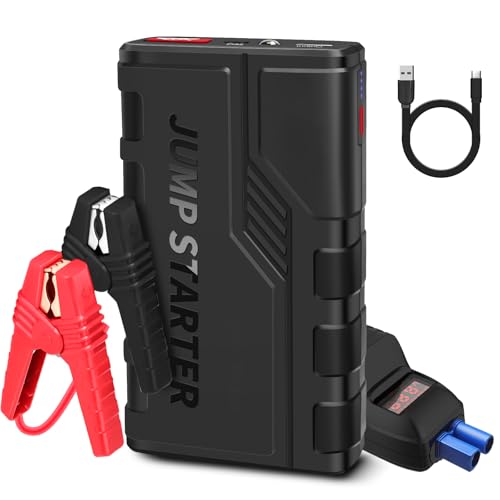
LifBetter Y29 Car Battery Booster Jump Starter 12V Portable Power Pack with Safe Jumper Cables and LED Flashlight
Original price was: £29.72.£21.95Current price is: £21.95. *View On Amazon* - Jump Starters
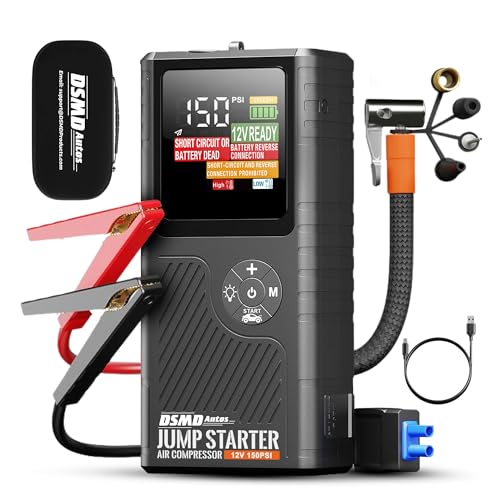
DSMDAutos Jump Starter Power Pack with Air Compressor for 6.5L Petrol and 3.5L Diesel Engines
Original price was: £59.99.£54.99Current price is: £54.99. *View On Amazon* - Jump Starters
RING ULTRABOOST 1000A Car Battery Jump Starter Power Pack
Original price was: £89.99.£71.98Current price is: £71.98. *View On Amazon* - Jump Starters
TOPDON Jump Starter Power Pack JS3000, 3000A 24000mAh Battery Booster
£139.99 *View On Amazon* - Jump Starters
NOCO Boost+Air AX65 2000A Jump Starter with Air Compressor Tyre Inflator
Original price was: £299.95.£207.31Current price is: £207.31. *View On Amazon* - Jump Starters
Jump Starter Power Pack, 12V Car Battery Booster, 5000A Portable Battery Pack, Portable Jump Starter with Extended Smart Jump Cables and 3 Mode Lights
Original price was: £49.99.£30.98Current price is: £30.98. *View On Amazon* - Jump Starters
DBPOWER Jump Starter 1600A Peak Portable Car Jump Starter for 12V Vehicles
Original price was: £69.99.£47.49Current price is: £47.49. *View On Amazon* - Jump Starters
Eigotrav 6000A Jump Starter Power Pack with 150PSI Air Compressor, 12V Car Battery Booster, Portable Car Jump Starter Power Bank with LCD Display, LED Light, Silver
Original price was: £52.99.£37.62Current price is: £37.62. *View On Amazon* - Jump Starters
ACEZUK Battery Jump Starter Pack 5000A 12V 8 in 1 Car Battery Booster Pack with Flashlight, Large Screen and Jump Leads
Original price was: £35.99.£32.99Current price is: £32.99. *View On Amazon*




Be Ready for a Flat Battery
A flat battery can happen at the worst time. Cold mornings, short journeys, lights left on, older batteries and long periods without driving can all leave your car struggling to start.
A portable jump starter gives you a self-contained power source to help get your vehicle started again, provided the unit is suitable for your battery and vehicle. It can be especially useful if you park away from help, travel with family, camp in remote areas or drive early in the morning when roadside support may take longer.
Unlike traditional jump leads, a jump starter does not require a second vehicle. That makes it a practical choice for drivers who want a simple backup in the boot.
How to Choose a Jump Starter
Start by checking your vehicle type and battery requirements. Most car jump starters are designed for 12V vehicle batteries, but you should always compare the product details with your vehicle handbook before buying.
Key decision factors include vehicle compatibility, engine size suitability, starting power, battery capacity, safety features, clamp design, charging method, size, weight, storage case, built-in display and whether it includes useful extras such as USB charging or an LED light.
If you drive a larger vehicle, diesel car, van, SUV, campervan or motorhome, check the jump starter’s capacity and stated suitability carefully. A unit that works for a small petrol car may not be suitable for a larger engine.
Portable Jump Starters vs Jump Leads
Jump leads are useful if you have access to another suitable vehicle and know how to connect them safely. They are simple, compact and often kept as part of a basic car emergency kit.
Portable jump starters are more independent because they contain their own power supply. You do not need another driver, and you can use them in places where positioning two vehicles safely would be awkward.
The trade-off is simplicity versus self-sufficiency. Jump leads are lightweight and low-maintenance, but they depend on a second vehicle. A jump starter is more convenient in an emergency, but it needs to be charged and stored correctly.
Compact Jump Starters vs Larger Booster Packs
Compact jump starters are ideal for everyday cars, commuters and drivers who want a small emergency device that fits neatly in the boot, glovebox or storage compartment. They are easy to carry and simple to store alongside other roadside essentials.
Larger booster packs may offer more starting power or extra features, depending on the model. They can be more suitable for larger vehicles, regular use or drivers who want a more substantial unit. The trade-off is that they usually take up more space and may be heavier to carry.
The right choice depends on your vehicle and how you plan to use it. For occasional emergency backup, compact may be enough. For larger engines or frequent travel, a more capable model may be more practical.
Useful Features to Look For
A good jump starter should be easy to use, clearly labelled and suitable for your vehicle. Safety features such as reverse polarity protection, short-circuit protection and overload protection may help reduce the risk of incorrect connection, depending on the model.
Clear clamps can make connection easier, while a digital display can help you check battery level before use. A built-in LED light is useful at night, in poor weather or when trying to see under the bonnet.
Some jump starters also work as power banks for phones, tablets or other small USB devices. This can be handy on camping trips, long journeys and roadside stops, but emergency starting performance should still be your main buying priority.
Using a Jump Starter Safely
Always read the jump starter instructions and your vehicle handbook before use. Vehicle electrical systems vary, and some cars, hybrids, electric vehicles, vans or motorhomes may have specific jump-starting guidance.
Use the jump starter only with compatible batteries and vehicles. Do not use it on a battery that is leaking, swollen, frozen, badly damaged or showing obvious signs of failure. If you are unsure, seek professional help.
Connect the clamps exactly as instructed, usually with the positive clamp to the positive terminal and the negative clamp to the correct negative terminal or earth point. Keep the unit away from moving engine parts, hot surfaces, fuel, water and children.
After starting the vehicle, disconnect the jump starter as directed and recharge it before putting it back in storage. A flat jump starter is not much help in an emergency.
Jump Starters for Road Trips, Camping and Emergency Kits
A jump starter is a sensible addition to a car emergency kit, especially if you travel long distances, drive in rural areas, park at campsites or rely on your vehicle for family trips.
It pairs well with a tyre inflator, torch, warning triangle, high-visibility vest, gloves, phone charging cable and basic vehicle tools. For camping and touring, it can be especially useful because campsites, fields and remote car parks are not always convenient places to find another vehicle for a jump start.
Check your jump starter regularly, charge it according to the manufacturer’s guidance and keep it somewhere accessible. Storing it under piles of luggage makes it much less useful when you need it quickly.
When a Jump Starter Is Not Enough
A jump starter can help with a flat battery, but it does not fix the reason the battery went flat. If your vehicle struggles to start repeatedly, loses charge quickly or shows warning lights, the battery or charging system may need checking.
Very old batteries, faulty alternators, damaged terminals and electrical faults can all cause starting problems. If the issue keeps happening, get your vehicle inspected rather than relying on repeated jump starts.
A jump starter is best used as an emergency backup, not as a long-term solution for an unreliable battery.
Shop Jump Starters Online
Browse our jump starters range to find practical battery booster packs and portable starting devices for cars, vans, SUVs, campervans and emergency kits. Compare compatibility, starting power, size, charging options and safety features to choose a jump starter that suits your vehicle and the way you travel.
Jump Starters FAQs
What is a jump starter used for?
A jump starter is used to help start a vehicle when the battery is flat. It provides temporary power so the engine can start without needing another vehicle.
How do I choose the right jump starter?
Choose a jump starter by checking your vehicle battery voltage, engine size, fuel type, starting power requirements, size, safety features and charging method. Always compare the product details with your vehicle handbook.
Is a portable jump starter better than jump leads?
A portable jump starter is more independent because it does not need another vehicle. Jump leads are useful too, but they rely on having a suitable second vehicle nearby.
Can a jump starter charge a flat battery?
A jump starter is designed to help start a vehicle, not fully recharge the battery. After using one, the battery may still need charging or checking, especially if it keeps going flat.
Can I use a jump starter on any car?
No. You must use a jump starter that is compatible with your vehicle’s battery type, voltage and engine size. Some vehicles also have specific jump-start points or procedures, so check the handbook first.
Are jump starters safe to use?
Jump starters are safe when used correctly with compatible vehicles and batteries. Follow the instructions carefully, connect the clamps as directed and do not use the unit on damaged, leaking or frozen batteries.
How often should I charge a jump starter?
Charge your jump starter before storing it and check it regularly according to the manufacturer’s guidance. It should be kept ready for use, especially before long journeys or camping trips.
Can a jump starter be used as a power bank?
Some jump starters include USB ports and can charge small devices such as phones or tablets. Check the product details, as features vary by model.
What should I keep with a jump starter?
Useful items include gloves, a torch, vehicle handbook, phone charging cable, warning triangle, tyre inflator and basic roadside emergency kit. Store everything where it can be reached easily.
Why does my car battery keep going flat?
Repeated flat batteries may be caused by an old battery, charging system problem, faulty alternator, loose connection or electrical drain. If it happens more than once, have the vehicle checked by a qualified professional.
 Getting ready for Summer? View our Home and Garden Products

Heading outdoors this winter? Take a look at our Outdoor Clothing.