
Landing Nets
Landing nets help anglers bring fish safely under control at the end of the fight. They are suitable for coarse anglers, carp anglers, match anglers, predator anglers, sea anglers, fly anglers and anyone who wants to reduce the risk of losing or damaging fish when landing them.
The right landing net depends on the species you target, fish size, venue, bank height, handle length, net head size, mesh type, frame strength, portability, hook type, fish care needs and whether the net is intended for freshwater, saltwater or general fishing use where listed.
- Landing Nets
Cuasting Fly Fishing Landing Net with Wooden Handle and Nylon Mesh
£15.53 *View On Amazon* - Landing Nets
SENLINLIN Fishing Landing Net Telescope Foldable Collapsible 50 cm
Original price was: £9.29.£8.99Current price is: £8.99. *View On Amazon*


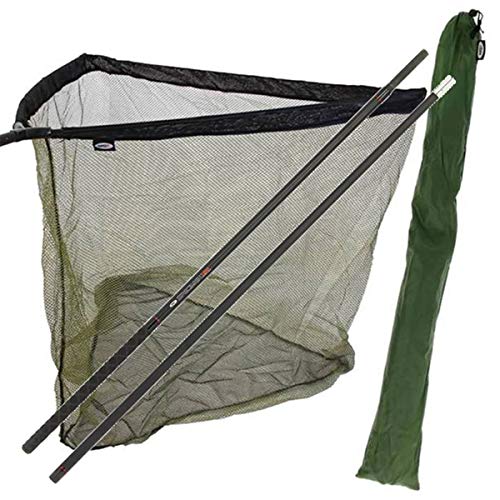


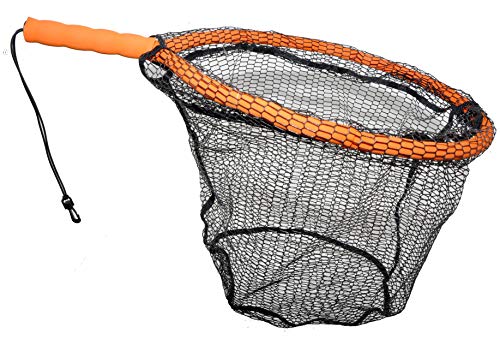


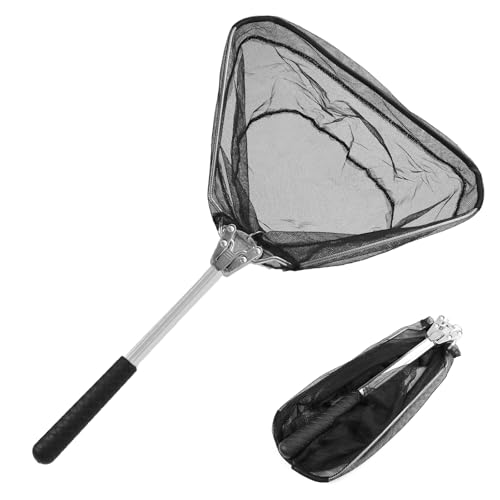


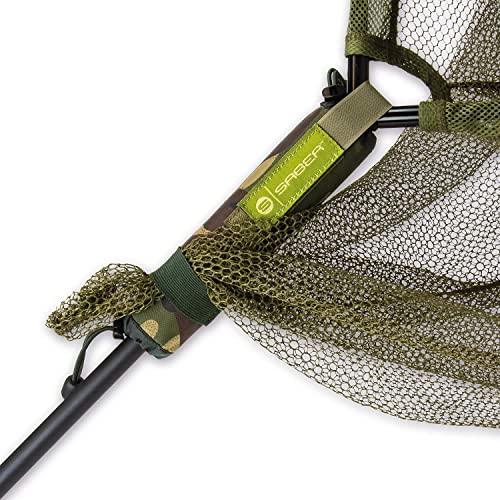


What Are Landing Nets?
Landing nets are fishing nets used to scoop and support fish once they are close enough to land. They usually include a net head, mesh and a handle or compatible handle attachment.
A landing net helps reduce pressure on the line, hook and fish during the final stage of landing. Instead of lifting a fish directly on the line, the angler guides it into the net and supports it properly.
Landing nets are one of the most important fish care items in many types of fishing. Even small fish can be lost or damaged if they are lifted awkwardly, and larger fish should usually never be lifted by the line alone.
What Are Landing Nets Used For?
Landing nets are used to land fish safely from banks, platforms, boats, kayaks, piers, rivers, lakes, canals and commercial fisheries where suitable. They help control fish that are ready to be brought to hand.
They are useful for coarse fishing, carp fishing, predator fishing, match fishing, fly fishing and sea fishing. The size and style of the net should match the fish and venue.
A landing net can also help calm a fish before unhooking. Once the fish is in the net and still in the water, the angler can prepare unhooking tools, mats, slings or other fish care equipment.
How To Choose The Right Landing Net
Start by thinking about the fish you expect to catch. Small roach, perch and skimmers need a different net from carp, pike, salmon, bass or larger sea fish.
Next, consider the venue. A short handle may suit small ponds, boats or kayaks, while a longer handle may be useful on canals, platforms, rivers, commercial fisheries or higher banks.
Mesh type also matters. The mesh should suit the species, hook type and fish care needs. Lures with treble hooks, delicate fins and larger fish can all affect the best choice.
Key Features To Compare
When comparing landing nets, look at net head size, mesh material, mesh depth, handle length, frame strength, spreader block design, folding design, transport size, grip comfort, weight, saltwater suitability where listed and ease of cleaning.
Net size should match the fish. A small net may be easy to carry, but it can make landing larger fish difficult. A large net can offer more support, but it may be heavier or awkward in tight swims.
Handle length should match the bank and fishing method. Too short can make landing difficult, while too long can be cumbersome in small swims or from boats.
Landing Nets Compared With Keep Nets
A landing net is used to land one fish at a time. It helps bring the fish under control safely before unhooking or release.
A keep net is used to hold suitable fish temporarily in the water where venue rules allow. Keep nets are common in match and coarse fishing, but they are not used for landing fish at the end of the fight.
Most anglers who use keep nets still need a landing net. The landing net lands the fish, while the keep net holds suitable fish only where permitted.
Landing Nets Compared With Drop Nets
Landing nets usually have a handle and are used from banks, platforms, boats or low edges where the angler can reach the fish.
Drop nets are lowered vertically by rope and are useful from piers, harbour walls or high positions where a handled landing net cannot reach.
Choose based on height and access. A landing net is ideal for normal bank fishing, while a drop net may be more suitable when fishing from height.
Landing Nets Compared With Fish Grippers
Landing nets support fish in the water and help control them during landing. They are often the safer first choice for bringing fish to hand.
Fish grippers are handheld tools used to hold certain fish by the jaw or mouth area where suitable. They may help with control, but they should not replace a proper landing net for many species.
For responsible fishing, a landing net, unhooking mat and suitable tools often work together. The net lands the fish, while tools help with safe hook removal.
Beginner, Regular Angler And Experienced Angler Guidance
Beginners should choose a landing net that is easy to handle, large enough for the fish expected and suitable for their usual venue. A simple net and handle can make early fishing much safer and more confident.
Regular anglers may need different landing nets for different methods. A compact net for small coarse fish, a larger net for carp and a strong net for predators or sea fishing may all serve different purposes.
Experienced anglers often compare mesh type, frame strength, handle stiffness, spreader block quality, folding speed, hook tangle resistance, fish support, packed size and how the net works with their full fish care setup.
Landing Nets For Coarse Fishing
Coarse fishing landing nets are used for fish such as roach, rudd, perch, bream, skimmers, tench, F1s and smaller carp depending on the venue.
A coarse landing net should be easy to move through the water and large enough for the fish expected. It should help protect lighter hooklengths by reducing the need to lift fish directly.
A suitable disgorger, forceps and unhooking mat where needed should also be close to hand. Landing the fish is only the first part of careful handling.
Landing Nets For Carp Fishing
Carp fishing usually needs a larger landing net because carp are deep bodied, powerful and often too large to lift safely by line or hand.
A carp landing net should support the fish properly and work with a suitable unhooking mat, cradle or weigh sling where needed. The net should be prepared before casting so it is ready when a fish is hooked.
Carp should be guided into the net calmly. Rushing the final stage can lead to hook pulls, broken tackle or poor fish handling.
Landing Nets For Predator Fishing
Predator fishing often needs strong and practical landing nets. Pike, zander and larger perch can be lively, toothy and difficult to control without suitable equipment.
A predator landing net should be large enough for the fish expected and suitable for the hooks and lures used. Treble hooks can tangle in some mesh types, so mesh choice matters.
Long forceps, pliers, cutters, traces and unhooking mats are also important for predator fishing. The landing net should be part of a complete safe handling setup.
Landing Nets For Match Fishing
Match fishing often requires quick, controlled landing. A suitable landing net can help bring fish to hand efficiently while protecting hooklengths and reducing lost fish.
The handle length should suit the peg, platform and water level. A match angler may need enough reach to land fish cleanly without standing up or disturbing the swim too much.
Net speed should not come before fish care. Fish should be landed, unhooked and placed into a keep net only where rules allow.
Landing Nets For Fly Fishing
Fly fishing landing nets are often compact and easy to carry. They may be used for trout, grayling, salmon, sea trout and stillwater fish depending on the size and design.
For river fishing, a net should be easy to reach while wading or walking. Some anglers use clips, magnets or straps where compatible with their setup.
Soft mesh can be useful for catch and release where suitable. The aim is to control the fish quickly and minimise handling time.
Landing Nets For Sea Fishing
Sea fishing landing nets may be used from beaches, rocks, piers, harbour walls, boats and jetties where suitable. The right net depends on the height, fish size and conditions.
Saltwater, sand and rocks can be hard on nets and fittings. Check saltwater suitability where listed and clean the net after coastal use.
From high walls or piers, a drop net may be more suitable than a handled landing net. Do not lean dangerously or overreach to net a fish.
Landing Nets For Boat And Kayak Fishing
Boat and kayak anglers often need landing nets that are manageable in limited space. A shorter handle can be useful where the angler is close to the water.
The net should be easy to operate one handed where possible and should not obstruct paddling, seating or rod handling.
Fish can be lively beside a boat or kayak, so the net should be ready before the fish is brought close. Safe balance and control are especially important on small craft.
Landing Net Head Size And Depth
Net head size affects how easily fish can be landed. Larger fish need a wider net head so the angler can guide the fish in without forcing it.
Net depth affects how well the fish stays contained once inside. A shallow net may not suit lively or larger fish, while a deeper net may offer more security.
Choose a size that matches your target species. A net that is too small can make landing harder and may increase stress on the fish.
Landing Net Handles And Reach
Landing net handles come in different lengths and designs. Short handles can suit boats, kayaks and small ponds, while longer handles can help on canals, rivers, platforms and higher banks.
Telescopic or multi section handles can be useful where transport length matters. They allow extra reach while still packing down for storage.
Handle strength matters. A weak or overly flexible handle can make landing larger fish difficult, especially when reaching over reeds, platforms or steep banks.
Mesh Type, Fish Care And Hook Tangles
Mesh type affects fish care, hook tangles and how the net moves through water. Soft mesh can help protect fins, scales and slime where suitable.
Rubber coated mesh can be useful in some fishing styles because it may reduce hook tangles and can be easier to clean where suitable.
Lure anglers should think carefully about mesh because treble hooks can tangle. A net that works well for float fishing may not always be ideal for lure fishing.
Folding Landing Nets And Compact Storage
Folding landing nets can be useful for travel, mobile fishing, family fishing and anglers with limited storage space. They can be easier to carry than fixed frame nets.
Compact designs are practical, but they still need enough strength and size for the fish expected. Portability should not come before fish care.
Check how quickly the net opens and locks into place. A landing net needs to be ready when a fish is close, not difficult to assemble at the critical moment.
Landing Nets For Catch And Release
Catch and release fishing depends on careful landing and handling. A suitable landing net helps control the fish while keeping it supported and close to the water.
Prepare the net before fishing. Once the fish is in the net, keep it in the water while unhooking tools, mats or slings are prepared where suitable.
Avoid dragging fish across dry ground, rough platforms or stones. The net should help protect the fish, not just help the angler complete the landing.
How To Use A Landing Net Properly
The best approach is usually to bring the fish over the net and then lift or draw the net around it. Chasing fish with the net can spook them and may cause sudden lunges.
Keep steady pressure on the rod and guide the fish head first towards the net where possible. Wait until the fish is ready rather than forcing it too early.
Once the fish is in the net, lift carefully and support the fish. Do not swing heavy fish by the net handle, as this can damage tackle and risk poor fish handling.
Avoiding Common Landing Net Mistakes
One common mistake is using a net that is too small. This makes landing stressful and can increase the chance of losing fish at the bank.
Another mistake is leaving the net packed away until a fish is hooked. The net should be ready before fishing starts, especially when targeting larger fish.
A third mistake is lifting fish too high or too quickly. Keep fish low, supported and over safe surfaces where possible.
Landing Nets And Fish Care Equipment
A landing net should work with the rest of your fish care setup. For larger fish, this may include unhooking mats, cradles, weigh slings and fish safe handling tools.
For predator fishing, long forceps, pliers and cutters should be ready. For carp fishing, mats and slings are often important. For coarse fishing, disgorgers and forceps should be close to hand.
The goal is to land, unhook, record and release or retain fish according to rules with the least stress possible.
Venue Rules And Landing Net Requirements
Always check venue rules before fishing. Some fisheries may require landing nets of a certain size for carp or specimen fish.
Rules may also cover unhooking mats, keep nets, fish handling, fish retention, barbless hooks, predator tools and net drying or dipping procedures.
Using the right landing net helps protect fish and may be required before you are allowed to fish certain venues.
Biosecurity, Cleaning And Drying Nets
Landing nets can carry water, mud, weed, fish slime and organic material between venues. Cleaning and drying nets helps reduce the risk of transferring unwanted material.
Some fisheries may ask anglers to arrive with dry nets or use net dip stations where provided. Always follow venue instructions.
After fishing, clean the mesh and frame, then dry the net fully where possible before storing it for longer periods.
Safety When Using Landing Nets
Landing net handles can be long, so take care around people, trees, rods, shelters, paths and overhead power lines. Carbon handles should always be kept away from electricity.
Do not overreach when netting fish. Steep banks, slippery mud, rocks, platforms and fast water can make landing dangerous if footing is poor.
Keep hooks and lures under control when a fish is in the net. Loose hooks can catch mesh, clothing or skin.
Care, Cleaning And Storage
Landing nets should be cleaned and dried after use. Mud, bait, fish slime, weed, salt and sand can affect mesh, frames, handles and fittings.
Check the mesh for holes, tears, trapped hooks or rough areas. Damaged mesh can harm fish or allow them to escape.
Store nets in a dry, ventilated place where possible. Avoid leaving wet nets sealed in bags for long periods, as this can cause unpleasant smells and reduce usability.
Useful Accessories To Consider
Useful accessories for landing nets include landing net handles, spare net heads, net bags, unhooking mats, weigh slings, forceps, pliers, disgorgers, fish care cradles, towel, cleaning cloths and suitable storage.
For carp and specimen fishing, larger mats and slings may be important. For predator fishing, long forceps, pliers and cutters should be part of the setup.
The best landing setup is one where the net, handle, tools, fish care equipment and fishing method all work together responsibly.
Why Buy Landing Nets From YPC?
At YPC, we understand active lifestyles and the need for practical products that work in real use. Landing nets should be chosen carefully because net size, mesh type, handle length, frame strength, portability and fish care all affect how useful they are.
Browse the Landing Nets category at YPC to compare available options, check the details that suit your fishing style and choose landing equipment that helps make fish landing safer, calmer and more controlled.
Landing Nets FAQs
What is a landing net?
A landing net is a fishing net used to land fish safely once they are close to the bank, boat or platform. It helps support the fish and reduces pressure on the line and hook.
It is one of the most important fish care tools in many types of fishing.
What are landing nets used for?
Landing nets are used to scoop and control fish during the final stage of landing. They help bring fish safely to hand for unhooking, weighing, measuring or release.
They can be used in coarse, carp, predator, fly and sea fishing.
Are landing nets suitable for beginners?
Yes, landing nets are very useful for beginners. They make fish landing easier and reduce the risk of lifting fish incorrectly.
Beginners should choose a net size that suits the fish and venue.
Do I need a landing net for coarse fishing?
A landing net is useful for coarse fishing, especially when catching fish too large to lift safely by the line.
It also helps protect lighter hooklengths and gives better control at the bank.
Do I need a landing net for carp fishing?
Yes, carp fishing usually needs a suitable landing net. Carp are powerful and deep bodied, so they should be supported properly.
A carp landing net should be used with suitable fish care equipment.
Do I need a landing net for pike fishing?
Yes, a landing net is important for pike fishing. Pike need controlled landing and careful unhooking with suitable tools.
Use a large enough net, long forceps, pliers and an unhooking mat.
What size landing net do I need?
The right size depends on the fish you expect to catch. Small coarse fish need a smaller net, while carp, pike and larger sea fish need a bigger net.
Choose a net that can support the fish safely.
What landing net handle length should I choose?
Choose handle length based on your venue. Short handles can suit boats and small ponds, while longer handles can help on canals, rivers, platforms and higher banks.
The handle should be strong enough for the net and fish expected.
What mesh is best for a landing net?
The best mesh depends on the fish and method. Soft mesh can help protect fish where suitable, while rubber coated mesh may reduce hook tangles in some situations.
Lure anglers should choose mesh carefully because treble hooks can tangle.
Are rubber coated landing nets useful?
Rubber coated landing nets can be useful because they may reduce hook tangles and can be easier to clean where suitable.
Check the net size and mesh style to make sure it suits your target fish.
Are folding landing nets good?
Folding landing nets are useful for travel, mobile fishing and compact storage. They can be easier to carry than fixed frame nets.
Make sure the folding design is strong enough and quick to use.
Can I use a landing net for sea fishing?
Yes, landing nets can be used for some sea fishing situations where suitable. Saltwater, rocks, sand and larger fish can be demanding, so product suitability matters.
Clean the net after coastal use.
Can I use a landing net from a pier?
A landing net can be used from some piers if the handle is long enough and the height is manageable. From high piers or harbour walls, a drop net may be more suitable.
Do not lean dangerously to reach fish.
Can I use a landing net from a kayak?
Yes, landing nets are useful for kayak fishing. A shorter handled net is often easier to manage in limited space.
Keep the net secure and ready before bringing the fish beside the kayak.
What is the difference between a landing net and a keep net?
A landing net is used to land one fish at a time. A keep net is used to hold suitable fish temporarily in the water where allowed.
They serve different purposes and are often used together in coarse or match fishing.
What is the difference between a landing net and a drop net?
A landing net usually has a handle and is used from close range. A drop net is lowered by rope from height.
Drop nets are often used from piers, harbour walls and raised edges.
How do I land a fish with a landing net?
Guide the fish calmly over the net and lift only when the fish is fully inside. Avoid chasing the fish with the net or lifting too early.
Keep the fish supported and close to the water where possible.
How do I stop hooks tangling in a landing net?
Choose mesh that suits your hook type and handle lures carefully. Treble hooks can tangle more easily, so use forceps or pliers and remove hooks patiently.
Check the net after each fish.
How do I clean a landing net?
Remove weed, mud, bait and fish slime, then rinse or wipe the net where suitable. After saltwater use, clean away salt and sand.
Let the net dry before long storage where possible.
What should I check before buying landing nets?
Check net head size, mesh type, mesh depth, handle length, frame strength, folding design, transport size, freshwater or saltwater suitability where listed and suitability for your target fish.
The right landing net should help you land fish safely, handle them responsibly and fish within venue rules.
 Getting ready for Summer? View our Home and Garden Products

Heading outdoors this winter? Take a look at our Outdoor Clothing.