
Golf Putting Mats
Golf putting mats are practice aids designed to help golfers work on putting stroke, distance control, alignment and confidence away from the course. This category is ideal if you want a putting practice setup for home, office, garage, garden room, junior golf, beginner training, regular putting drills or golf gifts.
The right golf putting mat depends on your available space, skill level, practice goals and how realistic you want the surface to feel. A simple compact mat may suit casual practice, while a longer mat with alignment guides, distance markings or automatic ball return can support more structured training.
- Golf Putting Mats
HUAEN Putting Green Mat for Indoors with Ball Return and 3 Holes
£71.16 *View On Amazon* - Golf Putting Mats
Golf Putting Mat Indoor, Dark Green with 2 Holes and Ball Return
£65.52 *View On Amazon* - Golf Putting Mats
Signstek Indoor Outdoor Golf Auto Return Putting Trainer Mat
£49.99 *View On Amazon* - Golf Putting Mats
ToVii Putting Green Indoor Outdoor Golf Practice Mat with Auto Ball Return and 3 Holes
£49.99 *View On Amazon* - Golf Putting Mats
Asgens Golf Putting Mat with Ball Return Indoor Putting Green with Slope 9.8 Feet with 3 Bonus Balls
Original price was: £41.90.£37.91Current price is: £37.91. *View On Amazon* - Golf Putting Mats
Wellputt Start 2.0 Golf Putting Mat 10ft Indoor Training Mat
£65.00 *View On Amazon* - Golf Putting Mats
Golf Putting Mat Set 15.3in x 106in with Return Track Indoor and Outdoor
£32.99 *View On Amazon* - Golf Putting Mats
ToVii Putting Mat Indoor Golf with Automatic Ball Return and 2 Size Holes
£49.94 *View On Amazon* - Golf Putting Mats
Perfect Practice Version 2.0 Putting Mat for Home or Office
£129.99 *View On Amazon* - Golf Putting Mats
Putt2Win Golf Practice Putting Mat with Putting Mirror and Target Ghost Hole
£44.95 *View On Amazon* - Golf Putting Mats
JIMITOP Putting Green Indoor Golf Putting Mat with Lenticular 3D Backplate, Alignment Guides and Ball Return
Original price was: £39.99.£33.99Current price is: £33.99. *View On Amazon* - Golf Putting Mats
ANMEISH Golf Automatic Putting Cup Ball Returner Practice Hole
Original price was: £13.49.£10.99Current price is: £10.99. *View On Amazon*


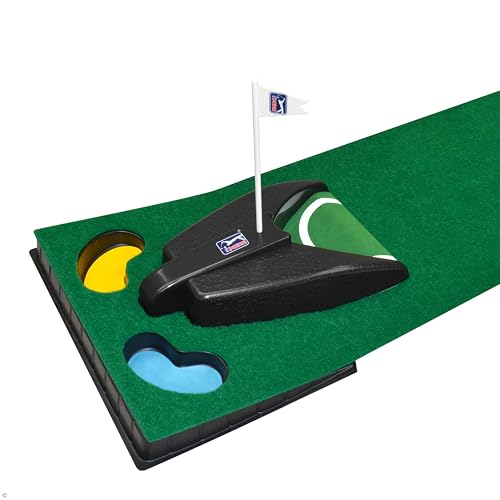


What Is A Golf Putting Mat?
A golf putting mat is a roll out or fixed practice surface used for putting practice. It gives golfers a flat or shaped area to practise short putts, stroke control, alignment and pace.
Most putting mats are designed to be used indoors, although some may also be suitable for sheltered outdoor spaces. They are popular because putting can be practised in a small area and does not require a full golf course or driving range.
A putting mat will not fully replace real greens, but it can help build a repeatable stroke and make regular practice easier.
Why Golf Putting Mats Are Useful
Putting is one of the most important parts of golf because it affects every round. A putting mat helps you practise more often, even when you cannot get to the course.
They are useful for working on short putts, starting the ball on line, controlling pace and building a consistent routine. Regular short practice can help golfers feel more comfortable over the ball.
Putting mats are also convenient. They can be used at home for a few minutes at a time, making practice easier to fit around everyday life.
How To Choose The Right Golf Putting Mat
Start with the space you have available. A short mat may be enough for simple indoor practice, while a longer mat gives more room to work on pace and distance control.
Surface feel is one of the most important buying factors. A smoother, more consistent surface makes practice more useful. Some mats are designed to feel faster, while others are more forgiving for casual use.
Also think about storage. A roll up mat is useful if the space is shared, while a larger fixed mat may be better if you have a dedicated practice area.
Compact Putting Mats
Compact putting mats are ideal for smaller homes, offices and quick practice sessions. They are easy to store and usually quick to roll out when needed.
They are useful for practising short putts, alignment and simple stroke repetition. A compact mat can still be valuable if it helps you practise regularly.
The trade off is distance. A shorter mat may not help as much with longer putts or pace control, but it can still improve confidence from close range.
Long Putting Mats
Long putting mats give more room for distance control and varied practice. They are useful if you want to work on putts from different lengths rather than only short tap ins.
A longer mat can also feel more realistic because it gives the ball more time to roll. This can help you judge pace, starting line and stroke length.
The trade off is space. Before buying a long putting mat, measure the area where it will be used and make sure there is enough room behind and around the ball.
Putting Mats With Ball Return
Putting mats with ball return systems send the ball back after a successful putt or after it reaches the end of the mat. This can make practice quicker and reduce the need to keep walking back and forth.
Ball return mats are useful for repetition. They are especially helpful if you want to practise many short putts in one session.
The trade off is feel and simplicity. Some golfers prefer a plain mat because it is quieter and less mechanical, while others enjoy the convenience of automatic return.
Putting Mats With Alignment Guides
Some golf putting mats include printed lines, gates, distance markings or aiming tracks. These features can help golfers check whether the putter face, ball position and stroke path are consistent.
Alignment guides are useful for beginners because they make practice more visual. They can also help regular golfers build a more repeatable putting routine.
Choose a design that supports your practice without becoming distracting. The best guide markings are clear, simple and easy to use.
Flat, Sloped And Breaking Putting Mats
Flat putting mats are best for basic stroke practice, starting line and distance control. They are simple and useful for golfers of all ability levels.
Sloped putting mats add extra challenge by making the ball travel uphill or towards a raised cup. These can help with pace and confidence, but they may not feel the same as a natural green.
Some mats include adjustable breaks or shaped surfaces to simulate curved putts. These can make practice more varied, but beginners may prefer to master straight putts first.
Putting Mats For Beginners
Beginners should choose a putting mat that is easy to set up, simple to use and not too small. A clear target, smooth surface and visible guide lines can make practice more enjoyable.
At the start, focus on a steady stroke, clean contact and starting the ball towards the target. Distance control and confidence will improve with repetition.
A putting mat can also help beginners learn how small changes in aim, stroke length and putter face angle affect the ball.
Putting Mats For Regular Golfers
Regular golfers may want a mat with better surface quality, more distance options and useful alignment features. If you practise often, durability and roll consistency become more important.
A longer mat can help regular players work on different putting distances. Multi target designs can make practice more varied and challenging.
Regular golfers may also want to use putting drills, such as making a set number of putts in a row, practising from different distances or working on start line control.
Putting Mats For Junior Golfers
Putting mats can be excellent for junior golfers because they make practice simple, safe and fun. A mat gives children a clear target and helps them understand aim and pace.
For younger golfers, choose a mat that is easy to see, not too long and simple to use. Fun target designs or ball return features can help keep practice enjoyable.
Junior practice should be encouraging. Short, regular sessions are usually better than long practice that feels like a chore.
Indoor Putting Practice
Indoor putting practice is one of the main reasons golfers buy putting mats. A hallway, spare room, office, garage or living room can all work if there is enough clear space.
Use the mat on a flat, stable surface where it will not wrinkle, slide or create a trip hazard. Make sure there is room to stand naturally and swing the putter safely.
Indoor practice is best for stroke, alignment and short putt confidence. Real green practice is still useful for reading slopes, grain, outdoor pace and changing course conditions.
Garden And Outdoor Putting Practice
Some putting mats may be used in sheltered outdoor spaces, depending on the product design. Always check suitability before using a mat outside.
Outdoor use can be helpful if you have more space, but weather, damp ground, wind and uneven surfaces can affect the mat and ball roll.
After outdoor use, clean and dry the mat before storing it. Leaving a mat damp or dirty can reduce its lifespan.
Putting Mat Surface And Speed
Putting mat surface affects how the ball rolls. Some mats are faster and smoother, while others feel slower or softer.
A consistent surface is more important than trying to perfectly copy a course green. If the mat rolls evenly, it can still help you practise line, contact and stroke control.
Some mats may need time to settle after being rolled up. Lay the mat flat before practice so creases and bumps do not affect the ball.
Looking After A Golf Putting Mat
Store the putting mat properly when not in use. Roll it carefully if designed to roll, and avoid folding it sharply unless the product instructions say it is suitable.
Keep the surface clean and dry. Dust, grit, pet hair and moisture can affect the roll and make the mat less pleasant to use.
Check for curling edges, worn areas and damage. Replace the mat if the surface becomes uneven or no longer gives a reliable roll.
Useful Accessories To Consider
Useful accessories for putting practice include golf balls, putters, putting cups, alignment sticks, putting mirrors, ball markers, golf towels, chipping nets and practice balls.
A putting mirror can help with eye position and setup. Alignment sticks can support start line practice. A golf towel keeps balls and putter faces clean.
Choose accessories that support the way you practise rather than making the setup more complicated than needed.
Why Buy Golf Putting Mats From YPC?
At YPC, we understand active lifestyles and the need for practical sports equipment that fits real use. A golf putting mat should be easy to set up, simple to store and useful for building confidence on the green.
Browse the Golf Putting Mats range, compare the options and choose the mat that fits your space, skill level and putting practice goals.
Golf Putting Mats FAQs
What is a golf putting mat used for?
A golf putting mat is used to practise putting stroke, alignment, pace control and short putt confidence away from the golf course.
Are golf putting mats worth buying?
Yes, a putting mat can be worth buying if it helps you practise regularly. It is especially useful for short putts, alignment and stroke repetition.
Can a putting mat improve my putting?
A putting mat can help with consistency, aim and confidence, but it works best alongside real green practice and good technique.
What size putting mat should I buy?
Choose a size that fits your space. A compact mat suits short practice, while a longer mat gives more room for distance control.
Are longer putting mats better?
Longer mats can be better for pace practice and varied distances, but they need more space. A shorter mat can still be useful for confidence from close range.
What is a putting mat with ball return?
A putting mat with ball return sends the ball back after a putt, making repeated practice quicker and more convenient.
Are alignment lines useful on putting mats?
Yes, alignment lines can help golfers check aim, putter path and starting direction. They are especially useful for beginners and structured practice.
Can I use a putting mat indoors?
Yes, most putting mats are designed for indoor use. Use them on a flat, stable surface with enough room to stand and swing safely.
Can I use a putting mat outside?
Some putting mats may be suitable for sheltered outdoor use, but always check the product details. Clean and dry the mat before storing it.
Do putting mats feel like real greens?
Putting mats can give a consistent practice surface, but they will not perfectly copy every real green. Course greens vary in speed, slope and condition.
Are putting mats good for beginners?
Yes, putting mats are good for beginners because they make practice simple, visual and easy to repeat at home.
Are putting mats good for children?
Yes, putting mats can be useful for junior golfers when the mat is suitable, safe and easy to use. Keep practice short and enjoyable.
What should I look for in a golf putting mat?
Look at length, surface quality, roll consistency, target design, alignment guides, ball return, storage size and whether it suits your practice space.
How do I stop a putting mat from curling?
Lay it flat before practice and store it according to the product instructions. Avoid sharp folds unless the mat is designed for folding.
How do I clean a golf putting mat?
Keep it dry, remove dust and debris, wipe marks where suitable and follow the product care instructions. Avoid soaking the mat unless the instructions allow it.
What accessories go well with a putting mat?
Useful accessories include golf balls, putting mirrors, alignment sticks, putting cups, golf towels, ball markers and chipping nets.