Quick Summary
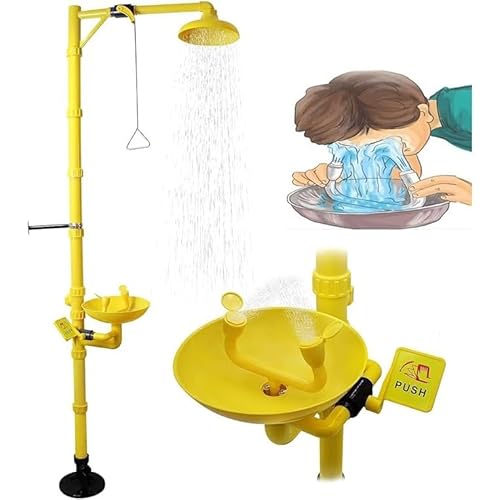
This emergency eye wash and shower station is a dual-spray first aid eyewasher for lab safety. It combines two eyewash nozzles with a shower function, and the unit is described as suitable for emergency eye and body washing.
The key buyer checks are the operating method, the exact installation needs and whether the station fits the intended safety setup. The product also uses engineering plastic construction.
Key Details
| Detail | Verified information and buyer relevance |
|---|---|
| Product type | Emergency eye wash and shower station for first aid rinsing. |
| Eyewash design | Dual eyewash nozzles for rinsing the eyes. |
| Nozzle covers | Each nozzle has a cover, which helps keep the nozzles protected between uses. |
| Operation | Press the handle or pull the shower rod to start the water flow. |
| Construction | Engineering plastic construction. |
| Stated application | Suitable for laboratories, hospitals, factories and petrochemical industries. |
What to Compare Before Buying
- Activation method: This model starts by pressing the handle or pulling the shower rod. Compare that with the emergency response setup you need.
- Eyewash layout: It uses two eyewash nozzles. Check that this matches the level of rinsing support you want from the station.
- Installation space: The unit is a combined shower and eyewash station, so allow enough room for the full fitting and use area.
- Material: The station uses engineering plastic. Compare that with the material finish you need for your environment.
- Intended setting: It is described for lab, hospital, factory and petrochemical use. Make sure the planned location matches that kind of safety arrangement.
What Else You May Need
Check the water connection and the full installation arrangement required for the chosen site. The station also needs to be positioned where it can be used quickly in an emergency.
Before You Decide
Confirm the activation method, the dual-nozzle eyewash layout and the available installation space before choosing an offer. For emergency equipment, the final setup should match the intended safety arrangement and the manufacturer instructions for the site.