Choosing an archery bow case is mainly about matching protection to the way you carry and store your bow. Some buyers want a simple, lightweight way to keep a bow together between sessions, while others need firmer protection for travel, mixed kit or longer journeys.
The right case depends on your bow type, whether you keep the bow assembled, and how much extra space you need for accessories. It is also worth thinking about how often you will move the bow, because convenience and protection often pull in different directions.
What should you look for in an archery bow case?
The best starting point is to decide how much protection you need and how the bow will be carried. Soft cases are usually easier to handle and store, while harder cases can offer a more rigid structure for transport. The main trade-off is between portability and protection, so it helps to think about where the case will be used most often.
Specifications vary by model, so always check the individual product page before buying.
| Feature | What it means | Why it matters | What to check |
|---|---|---|---|
| Case type | Soft, semi-rigid or hard construction | Sets the balance between easy carrying and added protection | How much impact resistance and structure you need for your use |
| Bow compatibility | Whether the case suits a recurve, compound or takedown setup | A case that is too small or the wrong shape may not fit properly | Bow style, overall length and whether the bow stays assembled |
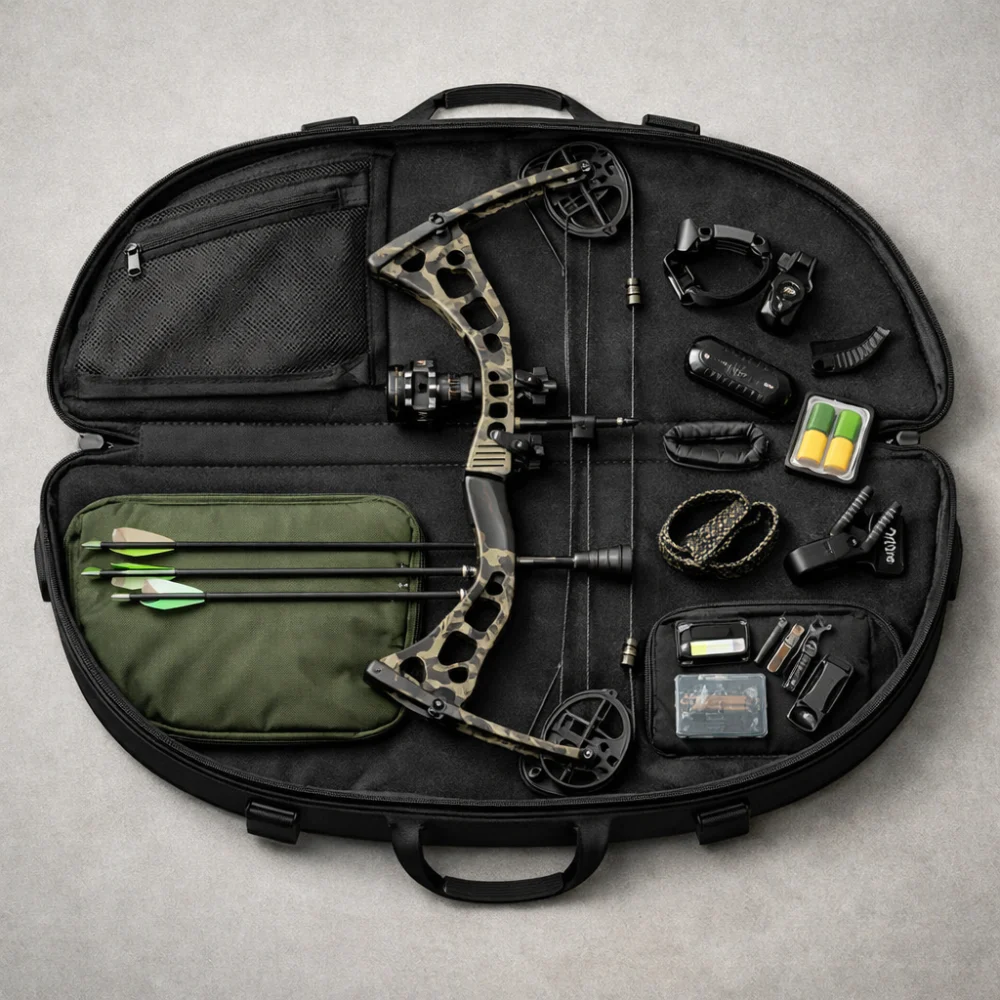
| Internal organisation | Pockets, straps or sections for accessories | Helps keep items separate and easier to find | Space for arrows, strings, stabilisers or small accessories if needed |
| Portability | Handles, straps and general carrying comfort | Important if you walk between home, range or field | How you plan to carry it and whether the layout suits that |
| Storage and closure | Zips, fastening style and overall shape when stored | Affects everyday use and how tidy the case is in storage | Ease of opening, closing and stowing in your space |
Key decision criteria
Bow type and fit
The first check is whether the case suits your bow style. Recurve and compound bows can have different shapes and accessory layouts, so fit is more than just overall length. If you use a takedown bow, you may want a case that helps keep the parts organised as well as protected.
Protection level
Think about where the bow will spend most of its time. For careful storage and local transport, a lighter case may be enough, but if the bow will be put in a car boot, carried with other gear or moved often, firmer protection may feel more appropriate. More protection can mean more bulk, so consider whether the added security is worth the extra size.
Accessory storage
Some buyers only need space for the bow itself, while others want room for arrows, a tab, release aid, string accessories or small spares. A case with useful internal organisation can reduce clutter and help prevent items rubbing together. If you travel with more than the bare minimum, accessory space becomes a practical part of the decision.
Carry style and convenience
A case that is comfortable to carry is easier to use regularly, especially if you are moving between home and a range. Look at whether the case is designed for hand carrying, shoulder carrying or both, and judge whether that suits your routine. A more compact case can be easier to live with, but it may not suit larger or more heavily accessorised bows.
Types and variants you are likely to see
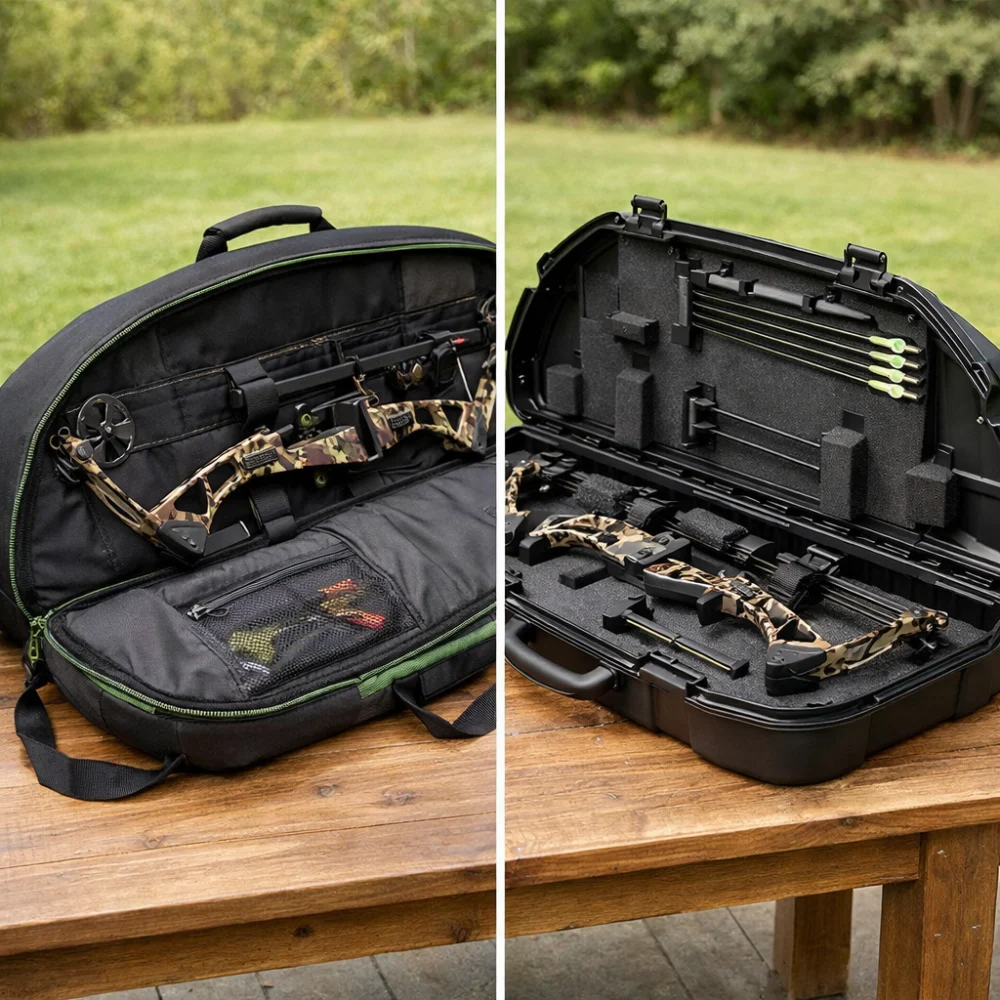
In this category, the most useful distinction is usually between soft cases and harder protective cases.
- Soft cases tend to suit buyers who want lighter weight and easier storage. They are often a sensible choice for routine use where heavy-duty impact protection is not the main concern.
- Hard cases are more suitable when shape retention and stronger protection matter more. They can be a better fit for travel or for buyers who want extra peace of mind during transport.
- Compact or shaped cases may suit bows that are kept in a specific configuration. Their limitation is that they can be less flexible if your kit changes over time.
- Cases with extra storage can work well for buyers carrying more accessories. The trade-off is often added bulk and weight.
Which case suits which buyer?
| Buyer need | What to prioritise | Main trade-off |
|---|---|---|
| Beginner buying a first case | Simple fit, easy handling, clear storage | May not offer the highest level of protection |
| Regular range user | Convenient carry, quick access, sensible organisation | Less bulky options may have limited padding or space |
| Traveller or frequent car transport | More rigid protection and secure closure | Often larger and heavier |
| Buyer with several accessories | Extra compartments and room for small items | More storage can make the case less compact |
| Owner of a takedown bow | Organisation for separated parts and accessories | Needs more careful checking of internal layout |
Common mistakes to avoid
- Choosing by appearance alone. A case can look suitable but still be the wrong shape or size for your bow.
- Forgetting accessory space. If you regularly carry extra items, a bow-only case may feel restrictive very quickly.
- Overlooking how you will carry it. A case that sounds practical on paper may be awkward if it does not suit your usual route.
- Assuming all bow cases are interchangeable. Bow style, length and stored configuration can make a real difference to fit.
Safety and suitability caveats
A bow case is for transport and storage, not a substitute for checking that your equipment is secured properly before you move it. Make sure the case suits the way your bow is set up and that any accessories you carry do not create pressure points or unnecessary movement. If you are unsure about fit, the product page details are more reliable than the category name alone.
Maintenance, storage and lifespan considerations
Bow cases are usually straightforward to look after, but the details still matter. Check how the closure opens and closes, whether the inside is easy to keep clean and how much space the case needs in storage. If you buy a case with more structure or more compartments, expect it to take up more room when not in use.
It can also help to think about what the case will be exposed to over time, such as repeated transport, damp conditions or regular handling. A simpler case may be easier to store, while a more protective case may be better suited to frequent movement.
How to compare options efficiently
- Start with your bow type and how it is usually stored or carried.
- Decide whether you want a soft, semi-rigid or hard case.
- Check the space you need for accessories and any extra parts.
- Compare carry comfort, closure style and storage convenience.
- Read the individual product page carefully before deciding.
Summary buyer decision checklist
- Does the case suit your bow type and usual setup?
- Is the protection level appropriate for how you will transport it?
- Is there enough room for any accessories you regularly carry?
- Does the carry style suit your routine?
- Will the case be practical to store when not in use?
Frequently asked questions
Do I need a hard case for archery?
Not always. A hard case is more useful when you want firmer protection or you transport the bow more often, but many buyers find a softer case perfectly suitable for regular local use. The right choice depends on how much protection you want versus how compact you want the case to be.
Will one bow case fit every bow?
No, not reliably. Bow style, length and whether the bow stays assembled can all affect fit, so it is important to check the individual product page. A case that is ideal for one setup may be awkward or too small for another.
Should I choose a case with accessory storage?
Choose one if you usually travel with extra items and want everything in one place. If you only carry the bow itself, extra storage may be unnecessary bulk. The useful question is whether the added organisation matches your actual routine.
What is the difference between a soft and a hard bow case?
Soft cases are generally lighter and easier to store, while hard cases are more rigid and can offer greater protection in transport. The trade-off is usually convenience versus structure. That makes the best option dependent on how and where you carry your bow.
Is a bow case useful for storage as well as transport?
Yes, many buyers use a case for both. It can help keep the bow together, reduce clutter and make it easier to move equipment between sessions. Just make sure the case is not so tight that it places pressure on the bow or accessories.
What should I check before ordering?
Check bow type, size, internal layout, carrying style and whether you need extra room for accessories. It is also sensible to think about where the case will be stored when not in use. Those few checks often prevent the most common buying mistakes.