
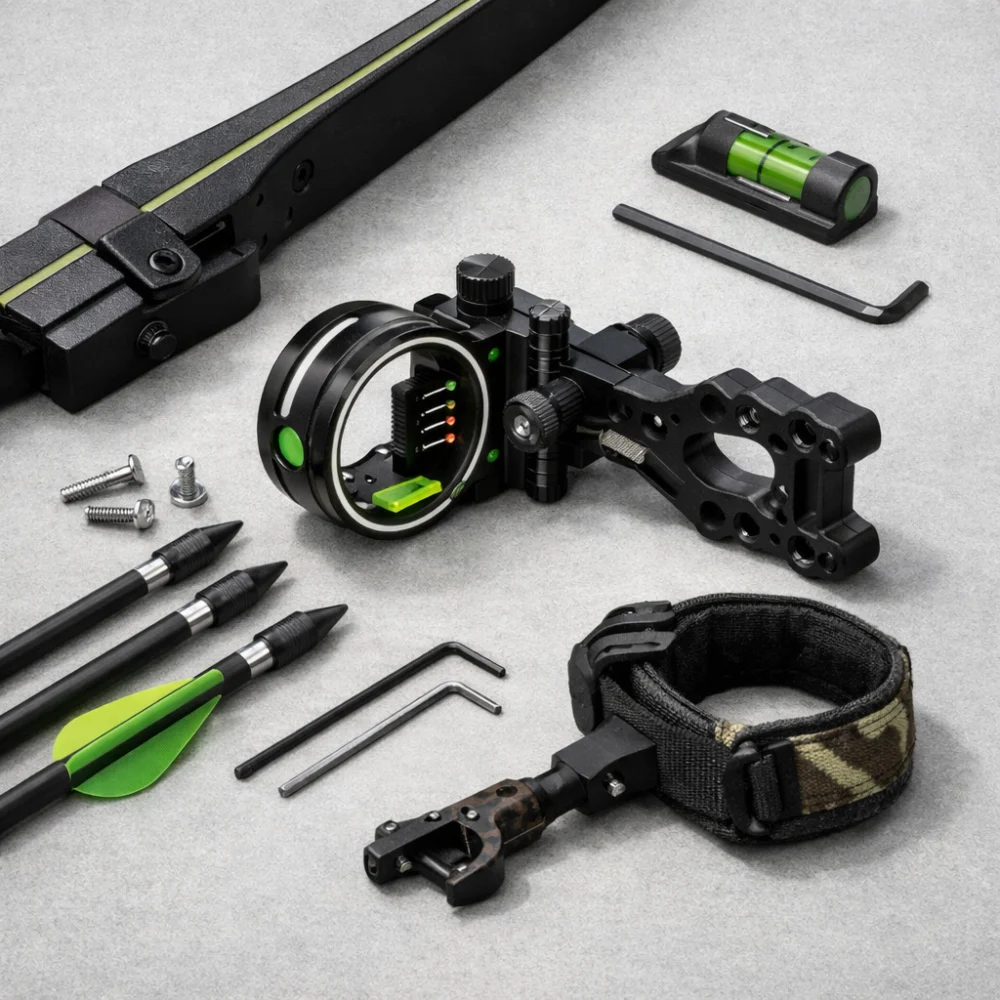
Archery bow sights help you aim more consistently, but the right choice depends on the bow you use, the kind of shooting you do and how much adjustment you want. A sight that feels simple and tidy for one archer may feel too basic or too busy for another.
If you are comparing sights for a recurve or compound bow, it helps to think first about mounting, adjustment style and the level of precision you need. That will narrow the field much faster than focusing on small visual differences.
Specifications vary by model, so always check the individual product page before buying.
What should you look for in a bow sight?
The best starting point is to match the sight to your bow and your shooting priorities. Many buyers want a balance between easy setup, clear aiming and enough adjustability to keep arrows landing where intended. The main trade-off is usually simplicity versus fine control: more adjustment options can help with precision, but they may also add weight, bulk or complexity.
| Feature | What it means | Why it matters | What to check |
|---|---|---|---|
| Bow type | Whether the sight is intended for a recurve or compound bow | Fit and setup are easier when the sight matches the bow style | Check the product page for the intended bow type and mounting details |
| Pin or single-aim system | How the sight presents the aiming point | Different systems suit different preferences for speed, clarity and precision | Look for how the sight is described and whether it matches your shooting style |
| Adjustment range | How much the sight can be moved and tuned | More adjustment can help with sighting-in and distance changes | Confirm the available adjustment method and whether it feels practical for your use |
| Visibility | How easy the aiming point is to see in different light | A clear aiming point can make shooting more consistent | Check fibre, ring or lens details only where they are actually listed |
| Build and weight | How solid the sight feels and how much it adds to the bow | Heavier sights may feel steadier, while lighter ones may suit simpler setups | Look for material and construction details on the individual listing |
Key decision criteria
Compatibility with your bow
Not every sight suits every bow. Recurve and compound setups can differ in how they mount and how much adjustment they need, so this is the first thing to confirm. If you are upgrading an existing bow, compare the sight style with the bow type and any mounting notes on the product page.
How precise you want the aiming to feel
Some archers want a simple aiming reference, while others prefer finer aiming control. A more detailed sight can help when you want to tune carefully, but it may take longer to set up and keep track of. If you are still building confidence, a straightforward sight can be easier to live with.
Adjustment and visibility
Good adjustment matters if you change distances often or want repeatable setup. Visibility matters if you need a clear aiming point under changing light. The right balance depends on whether you value speed, clarity or fine tuning more.
Weight and handling
Sight weight can affect how the bow feels in the hand. A larger, more adjustable sight may offer more control, but it can also add bulk. For a lighter or simpler setup, a more compact sight may be easier to manage.
Common sight styles and variants
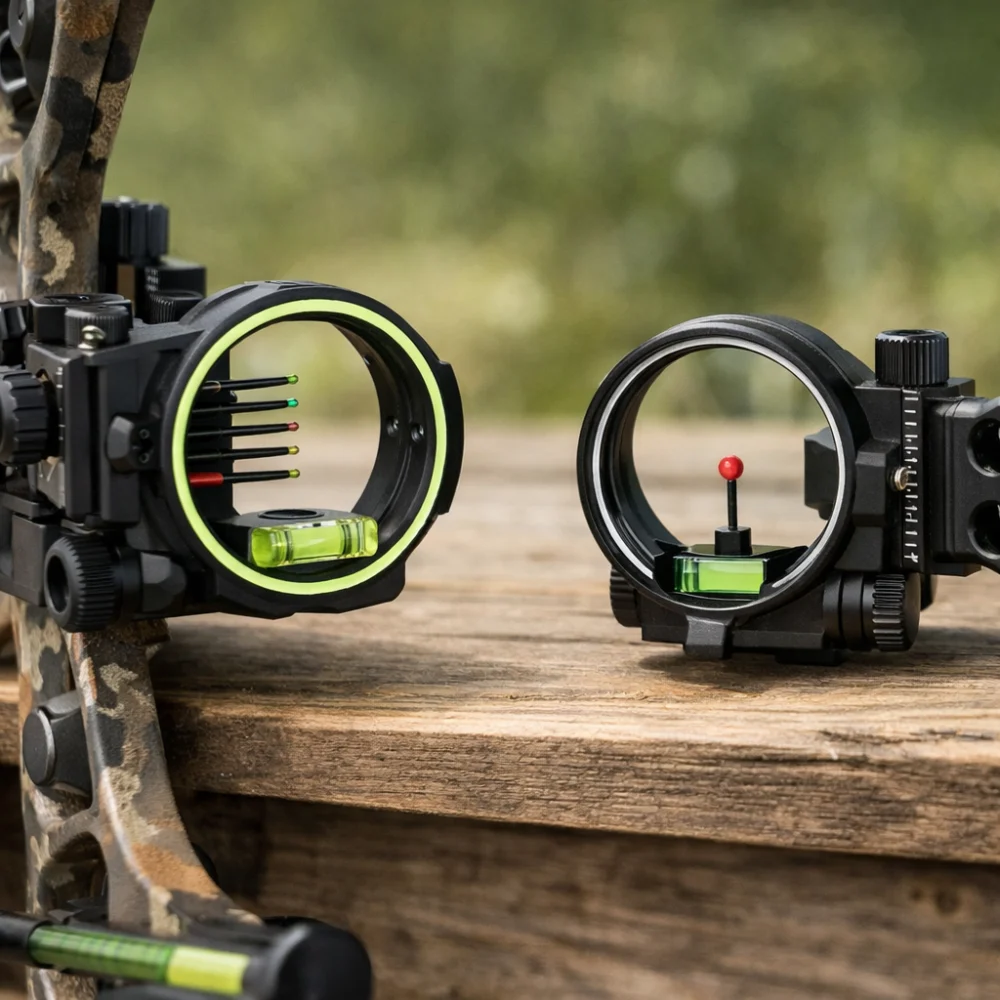
Bow sights in this category can be broadly grouped by how they present the aiming point and how much adjustment they offer. Some buyers will want a simple single-aim style, while others may prefer a multi-point arrangement or a more detailed optical setup. The main limitation is that more specialised designs can suit one style of shooting very well and feel unnecessary for another.
- Single-aim sights: suit archers who want a simple reference point and a less cluttered view.
- Multi-pin sights: suit those who want more than one aiming reference without re-setting the sight each time.
- Lens or magnified sights: may suit shooters who want a more focused aiming image, but they are not always the simplest choice.
Which sight suits which buyer?
| Buyer need | Helpful sight characteristics | Why this helps |
|---|---|---|
| Beginner or returning archer | Simple adjustment, clear aiming point, straightforward mounting | Makes setup and early practice less confusing |
| Target-focused shooter | Fine adjustment, stable construction, clear visibility | Supports more consistent aiming and tuning |
| Compound bow owner | Compatible mounting and the level of detail your setup needs | Helps the sight work properly with the bow |
| Recurve bow owner | Light, tidy sight with clear reference points | Can keep the bow feeling balanced and manageable |
| Buyer replacing a worn sight | Similar mounting style and familiar adjustment format | Reduces the chance of buying something awkward to fit or use |
Common mistakes to avoid
- Choosing on appearance alone: a sight that looks more advanced is not always better for your bow or your experience level.
- Ignoring compatibility: always check that the mounting and intended bow style fit what you already use.
- Overcomplicating the setup: extra adjustment can be helpful, but it is only useful if you will actually use it.
- Forgetting visibility: a sight that is hard to read in your normal shooting conditions can become frustrating quickly.
Safety and suitability caveats
Bow sights are accessories, but they still need to suit the bow and the intended use. If a product page does not clearly explain compatibility, mounting or intended bow style, treat that as a sign to check carefully before buying. Do not assume that one sight will suit all bows or all shooting styles.
Maintenance, storage and lifespan considerations
Most buyers should think about keeping the sight clean, protecting it in storage and checking that moving parts stay secure. If a sight uses delicate aiming elements or finer adjustment parts, it may deserve a little more care when packing away or transporting the bow. Exact upkeep depends on the design, so it is worth checking the product listing for any model-specific guidance.
How to compare options efficiently
- Start with your bow type and make sure the sight is intended for it.
- Decide whether you want a simple aiming point or a more adjustable setup.
- Compare visibility, adjustment style and overall handling rather than only the number of features.
- Consider whether the sight feels appropriate for your level of experience and how often you change distances.
- Check the individual product page for the details that matter most before you buy.
Summary buyer decision checklist
- Does the sight suit your bow type?
- Is the aiming style simple enough for how you shoot?
- Is the adjustment range practical for your needs?
- Will the sight be easy to see in your normal conditions?
- Does the size and weight suit the feel you want from the bow?
- Have you checked the individual product page for the exact mounting and design details?
Frequently asked questions
Are bow sights suitable for beginners?
Yes, provided the sight is simple enough to set up and use. Beginners often benefit from a clear aiming reference and straightforward adjustment rather than a highly complex design. The key is to choose a sight that supports learning instead of adding confusion.
Do recurve and compound bows use the same sights?
Not always. Some sights are designed with one bow style in mind, and the mounting or adjustment details can differ. Always check the product page to make sure the sight is intended for your bow.
Is a more expensive sight always better?
Not necessarily. A more involved sight may offer extra adjustment or refinement, but that only helps if you need it. The right choice is the one that fits your bow, your style and the way you actually shoot.
What is the most important feature to check first?
Compatibility is usually the first check, followed by the aiming style and adjustment range. If those are wrong for your setup, the rest of the features matter much less. After that, look at visibility and handling.
Do I need a sight with lots of adjustments?
Only if your shooting style or setup benefits from it. Some archers prefer a clean, simple sight that is easy to use, while others want more tuning options. Extra adjustment is useful only when you will use it regularly.
How do I know if a sight will feel too bulky?
Check the product description for the construction style and any details that suggest size or weight. If your bow setup is compact or you prefer a lighter feel, a simpler design may suit you better. When in doubt, compare the individual listing against the way you currently shoot.

