
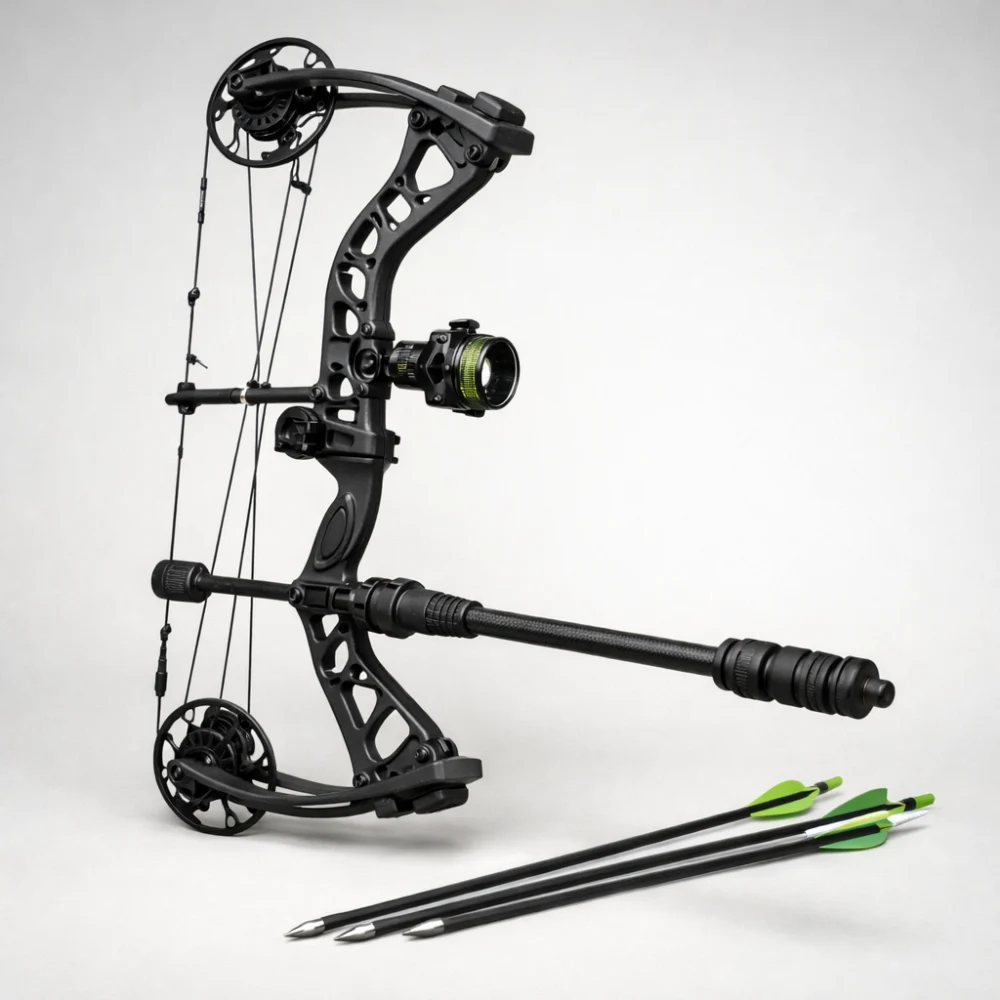
Archery bow stabilisers are chosen to help a bow feel steadier in the hand and easier to control during aiming and follow-through. The right choice depends on your bow type, how you like the bow to balance, and whether you want a simple single rod or a more adjustable setup.
If you are comparing stabilisers for the first time, it helps to separate appearance from function. Small differences in length, mounting style and added weight can change how a bow sits, so the most useful choice is the one that suits your shooting style rather than the one with the most parts.
What should you look for in a bow stabiliser?
Start with the way the stabiliser will fit your bow, then consider how much adjustability you need. For many buyers, the main decision is between a straightforward stabilising rod and a more configurable balance setup. Specifications vary by model, so always check the individual product page before buying.
The best starting point is to match the stabiliser to the kind of shooting you do and how much tuning you are prepared to manage. A simpler design is often easier to live with, while an adjustable system gives more room to fine-tune balance.
| Feature | What it means | Why it matters | What to check |
|---|---|---|---|
| Mounting style | How the stabiliser attaches to the bow | It affects fit, setup and whether the stabiliser suits your bow | Check the mounting arrangement and any stated bow compatibility |
| Length | The overall reach of the stabiliser rod or rods | It influences balance and how the bow feels when held | Look for the stated length and consider whether you want a compact or extended setup |
| Weight and balance | How much mass is added and where it sits | It changes steadiness, front-heaviness and handling | Check whether weights are included, adjustable or sold separately |
| Configuration | Single rod, side rods, V-bar or a weight kit | Different layouts suit different tuning preferences | Confirm whether you want a simple stabiliser or a more adjustable balance system |
| Material and construction | The main materials used in the rod and fittings | It can affect rigidity, feel and how solid the setup seems | Review the material description and any notes about included fittings |
Key decision criteria explained
Fit and compatibility
Compatibility is the first thing to check because stabilisers are not a one-size-fits-all purchase. Some are designed around a basic front-mounted rod, while others are part of a larger balance system with side rods or angle-adjustable brackets. If the product page does not clearly explain the fitting, treat that as a sign to compare carefully rather than assume it will suit your bow.
Balance versus simplicity
A simple stabiliser is usually easier to choose and set up, especially if you want a modest improvement without much tuning. A more elaborate arrangement can offer finer control over balance, but it also adds more parts and more decisions. The practical trade-off is convenience against adjustability.
Length and handling
Longer stabilisers can feel different from shorter ones, even when the bow itself is unchanged. A compact option may be easier to carry and less cumbersome, while a longer setup may better suit archers who want a more pronounced balance effect. The right length is less about a universal rule and more about what feels manageable in your own use.
Weight and adjustability
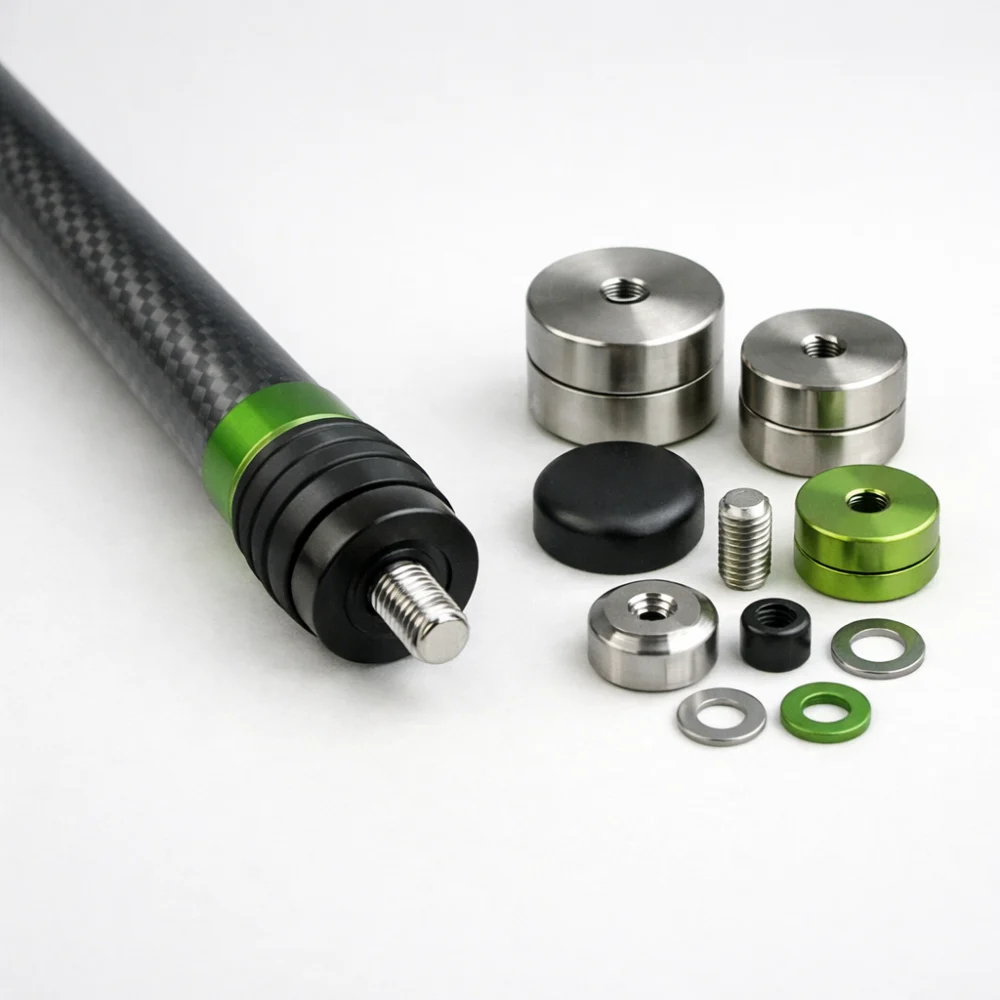
Some products are mainly about the rod itself, while others include weights or allow weight changes. That matters because the same stabiliser can feel very different depending on how much mass is added. If you want room to experiment, look for a design that makes the weight arrangement clear on the product page.
Build and finish
Stabilisers vary in how substantial they feel, and that can matter if you want a setup that stays consistent once fitted. A cleaner, simpler construction is often easier to maintain, while a more complex system may offer more control but also more parts to keep track of.
Common product types and variants
Within this category, the most useful distinction is between straightforward stabiliser rods and more elaborate balance systems.
- Single stabiliser rod: A simpler option for archers who want an uncomplicated way to change the bow’s feel.
- Stabiliser set: A broader package that may combine a main rod with other pieces for more control over balance.
- Weight kit or counterweight setup: Useful when the priority is tuning the bow’s balance rather than adding a fixed rod alone.
- Side rod or V-bar style configuration: More suitable for buyers who want extra adjustability and do not mind a more involved setup.
Not every buyer needs the same level of complexity. If you want a first stabiliser, a simpler product is often easier to live with. If you already know you want to fine-tune balance, a set or kit may be more appropriate.
Which stabiliser suits different buyers?
| Buyer need | Useful product characteristic | Why it helps |
|---|---|---|
| Beginner choosing a first stabiliser | Simple rod with clear mounting information | Easy to understand, fit and use |
| Archer wanting more balance control | Adjustable weight or multi-part setup | Allows finer tuning of how the bow sits |
| Buyer who values compact handling | Shorter, less complex arrangement | Usually easier to carry and manage |
| Experienced archer refining setup | Side rods, V-bar or weight kit | Offers more options for balance changes |
| Gift buyer or casual hobbyist | Clear, straightforward product page details | Reduces the risk of choosing a mismatch |
Common mistakes and misunderstandings
- Choosing by appearance alone: A more complex-looking stabiliser is not automatically more suitable. Focus on fit, balance and practicality.
- Ignoring the mounting setup: If the attachment style does not suit the bow, the rest of the features matter less.
- Assuming all stabilisers do the same job: Some mainly add a rod, while others are part of a balance system. The difference affects how much adjustment you get.
- Overlooking weight information: If weight details are missing, it is harder to predict how the bow will feel once fitted.
Safety and suitability caveats
Only choose a stabiliser that is intended for the type of bow and setup you use. If you are unsure about compatibility, check the product page carefully rather than assuming a universal fit. For any model-specific details, especially around mounting or included accessories, refer to the individual listing before buying.
Maintenance, storage and lifespan considerations
Bow stabilisers are usually straightforward to look after, but the exact needs depend on the design. A simple rod may need little more than sensible storage, while a more adjustable system may have more parts to keep organised. If weights, brackets or fixings are included, it is worth checking how they are secured and whether anything is likely to be removed between uses.
For storage, think about whether the setup is compact enough to carry with your other archery gear. More elaborate arrangements can be less convenient to transport, even if they offer better balance control.
How to compare options efficiently
- Decide whether you want a simple stabiliser or a more adjustable balance setup.
- Check that the mounting style suits your bow.
- Compare length, weight and included parts rather than relying on the product name alone.
- Consider whether you want a compact, easy-to-handle option or a more tunable arrangement.
- Read the individual product page closely for the details that affect fit and feel.
Summary buyer decision checklist
- Does the stabiliser suit your bow type and mounting needs?
- Do you want a simple rod, a set or a more adjustable balance system?
- Are length and added weight clearly stated?
- Does the product page explain what is included?
- Will the setup be easy enough for your level of experience?
- Have you checked the individual listing for any model-specific details?
Frequently asked questions
What does a bow stabiliser actually do?
A stabiliser changes how the bow feels in the hand by altering balance and, in some cases, adding adjustability. It is mainly about handling and control rather than changing the bow itself. The effect depends on the design, weight and configuration.
Are all bow stabilisers the same?
No. Some are simple front rods, while others are part of a larger balance system with additional arms or weights. The differences matter because they affect fit, adjustability and how involved the setup is.
Do I need a stabiliser as a beginner?
Not always, but many beginners find a simple stabiliser easier to understand than a more complex balance setup. If you are just starting out, a straightforward product is often the least complicated place to begin. The key is to choose something that suits your bow and feels manageable.
How do I know if a stabiliser will fit my bow?
Check the product page for the stated mounting arrangement and any compatibility notes. If those details are vague, compare carefully before buying. Do not assume that a stabiliser described for one type of bow will suit every other setup.
Is a longer stabiliser always better?
Not necessarily. Longer options may change the feel of the bow more noticeably, but they can also be less compact and less convenient to handle. The better choice is the one that matches your balance preference and practical use.
Should I choose a stabiliser with weights?
If you want to fine-tune how the bow balances, weights can be useful. If you prefer a simpler setup, a fixed stabiliser may be enough. The right answer depends on how much adjustment you want to manage.

