
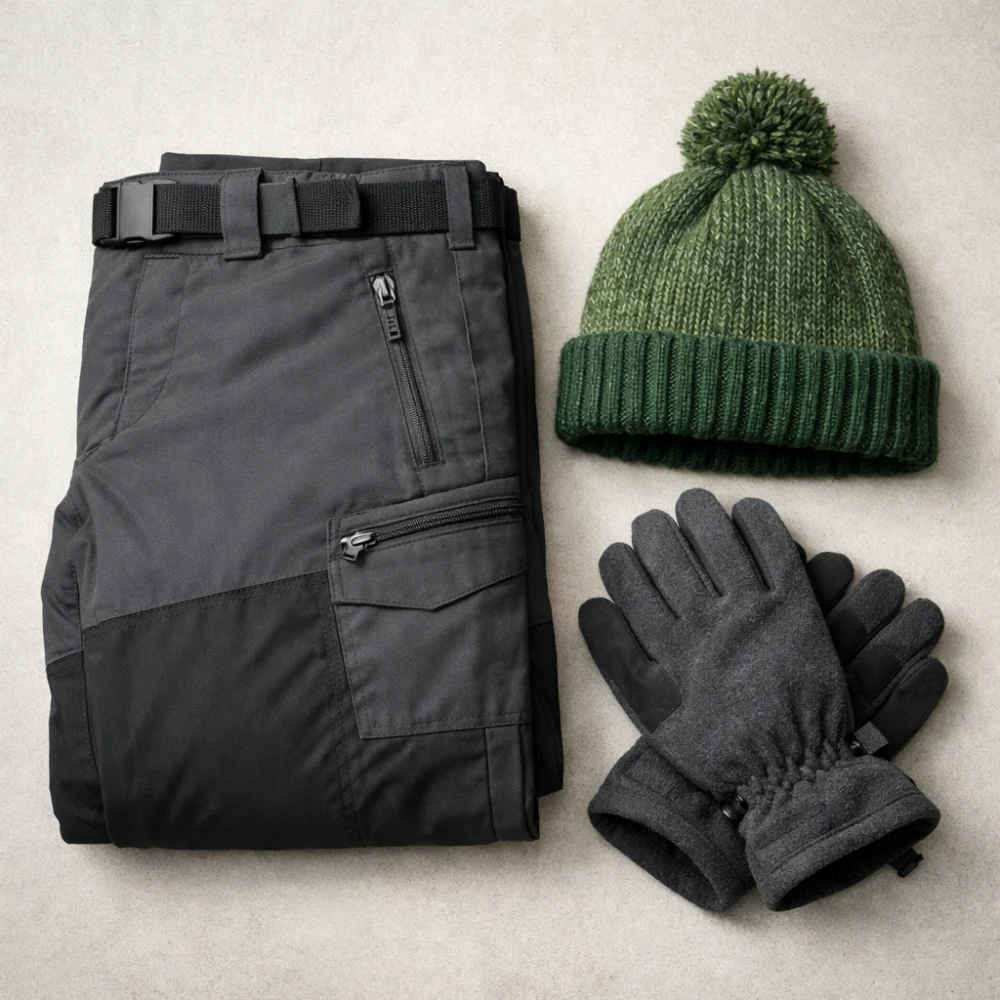
Men’s insulated trousers are designed for colder conditions where ordinary walking trousers may feel too light. They are most useful when warmth matters as much as mobility, such as winter walks, cold-weather travel or time spent outdoors standing around rather than keeping a brisk pace.
The tricky part is that insulation can be added in different ways, and not every insulated trouser suits the same conditions. Some are better for active walking, while others are aimed more at sitting, stop-start use or snow-related activity.
If you are comparing this category for the first time, focus on where and how you will wear them, then work outward from warmth, weather resistance and fit. That approach is usually more reliable than starting with appearance alone.
What should you look for in men’s insulated trousers?
The best starting point is the balance between warmth, comfort and freedom of movement. Heavier insulation can feel reassuring in colder weather, but it may be less comfortable for steep climbs, fast walking or travel where you want a slimmer feel. A lighter insulated trouser can be easier to move in, but may not be enough for long periods of low activity in the cold.
Specifications vary by model, so always check the individual product page before buying.
| Feature | What it means | Why it matters | What to check |
|---|---|---|---|
| Insulation level | How much warmth the trouser is designed to provide | Determines whether the trouser suits active walking or colder, slower-paced use | Look for the stated insulation type, lining description or winter-focused wording |
| Outer fabric | The outer layer that faces wind, damp ground and abrasion | Helps with durability and can influence comfort in windy or damp conditions | Check whether the fabric is described as water-resistant, softshell-like or weatherproof |
| Fit and cut | How close the trouser sits to the body and how much room it leaves | Affects layering, movement and comfort over long wear | Review waist, leg shape, stretch and any notes about regular or relaxed fit |
| Weather protection | How well the trouser handles wind, light rain or snow | Important if you will be outdoors for long periods in mixed winter conditions | Check the product description for water resistance, wind resistance and limitations |
| Mobility features | Details that improve movement, such as stretch or articulated shaping | Useful for walking, bending and uneven terrain | Look for stretch panels, pre-shaped knees or similar design cues |
| Pockets and extras | Added practical details on the trouser | Can improve convenience, but should not distract from warmth and fit | Check pocket layout, fastening type and whether the extras suit your use |
Key decision criteria explained
Warmth versus breathability
Warmth is the main reason to buy insulated trousers, but too much insulation can make them feel warm in motion and not warm enough once you stop if sweat builds up and then cools. If your walk involves sustained effort, you may prefer a lighter insulating layer than someone who spends more time standing, spectating or moving slowly.
Weather resistance versus pure insulation
Insulation helps trap warmth, but it does not automatically mean the trouser will cope well with wet ground, sleet or wind. If your route is likely to be exposed, check whether the outer fabric offers meaningful weather resistance rather than assuming every insulated trouser is also a weatherproof trouser.
Fit and layering
Fit matters because some buyers will wear insulated trousers on their own, while others may need room for a base layer underneath. A close fit can feel tidier and more efficient, but it may limit layering. A roomier fit can improve flexibility, but it may feel bulky if the trouser is used for more active walking.
Movement and comfort
For walking, the trouser should feel comfortable when sitting, striding, climbing and crouching. Stretch, shaped knees and a sensible cut can all improve comfort, but the exact benefit depends on the individual design. If you need a trouser for varied terrain, movement details may matter as much as warmth.
Weight and packability
If you plan to carry the trousers and wear them only when conditions change, bulk becomes important. Some insulated trousers are easy to keep on for a whole outing, while others are better treated as a dedicated cold-weather layer. Think about whether you want something to wear all day or something to pull on when temperatures drop.
Common types and variants
Within this category, buyers usually see a few broad approaches rather than completely different product families. Some trousers are closer to winter walking trousers, where insulation is added for everyday cold-weather use. Others are more weather-focused and may lean towards snow, exposed conditions or mixed outdoor use. A third group may feel more technical or activity-led, with added flexibility for movement.
The useful question is not which type is “better” in general, but which is closest to your main use. If you walk briskly, a lighter and more mobile option may be enough. If you pause often, spend long periods outdoors or feel the cold easily, a warmer construction may be more suitable.
Which features suit different buyers?
| Buyer need | Features that usually help | Main trade-off | What to check first |
|---|---|---|---|
| Cold-weather walking | Moderate insulation, good movement, manageable bulk | Too much warmth can feel restrictive on longer climbs | Fit, stretch and how the product is described for active use |
| Standing around outdoors | Higher warmth, better wind resistance, comfortable waist and seat | Less breathability if you start moving more | Insulation description and outer fabric notes |
| Mixed winter conditions | Insulation plus some weather resistance | May not replace dedicated waterproof trousers | Water resistance wording and intended use |
| Layering over base layers | Roomier fit, flexible fabric, adjustable waist if available | Loose fit may feel bulkier without layers | Waist design and fit description |
| Travel or everyday wear | Neater cut, comfort-focused design, moderate warmth | May be less specialised for very cold conditions | Overall silhouette and comfort features |
Common mistakes and misunderstandings
- Assuming all insulated trousers are the same. Warmth, fit and weather resistance can vary a lot, so it is worth checking the product description carefully.
- Choosing only by warmth. A very warm trouser may be less comfortable if you walk quickly or cover steep ground.
- Ignoring the weather. Insulation helps with cold, but it does not automatically solve wind, wet grass or snow underfoot.
- Overlooking fit over layers. If you plan to wear thermal base layers, a tight cut can become uncomfortable.
- Expecting one trouser to suit every winter task. Some are better for active walking, while others are more suited to periods of low movement.
Safety and suitability caveats
Check that the trouser suits the conditions you actually expect, especially if you will be out in wind, damp ground or changing temperatures. If you need reliable protection from heavy rain, you may still need a different outer layer rather than relying on insulation alone. The most useful buying decision is to match the garment to the activity, not to assume a winter label guarantees suitability for every outing.
Maintenance, storage and lifespan considerations
Insulated trousers can be more sensitive to care than plain walking trousers because the warmth comes from the construction as well as the fabric. Before buying, it is sensible to consider how often you will need to clean them, whether they need gentler washing and whether you have room to store bulkier winter clothing. If you plan to use them seasonally, think about how easily they will dry and whether they can be packed away without losing their shape.
How to compare options efficiently
- Decide how cold and how active your use will be.
- Choose the level of insulation that fits that use.
- Check fit, layering room and movement comfort.
- Look at weather resistance and decide whether it is enough.
- Compare the practical details that matter to you, such as pockets, waist adjustability or bulk.
- Read the individual product page for the exact construction and limitations.
Summary buyer decision checklist
- Will I wear these for active walking, standing around or both?
- Is the level of warmth suitable for my usual winter conditions?
- Do I need room for base layers underneath?
- Is the outer fabric enough for the weather I expect?
- Does the cut allow comfortable movement?
- Are the practical details useful rather than just added extras?
- Have I checked the individual product page for the exact specification?
Frequently asked questions
Are insulated trousers the same as waterproof trousers?
No. Insulated trousers are mainly about warmth, while waterproof trousers are mainly about keeping out rain. Some insulated trousers offer some weather resistance, but that is not the same as full waterproof protection.
Can I wear insulated trousers for hiking?
Yes, if the level of insulation and the fit suit active use. For energetic hiking, a lighter and more mobile option is often easier to wear than a very heavily insulated one.
Do I need insulated trousers for winter walking?
Not always. If you stay warm in ordinary walking trousers with base layers, you may not need them. They are most useful when you know that extra warmth would make a noticeable difference.
Should I size up for insulated trousers?
Sometimes, but not always. If you plan to wear layers underneath, a bit of extra room can help, yet too much room may reduce comfort and create unnecessary bulk. Check the fit notes on the product page rather than assuming one size change is right for every design.
What is the main trade-off with insulated trousers?
The main trade-off is warmth against flexibility and breathability. More insulation usually means more cold-weather comfort, but it can also make the trousers feel less light or less suited to fast movement.
Are insulated trousers suitable for everyday wear?
They can be, especially in cold weather, but comfort and appearance will depend on the cut and amount of insulation. Some are aimed more at outdoor activity, while others are easier to wear casually.

