
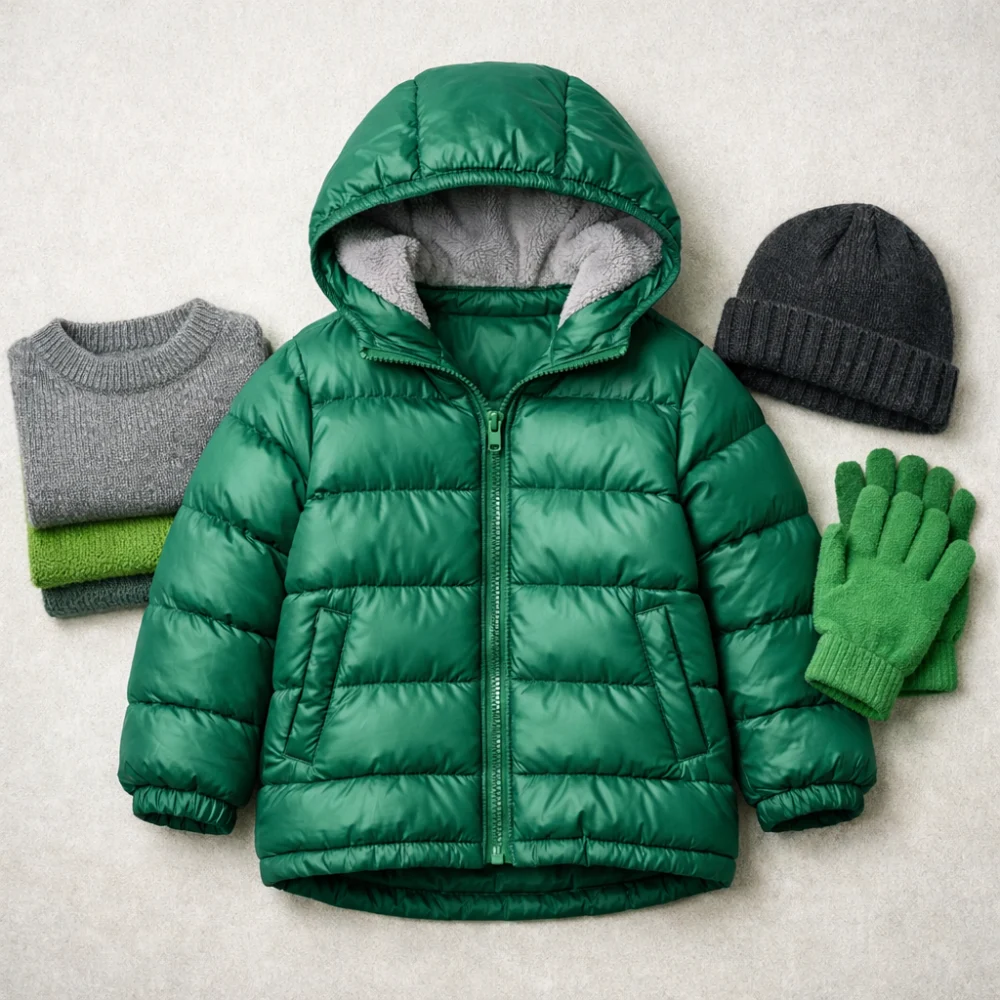
Kid’s down jackets are a practical choice for colder days when warmth and easy layering matter. They are often chosen for everyday wear, school runs, trips outdoors and family holidays, but the right pick depends on how much insulation, weather protection and freedom of movement you want.
Because styles vary, it helps to look past the overall look and focus on what the jacket is designed to do. Some are better for dry cold, while others are made to cope with damp weather or more active use. Specifications vary by model, so always check the individual product page before buying.
What should you look for in a kid’s down jacket?
The starting point is warmth versus weather protection. A down jacket can feel very cosy for its weight, but not every style is equally suited to wet conditions, active play or long outdoor sessions. The best choice is usually the one that fits the child’s routine, local weather and layering needs rather than simply the thickest-looking option.
Think about fit, hood design, closures, ease of movement and how the jacket will be cared for. A good buy is one that feels warm without being bulky, leaves room for a mid-layer if needed and suits the way your child actually wears outerwear.
| Feature | What it means | Why it matters | What to check |
|---|---|---|---|
| Warmth level | How much insulation the jacket provides | Helps match the jacket to cold mornings, winter walks or general everyday use | Look at the product description for the intended cold-weather use and any notes on insulation type |
| Weather resistance | How well the jacket copes with damp, drizzle or snow | Important if the jacket will be worn outside for longer periods | Check whether the outer fabric is described as water resistant, shower resistant or similar |
| Fit and layering room | How the jacket sits on the body with room for a jumper underneath | Affects comfort, movement and how long the jacket stays usable | Compare size guidance, sleeve length and whether the cut looks slim or roomy |
| Hood and cuffs | Features that help retain heat and keep the jacket secure | Useful in colder or windier conditions | See whether the hood is fixed or detachable and whether cuffs are elasticated or adjustable |
| Weight and bulk | How heavy and puffy the jacket feels to wear | Can affect comfort for active children and easy packing for travel | Look for lighter styles if the jacket will be worn frequently or carried often |
| Care requirements | How the jacket should be cleaned and dried | Helps you judge everyday practicality and long-term upkeep | Check the washing instructions and whether special drying care is needed |
Which details matter most?
Warmth and insulation
The main reason to buy a down jacket is insulation. Some styles are designed to give a lot of warmth without feeling overly heavy, which can be useful for colder weather and everyday wear. The trade-off is that a warmer jacket may be less compact or less suited to milder days.
Outer fabric and weather exposure
Down works well for cold conditions, but the outer fabric matters if the jacket may face wet weather. If your child will wear it in light rain, damp playground conditions or snow, look for clear information about the shell fabric and any water-resistant treatment. A warmer jacket is not automatically a better choice if the outer layer is not suited to the conditions.
Fit, comfort and movement
Children need enough room to move, reach and play comfortably. A jacket that is too tight can feel restrictive, while one that is too loose may let in draughts and sit awkwardly under school bags or harnesses. Check the garment shape and size guidance carefully, especially if you are buying for growth room.
Practical features
Small details can make a big difference in daily use. A hood can improve comfort in cold weather, secure cuffs help keep sleeves in place and a full zip can make dressing easier. These are not just convenience features; they affect how often the jacket gets worn.
Types and variants you may see
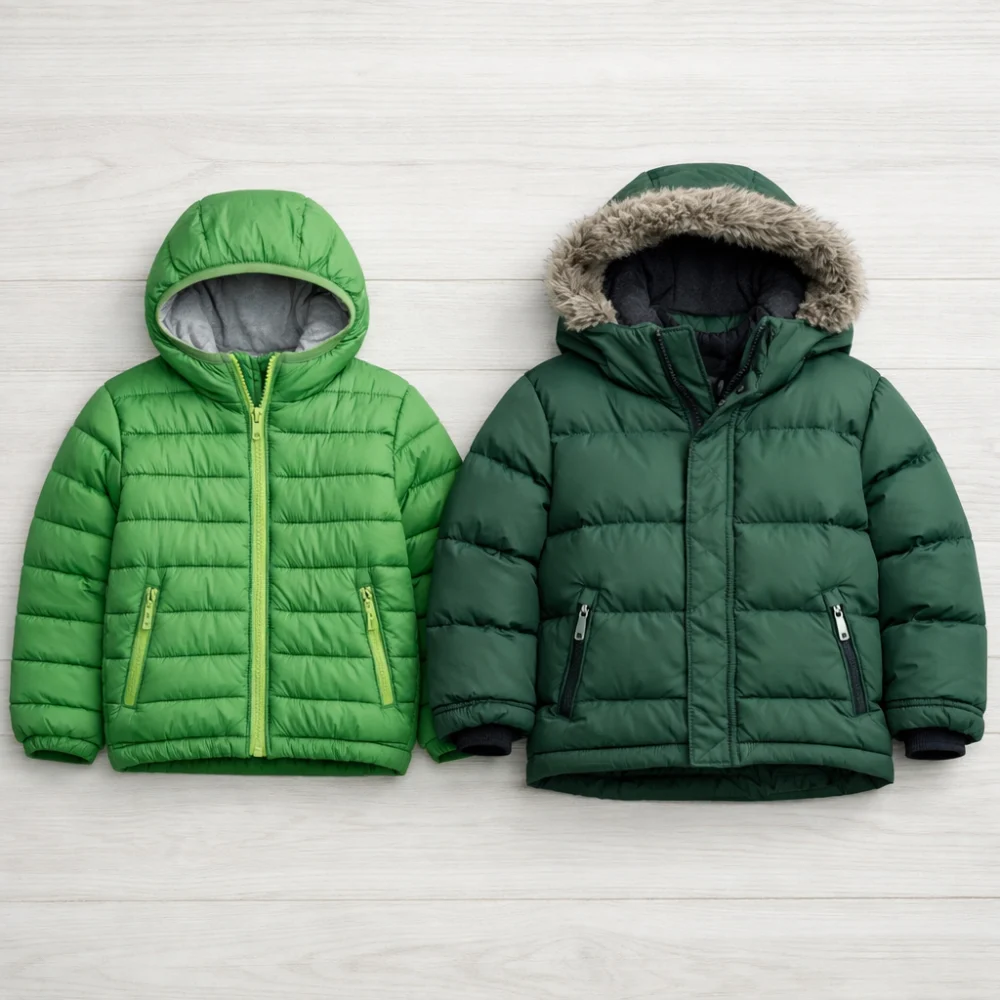
Within this category, the main differences are usually in warmth level, cut and weather protection rather than in radically different product types. Some jackets are closer to lightweight everyday layers, while others are bulkier and more winter-focused. You may also see styles with hoods, quilted construction or more streamlined designs.
For a child who runs warm or only needs an extra layer, a lighter down jacket may be enough. For colder commutes or outdoor time in winter, a fuller insulated style may suit better. The limitation is that a very warm jacket can feel too much for changeable weather, so it helps to think about how often it will actually be worn.
Choosing by buyer need
| Buyer need | Good signs to look for | Possible trade-off |
|---|---|---|
| Everyday school and nursery use | Easy zip, comfortable fit, reliable warmth, simple hood or collar | May not be the most weatherproof choice for heavy rain |
| Cold-weather family outings | More insulation, secure cuffs, hood, good coverage | Can be warmer and less flexible on milder days |
| Active children | Lighter feel, easier movement, not overly bulky | May offer less coverage in very cold conditions |
| Travel or packing convenience | Reasonably compact design and manageable weight | Very packable styles may not feel as substantial |
| Buying a size to last | Clear size guidance and a cut that allows layering | Too much room can reduce comfort and warmth now |
Common mistakes to avoid
- Choosing warmth alone. A jacket that feels very cosy is not always the best fit for wet or active use.
- Ignoring fit. A size that is too large can be awkward and less effective at keeping warmth in.
- Overlooking care instructions. Some jackets need more careful cleaning or drying than a simple fleece layer.
- Assuming all down jackets handle damp weather equally well. Check the product page rather than relying on the jacket style name alone.
Safety and suitability notes
As with any children’s outerwear, the best choice depends on the child’s age, activity level and the weather they are likely to face. Make sure the jacket does not restrict movement and that the features you rely on, such as a hood or zip, suit the intended use. For children who will wear the jacket in changeable weather, it is sensible to read the product details carefully and avoid assuming a down jacket will be fully weatherproof.
Care, storage and everyday use
Down jackets are usually bought for season-after-season warmth, so care matters. Follow the washing and drying guidance on the product page, as some styles need more careful handling than everyday jackets. When not in use, store the jacket clean and dry so it keeps its shape and is ready for the next cold spell.
If the jacket will be worn often, think about how quickly it can be put on, whether it fits over school uniform or jumpers and how easy it is to keep in good condition. That practical fit often matters more than any single feature.
How to compare options efficiently
- Decide when the jacket will be worn most often: everyday school use, colder outings or occasional winter trips.
- Compare warmth and weather resistance rather than looking only at the style name.
- Check the fit guidance and whether there is enough room for a layer underneath.
- Look at the practical details: hood, cuffs, zip and ease of dressing.
- Read the care instructions so the jacket suits your routine.
- Choose the option that matches the child’s normal use, not just the coldest day you can imagine.
Quick buyer checklist
- Is the jacket warm enough for the intended weather?
- Does the outer fabric suit the likely conditions?
- Will the fit allow comfortable movement and layering?
- Are the hood, cuffs and zip practical for daily use?
- Are the care instructions realistic for your household?
- Does the style suit how often and where it will be worn?
Frequently asked questions
Are kid’s down jackets good for everyday wear?
They can be, especially in colder months when warmth matters more than a lighter layer. The key is to choose a style that is comfortable enough for daily use and not so bulky that it gets left in the cupboard. If the jacket will be worn often, easy fastening and a sensible fit are especially useful.
Are down jackets waterproof?
Not automatically. Some have water-resistant outer fabrics, but that does not mean they are fully waterproof. If you expect regular rain, check the product details carefully and consider how much weather protection you really need.
Should I size up for growth?
Sometimes a little extra room is helpful, especially if the jacket will be worn over jumpers. Too much extra space can make the jacket less comfortable and less effective at holding warmth in, so it is worth balancing future growth against current fit.
What is the difference between a down jacket and an insulated jacket?
Both are designed to provide warmth, but the construction and feel can differ. A down jacket is often chosen for warmth with a lighter feel, while other insulated jackets may use different fill types or constructions. The most useful check is the individual product page, not the label alone.
How do I know if a jacket will be too warm?
Think about when your child will actually wear it. A very warm jacket can be a poor fit for mild weather, indoor-outdoor days or highly active use. If the jacket is for changeable conditions, a lighter or more versatile style may be easier to use often.
What features make dressing easier?
A smooth full zip, simple fastening and a comfortable opening around the neck can all help. Features that are easy for children to manage themselves are often more practical than decorative details. Look for simplicity if the jacket will be used every day.
How important is the hood?
A hood can be useful in cold or breezy weather, especially if your child spends time outdoors. Whether it should be fixed or detachable depends on preference and intended use. If you want a jacket for frequent wear, the hood should feel comfortable and not get in the way.
Do I need to worry about care instructions before buying?
Yes, because care affects how easy the jacket is to live with. Some jackets are straightforward to look after, while others need more careful washing and drying. Checking this before you buy helps avoid an awkward surprise later.

