
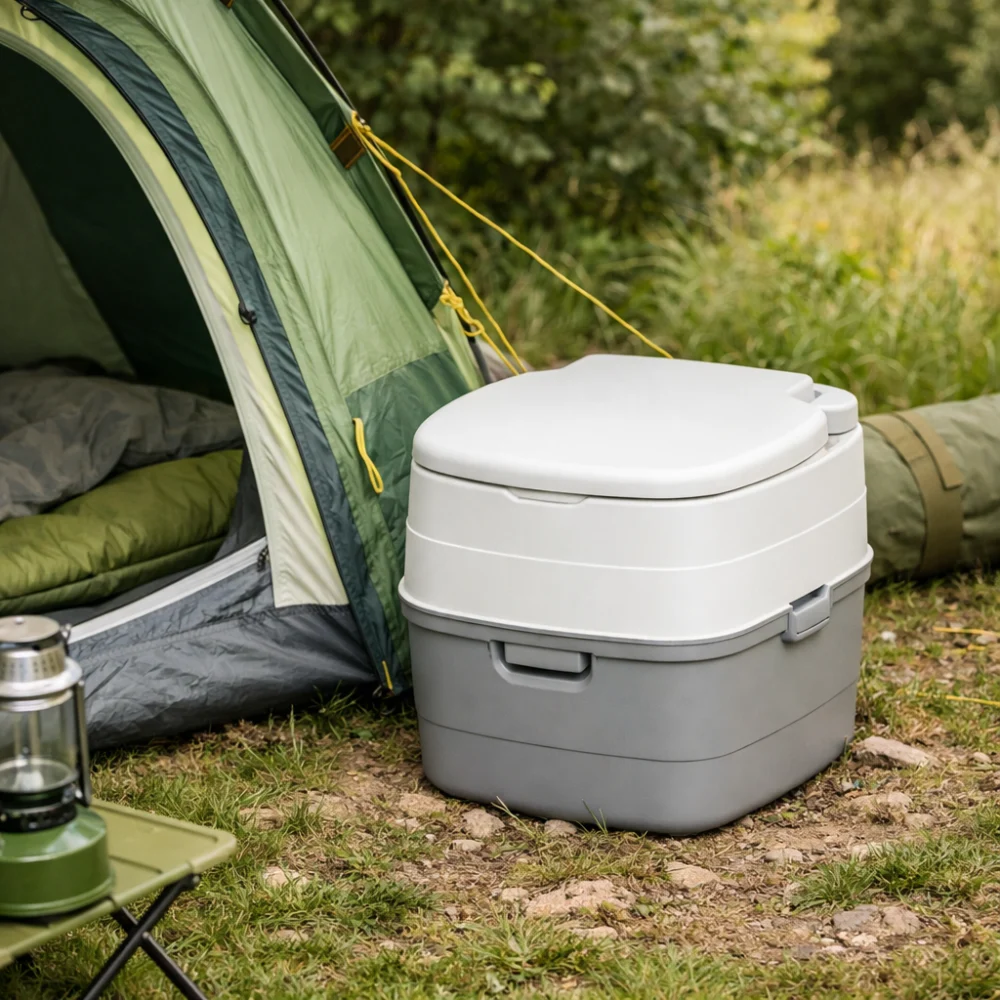
Camping toilets can make overnight trips, festivals, road trips and off-grid stays more comfortable, especially when facilities are limited or shared. The right choice depends on where you will use it, how often it will be emptied or cleaned, and how much space you have to store it.
Some buyers want a very simple backup toilet for occasional use, while others need something more practical for repeated trips, family camping or longer stays. This guide focuses on the buying decisions that matter most, so you can compare options without getting lost in minor differences.
What should I look for in a camping toilet?
The best starting point is to decide how the toilet will be used: occasional emergency backup, regular campsite use, or a more self-contained setup for longer stays. From there, the main trade-off is usually between simplicity and convenience, because easier-to-carry options may need more frequent emptying or more basic waste handling. Specifications vary by model, so always check the individual product page before buying.
| Feature | What it means | Why it matters | What to check |
|---|---|---|---|
| Type | The general style of toilet, such as folding, portable or more self-contained | It affects comfort, setup and how much maintenance is involved | Choose a type that fits your trip length, storage space and use pattern |
| Portability | How easy it is to carry, pack and move | Important if you travel light or have limited vehicle space | Check packed size, weight and whether it folds or separates for transport |
| Waste handling | How waste is collected, contained or disposed of | This has a big effect on convenience and cleaning | Look for tank arrangement, bag use, removable parts or other disposal method |
| Comfort | Seat shape, sitting height and overall stability | More comfortable models are easier to use for longer stays | Check the seating style and whether the design suits the intended user |
| Cleaning and maintenance | How easy it is to empty, rinse and keep hygienic | Simple upkeep usually makes a toilet more pleasant to own | Look for smooth surfaces, removable components and clear cleaning guidance |
| Capacity | How much waste or liquid the unit can hold before emptying | Higher capacity can reduce emptying frequency | Compare the stated capacity with your expected use and group size |
| Privacy and placement | How and where the toilet will be used | Some setups suit tents, awnings, caravans or sheltered outdoor areas better than others | Check whether you also need a privacy tent or a stable, level place to use it |
Key factors that affect the choice
Type and intended use
Camping toilets are not all the same. A basic portable toilet may be enough for short breaks or as an emergency option, while a more self-contained design may suit longer trips or repeated family use. Think about whether you need something compact and simple, or something that feels closer to home in day-to-day use.
Ease of transport
If the toilet will travel in a car boot, caravan or van, size and packing convenience matter. Folding designs and lighter units are easier to store, but they may offer less comfort or require more careful handling. A bulkier toilet can be more stable and convenient once set up, but may be less flexible for travel.
Emptying and cleaning
Many buyers underestimate how important maintenance is. A toilet that is awkward to empty or clean can quickly become a nuisance, even if it seems fine at first glance. Look for a design that matches how often you are happy to deal with disposal, rinsing or replacement parts.
Comfort for the user
Comfort is especially important if the toilet will be used by children, older adults or anyone who may need it more often. Seat height, lid style and overall stability can make a practical difference. If more than one person will use it, choose a format that feels broad enough for shared use rather than only occasional emergencies.
Where it will be placed
A camping toilet often works best as part of a wider campsite setup. You may need a level base, a sheltered position or extra privacy depending on how and where you camp. If you use a tent, awning or screened area, check that the toilet’s shape and size suit that space comfortably.
Common camping toilet types
Most buyers will come across a few broad types, each with its own trade-offs.
- Folding or collapsible toilets: useful when compact storage is a priority, but they may be less substantial than larger units.
- Portable bucket-style toilets: simple and straightforward, often chosen for occasional use or as a backup.
- Two-part portable toilets: usually aimed at easier waste separation and more convenient emptying, though they can take up more space.
- More advanced composting or dry toilet styles: can suit longer stays or more fixed setups, but they need the right space and a willingness to manage them properly.
The right type depends less on the name and more on how it fits your routine. A simpler design may be enough for weekends away, while a more involved setup may make sense if you camp regularly and want fewer compromises.
Which camping toilet suits different buyers?
| Buyer need | What to prioritise | Why it matters |
|---|---|---|
| Short weekend trips | Compact size, quick setup and easy storage | You may value convenience more than larger capacity |
| Family camping | Stability, comfort and easier cleaning | More users usually means more wear and more frequent emptying |
| Festival or emergency backup | Simplicity and portability | You may only need occasional use and minimal setup |
| Longer off-grid stays | Capacity, waste handling and maintainability | Regular use makes emptying and cleaning much more important |
| Caravans, vans and motorhomes | Fit, storage and ease of transport | Space is often limited, so dimensions and packing style matter |
Common mistakes to avoid
- Choosing only by size: a very small toilet may store easily but feel awkward in regular use.
- Ignoring disposal needs: if emptying is inconvenient, the toilet may not suit your trip pattern.
- Overlooking stability: a lightweight unit can be easy to move, but it still needs to feel secure in use.
- Forgetting the storage location: some toilets fit better in a car or van than in a small tent or crowded awning.
- Assuming all models suit the same users: comfort and accessibility can vary more than buyers expect.
Safety and suitability caveats
Choose a camping toilet for the environment where it will actually be used. A model that suits a sheltered campsite may not be ideal for very limited space, rough ground or frequent movement between locations. Think about who will use it, how often it will be emptied and whether you need additional privacy or waste-management accessories.
Maintenance, storage and lifespan considerations
General care affects how well a camping toilet works over time. Cleaning, rinsing and dry storage are usually easier when the design has smooth surfaces and removable parts. If a model uses bags, tanks or other consumables, factor in the ongoing effort of keeping those items available and suitable for your trip style. Specifications vary by model, so always check the individual product page before buying.
How to compare options efficiently
- Start with the trip type: occasional backup, short breaks, family camping or longer stays.
- Decide which toilet style fits your storage space and comfort expectations.
- Compare the practical features that matter most, such as portability, capacity and cleaning ease.
- Think about who will use it and whether stability or accessibility matters more than compactness.
- Check the individual product page for the exact details before you choose.
Summary buyer decision checklist
- Does the toilet suit your trip length and frequency of use?
- Will it fit the space you have for storage and transport?
- Is the emptying or cleaning method manageable for you?
- Will the user find it comfortable and stable enough?
- Do you need a simple portable option or a more self-contained design?
- Have you checked the individual product page for the exact specification?
Frequently asked questions
Do I need a camping toilet for weekend trips?
Not always, but it can be useful if campsite facilities are far away, shared or inconvenient at night. A compact portable toilet may be enough for short trips if you mainly want comfort and convenience. If you only need it occasionally, simplicity is usually more important than a large capacity.
What is the easiest type of camping toilet to clean?
Simpler designs are often easier to keep tidy because there are fewer parts to manage. Look for a unit that is easy to access, empty and rinse, rather than focusing only on appearance or compact size. The best option is the one you are most likely to maintain properly.
Should I choose a folding toilet or a rigid one?
Folding toilets are easier to store and carry, which helps if space is tight. Rigid units often feel more stable and may be more comfortable for regular use. The choice is mainly a balance between portability and everyday practicality.
Are camping toilets suitable for families?
They can be, provided the size, stability and cleaning routine suit the number of users. Families often benefit from a model that is easy to empty and comfortable for repeated use. If more than one person will use it, durability and convenience matter more than minimal pack size.
Can I use a camping toilet indoors?
Some buyers use them in indoor or enclosed spaces, but you should only do so if the product and setup are suitable for that environment. Ventilation, cleanliness and placement all matter. Check the product information carefully and make sure the toilet is appropriate for where you plan to place it.
What should I check before buying a portable toilet?
Look at the type, capacity, size, cleaning method and how it is emptied or maintained. It also helps to think about who will use it and how often it will need attention. If in doubt, compare the product page details against your real camping routine rather than buying on size alone.

