
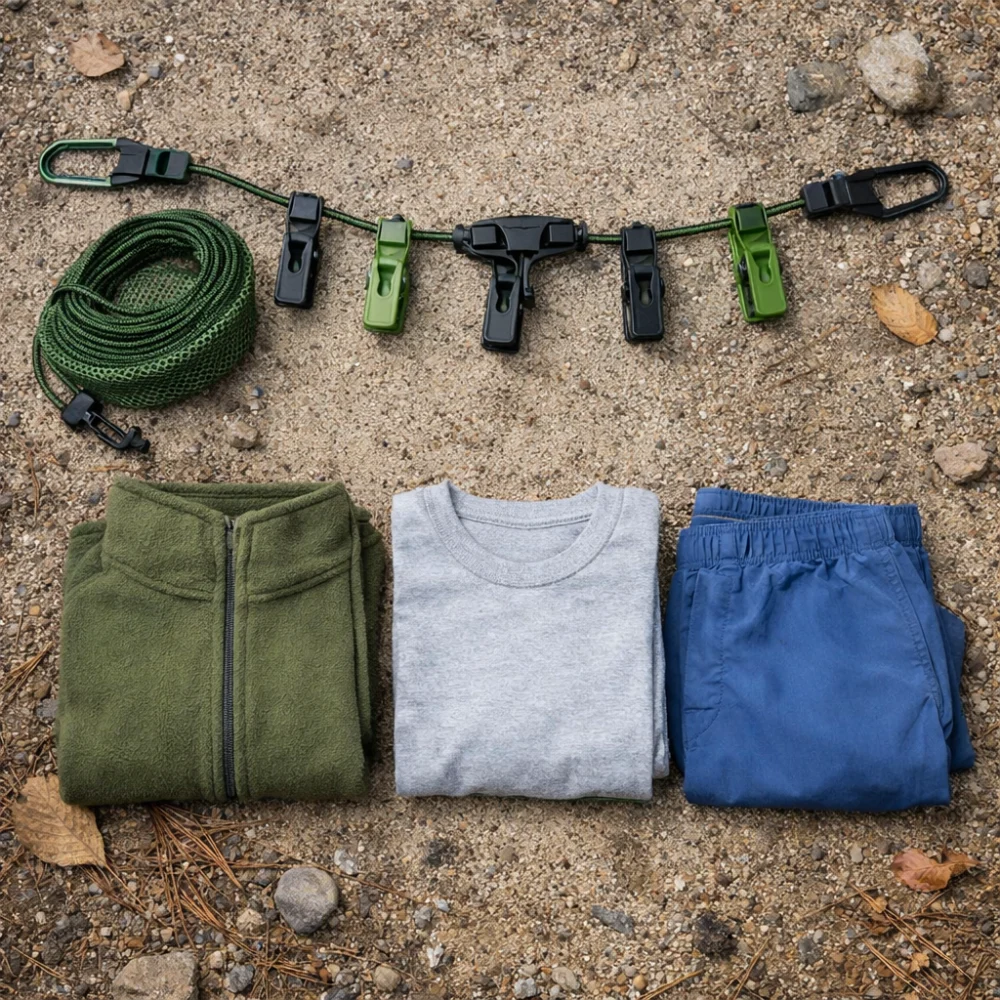
Camping clothes lines are a simple but useful bit of kit when you want to dry towels, swimwear or lightweight clothing away from the ground. They can also help keep damp items organised inside a tent, awning or wash area.
The main choice is usually between portability, ease of setup and how securely the line will stay in place. Some designs suit short weekend breaks, while others are more convenient for longer trips where you may be drying items more often.
If you are buying for family camping, touring, festivals or an occasional overnight stay, it helps to think about where the line will be used and how much space you have. That makes it easier to choose a style that feels practical rather than awkward to rig each time.
What should you look for in a camping clothes line?
Start with how and where you plan to use it. A camping clothes line should be easy to carry, simple to attach and suited to the space you actually have available. The best starting point is usually a balance between length, tension and the kind of fixing method that works with your campsite setup.
Specifications vary by model, so always check the individual product page before buying.
| Feature | What it means | Why it matters | What to check |
|---|---|---|---|
| Length | How much line you have for hanging items | Affects how many garments or towels you can dry at once | Whether the line length suits your usual load and available hanging space |
| Attachment method | How the line is fixed in place | Determines where it can be used and how securely it stays put | Hooks, loops, suction options or other fixings that match your setup |
| Adjustability | Whether the line can be tightened or repositioned easily | Helps stop items sagging and makes the line more adaptable | How the tension is set and whether it is easy to adjust when in use |
| Packability | How compact the line is when stored away | Useful if space in your camping kit is limited | Folded size, weight and whether it stores neatly with your other accessories |
| Drying support | Extras such as pegs or hanging points | Can make it easier to keep items spaced out and secure in breezy conditions | Whether accessories are included or need to be bought separately |
Key decision criteria
Where will you use it?
The right camping clothes line depends a lot on the setup. Some buyers need something for a tent or awning, while others want a line they can use outdoors between fixed points. A line that works well in one place may be awkward in another, especially if attachment options are limited.
How much drying space do you need?
Think about the items you usually wash on a trip. A small line may be fine for socks, underwear and a few light garments, but towels and bulkier clothing need more room. Longer lines can be more versatile, but they may also need more space to rig properly.
How easy is it to tension and secure?
A line that is simple to tighten tends to be more usable in real camping conditions. If the line sags too much, items can touch each other or the ground. If it is difficult to fasten, you may end up not using it as often as you planned.
What does the set include?
Some camping clothes lines are sold as a complete kit, while others are just the line itself. It is worth checking whether pegs, hooks or other fittings are included, because those extras can affect convenience and value. Consider whether you want a minimal solution or a more complete drying setup.
Types and variants
There is not a huge amount of variation in this category, but the practical differences still matter.
- Basic travel lines are usually the simplest option for light use and compact packing.
- Adjustable or tensioned lines suit buyers who want a more secure setup and the ability to change how tight the line feels.
- Accessory-led sets may include fittings or hanging aids that make setup easier for family or longer-stay camping.
Each type can be useful, but the trade-off is usually between simplicity and convenience. A more complete set may save effort, while a basic line can be easier to pack and store.
Which type suits which buyer?
| Buyer need | What to prioritise | Why it helps |
|---|---|---|
| Short camping trips | Compact size and quick setup | Easy to pack, carry and use without adding clutter |
| Family camping | More hanging space and secure fixing | Helps dry several items at once and cope with more regular use |
| Lightweight touring | Low bulk and simple attachment | Fits better with a smaller kit and frequent moves |
| Awning or basecamp use | Better tension and versatility | More useful when you want a semi-permanent drying point |
Common mistakes to avoid
Choosing on line length alone. A longer line is not always more practical if it is hard to secure or takes up too much room. Look at the full setup, not just the headline measurement.
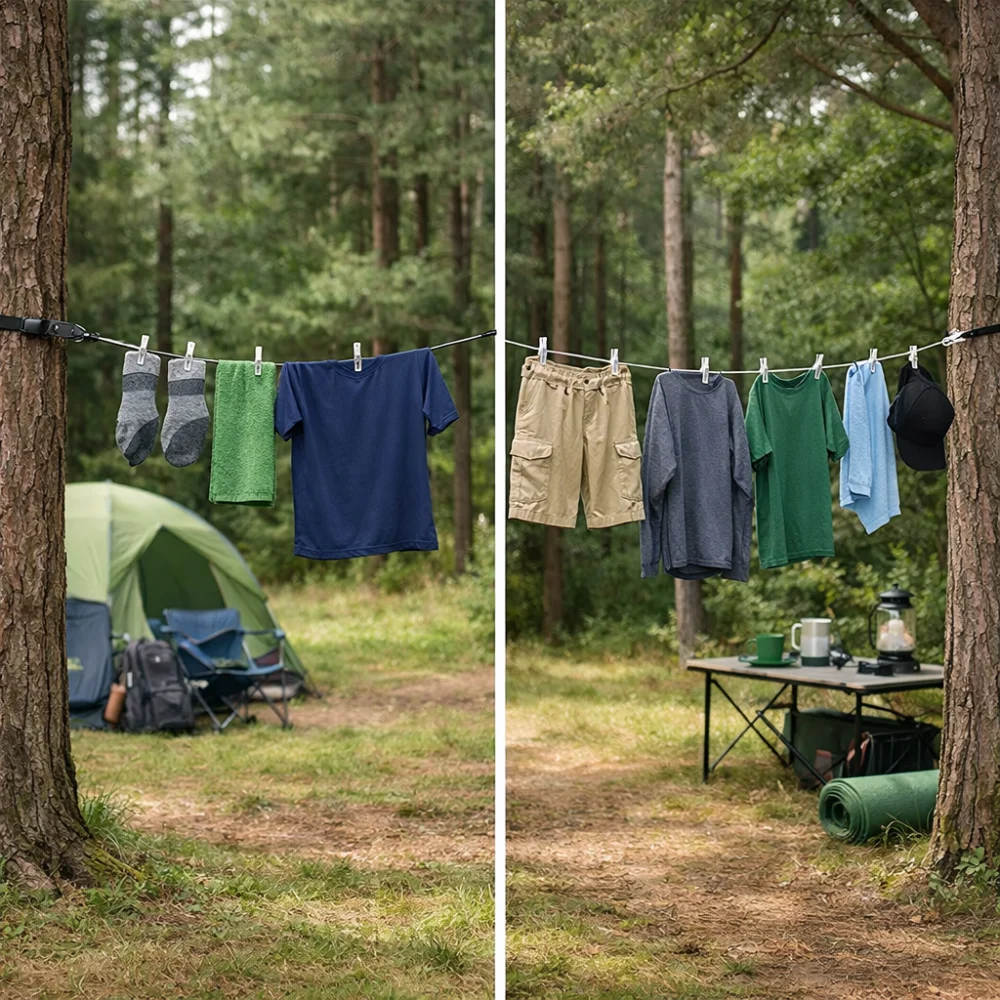
Ignoring where it will attach. Some lines are easier to use in specific camping spaces than others. Check that the fixing method suits the places you normally camp.
Forgetting about wet weight. A line that is fine for light clothing may be less convenient for heavier, wetter items. Think about what you actually dry most often.
Overlooking storage. A small, tidy line is usually easier to keep with your camping kit than something bulky or fiddly.
Safety and suitability caveats
Choose a camping clothes line that suits the environment where it will be used. If you are relying on a specific fixing method, check that the product page describes it clearly and that your intended setup is appropriate. Avoid assuming that every line will work equally well in windy conditions, on smooth surfaces or with heavy items.
If you plan to use the line in shared camping areas, keep placement sensible so it does not create a trip hazard or block access.
Maintenance, storage and lifespan considerations
Camping clothes lines are usually simple to look after, but care still matters. Let the line dry before storing it if it has been used in wet weather, and keep it free from dirt or grit that could shorten its useful life. If the set includes hooks, pegs or tensioning parts, store everything together so small pieces are not lost between trips.
Over time, the most important wear points are often the fixings and any tensioned sections. If those parts are important to how you will use the line, it is worth paying attention to their finish and general robustness when comparing options.
How to compare options efficiently
- Decide where the line will be used most often.
- Estimate how much drying space you realistically need.
- Compare the attachment method and how easy it is to tension.
- Check what is included in the pack and what you would need separately.
- Review the individual product page for any model-specific details.
Summary buyer decision checklist
- Does the line suit your campsite, tent or awning setup?
- Is the length enough for the items you usually dry?
- Is the fixing method practical for the places you camp?
- Will it pack away neatly with the rest of your kit?
- Are any useful extras included?
- Does the product page give enough detail for your intended use?
Frequently asked questions
How long should a camping clothes line be?
That depends on what you plan to dry and how much room you have. Shorter lines can be enough for a couple of lightweight items, while longer ones are more flexible for family use or towels. The best choice is the one that fits both your space and your typical load.
Are camping clothes lines suitable for tents?
Some are, but not all. It depends on the fixing method and whether your tent or awning layout gives you suitable anchor points. Check the product page carefully rather than assuming a line will work in every shelter.
Do camping clothes lines usually include pegs or hooks?
Sometimes they do, sometimes they do not. Included accessories can make a product easier to use straight away, but they are not universal. It is worth checking the listing so you know what you are getting.
What is the main advantage of a camping clothes line over a normal washing line?
A camping clothes line is usually chosen for portability and simpler storage. It is designed to be easier to carry in a camping kit and more convenient to set up in limited spaces.
Can I use one for heavier items like towels?
You may be able to, but it depends on the line and how it is secured. Heavier, wetter items put more strain on the setup, so a secure fixing method and enough tension become more important.
How should I store a camping clothes line between trips?
Keep it dry, clean and together with any small accessories it needs. That makes it easier to find next time and helps reduce wear from damp or tangled storage.

