
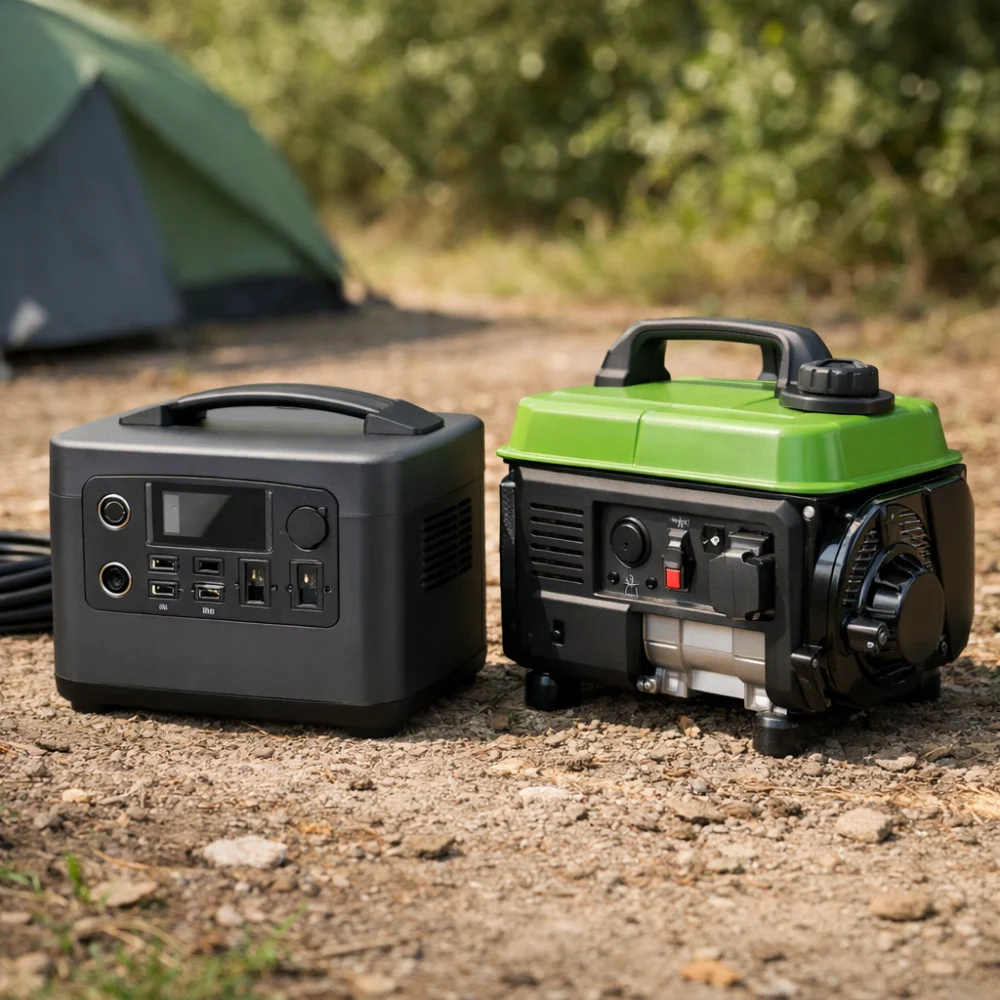
Generators and portable power stations are both used to bring electricity to places where mains power is not available, but they suit different jobs. The right choice depends on what you need to power, how often you will move it, and how important quiet running, fuel use, charging options and overall convenience are to you.
If you are comparing options for camping, touring, backup use or outdoor events, it helps to focus on the practical trade-offs rather than the headline wording. Some buyers need simple, portable charging for phones, lights and small devices, while others need a higher-output source for more demanding equipment.
Specifications vary by model, so always check the individual product page before buying.
What should you choose: a generator or a power station?
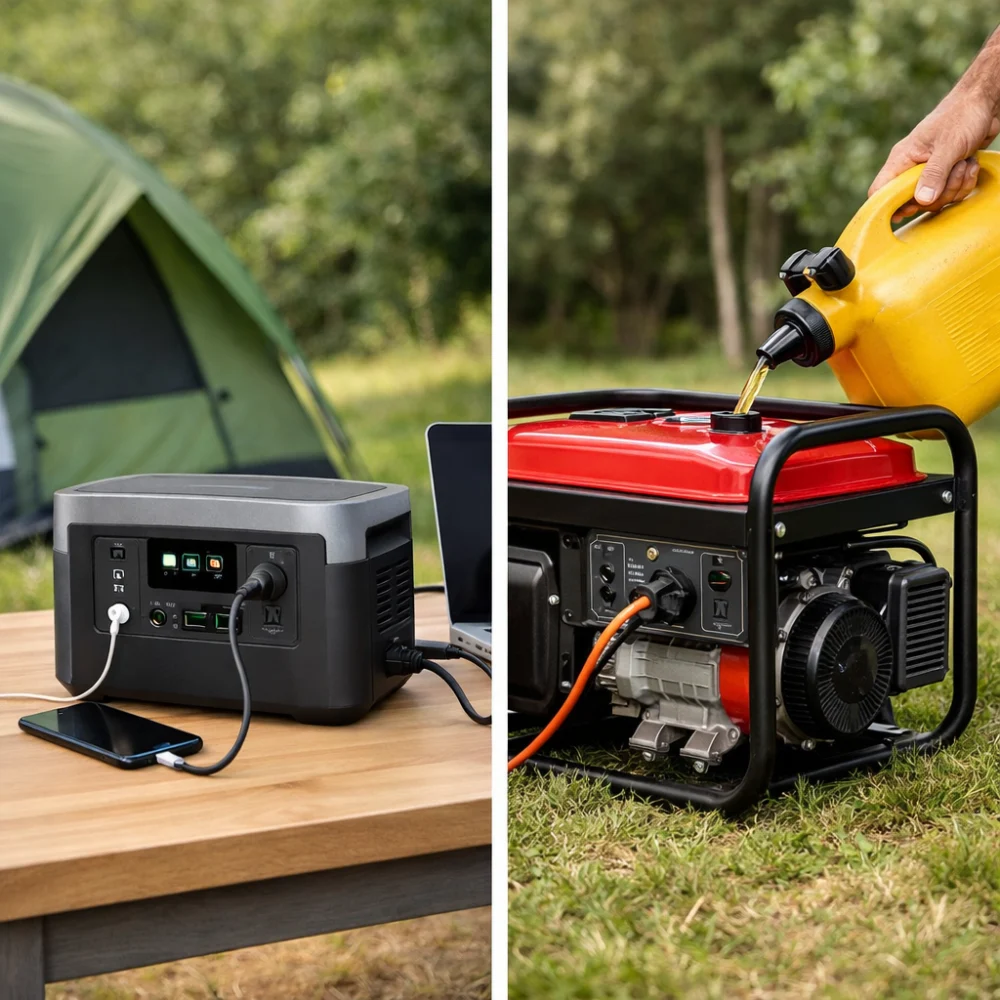
A good starting point is to decide whether you need fuel-powered output for longer running and heavier loads, or battery-based portability for quieter, simpler use. Generators are generally chosen for active power production, while power stations are usually chosen for stored electricity that you recharge from mains, solar or another source. The main trade-off is between runtime and recharge convenience on one side, and noise, emissions and ease of use on the other.
For many camping buyers, a portable power station is the simpler option for everyday electronics and short trips. A generator may make more sense when you need sustained output and are prepared to manage fuel and operating conditions.
| Feature | What It Means | Why It Matters | What To Check |
|---|---|---|---|
| Power source | Fuel-powered generation or stored battery power | Affects runtime, charging method and how the unit is used | How it is powered and how it is recharged or refuelled |
| Output needs | How much electricity the unit can provide for your devices | Determines whether it suits small electronics or more demanding equipment | Rated output and the kind of sockets or ports provided |
| Portability | How easy it is to move, lift and store | Important for camping, touring and occasional use | Size, weight and whether you can carry it comfortably |
| Noise and convenience | How much user attention the unit needs while operating | Matters for campsites, shared spaces and relaxed use | Noise information, starting method and day-to-day handling |
| Charging or refuelling | How the unit gets ready for the next use | Can affect trip planning and how practical it is off-grid | Charging options, recharge time or fuel type and access |
Key decision criteria
Power output and device demand
The most important question is what you want to run. Small electronics, lights and device charging usually place very different demands on a power source than kettles, heaters or other high-demand equipment. Check the product page for the output rating and think about the combined load of everything you may use at once.
Portability and setup
If you will move the unit often, portability matters as much as output. A compact power station may be easier to carry and store, while a generator may be more suitable when it can stay in one place for longer periods. Consider where it will be loaded, transported and kept when not in use.
Noise, fumes and where you will use it
Where you plan to use the unit can matter as much as the power it provides. Some buyers prioritise quieter, cleaner indoor-adjacent use for camping vehicles, awnings or shared outdoor spaces, while others are mainly looking for raw output in a more open setting. This is one reason the same product can suit one buyer very well and another poorly.
Charging or refuelling practicalities
Battery-based power stations need to be recharged, while generators need fuel and appropriate operation. Think about whether you will have mains access, solar charging, vehicle charging or fuel available on the trips you actually take. The most convenient option is the one you can realistically keep ready when you need it.
Sockets, ports and device compatibility
Look at the type of outlets and connections rather than assuming every power source is equally flexible. Some buyers need standard AC output, while others mainly care about USB charging or DC connections. Match the available outputs to the devices you expect to use, rather than buying more capacity than you can connect to.
Types and variants within the category
Portable power stations
These are battery-based units designed for portable stored power. They often suit camping, van use and backup charging because they are simple to understand and can be useful for quieter situations. Their main limitation is that they must be recharged, so they are not ideal if you need continuous high-output use without a charging plan.
Portable generators
These create electricity from fuel and are often chosen when runtime and sustained output matter more than convenience. They can suit buyers who need a more active power source for longer periods. Their main trade-off is that they usually require more attention to use, storage and operating conditions than a battery-based unit.
Compact versus higher-capacity options
Within both types, buyers are often choosing between smaller, easier-to-carry models and larger units intended for more demanding use. Smaller units are generally easier to pack and move, while larger ones can offer more headroom for heavier loads. The better choice depends on whether mobility or capacity is more important to you.
Which type suits different buyers?
| Buyer need | Often suits | Why | Things to double-check |
|---|---|---|---|
| Weekend camping and simple device charging | Portable power station | Usually simpler and more convenient for everyday electronics | Capacity, ports and how you will recharge it |
| Longer off-grid use with regular power needs | Generator or larger power station | Higher-demand situations may need more output or longer runtime | Output rating, runtime plan and portability |
| Quiet shared campsite use | Power station | Often preferred where low noise and easy handling matter | Recharging method and whether it covers your devices |
| Back-up power planning | Depends on the devices | The right choice depends on what must stay powered | Critical loads, output type and expected duration |
Common mistakes and misunderstandings
- Choosing by headline capacity alone: a large number is not useful if the output type or ports do not suit your devices.
- Ignoring where the unit will be used: noise, fumes and setup space can matter more than the power rating.
- Forgetting recharge or fuel planning: a unit is only useful if you can keep it ready for the next trip.
- Assuming all devices are equally easy to run: some equipment places a much greater demand on the power source than simple charging.
- Overlooking portability: a product can be technically suitable but awkward to move, store or load.
Safety and suitability caveats
These products should be chosen with their intended environment in mind. Make sure you understand where the unit is meant to be used, what it can power and what power connections it offers. For generators in particular, treat ventilation, fuel handling and operating conditions as important buying considerations rather than afterthoughts.
Do not assume that a product designed for one kind of use will be equally suitable for another. If you are buying for camping, van use or backup power, check the product information carefully so that the unit matches the setting and the equipment you want to support.
Maintenance, storage and lifespan considerations
Power stations and generators both benefit from sensible storage and regular attention. Battery-based products may need periodic recharging, while fuel-powered products may require you to think about fuel storage and routine care. If the unit will spend most of its time stored between trips, convenience can be just as important as peak output.
Consider how easy the product will be to keep ready for the next use. A well-chosen unit is one you can actually maintain in the way your routine allows, rather than one that only looks suitable on paper.
How to compare options efficiently
- Start with the devices you want to power and decide whether you need simple charging or more sustained output.
- Choose between a generator and a power station based on noise, fuel, recharge and convenience trade-offs.
- Compare output, sockets or ports, portability and the way the unit is powered or recharged.
- Check whether the product suits your intended setting, such as camping, touring or backup use.
- Read the individual product page carefully before deciding.
Buyer checklist
- Does the unit type suit how you will use it?
- Will it power the devices you actually plan to connect?
- Is it portable enough for your trips or storage space?
- Does the charging or fuel approach fit your routine?
- Are the ports, sockets and outputs suitable for your equipment?
- Have you checked the individual product page for the exact specification?
Frequently asked questions
Are generators and power stations the same thing?
No. Generators usually create electricity from fuel, while power stations store electricity in a battery and then supply it when needed. That difference affects noise, refuelling, recharge planning and how convenient the unit is in different settings.
Which is better for camping?
There is no single answer for every camper. A power station often suits quieter, simpler use for lights, phones and small electronics, while a generator may suit buyers who need more sustained output and are comfortable with the extra operating considerations.
What should I check first when comparing products?
Start with the devices you want to power, then look at the output and connection types. After that, compare how portable the unit is, how it is powered and whether it fits the way you actually travel or stay away.
Do I need more capacity than I think?
Sometimes, but not always. Buying more than you need can add cost, size and weight, so it is better to match the likely load and leave sensible headroom rather than choosing the largest option by default.
Can one product cover both camping and home backup use?
Sometimes it can, but only if its output, runtime or recharge method fit both jobs. The same unit may feel very suitable for occasional camping and less suitable for longer backup use, so it is worth checking the intended balance carefully.
Why does portability matter so much?
Because a power source that is awkward to move or store can become inconvenient very quickly. If you will carry it in and out of a vehicle or pack it with other kit, size and handling can be just as important as raw output.
Should I choose the quietest option available?
Quiet operation is often valuable, but not the only factor. If your main need is simple charging, a quieter battery-based option may be the better fit, but if you need longer runtime or higher demand support, output and operating practicality may matter more.

