
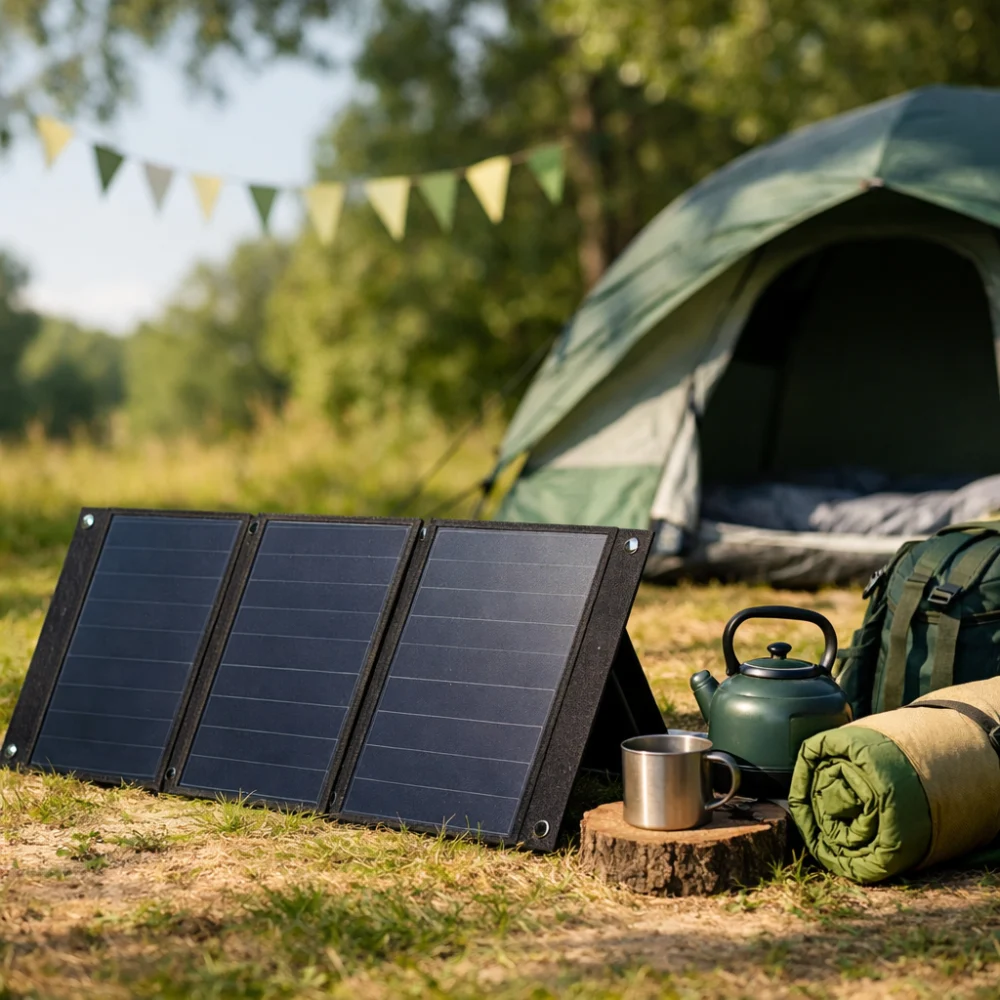
Camping solar panels can be a practical way to keep small devices, battery packs or leisure batteries topped up when you are away from mains power. The right choice depends less on the headline panel and more on how you camp, what you want to charge and how much space you have to carry and set up the kit.
This guide focuses on the buying decisions that usually matter most: portability, charging method, compatibility and expected trade-offs. It is aimed at campers who want a clearer way to compare options without getting lost in technical detail.
What should you look for in a camping solar panel?
The best starting point is to match the panel to your usual camping style. A compact foldable panel may suit touring and day trips, while a larger rigid or flexible setup may make more sense if you camp for longer or keep the panel in one place. The main trade-off is usually between portability and charging potential.
Specifications vary by model, so always check the individual product page before buying.
| Feature | What it means | Why it matters | What to check |
|---|---|---|---|
| Panel format | How the panel is made and carried, such as foldable, portable or fixed-style | It affects pack size, ease of use and where you can deploy it | How it stores, how quickly it can be set up and whether it suits your camping routine |
| Power need | The kind of items you want to charge or support | Small electronics, power banks and larger battery systems have different needs | What the product is intended to charge and whether that matches your equipment |
| Connection type | How the panel links to your device or battery system | Compatibility is often the deciding factor | Connectors, output type and any included controller or charging accessories |
| Portability | Weight, folded size and how easy it is to move around camp | Important for walkers, family campers and anyone with limited storage space | Pack size, carry method and whether the panel will fit with the rest of your kit |
| Placement needs | How the panel needs to face the sun and be positioned | Some setups are more flexible than others | Whether it can be angled, laid flat or secured safely where you camp |
Key decision criteria explained
1. What do you want to power?
Start with the job, not the panel. A buyer looking to top up a phone or power bank has very different needs from someone trying to support a leisure battery or a more demanding camping power setup. The more energy you need, the more important panel size, output and system compatibility become.
2. How portable does it need to be?
If you move camp often, carry kit by hand or have limited storage, portability matters a lot. Foldable and compact panels are easier to transport, but they may not suit every use case. Larger panels can be more awkward to carry, yet may be better if you prioritise a more stable setup.
3. How will it connect to your gear?
Compatibility is one of the easiest areas to get wrong. Check whether the panel is intended for direct USB charging, battery charging or use with an included controller. The panel has to suit the device or battery you actually plan to use, not just look powerful on the listing.
4. Where will you use it?
Some campers want a panel that can be placed near a tent or vehicle, while others need something that can be carried on foot and positioned quickly. Think about available sunlight, space, and whether the panel can be placed securely enough for your usual campsite conditions.
5. How much setup do you want?
More capable systems may take more planning, more space or more accessories. Simpler portable panels are often easier for beginners, but they may be less flexible. The right choice depends on whether you value convenience, capacity or a balance of both.
Common product types and variants
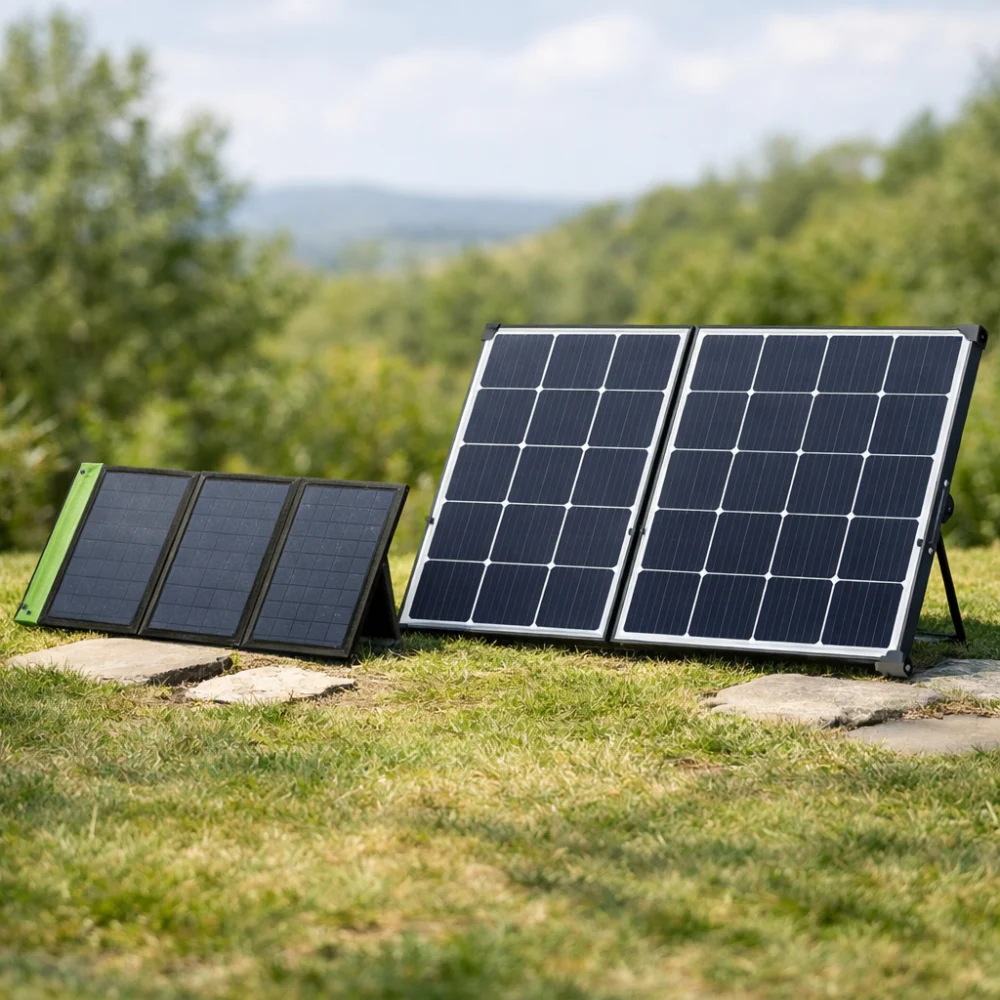
Camping solar panels commonly fall into a few practical groups. Portable foldable panels are useful when storage space matters and you want a kit that is easy to pack away. Flexible panels can suit surfaces where a rigid panel is less convenient, while more traditional panel-and-controller setups may appeal to buyers building a more fixed charging arrangement.
There are also panels aimed at smaller USB charging tasks and others intended for broader camping power use. The important point is not the shape alone, but how the panel is meant to be used and what it is designed to connect to.
Which type suits which camper?
| Buyer need | More suitable characteristics | Why |
|---|---|---|
| Weekend camper | Portable, quick to pack, simple to set up | Convenience matters more than complexity for short trips |
| Touring camper | Compact folded size and straightforward connection | Kit needs to travel easily between locations |
| Family camper | Practical charging setup and manageable storage | Several devices may need topping up, but space is still limited |
| Long-stay camper | Better fit with the intended battery or power system | Longer use makes compatibility and setup more important |
| Lightweight packer | Small, easy-carry panel with modest setup needs | Every extra item affects the rest of the pack |
Common mistakes and misunderstandings
- Choosing by output number alone. A larger headline figure is not useful if the panel does not suit your device or battery system.
- Ignoring connectors and accessories. The panel may be suitable in principle but still need the right lead, controller or adapter.
- Overlooking pack size. A panel that looks convenient on a listing may still take up more space than expected in a vehicle, rucksack or storage box.
- Assuming all camping solar panels do the same job. Some are aimed at small USB charging, while others are better suited to battery-based camping power systems.
Safety and suitability caveats
Check that the panel is suitable for the equipment you intend to use and follow the instructions supplied with the product and any connected device. Solar charging performance can vary with weather, angle, shade and campsite layout, so it is better to treat output as situational rather than fixed. If you are buying for a battery setup, make sure the full charging path is appropriate for that system.
Maintenance, storage and lifespan considerations
Camping solar panels usually benefit from basic care: keeping the surface clean, folding or stowing them carefully and storing them where they will not be crushed or bent unnecessarily. If the panel uses cables, connectors or a controller, those parts should be checked as part of normal ownership too. Good storage matters because damage to the panel face, wiring or connectors can affect how useful the kit is over time.
How to compare options efficiently
- Decide what you want to charge and how often you expect to use the panel.
- Choose the most suitable format for your camping style and available storage.
- Check the connection type and any extra components needed.
- Compare portability, setup convenience and intended use rather than output alone.
- Read the individual product page carefully before making your final choice.
Summary buyer decision checklist
- Does the panel suit the device or battery system you actually want to charge?
- Is the format practical for the way you travel and camp?
- Have you checked the connection type and any included accessories?
- Will the packed size and setup suit your available space?
- Does the intended use match your expectations for portable solar charging?
Frequently asked questions
What is a camping solar panel used for?
It is used to capture sunlight and support charging for camping power needs. That might mean smaller devices, power banks or battery-based setups, depending on the product. The key is to choose a panel that matches the way you camp and the gear you want to power.
Are foldable panels better than rigid ones?
Not always. Foldable panels are often easier to carry and store, which suits mobile camping, while other designs may be better for a more fixed arrangement. The better option depends on whether you value portability or a more permanent setup.
Can I use a camping solar panel with any battery?
No, not safely or sensibly. Battery charging depends on the panel output, the connection method and the battery system itself. Always check the product page and the battery requirements before buying.
Do I need extra equipment?
Sometimes, yes. Some panels are more straightforward than others, and certain setups may need a controller, cable or adapter. Check what is included and what is required for your intended use.
Will a larger panel always be better?
Not necessarily. A larger panel may suit bigger power needs, but it can also be heavier, bulkier and less convenient to carry. It is often better to match the panel to your actual use rather than buying the largest option available.
How important is portability?
Very important if you move between campsites, carry kit by hand or have limited storage. If the panel is hard to transport, it may not be practical enough to use regularly. For some buyers, a smaller and simpler panel is the more realistic choice.
What should I check before ordering?
Check the intended use, connection type, pack size and whether the panel suits the equipment you want to charge. It also helps to confirm whether any extra accessories are needed. Specifications vary by model, so always check the individual product page before buying.

