
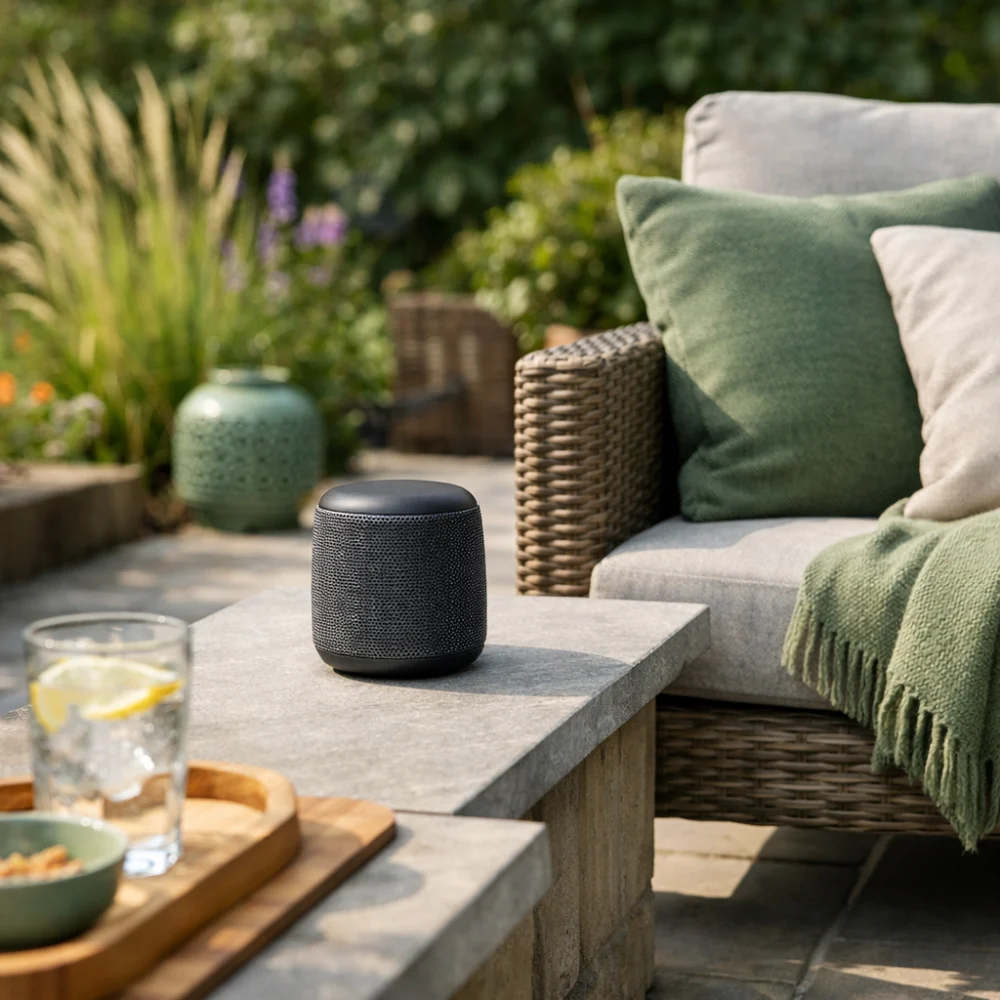
Garden speakers are for listening outdoors without having to rely on a phone speaker or an indoor system pushed through an open window. They can suit everything from relaxed background music on a patio to a more permanent garden audio setup.
The right choice depends on where the speakers will live, how they will be powered, and whether you want something simple and portable or a more fixed arrangement. It also helps to think about how much weather exposure they will face and how important sound coverage is across the space.
Because garden audio products vary widely, it is worth comparing the speaker style, mounting options and weather suitability before you decide.
What should you look for in garden speakers?
Start with how you plan to use them. A small patio setup may only need a compact pair of speakers, while a larger garden might benefit from a system that spreads sound more evenly. The main trade-off is usually between convenience, flexibility and a more permanent installation. Specifications vary by model, so always check the individual product page before buying.
| Feature | What It Means | Why It Matters | What To Check |
|---|---|---|---|
| Speaker type | Whether the speaker is portable, wall-mounted, stake-mounted or part of a fixed system | Affects placement, coverage and how permanent the setup feels | Where you want to put it and whether you can move it later |
| Power source | Mains-powered, battery-powered, wireless or a combination of these | Influences flexibility, charging needs and where the speaker can be used | How you will power it and whether cable runs are practical |
| Weather suitability | How well the speaker is intended to cope with outdoor exposure | Outdoor products face moisture, dust and changing temperatures | Product details about intended outdoor use and any limits noted by the seller |
| Sound coverage | How widely the sound is likely to spread | Important if you want music to be heard across a seating area or larger space | Pairing options, placement guidance and whether one unit or several makes more sense |
| Installation | How much fixing, wiring or setup is needed | Decides whether the speaker suits a quick purchase or a more planned project | Mounting method, space available and whether professional help may be needed |
Key decision criteria explained
Fixed or portable
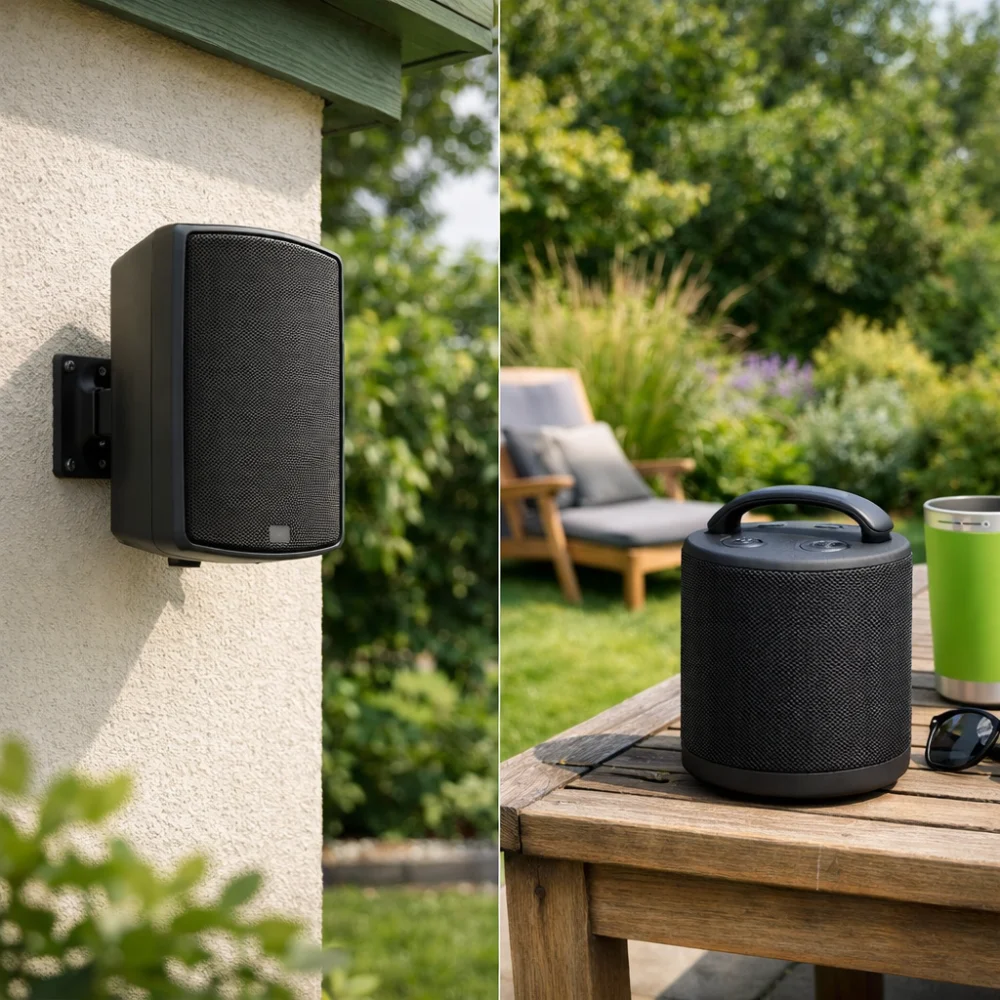
Portable speakers are easier to reposition, which is useful if you use different parts of the garden at different times. Fixed or wall-mounted speakers are better when you want a tidier, more permanent arrangement and less set-up each time. The trade-off is flexibility versus convenience of installation.
Where the speaker will sit
Placement matters as much as the speaker itself. Wall-mounted models may suit patios, seating areas and sheltered corners, while stake-style or ground-positioned options can work well in planting areas or open lawns. Check whether the design fits your available space and whether the speaker should be kept under cover.
Power and connectivity
Some buyers want the simplest route to music playback, while others prefer a speaker that fits into a larger audio setup. Think about whether you want wireless playback from a phone, a mains-powered connection or a battery option for occasional use. If you expect to host outdoors often, charging routine and cable access become more important.
Weather exposure
Garden speakers are meant for outdoor use, but not all products are intended for the same level of exposure. A sheltered patio is a very different setting from an open area that gets wind and rain. Look for the seller’s guidance on whether the speaker is intended for permanent outdoor positioning or more limited use.
Sound for one space or the whole garden
It is easy to overestimate how far a single speaker will carry outdoors. Open spaces absorb sound differently from indoor rooms, so a speaker that sounds fine near your chair may not reach the far end of the garden evenly. If you want broader coverage, check whether a pair or a multi-speaker setup makes more sense.
Common garden speaker types
Portable wireless speakers
These are the easiest option if you want music in different spots or only use outdoor audio occasionally. They suit informal use, but they may need charging more often and are usually better for smaller listening areas.
Wall-mounted speakers
These are a good fit for more permanent installations near patios, conservatories or outdoor entertaining areas. They can offer a neater appearance and more stable placement, but they are less flexible if you later change the layout.
Ground or stake-mounted speakers
These can be useful when you want the sound source closer to planting beds, paths or open lawn areas. They may blend into the garden more easily, but you still need to think about exposure and where cables or power will run, if relevant.
Multi-speaker systems
These suit larger spaces or buyers who want more even coverage. They can improve listening consistency across the garden, but they usually involve more planning, more components or a more involved setup.
Which type suits different buyers?
| Buyer need | More suitable option | Reason | Watch out for |
|---|---|---|---|
| Occasional background music | Portable wireless speaker | Easy to use and move when needed | Battery charging and limited outdoor coverage |
| Patio entertaining | Wall-mounted or fixed pair | More stable placement and better sound spread | Installation effort and cable planning |
| Larger garden coverage | Multi-speaker setup | Can distribute sound more evenly | System complexity and placement planning |
| Simple seasonal use | Portable or easily removable model | Easier to store when not in use | Weather exposure if left outside |
Common mistakes and misunderstandings
- Choosing on looks alone. Garden speakers need to fit the space, but placement and weather suitability matter more than appearance.
- Assuming one speaker will cover everything. Outdoors, sound often disperses more quickly, so coverage can be narrower than expected.
- Overlooking power needs. A speaker may suit the garden but not your available power points, charging habits or cable routing.
- Ignoring installation complexity. Some setups are straightforward, while others are better thought of as a small project.
- Not checking the intended outdoor use. A product described for outdoor use can still have limits on how and where it should be placed.
Safety and suitability caveats
Think carefully about where the speaker will sit, especially if children, pets or frequent garden movement are involved. Cables, mounting points and portable units can all affect how practical the setup is in everyday use. If the speaker will be exposed to the elements, make sure the product information matches the conditions where you plan to keep it.
Maintenance, storage and lifespan considerations
Basic care can make a practical difference to how long a garden speaker remains pleasant to use. Many buyers will want to wipe away dirt, keep connectors protected where relevant and store portable units safely when they are not being used. If the model depends on charging, think about how easy it will be to keep that routine going through the season.
How to compare options efficiently
- Decide where the speaker will be used and whether it needs to be fixed in place or moved around.
- Choose the broad type that fits that use, such as portable, wall-mounted or multi-speaker.
- Compare the practical factors that matter most: power, placement, weather suitability and coverage.
- Weigh the trade-offs between convenience, permanence and setup effort.
- Check the individual product page carefully before buying.
Summary buyer decision checklist
- Will the speaker suit the size and layout of your garden?
- Is it portable enough, or fixed enough, for how you will use it?
- Does the power source fit your routine and installation plans?
- Is the speaker suitable for the outdoor exposure it will face?
- Will one speaker be enough, or would a pair or system be better?
- Have you checked the product page for the exact intended use and limits?
Frequently asked questions
Are garden speakers the same as indoor speakers?
Not usually. Garden speakers are chosen with outdoor placement and exposure in mind, whereas indoor speakers are designed for a more protected environment. If you are comparing them, the main question is not only sound quality but also whether the product is intended for outdoor use.
Do I need a pair of garden speakers?
Not always. A single speaker may be enough for casual listening in a small area, but a pair can improve spread and balance across a patio or seating zone. The right choice depends on how large the area is and how evenly you want the sound distributed.
Can I leave garden speakers outside all year?
Sometimes, but that depends on the model and the seller’s guidance. Outdoor use does not automatically mean unlimited exposure in every weather condition, so check the product information for any limits on placement or storage. If in doubt, a more sheltered position is usually easier to manage.
What matters more: weather resistance or sound quality?
Both matter, but in different ways. A speaker that sounds good but is not suitable for the location will be a poor fit, while a very robust speaker still needs to meet your listening expectations. It helps to decide how exposed the speaker will be before comparing sound features.
Are portable garden speakers a good idea?
They can be, especially if you only listen outdoors occasionally or want to move the speaker around. The trade-off is that they may need charging and may not cover a large space as evenly as a fixed setup. They are often a good starting point for simpler use.
What should I check before mounting a garden speaker?
Check the available fixing space, where the cable will run if relevant, and whether the speaker is intended for that style of installation. It is also worth thinking about the height and direction of the sound, because placement has a noticeable effect outdoors. Specifications vary by model, so always check the individual product page before buying.
How do I avoid buying more speaker than I need?
Focus on your actual use rather than the most ambitious setup you can imagine. A compact or portable option may be enough for relaxed background music, while a larger system only makes sense if you regularly need wider coverage or a more permanent arrangement. Matching the speaker to the space usually gives the clearest result.