
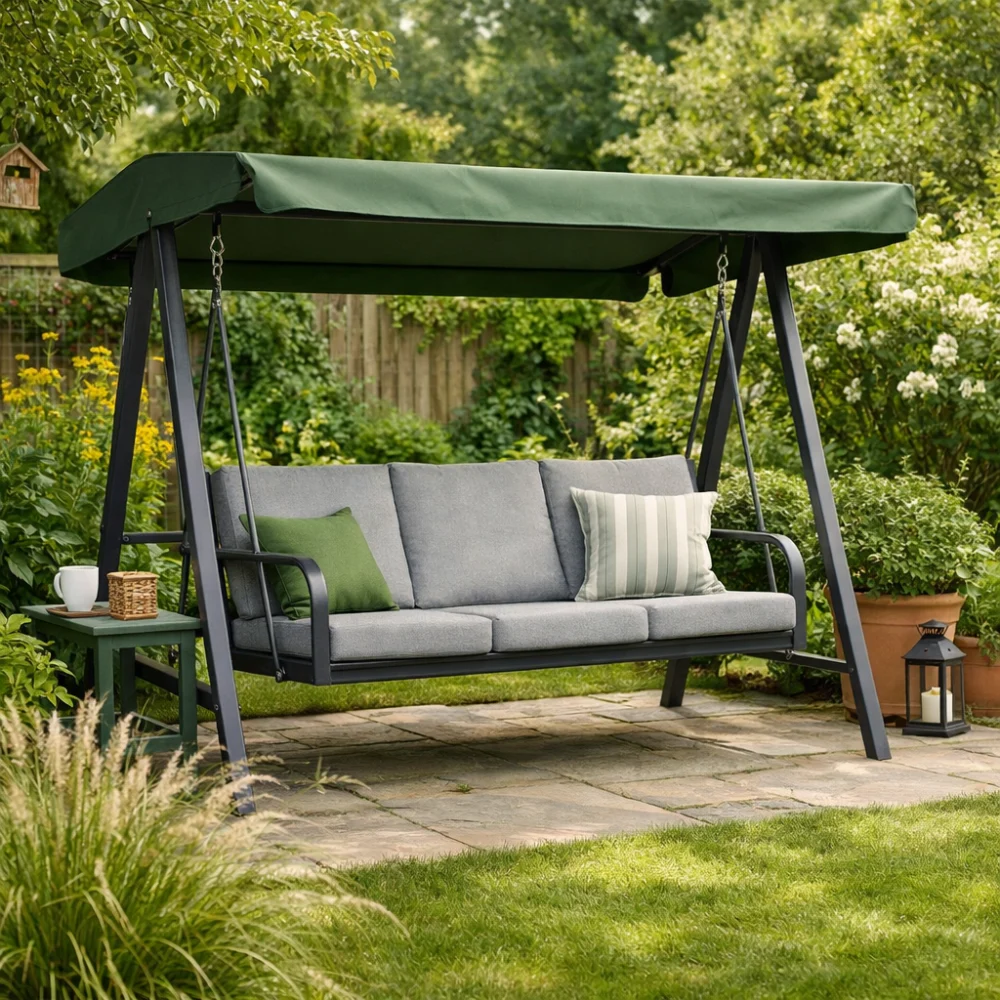
Garden swing seats can turn a patio, deck or lawn into a more relaxed seating area, but the right choice depends on how you plan to use it and where it will sit. Some buyers want a gentle swinging seat for two or three people, while others are mainly looking for a sheltered place to read, chat or enjoy shade.
This guide focuses on the practical choices: seating capacity, frame style, canopy design, comfort, placement and care. It is meant to help you compare options sensibly without assuming that every swing seat suits every garden.
What should you look for in a garden swing seat?
The best starting point is to match the seat to your space and how many people will use it. After that, look at how much shade or weather cover you want, how easy the seat will be to position, and whether you prefer a simple swing bench or a more enclosed cocoon-style design. Specifications vary by model, so always check the individual product page before buying.
Comfort matters, but so does practicality: a swing seat that looks right in a showroom may feel cramped in a smaller garden, while a larger model can dominate a modest patio. The main trade-off is usually between size, shelter and ease of moving or storing the furniture.
| Feature | What it means | Why it matters | What to check |
|---|---|---|---|
| Seating style | Open bench, cushioned swing or cocoon-like hanging chair | Changes how social, sheltered or enclosed the seat feels | How you want to sit, lounge and share the space |
| Capacity | How many people the seat is designed for | Helps you avoid choosing something too small or too bulky | Practical space for the intended users, not just the headline description |
| Canopy or cover | Built-in shade or overhead shelter | Affects comfort in sun and light drizzle, and may change the overall look | Whether it is adjustable, fixed or removable |
| Frame and footprint | The structure and the floor space it occupies | Determines stability, placement options and how much room remains around it | Overall size, clearance and where it will sit on your patio or lawn |
| Cushioning | Seat and back padding, where included | Influences comfort and how inviting the seat feels for longer use | Thickness, shape and whether covers can be removed for cleaning |
| Materials and finish | Main frame and seating materials | Affects maintenance needs, appearance and suitability for outdoor exposure | How the materials suit your weather, storage and care routine |
Key decision criteria
Size and space
A swing seat needs more room than a standard garden chair because it must be placed with comfortable clearance around it. Think about the footprint of the frame, the room needed for movement and any nearby walls, fences or planting. If your outdoor space is compact, a slimmer two-seater or a more compact hanging style may be easier to place than a larger swing bench.
Comfort and sitting position
Some buyers want a gently upright seat for conversation, while others prefer a deeper, more relaxed position for reading or resting. Cushions can improve comfort, but they also add upkeep and may need storing indoors. Consider who will use the seat most often and for how long each time.
Canopy and shade
A canopy can make a big difference if the seat will be used in strong sun or if you want a little overhead shelter. Adjustable canopies can be easier to tailor to the light, while fixed designs are simpler to live with. The key question is whether you want shade as a primary feature or just an occasional extra.
Materials and maintenance
Outdoor furniture materials vary in how much care they need and how they age visually. Metal frames, rattan-effect finishes and cushioned models each bring different cleaning and storage expectations. Think about how much time you are happy to spend wiping, covering or moving the seat through the year.
Assembly and placement
Many swing seats need some assembly and careful positioning once built. It is worth checking how much space the assembled product will need and whether it can be moved easily by one person or two. If the seat will stay in one place, this may matter less than if you plan to adjust it seasonally.
Common garden swing seat types
Swing bench seats
These are the familiar garden swing seats with a bench-style seat on a frame, often with a canopy above. They suit buyers who want a shared seating option for a patio or lawn. The limitation is that they need more room than a single chair or compact bistro set.
Canopy swing chairs
Canopy swing chairs focus on shade and comfort, often with a smaller footprint than larger bench-style versions. They can suit couples or anyone who wants a dedicated spot for reading and relaxing. Their main trade-off is reduced social seating capacity compared with bigger models.
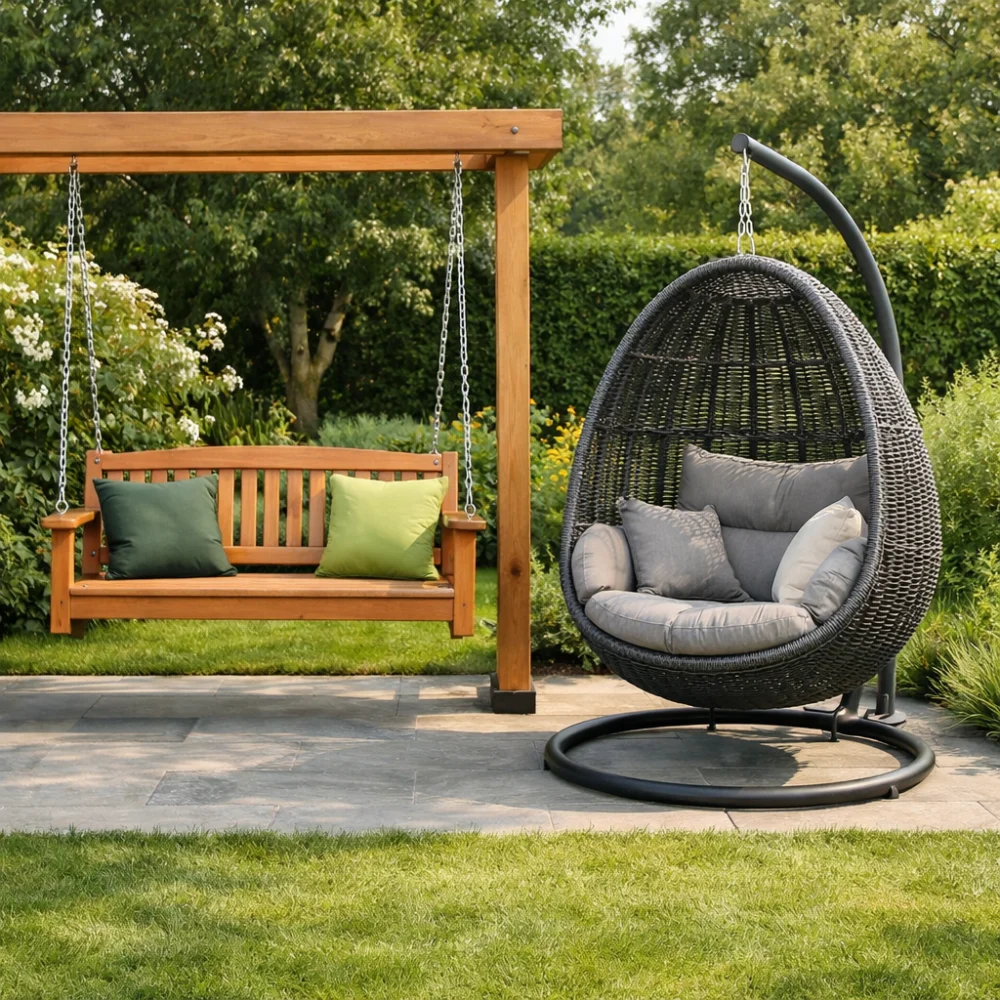
Cocoon or hanging styles
These designs feel more enclosed and may suit buyers who want a cosier, more private seat. They can be a good fit where visual style matters as much as seating. The limitation is that they are usually less suitable for several people at once and may feel more enclosed than some buyers expect.
Which type suits which buyer?
| Buyer need | Helpful features | Trade-off to accept |
|---|---|---|
| Family seating | Wider bench-style seat, stable frame, enough space for shared use | Needs more garden space |
| Quiet reading spot | Comfortable cushioning, shade, more enclosed or cocoon-like feel | Less seating capacity for guests |
| Compact patio | Slimmer footprint, simpler structure, easier placement | Usually less lounging space |
| Low-maintenance preference | Durable frame, straightforward finish, easy-to-clean surfaces | May feel less soft or luxurious than padded options |
| Style-led purchase | Distinctive shape, canopy finish and frame appearance | Looks should still be balanced against comfort and size |
Common mistakes and misunderstandings
- Choosing by appearance alone. A swing seat can look compact online but still need significant clearance in a real garden. Check the overall dimensions and the space needed around it.
- Assuming more seats always means better value. A larger model is only useful if you have enough room and will genuinely use the extra capacity.
- Overlooking storage and care. Cushions and covers may need to be brought in or protected, especially if you want the seat to stay looking tidy.
- Ignoring the intended sitting style. A deeper, more enclosed design can be comfortable for one person but less convenient for chatting with others.
Safety and suitability caveats
Garden swing seats are outdoor furniture, so the main buying concern is suitability for the intended users and the intended location. Check the product page for any assembly requirements, weight guidance and care notes, and make sure the chosen model leaves enough space for normal use without obstruction. If children, older users or frequent guests will use it, comfort, access and stability become especially important when comparing options.
Maintenance, storage and lifespan considerations
How much upkeep a swing seat needs depends on its materials and whether it includes cushions or a canopy. Some buyers are happy to cover or store soft parts when the weather turns, while others want a simpler design that stays ready for use outdoors. Thinking about cleaning and seasonal storage before you buy can help you avoid choosing a model that feels more demanding than you expected.
How to compare options efficiently
- Decide where the swing seat will go and how much room you can spare.
- Choose the broad type that fits your use, such as bench-style, canopy-focused or more enclosed seating.
- Compare comfort, shade, materials and maintenance needs.
- Check the product page for the exact dimensions, assembly requirements and care information.
- Balance style with practicality so the seat suits both the space and the way you will use it.
Summary buyer decision checklist
- Enough space for the frame and safe clearance around it
- Seating capacity that matches your usual users
- Comfort level and sitting position that suit your purpose
- Shade or canopy features that match your garden conditions
- Materials and finishes that fit your maintenance preference
- Any cushion, cover or storage needs you are happy to manage
Frequently asked questions
Are garden swing seats suitable for small gardens?
They can be, but the footprint matters more than the style name. A compact design may work on a patio or decking area if you measure carefully and allow room for movement. It is usually better to choose a smaller, simpler model than to squeeze in one that dominates the space.
Do I need a canopy on a swing seat?
Not always, but a canopy can make the seat more comfortable in bright sun and give the furniture a more sheltered feel. If the seat will be used mainly in shaded areas, you may not need one. Think about whether shade is essential or just a nice extra.
What is the difference between a swing bench and a hanging cocoon-style seat?
A swing bench is usually designed for shared sitting and a more open feel. A cocoon-style seat is generally more enclosed and can feel cosier for one person or a couple. The right choice depends on whether you want social seating or a more private relaxing spot.
Are cushions worth having on a garden swing seat?
Cushions usually improve comfort and make the seat more inviting for longer sessions. The trade-off is that they can add care, cleaning and storage needs. If convenience matters most, a simpler seat may suit you better.
How important is the frame material?
It matters because it affects appearance, maintenance and how the seat fits your outdoor routine. Some buyers prefer a low-fuss finish, while others are happy to spend more time keeping the furniture looking tidy. The best choice is the one that matches how you plan to use and look after it.
Should I compare swing seats by seating capacity alone?
No, because capacity does not tell you everything about comfort or practicality. A seat that technically fits several people may still feel narrow once cushions are added. It is better to compare capacity alongside footprint, seat depth and the overall layout.
What should I check before buying online?
Check the full dimensions, the style of seat, any canopy details and the maintenance expectations. It also helps to think about where you will place it and whether you will need to move or store any parts seasonally. That makes the final choice much easier to narrow down.

