

BBQ smokers are for cooks who want to make food with a slow, smoky flavour rather than simply grill it quickly. They suit anyone planning longer outdoor cooking sessions, whether you are experimenting with low-and-slow barbecue or looking for a more flexible way to cook for a group.
The main buying challenge is not just choosing a smoker, but choosing the right type of smoker for the way you actually cook. Fuel, size, temperature control and cleaning all affect how easy the smoker is to live with, and how much attention it will need once you start using it.
Specifications vary by model, so always check the individual product page before buying.
Which BBQ smoker should I choose?
The right BBQ smoker is usually the one that matches your patience, cooking space and how hands-on you want the process to be. If you want more direct control and do not mind tending the fire, a more traditional smoker may suit you. If you prefer simpler setup and steadier temperature management, a model with more built-in control can feel easier to use. The best starting point is to decide how much time you want to spend monitoring the cook, then compare size, fuel type and cleaning needs.
| Feature | What It Means | Why It Matters | What To Check |
|---|---|---|---|
| Fuel type | How the smoker is heated and how smoke is produced | Affects flavour, control and the amount of attention needed | Whether the model uses charcoal, wood, pellets or electricity |
| Cooking style | How the smoker is designed to cook food over time | Helps you match the smoker to slow cooking, smoking or more flexible use | Whether it is intended for low-and-slow cooks, hot smoking or both |
| Size and capacity | How much food and cooking space it offers | Impacts batch size, meal planning and how easy it is to store | Cooking area, rack arrangement and overall footprint |
| Temperature control | How easily heat can be managed during a cook | Better control can reduce stress and improve consistency | Thermometer provision, vents, digital controls or other adjustment methods |
| Build and cleaning | Materials, access and how easy it is to maintain | Influences longevity, upkeep and day-to-day convenience | Access to cooking chambers, drip management and cleaning access |
What matters most when choosing a smoker?
Fuel type
Fuel type is one of the biggest differences between smokers. Charcoal and wood-based smokers often appeal to buyers who want more of a hands-on cooking experience and a strong smoky character. Electric or more automated options can be easier to manage if you value convenience and steadier heat. The trade-off is usually between flavour style, control and how much tending the smoker needs.
Cooking capacity
Capacity matters more than many first-time buyers expect. A smoker that looks compact can still be fine for occasional meals, but if you cook for family gatherings you may need more room for food spacing and airflow. Think about how many people you usually cook for, not just the largest crowd you might one day host.
Temperature control
Smoked food usually rewards steady cooking conditions, so easy temperature control is important. Some buyers prefer simple setups and are happy to learn by experience; others want more obvious control features to reduce guesswork. Look for the practical details on the product page, such as how temperature is monitored and adjusted.
Cleaning and upkeep
A smoker that is awkward to clean is more likely to be left unused. Removable trays, accessible racks and straightforward ash or residue management can make a real difference after a long cook. If you plan to use the smoker often, convenience here can matter as much as appearance.
Types and variants within BBQ smokers
There are several common smoker styles, and each suits a different kind of cook.
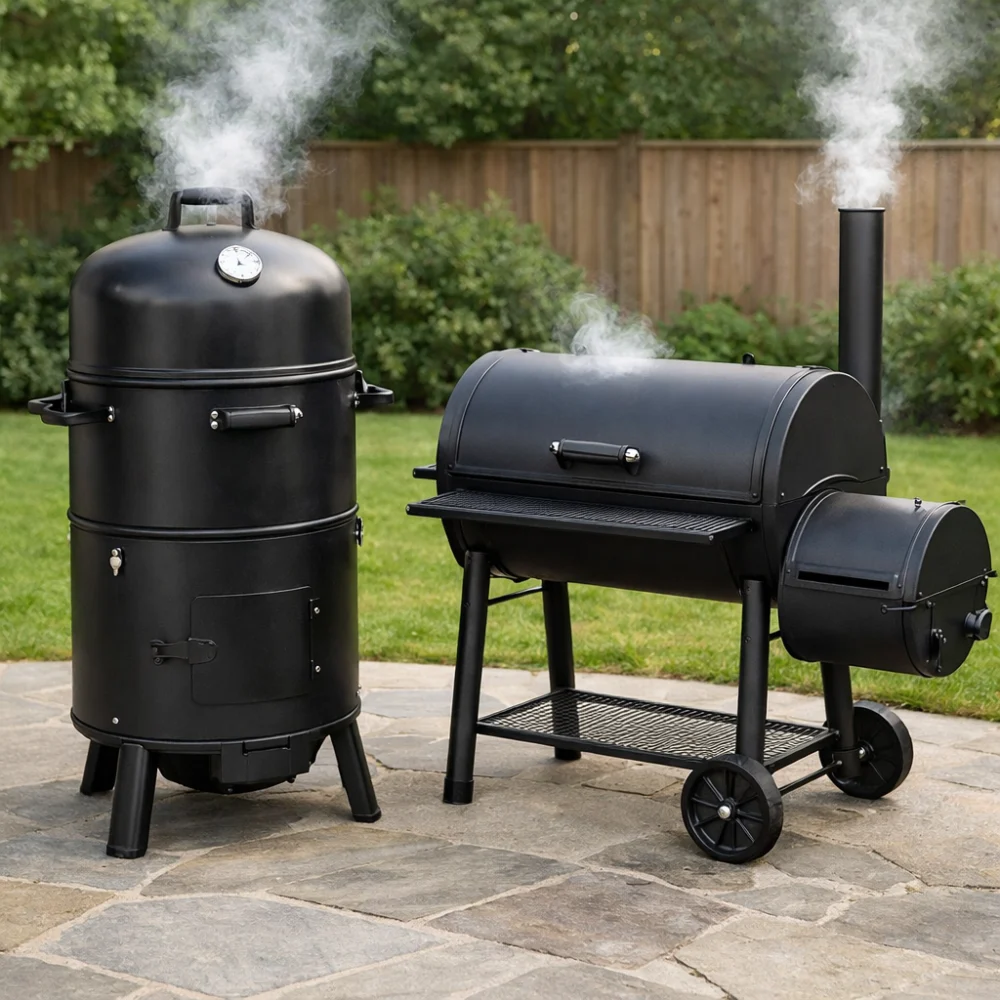
- Traditional offset-style smokers often suit buyers who enjoy a more involved cooking process and do not mind tending heat more closely.
- Vertical smokers can be a practical choice when you want to cook in a smaller footprint and use space efficiently.
- Electric smokers may appeal to buyers who want simpler temperature management and a less hands-on routine.
- Pellet-style smokers can suit people who want smoke flavour with a more convenient, controlled approach.
- Portable smoke accessories and cabinets are usually better for specific tasks or smaller-scale smoking rather than full outdoor cooking sessions.
The main limitation to remember is that no single style does everything equally well. A compact smoker may be easier to store but less flexible for large cooks, while a more elaborate smoker may offer greater control but require more space and attention.
Who needs what?
| Buyer need | Useful smoker characteristics | Main trade-off |
|---|---|---|
| Beginner or occasional cook | Simple setup, easier temperature management, manageable cleaning | May give up some control or cooking flexibility |
| Family entertaining | Enough capacity for multiple portions and practical rack access | Larger models can take more space and longer to heat |
| Enthusiast who likes hands-on cooking | More manual control, flexible fuel choice, room to experiment | Requires more attention during cooking |
| Buyer with limited storage | Compact footprint and easier movement or storage | May reduce cooking area or batch size |
| Convenience-first buyer | Clear controls, accessible cleaning and steadier heat management | Can be less traditional in approach |
Common mistakes to avoid
- Choosing by appearance alone. A smoker may look impressive, but the usable cooking space and control features matter more in practice.
- Underestimating preparation time. Smoking is usually slower than direct grilling, so plan for longer sessions and more attention where needed.
- Ignoring storage space. A smoker that is awkward to store or move may not suit a small garden or patio.
- Overlooking cleaning. If upkeep feels difficult, you are less likely to use the smoker regularly.
- Assuming every smoker behaves the same. Different fuel types and layouts can produce very different cooking experiences.
Safety and suitability caveats
Check that the smoker is suitable for your intended outdoor space and that you are comfortable with the fuel type and level of supervision it needs. Consider the surface it will sit on, how much room it needs around it and whether any local restrictions may affect outdoor cooking in your area. For the exact setup, accessories and use limits, rely on the individual product page.
Maintenance, storage and lifespan considerations
BBQ smokers last longer when they are cleaned and stored sensibly after use. That usually means emptying residue, keeping cooking surfaces in good condition and storing the smoker somewhere dry when possible. If a model uses fuel, chips or pellets, think about how easily you can buy and store those items as part of the overall ownership cost and convenience.
How to compare options efficiently
- Start with how you want to cook: occasional casual use, family meals or more dedicated smoking.
- Choose the smoker style that fits your level of control and attention.
- Compare capacity, layout and footprint against your usual cooking space.
- Check temperature management, access for loading food and ease of cleaning.
- Read the individual product page carefully for the details that vary by model.
BBQ smoker buyer checklist
- Does the fuel type suit how hands-on you want to be?
- Is the cooking area large enough for the number of people you usually cook for?
- Will it fit your outdoor space and storage area?
- Does it offer the level of temperature control you want?
- Is cleaning and general upkeep realistic for your routine?
- Have you checked the individual product page for model-specific details?
Frequently asked questions
Are BBQ smokers hard to use?
They can take more patience than a standard grill, but many buyers find them manageable once they understand the basic cooking rhythm. The level of difficulty depends on the smoker style and how much control it gives you. If you want a gentler learning curve, look for a model with clearer temperature management.
What size smoker do I need?
Start with the number of people you usually cook for and the amount of space you have available. A bigger smoker is not always better if it is too large for your patio or more capacity than you need. It is often sensible to choose for typical use rather than the biggest possible gathering.
Do all smokers use the same fuel?
No. Different smokers use different fuel or heat sources, and that affects flavour, control and maintenance. Check the product page carefully so you understand what the smoker needs and how it fits your routine.
Is a smoker only for experienced cooks?
No, but beginners may prefer a model that is simpler to control and easier to clean. More experienced cooks may enjoy the extra flexibility of a more hands-on design. The main thing is matching the smoker to your confidence level and the time you can spend on it.
What should I look for if I want easier cleaning?
Look for features that make residue management and access simpler, such as removable parts and practical loading arrangements. A smoker that is easy to clean is generally easier to keep in regular use. Always confirm the exact cleaning approach from the individual product information.
Can I use a smoker in a small garden?
Sometimes, but you need to think about footprint, ventilation and where the smoker will be positioned. Compact models or vertical designs may be more suitable than larger units. Make sure the product fits your space and your way of cooking before you buy.

