
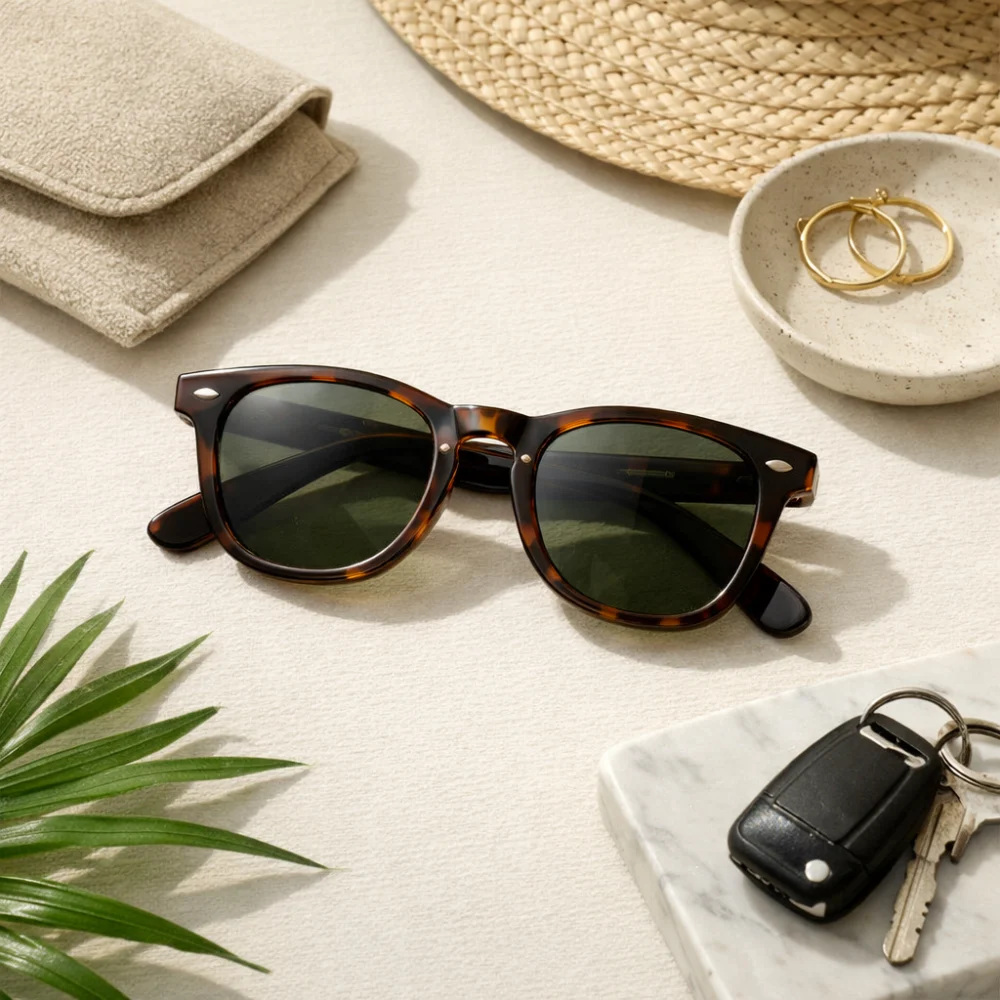
Ray-Ban sunglasses are often chosen for their familiar styling, but the practical buying decision is still about fit, lens behaviour and how you plan to wear them. The right pair for commuting, driving, holidays or daily casual use may not be the same shape or lens finish.
This guide helps you compare the main choices without getting lost in model names. It focuses on the things that usually matter most before you buy: frame style, lens type, comfort, coverage and what to check on the individual product page.
What should you look for first?
Start with how you want the sunglasses to sit and feel, then look at the lens options. Frame shape affects comfort and coverage, while lens type affects how the glasses behave in bright light and whether they suit your routine. Specifications vary by model, so always check the individual product page before buying.
If you are choosing between similar styles, the safest approach is to compare fit details, lens tint or treatment, and how much of your face the frame covers. That is usually more useful than focusing on the name of the style alone.
| Feature | What it means | Why it matters | What to check |
|---|---|---|---|
| Frame shape | The overall silhouette, such as round, square, aviator or wayfarer-inspired. | It affects how the sunglasses look and how much coverage they give. | Look for a shape that suits your face and the amount of coverage you want. |
| Frame size and fit | How the frame sits across the face, nose and ears. | Fit is a major comfort factor and affects whether the sunglasses stay in place. | Check the listed measurements and any fit notes on the product page. |
| Lens type | The lens tint, finish or treatment used in the pair. | Different lenses can change glare reduction, contrast and overall light feel. | Confirm the lens description, tint and any polarised or mirrored detail if listed. |
| Coverage | How much of the eye area the frame and lens shape cover. | More coverage may feel better in brighter conditions or for all-day wear. | Compare lens height, wrap and frame proportions where provided. |
| Use case | How and where you plan to wear the sunglasses. | Everyday wear, travel and driving can each favour different comfort priorities. | Match the style to your usual routine rather than buying by appearance alone. |
Key decision criteria explained
Frame shape and style
Ray-Ban sunglasses cover a few recognisable frame families, and the shape changes both the look and the feel. A rounder shape can suit someone who wants a softer profile, while squared or angular shapes often give a more defined look. The main trade-off is visual style versus the amount of face coverage you want.
Fit and comfort
Comfort matters as much as appearance because sunglasses are often worn for long periods. Check how the frame sits on the bridge of the nose, whether the arms look likely to sit comfortably behind the ears, and whether the overall width seems appropriate. If you are between sizes or like a lighter feel, a smaller or simpler frame may be easier to live with.
Lens choice
Lens differences can affect how the sunglasses handle bright light, reflections and contrast. Some buyers prefer a darker, more classic look, while others care more about the way the lens behaves in changing conditions. Do not assume that one lens style is always better; the useful choice depends on where you will wear the sunglasses most often.
Coverage and everyday use
If you want a pair for regular outdoor wear, coverage becomes more important than fashion detail alone. Larger lens shapes can offer a more enveloping feel, while slimmer styles may be easier to wear casually and pack away. The trade-off is usually between broader coverage and a lighter, less prominent look.
Product types and variants
Within Ray-Ban sunglasses, the main variation is usually between frame families rather than completely different product categories. You will commonly see classics with a strong recognisable shape, more angular everyday styles and rounded or semi-rounded designs.
- Aviator-style frames: Often chosen for a timeless, open look with broad lens coverage.
- Wayfarer-style frames: A familiar everyday shape that tends to suit a wide range of casual outfits.
- Round or softer shapes: Useful if you want a less angular appearance and a more distinctive silhouette.
- Clubmaster-style frames: A more structured look that can feel more style-led than minimal.
The limitation is that a familiar name does not guarantee a good fit. Two models with a similar look may still sit very differently on the face, so shape and measurements still matter.
How different buyers can narrow the choice
| Buyer need | What tends to matter most | What to prioritise |
|---|---|---|
| Everyday casual wear | Comfort, easy styling and a frame you can wear for long periods. | Check fit, weight cues in the description and a shape you already feel comfortable wearing. |
| Holiday or travel use | Coverage, versatility and a style that works in bright conditions. | Look closely at lens type, lens size and whether the frame seems easy to wear all day. |
| Gift buying | Broad appeal and a shape that is unlikely to feel too extreme. | Choose a classic frame family and keep the fit range in mind if measurements are listed. |
| Style-led purchase | The visual profile more than a technical feature set. | Focus on frame shape, colour and overall proportions. |
Common mistakes and misunderstandings
- Choosing only by brand name: A familiar label is not enough if the frame shape does not suit the wearer or the fit is off.
- Ignoring size information: Small differences in width or lens size can change comfort noticeably.
- Overlooking lens details: A similar-looking pair may have different lens behaviour, so check the product description carefully.
- Buying a style that looks good in photos but feels too bold: Stronger frame shapes can be flattering on some faces and overwhelming on others.
Safety and suitability caveats
Sunglasses are a comfort and vision accessory, not a substitute for judging conditions carefully. If you need a pair for a particular activity or environment, check the individual product details rather than assuming the style alone makes it suitable. Make sure the frame feels secure and that the lens description matches the amount of light control you want.
Maintenance, storage and lifespan considerations
Good care helps any sunglasses stay usable for longer. Keep them in a protective case when not in use, clean lenses gently with an appropriate cloth, and avoid placing them face down on hard surfaces. If a pair will live in a bag, car or pocket, a sturdier frame and case may be worth prioritising.
How to compare options efficiently
- Decide where you will wear the sunglasses most often.
- Choose the frame family and shape you are most likely to wear comfortably.
- Check the fit information, including any listed dimensions.
- Compare lens details and any treatment or tint described.
- Read the product page for anything model-specific before making a final choice.
Summary buyer decision checklist
- Does the frame shape suit your face and personal style?
- Do the listed measurements look comfortable for your head size?
- Does the lens description match how you plan to use the sunglasses?
- Is the level of coverage right for everyday wear, travel or casual use?
- Have you checked the individual product page for model-specific details?
Frequently asked questions
Are Ray-Ban sunglasses mainly about style or practical use?
They are often bought for style, but practical details still matter. Fit, lens behaviour and coverage affect whether they are comfortable enough for regular wear. The most useful choice is usually the one that balances the look you want with the way you plan to use them.
How do I know which frame shape will suit me?
A good starting point is to think about what you already wear comfortably. If you like a softer profile, rounder shapes may appeal; if you want something more defined, angular frames may suit you better. The final decision should also take size and coverage into account.
Are larger frames always better?
Not necessarily. Larger frames can give more coverage, but they may feel heavier or look more prominent than you want. Smaller frames can be easier to wear casually, so the best choice depends on comfort and how much face coverage you prefer.
Should I focus more on frame or lens choice?
Both matter, but for most buyers the frame fit comes first because comfort affects how often you will wear them. Lens details become more important if you have a specific use in mind, such as regular outdoor wear or brighter conditions.
Can one style work for everyday use and holidays?
Yes, if the frame is comfortable and the lens choice feels versatile. A classic shape often works well for mixed use, but always check the product page for the details that affect comfort and coverage. Specifications vary by model, so always check the individual product page before buying.

