
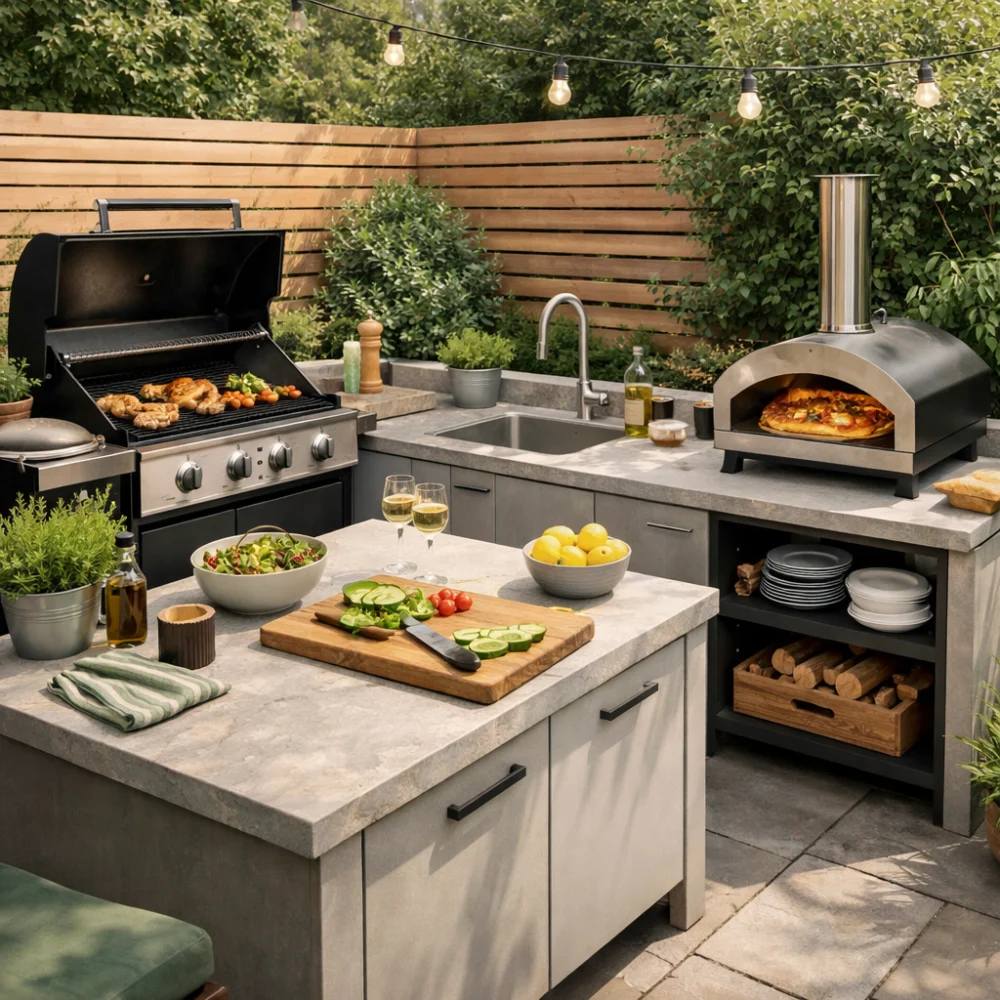
Garden kitchens can turn an outdoor area into a more practical place to cook, serve and spend time with guests. The right choice depends less on style alone and more on how you plan to use the space, how much room you have and how much preparation you want to do outdoors.
If you are comparing options for the first time, it helps to think about the whole setup rather than a single item. Storage, weather exposure, cleaning and the layout around the cooking area can matter just as much as the cooking surface itself.
This guide focuses on the buying decisions that usually shape satisfaction after purchase. It should help you narrow the field before you look at individual product pages.
What should you look for in a garden kitchen?
Start with how you want to use it: occasional summer cooking, regular family meals or a more complete outdoor entertaining area. The most suitable garden kitchen is usually the one that fits your space, your cooking habits and the amount of upkeep you are prepared to manage. Specifications vary by model, so always check the individual product page before buying.
The main trade-off is usually between size and convenience. Larger layouts may give you more prep space and storage, but they also need more room, more careful planning and more attention to weather protection.
| Feature | What It Means | Why It Matters | What To Check |
|---|---|---|---|
| Layout | How the units and cooking area are arranged | Determines whether the space feels efficient or cramped | Measure the available area and think about movement around the cooking zone |
| Storage | Cabinets, shelves or enclosed spaces for tools and accessories | Helps keep cooking essentials close to hand | Look at how much organised storage the design appears to offer |
| Cooking setup | The part of the kitchen used for cooking or heating food | Shapes what you can prepare outdoors | Check the intended cooking style and whether it suits your usual meals |
| Materials and finish | The visible construction and surface treatment | Affects appearance, cleaning and general upkeep | Look for materials suited to outdoor use and the amount of maintenance you accept |
| Weather exposure | How well the design suits outdoor conditions | Outdoor furniture and cooking areas face rain, sun and temperature changes | Consider whether the unit needs shelter, covers or seasonal storage |
| Space and installation needs | The footprint and any setup requirements | Helps avoid buying something that does not fit your garden | Check dimensions, access routes and whether assembly is likely to be simple or involved |
Key decision criteria explained
Size and layout
Think about how many people will use the space at once and whether you need separate areas for prep, cooking and serving. A compact arrangement can work well if you mainly cook for a few people, while a larger layout may suit frequent hosting. The important point is to leave enough room for movement and for safe, comfortable working.
Storage and organisation
Outdoor cooking becomes easier when utensils, ingredients and serving items have a place to live. Built-in storage can reduce trips back indoors, but only if it is arranged in a way that makes sense for your routine. Check whether the storage is open, closed or mixed, because that affects convenience as well as protection from the elements.
Cooking style
Some buyers want a straightforward area for grilling and serving, while others want a more complete outdoor kitchen experience. The right choice depends on whether your main aim is quick meals, relaxed entertaining or more ambitious outdoor food preparation. Focus on the cooking style you actually use most often rather than the one that looks most impressive.
Materials, cleaning and upkeep
Because these products live outdoors, finish and maintenance matter. Surfaces that are easier to wipe down may suit busy households, while more demanding finishes may be acceptable if you are happy to spend time on care. Consider how much cleaning you want after each use and whether the design is likely to need more protection in bad weather.
Placement in the garden
The best position is often the one that balances access, shelter and everyday practicality. Think about proximity to the house, nearby seating, wind exposure and the route you will use when carrying food or equipment. A garden kitchen that is awkwardly placed can be less enjoyable even if the product itself is well suited to your needs.
Common types and how they differ
Garden kitchens can vary from simple outdoor cooking stations to more substantial layouts with storage and work surfaces. A simpler setup may suit smaller spaces or buyers who want to keep the garden uncluttered. A larger, more integrated arrangement may suit those who entertain often and want a clearer outdoor cooking zone.
The main limitation of bigger systems is that they ask more of the space and the buyer. They can be harder to position, more demanding to maintain and less forgiving if your patio or terrace is not well suited to a fixed layout.
Which type suits which buyer?
| Buyer need | Useful features | Why they help |
|---|---|---|
| Small garden or patio | Compact layout, efficient footprint | Makes the outdoor area feel usable without crowding it |
| Frequent entertaining | More prep space, better organisation, clear workflow | Helps several people use the area without getting in each other’s way |
| Low-maintenance preference | Easy-clean surfaces, straightforward layout | Reduces the effort needed after cooking |
| Occasional summer use | Simpler setup, practical storage, manageable size | Balances usefulness with less commitment to upkeep |
| Outdoor cooking enthusiast | More complete kitchen arrangement, flexible working area | Supports a wider range of preparation and serving tasks |
Common mistakes and misunderstandings
- Choosing by appearance alone. A garden kitchen should suit the way you cook and the space you have, not just the style you like.
- Underestimating footprint. What looks neat on a page may need more room once you allow for movement, access and serving space.
- Ignoring upkeep. Outdoor products need cleaning and protection, so it is worth considering how much maintenance feels realistic.
- Forgetting storage needs. If tools and serving items do not have a place, the setup can feel cluttered very quickly.
- Overcomplicating a simple need. If you only cook outdoors occasionally, a large setup may add cost and care without much benefit.
Safety and suitability checks
Garden kitchens are bought for outdoor use, so suitability depends on the space as much as the product itself. Check whether the area is level enough, whether there is enough clearance around the cooking zone and whether the layout suits your household. If the design is meant to stay outside, consider what protection it may need from weather and seasonal changes.
It is also sensible to think about who will use the space and how often. A more complex setup may be fine for a dedicated outdoor cook, but a simpler arrangement may be easier for general family use.
Maintenance, storage and lifespan considerations
How long a garden kitchen feels useful often depends on how well it is cared for. Regular cleaning, sensible storage of accessories and appropriate weather protection can all help the space stay practical. If the unit includes open areas or exposed surfaces, think about whether you will be comfortable maintaining them through wet or colder seasons.
Some buyers also prefer a design that can be kept tidy with minimal effort between uses. If that matters to you, check the structure and surfaces carefully before deciding.
How to compare options efficiently
- Start with the space you actually have and the way you plan to use it.
- Narrow the choice to the layout or size that fits your garden and cooking habits.
- Compare storage, surface area and overall practicality rather than looks alone.
- Check what the product page says about materials, upkeep and outdoor suitability.
- Choose the option whose trade-offs fit your routine, not just the one with the most features.
Summary buyer decision checklist
- Does the garden kitchen fit the available space comfortably?
- Is the layout suitable for how you cook and entertain?
- Is there enough storage for your day-to-day needs?
- Are you happy with the likely cleaning and upkeep?
- Does the design suit the amount of weather exposure it will face?
- Have you checked the individual product page for the details that matter most?
Frequently asked questions
Do I need a large garden to use a garden kitchen?
Not necessarily. A smaller outdoor area can still work if the layout is compact and carefully planned. The key is to leave enough room for movement and for comfortable use, rather than trying to fill the space completely.
What is the most important thing to check before buying?
Start with footprint and layout, because these determine whether the kitchen will actually work in your space. After that, consider storage, maintenance and the style of cooking you expect to do most often.
Are garden kitchens mainly for entertaining?
They can be, but they are not only for hosting. Some buyers want a garden kitchen for relaxed family meals or to make everyday outdoor cooking more convenient. The right setup depends on how often you plan to use it and for how many people.
How much maintenance should I expect?
That depends on the design, the materials and how exposed the area will be to the weather. As a general rule, outdoor cooking areas need more care than indoor ones, so it helps to choose a style you will realistically keep clean and protected.
Should I choose the biggest option available?
Usually not. Bigger can be useful, but only if it fits the garden and matches your actual habits. A more compact design may be the better choice if you want something easier to place, clean and use regularly.
How do I know whether a design suits my garden?
Check the available space, the access route and how the unit will sit alongside seating or other outdoor furniture. It is often helpful to imagine the whole cooking flow, from preparation to serving, before making a decision.

