
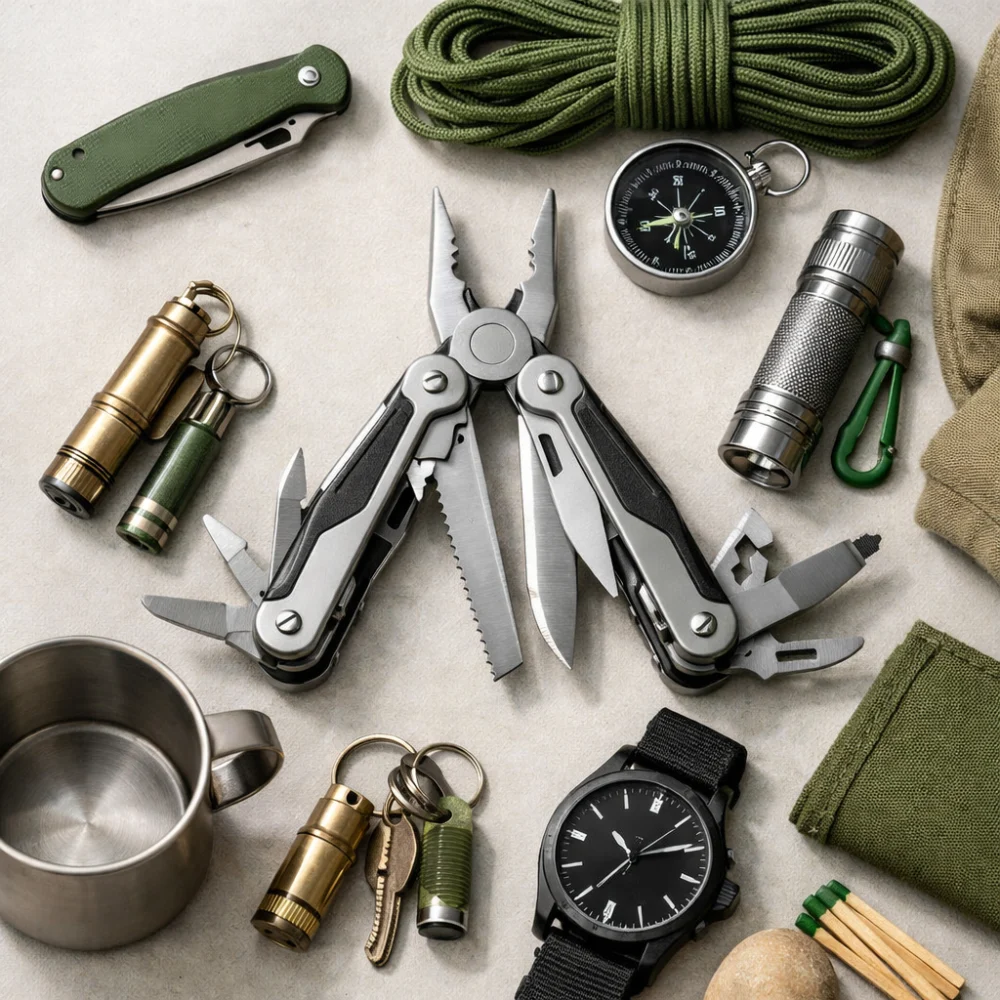
Gerber multi tools are bought for a mix of everyday tasks, camping jobs and light repair work, so the right choice depends on how you plan to carry and use it. Some buyers want something compact for pockets or key rings, while others prefer a fuller set of functions for the car, kit bag or campsite.
This guide helps you compare the important decisions without getting lost in small details. It focuses on practical choices such as size, tool count, carry comfort and the kind of tasks you expect to do most often.
If you are narrowing the category for the first time, start with where you will carry the tool and how often you expect to use it. That usually gives you a clearer answer than looking only at the number of functions. Specifications vary by model, so always check the individual product page before buying.
What should you look for in a Gerber multi tool?
The most suitable Gerber multi tool is usually the one that balances size, function set and ease of carrying for your routine. A compact tool may be easier to keep with you every day, while a larger tool may feel more useful when you expect to handle a wider range of jobs. The trade-off is simple: more capability often means more bulk, and a smaller tool may be easier to carry but less versatile.
| Feature | What it means | Why it matters | What to check |
|---|---|---|---|
| Tool size | How large and portable the multi tool feels in hand or in a pocket | Affects everyday carry comfort and how easy it is to keep nearby | Think about where you will carry it and whether bulk or weight is a concern |
| Function set | The mix of tools included on the unit | Determines whether it suits simple tasks or a broader range of jobs | Compare the functions you are likely to use, not just the total count |
| Carry method | How the tool is meant to be stored or transported | Influences convenience and how quickly you can access it | Check whether the carry style fits your clothing, bag or storage habits |
| Handle feel | How comfortable the tool is to hold during brief or repeated use | Matters if you expect to use it regularly or for slightly longer tasks | Look for a shape and size that seems manageable for your hand and intended use |
| Task focus | The type of jobs the tool is best suited to | Some tools are better for light everyday jobs, others for broader general use | Match the tool to camping, home repairs, travel or general carry |
Key decision criteria explained
Portability and carry comfort
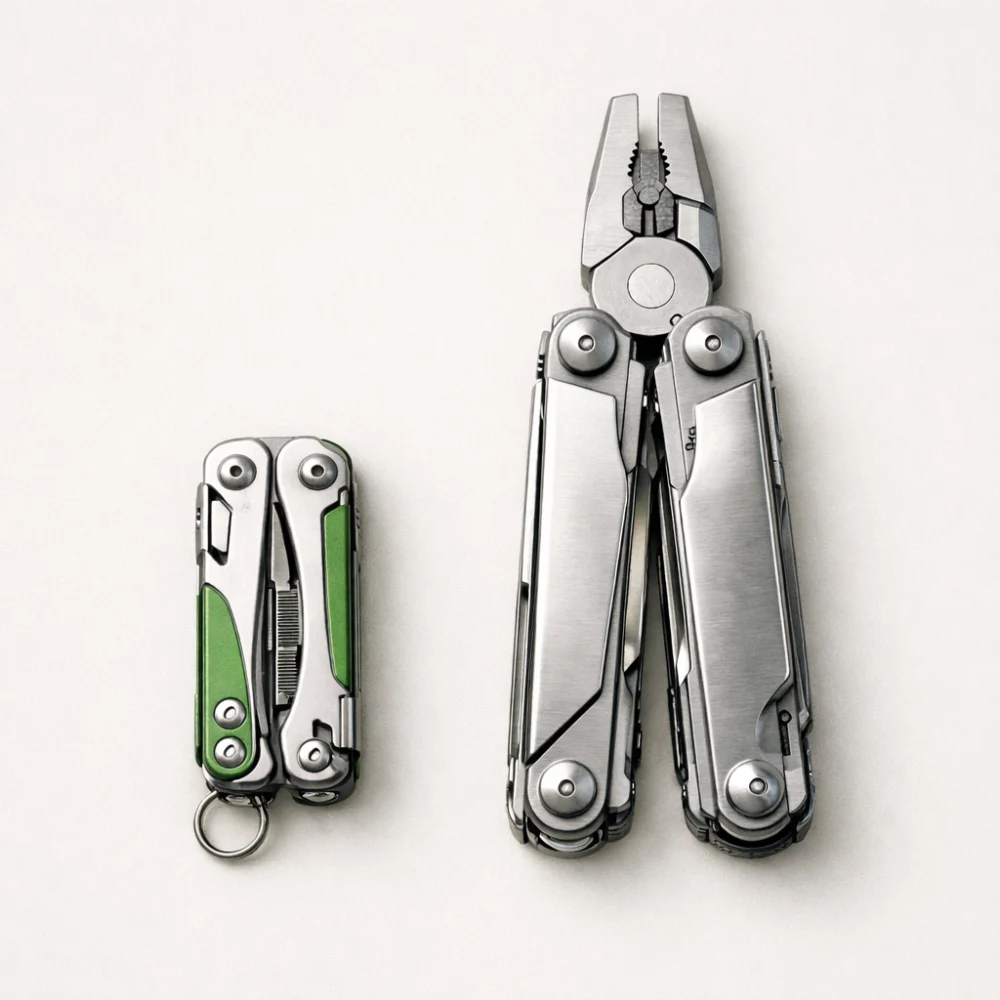
Portability is often the first decision for a multi tool buyer. If you want something to carry every day, a smaller and lighter option may be easier to keep with you, while a larger format may suit a bag, glove box or campsite kit. The main trade-off is convenience versus capability.
Function count versus useful functions
A higher function count can be appealing, but the total number of tools is less important than whether the tool includes the ones you will actually use. A buyer who mainly wants simple cutting, gripping or screwdriving tasks may not need a more complex setup. Look closely at the actual tools rather than assuming more is always better.
Intended use
Think about whether the tool is mainly for everyday carry, camping, travel, vehicle use or general household tasks. That context helps you judge whether compactness or a broader feature set is more valuable. A tool that feels ideal for occasional use may be frustrating if you want it in your pocket all day.
Ease of access and handling
How the tool opens, folds and sits in the hand can affect whether you actually enjoy using it. If a model feels awkward to hold, it may be less appealing even if the function list looks good on paper. For frequent use, practical handling often matters more than headline feature counts.
Common Gerber multi tool types
Within this category, buyers often choose between compact everyday carry styles and larger general-purpose multi tools. Compact versions are easier to keep close at hand, which suits people who want a small backup tool. Larger versions are better for buyers who want a broader selection of tools and do not mind carrying extra bulk.
Some tools are also designed with pocket-friendly convenience in mind, while others are more suited to being stored in a bag, car or camping kit. Neither is automatically better; it depends on whether the tool needs to disappear into your pocket or stay ready for occasional use elsewhere.
Which type suits which buyer?
| Buyer need | What to prioritise | Why this helps |
|---|---|---|
| Everyday carry | Compact size, easy carry and a sensible core tool set | Makes it more likely you will actually take it with you |
| Camping and outdoor use | Balanced versatility and comfortable handling | Helps with small campsite jobs without carrying more than you need |
| Car or home backup | Broader tool selection and practical access | Useful when the tool stays in one place rather than being carried all day |
| Gift buying | General usefulness and straightforward size | A less specialised choice is easier to suit the recipient |
Common mistakes and misunderstandings
- Choosing by tool count alone: a long list of functions is not automatically more useful than a smaller, better-chosen set.
- Ignoring carry comfort: a tool that is awkward to keep on you often gets left behind.
- Buying for rare tasks only: if the tool will be used often, everyday practicality matters more than occasional extras.
- Assuming all multi tools feel the same: size and handling can make a big difference to real-world satisfaction.
Safety and suitability caveats
Before buying, consider where and how you expect to use the tool, since a compact model may be convenient but not ideal for heavier tasks. It is also worth checking how the individual product is intended to be carried and what tools are included. Specifications vary by model, so always check the individual product page before buying.
Maintenance, storage and ownership considerations
Multi tools are generally easier to keep if you store them dry, clean them after use and return them to a sensible place when not carrying them. If a model includes more moving parts or a larger tool set, it may benefit from a bit more attention to cleanliness and regular checking. Think about whether you want something that lives in a pocket, bag or fixed storage location, because that affects how often it is ready to hand.
How to compare options efficiently
- Decide where you will carry the tool most of the time.
- Choose the size and style that fits that use.
- Compare the actual tools included, not just the headline count.
- Check whether the shape and carry method suit your routine.
- Read the individual product page carefully before you choose.
Summary buyer decision checklist
- Will this be for everyday carry, camping, travel or backup use?
- Is the size practical for how you plan to carry it?
- Do the included tools match the jobs you expect to do?
- Would a compact model be enough, or do you need broader versatility?
- Does the handling and carry style suit your routine?
- Have you checked the individual product page for the exact tool set?
Frequently asked questions
Are Gerber multi tools suitable for everyday carry?
Many buyers choose them for everyday carry because they can cover small, routine tasks in a compact format. The key question is whether the size and carry style suit your clothing, bag or pocket habits. If it is awkward to carry, you are less likely to keep it with you.
What is the difference between a compact and a larger multi tool?
Compact tools are usually easier to carry, while larger tools may offer a broader set of functions or a more substantial feel. The choice depends on whether portability or versatility matters more to you. For many buyers, the right answer is the smallest tool that still covers the most likely tasks.
How many functions do I really need?
Start with the tasks you expect to do most often and work from there. A tool with fewer, well-chosen functions can be more practical than one with many extras you rarely touch. Focus on usefulness rather than the highest count.
Is a multi tool a good gift?
It can be, especially if the recipient likes camping, practical kit or everyday carry gear. A general-purpose choice is usually safer than something highly specialised. Size and ease of carrying are worth considering if you are unsure what they already own.
Should I choose one for a pocket, bag or car?
If it will stay in a pocket, compactness usually matters most. If it will live in a bag or car, you may have more freedom to choose a larger or more versatile option. The best choice depends on how quickly and how often you want to reach for it.
What should I check before buying online?
Check the exact list of included tools, the overall size and the carrying method shown on the product page. It also helps to compare the intended use against your own routine so you do not overbuy or end up with a tool that is too bulky. Specifications vary by model, so always check the individual product page before buying.

