
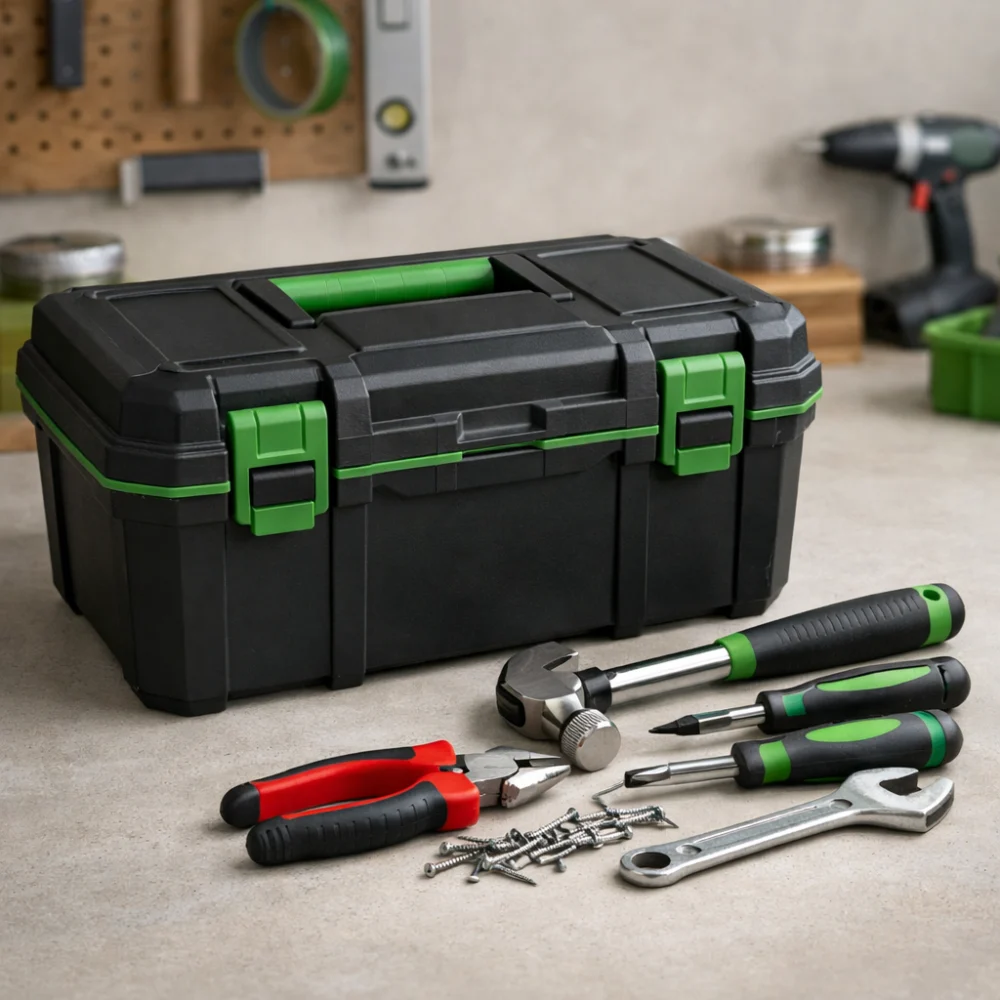
Tool boxes come in more than one form, from simple portable carry cases to larger chests and wheeled storage. The right choice depends on how many tools you need to keep together, whether you move them often and how neatly you want to organise smaller items.
If you are buying for DIY, trade use or a home workshop, it helps to think first about access, portability and storage space. A compact box is easy to lift and carry, while a larger chest may suit a fixed location or a heavier tool collection.
This guide focuses on the buying choices that usually matter most: size, layout, build style, movement and storage practicality. It can help you narrow down the type of tool box that fits your routine before you compare individual products.
What should you look for in a tool box?
Start with how the box will be used. A good tool box is not simply the biggest one available; it is the one that fits your tools, your carrying needs and the place where it will live. If you move tools between jobs, a lighter portable design may be more useful than a tall cabinet. If you mostly work in one place, a larger chest or stacked solution may be easier to live with.
The main trade-off is usually portability versus capacity. More space can mean more weight and a bulkier shape, while a smaller box is easier to handle but may fill up quickly. Specifications vary by model, so always check the individual product page before buying.
| Feature | What it means | Why it matters | What to check |
|---|---|---|---|
| Size and capacity | How much tool storage the box offers | Decides whether your hand tools, fixings and accessories fit together | Internal layout, overall dimensions and whether the shape suits your kit |
| Portability | How easy it is to carry or move | Important if you take tools to different rooms, jobs or sites | Handles, weight, wheels or stacking features where relevant |
| Organisation | Compartments, trays or drawers for separating items | Helps keep small parts and frequently used tools easy to find | Tray depth, drawer count, removable inserts and divider layout |
| Build style | Carry case, chest, rolling cabinet or stackable system | Affects access, footprint and how the storage fits your workspace | Whether it is meant for mobile use or fixed storage |
| Closure and security | Lids, latches or lockable features | Useful for keeping the contents contained and more orderly | Latch type and any lockable design details listed by the seller |
Key decision criteria explained
How much storage do you actually need?
Think about the tools you use together, not just the total number you own. A screwdriver set, pliers, tape measure and fixings may fit neatly in a compact box, while power tools and accessories may call for a deeper or wider design. Overbuying can leave you with a box that is awkward to carry or wastes space on the shelf.
Will you carry it, roll it or leave it in one place?
Movement changes the best shape. If the box will travel between locations, comfortable handles and manageable weight matter more than maximum storage. If it is staying in a garage or workshop, a larger chest or cabinet-style solution may be more practical. Wheels can help with heavier setups, but they also make the unit less compact to store.
How important is organisation?
Some buyers need a simple container for larger hand tools. Others want trays, drawers or compartments so screws, blades, bits and accessories do not mix together. Better organisation usually saves time, but it can also reduce the space available for larger items, so consider whether you need sorting or open volume.
What kind of build suits your routine?
Different tool box styles serve different storage habits. A carry box is straightforward and portable. A chest or drawer unit suits users who want quicker access to a wider range of tools. A stacked or modular arrangement can work well if you want to separate hand tools from accessories or keep expanding storage over time.
What about access and day-to-day convenience?
It is easy to focus on capacity and forget how the box opens. A good design should let you reach the tools you use most without emptying the whole unit. If you often use small items, a lid tray or internal organiser may be more useful than a single large compartment.
Common tool box types and who they suit
Most tool boxes fall into a few practical types, even when the details differ from one product to another.
- Portable carry boxes suit users who want a simple, moveable option for hand tools and small accessories.
- Tool chests suit people who want more storage and a more structured layout, often for workshop use.
- Rolling tool cabinets suit heavier collections where moving the storage unit is easier than lifting it.
- Stackable or modular systems suit buyers who like separating tools by task or expanding storage in stages.
The main limitation of any more complex design is usually size and weight. More drawers or sections can improve organisation, but they can also make the unit less compact and less convenient to move.
Which tool box suits different buyers?
| Buyer need | More suitable features | Why |
|---|---|---|
| Occasional DIY use | Simple portable storage, clear lid or tray layout | Keeps essential tools together without adding unnecessary bulk |
| Frequent home workshop use | More organised compartments, sturdier construction, easy access | Helps separate tools and accessories for quicker jobs |
| Moving tools between locations | Comfortable handles, manageable weight, compact shape | Makes carrying less awkward and reduces strain from repeated movement |
| Heavier tool collection | Chest, cabinet or wheeled storage | Better for larger volumes and bulkier items |
| Small parts and fixings | Trays, dividers or drawers | Helps prevent items from mixing and becoming harder to find |
Common mistakes when buying a tool box
- Choosing by size alone: a bigger box is not always more usable if it is too heavy or awkward to carry.
- Ignoring internal layout: a large empty space can be less practical than a smaller box with sensible compartments.
- Overlooking the place it will live: a tall or wide box may not suit a crowded shed, van or workshop shelf.
- Assuming all tool boxes suit the same jobs: portable carry storage and fixed workshop storage solve different problems.
- Forgetting about access: if you use certain tools daily, make sure they are easy to reach without rearranging everything.
Safety and suitability caveats
A tool box is mainly a storage purchase, but suitability still matters. Check that the construction, latches and carrying arrangement match the weight and shape of the tools you plan to store. If you need to transport sharp or heavy items, make sure the design gives you a sensible way to keep them contained and organised.
Do not assume that any one tool box will suit power tools, hand tools and small parts equally well. The best choice depends on the mix of items you want to keep together and how often you need to access them.
Maintenance, storage and lifespan considerations
Tool boxes are usually simple to look after, but the way you store them can affect how long they stay useful. Keep them in a dry place where possible, avoid overloading drawers or lids and make sure moving parts such as latches or handles are not forced beyond their intended use. If the box has removable trays or inserts, a design that is easy to clean can be more convenient over time.
If you plan to move the box often, think about how often you will be lifting it and whether that affects the size you should choose. A slightly smaller model that stays manageable may be a better long-term choice than a larger one that quickly becomes cumbersome.
How to compare tool boxes efficiently
- List the tools and accessories you want to store together.
- Decide whether the box needs to be carried, rolled or kept in one place.
- Compare the internal layout, not just the outside size.
- Check how easy it is to access the items you use most often.
- Read the individual product page carefully for the exact dimensions and features.
Tool box buying checklist
- Fits the tools and accessories you want to keep together
- Matches your need for portability or fixed storage
- Has a layout that suits how you work
- Offers easy access to frequently used items
- Fits the space where you will store it
- Seems practical for the weight you expect to carry
Frequently asked questions
Is a tool box better than a tool bag?
It depends on what you need to carry. A tool box usually offers firmer structure and better organisation for keeping items together, while a tool bag can be lighter and more flexible. If you want stronger separation for small parts or a neater storage shape, a tool box is often the more practical choice.
Should I choose a tool box with drawers or one open compartment?
Drawers and compartments help if you keep many small items and want quicker access. A single open compartment can be better for larger tools or a simpler setup. The right answer usually comes down to whether you value organisation or maximum open space more.
Are wheeled tool boxes worth considering?
They can be useful if your tool collection is heavy or if you need to move storage across a workshop or garage. The trade-off is that wheeled units are generally less compact than a simple carry box. They make most sense when movement is frequent enough to justify the extra size.
What should I check if I store power tools in a tool box?
Check the internal space, depth and layout so the tools sit properly and do not crowd the lid or compartments. It also helps to look for a design that leaves room for chargers, batteries or accessories if you plan to store them together. Specifications vary by model, so always check the individual product page before buying.
How do I know if a tool box is too small?
If your most-used tools do not fit comfortably, or you have to stack items so tightly that access becomes awkward, the box is probably too small for your needs. It is usually better to leave a little room for movement and easier sorting than to fill every gap.
Can one tool box suit both home DIY and workshop use?
Yes, if the layout matches the way you work. Some buyers want a portable box for basic DIY tasks, while others need more structured storage for workshop use. A flexible design can do both, but only if its size and organisation are right for the tools you own.

