
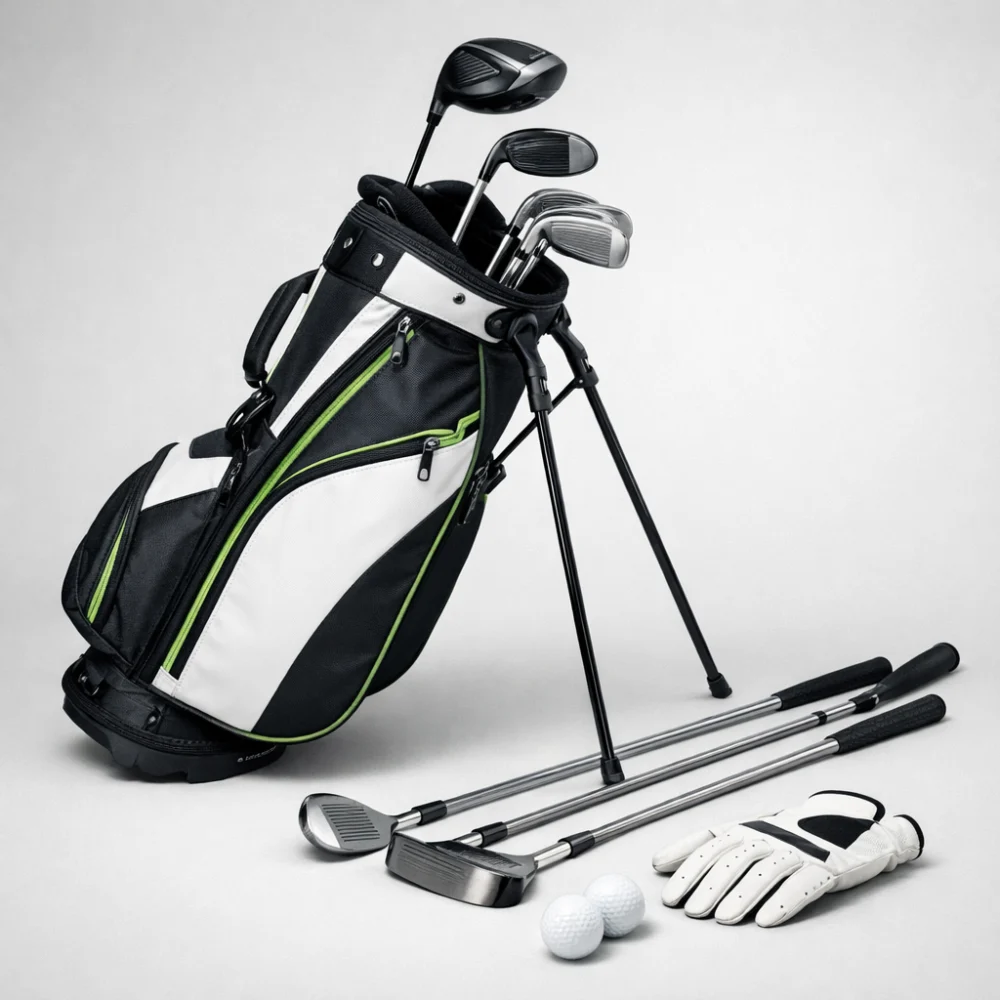
A golf bag is more than somewhere to keep clubs. The right one can make it easier to carry, organise and access your gear, whether you walk the course, use a trolley or want something for occasional range sessions.
Because golf bags vary in layout, weight, storage and intended use, it helps to compare them by practical fit rather than by looks alone. A bag that suits a regular walker may feel awkward on a trolley, while a cart-focused design may be less comfortable to carry.
This guide is for buyers who want to narrow down the choice quickly and avoid paying for features they will not use. It also helps if you are replacing an older bag and want to understand which details are worth checking before you buy.
What should you look for in a golf bag?
The best starting point is how you will use the bag most often: carrying, trolley use, mixed use or travel. From there, compare the bag’s weight, organisation, storage and support features against your routine. A lighter bag is usually easier to move around, but a more structured bag may offer better separation and convenience.
Specifications vary by model, so always check the individual product page before buying.
| Feature | What it means | Why it matters | What to check |
|---|---|---|---|
| Bag type | Whether the bag is designed mainly for carrying, trolley use or travel. | It affects comfort, stability and how easy the bag is to live with. | Match the type to your usual round and how you transport your clubs. |
| Weight and handling | How easy the bag is to lift, carry and position. | Important for walkers and anyone who moves their bag frequently. | Look at the stated design and consider whether you want a stand, strap or trolley-friendly format. |
| Club organisation | How the top is divided for clubs. | Better organisation can reduce clutter and make clubs easier to reach. | Check the top layout and decide how much separation you want. |
| Storage space | Pockets and compartments for balls, gloves, layers and accessories. | Too little storage becomes inconvenient; too much can add bulk. | Think about what you normally carry and whether the pocket layout suits it. |
| Stability and base | How well the bag stands or sits securely. | Useful for keeping the bag upright at the range or on the course. | Check whether it is designed to stand, sit on a trolley or travel in a case. |
Key decision criteria explained
Carry comfort
If you walk most rounds, comfort matters as much as storage. Look for a design that is intended to be carried rather than one that only works well on a trolley. The trade-off is simple: the lighter and more compact the bag, the less likely it is to feel bulky, but it may offer less room for extras.
Trolley compatibility
Some bags are aimed at carrying, while others are better suited to trolley use. If you mostly use a trolley, choose a bag that sits securely and gives you access to the pockets once mounted. A carry-first design can still be used on a trolley, but it may not be as convenient.
Club layout and organisation
The top layout affects how easily you can separate clubs and how tidy the bag feels in use. A more divided top can help reduce club crowding, while a simpler top may be enough if you prefer less structure. Think about whether you value quick access or a more organised layout.
Storage and pocket layout
Golf bags differ in how they distribute storage across pockets. If you carry waterproofs, food, gloves or other accessories, pocket space becomes important quickly. The main question is not simply how many pockets there are, but whether the layout suits the items you actually bring.
Travel and transport needs
If you need a bag for trips as well as local rounds, consider whether you need a travel bag rather than a standard golf bag. A travel-focused option is intended to protect clubs during transport, while ordinary bags are designed for day-to-day use. These are different jobs, so it helps to separate them clearly before buying.
Common golf bag types
Most buyers will be choosing between a few familiar formats. The main differences are about how the bag is carried, supported and stored, rather than about one type being universally better.
- Stand bags: Suited to golfers who walk and want the bag to stand upright when they set it down. The trade-off is that stand mechanisms can add complexity compared with simpler designs.
- Cart or trolley bags: Designed for use on a golf trolley or cart, often with a layout that makes access easier while mounted. They may be less convenient if you carry your clubs often.
- Carry bags: A straightforward option for golfers who want a lighter, simpler bag for short sessions or range use. The limitation is usually less storage and a simpler structure.
- Travel bags: Intended for transporting clubs between locations. They are not a direct replacement for an everyday course bag and are usually chosen for a specific travel need.
Which golf bag suits which buyer?
| Buyer need | What to prioritise | Likely trade-off |
|---|---|---|
| Regular walker | Comfort, manageable weight and a design that is easy to carry. | Less space or structure than a larger trolley-focused bag. |
| Trolley user | Stable fit, easy pocket access and a layout that works on a trolley. | Not always the lightest or easiest to carry by hand. |
| Occasional golfer | Simplicity, sensible storage and straightforward handling. | Fewer specialist features. |
| Frequent traveller | Transport protection and a format suited to moving clubs safely. | May be bulkier than an everyday course bag. |
| Range-focused buyer | Enough room for essentials without unnecessary bulk. | Less capacity for full-round use. |
Common mistakes to avoid
- Choosing by appearance alone: a bag can look smart but still be awkward for your usual way of playing.
- Ignoring how you move around the course: a carry-first bag and a trolley-focused bag solve different problems.
- Overestimating storage needs: more pockets are not always better if they make the bag larger or heavier than you want.
- Forgetting about access: storage is only useful if you can reach it easily when the bag is on the ground or mounted.
- Mixing up everyday bags and travel bags: they are designed for different purposes and should be compared separately.
Suitability and care considerations
Think about where the bag will be used and stored. Bags used often will need regular emptying and simple cleaning, while travel bags may spend longer in storage between trips. If you play in mixed weather, it is sensible to check how much protection and coverage the bag is intended to provide, without assuming every model handles the same conditions in the same way.
It is also worth considering how much weight you are comfortable lifting in and out of the car, onto a trolley or through a venue. The most convenient bag is usually the one that fits your routine with the least friction.
How to compare golf bags efficiently
- Decide how you mainly use your clubs: carry, trolley, travel or mixed use.
- Shortlist the bag type that fits that use first.
- Compare weight, organisation, storage and stability next.
- Check whether the pocket layout and top layout suit the way you pack your gear.
- Read the individual product page carefully before buying.
Summary buyer checklist
- Have you chosen the right bag type for your main use?
- Will it be comfortable enough for the way you carry or move it?
- Does the club layout suit how you like to organise your set?
- Is the storage layout practical for the items you normally take?
- Will it work well with a trolley if you use one?
- Is it intended for everyday use or travel?
- Have you checked the individual product page for the exact details?
Frequently asked questions
What is the difference between a stand bag and a cart bag?
A stand bag is usually chosen by golfers who want the bag to stand upright when set down and remain reasonably comfortable to carry. A cart bag is more focused on trolley or cart use and may give easier access to storage when mounted. The main difference is the intended way the bag is used, not just its appearance.
Can I use one golf bag for both carrying and a trolley?
Sometimes yes, but the experience may not be equally good in both situations. A bag that works well for carrying may be less stable or less convenient on a trolley, while a trolley-focused bag can feel awkward to carry. If you regularly switch between both, look carefully at the bag’s intended use and layout.
How much storage do I really need?
That depends on whether you carry just the essentials or like to bring layers, gloves, food and extra accessories. More storage can be helpful, but it can also mean a larger bag. The right amount is the one that fits your routine without adding unnecessary bulk.
Is a travel bag the same as a normal golf bag?
No. A travel bag is designed mainly to protect and transport clubs between locations, while a normal golf bag is designed for use on the course or at the range. If you travel with clubs often, a travel-focused option may be worth considering alongside your everyday bag.
Should I prioritise lightness or organisation?
That depends on whether you are most sensitive to carrying comfort or to having a tidy, well-ordered setup. Lighter bags are usually easier to move, while more structured bags can make clubs and accessories easier to organise. Most buyers need some balance between the two.
What should I check before buying online?
Check the bag type, intended use, storage layout and how the top is organised. Then read the product page carefully for the exact details rather than assuming one bag works like another. That is the simplest way to avoid choosing a design that does not suit your routine.

