
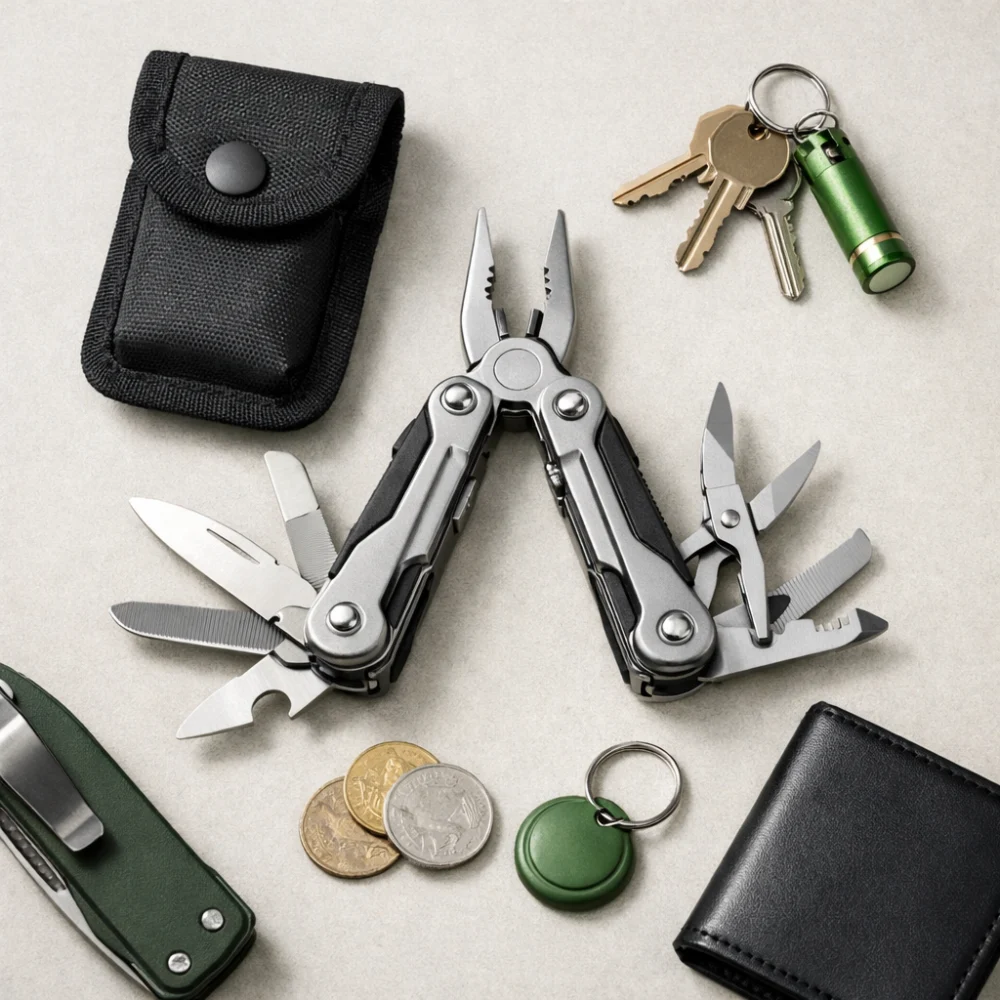
Pocket multi tools are a compact option for everyday carry, camping kit and quick fixes when a full toolbox is not practical. The right choice depends less on the number of functions and more on how you expect to carry and use the tool.
Some buyers want something small enough to disappear in a pocket or on a keyring, while others care more about grip, access and the usefulness of the main tools. This guide helps you compare those trade-offs without overcomplicating the decision.
What should you look for in a pocket multi tool?
Start with the way you will carry it, then look at the tools you are most likely to use. A smaller design is easier to carry every day, but it may be less comfortable for longer tasks or larger hands. If you want something for occasional campsite jobs, light repairs or everyday convenience, focus on build quality, tool selection and how securely the tool folds or stores away.
Specifications vary by model, so always check the individual product page before buying.
| Feature | What It Means | Why It Matters | What To Check |
|---|---|---|---|
| Size and carry style | How the tool is carried, such as in a pocket, on a keyring or in a wallet-style format | Determines convenience, portability and whether it is likely to be with you when needed | Overall size, weight and whether the carry method suits your routine |
| Tool selection | The functions included in the multi tool | Shows what tasks it can realistically handle | Whether the set includes the tools you will actually use, rather than only extra features |
| Ease of access | How quickly tools can be opened and used | Affects everyday practicality | How each function is deployed and whether the layout feels manageable |
| Grip and control | How secure the tool feels in the hand | Important for comfort and confidence during small jobs | Handle shape, body thickness and whether the size suits your hand |
| Build and finish | The general construction and surface finish | Influences durability and day-to-day feel | Materials, hinge quality and whether the finish is likely to suit regular carrying |
| Storage and case | Whether the tool comes with a pouch, keyring attachment or other carry option | Can make the tool easier to keep organised and protected | Included carry accessories and whether they fit your intended use |
Key decision criteria explained
Carry size versus usability
The smallest pocket multi tools are attractive because they are easy to carry, but compactness can reduce comfort and leverage. If you expect to use the tool often, a slightly larger format may be easier to hold and operate. If you only want occasional convenience, the smallest practical version may be enough.
Which tools you will actually use
It is easy to be distracted by a long list of functions, but unused features do not make the tool more useful. Think about the jobs you actually encounter, such as opening packaging, light repairs, small adjustments or campsite tasks. Choose a tool set that matches those jobs rather than one with the highest number of functions.
Access and simplicity
Some pocket multi tools are straightforward to unfold and use, while others pack many functions into a tighter space. A simpler layout can be easier to learn and quicker to use, especially for first-time buyers. More compact designs may save space, but they can also feel less immediate in use.
Comfort in the hand
When a tool is very small, the trade-off is often less leverage and less comfort for repeated use. If you have larger hands or expect to use the tool for more than very brief tasks, look carefully at the shape and thickness of the body. A tool that is pleasant to carry but awkward to use can be disappointing in practice.
Common pocket multi tool types
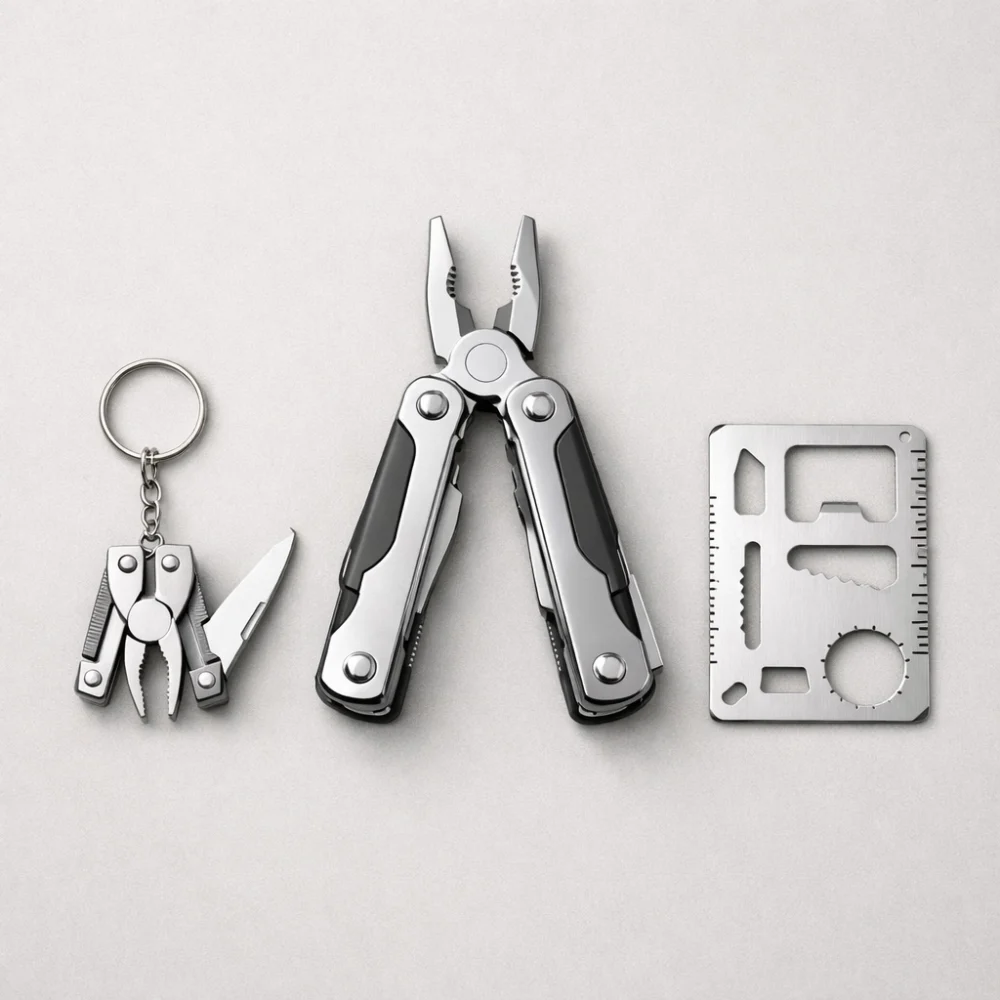
There are a few common formats in this category. Keyring-sized tools are the easiest to carry and suit light everyday tasks. Folding pocket multi tools usually give a better balance between portability and comfort. Wallet or card-style tools are very slim and can be convenient for storage, but they may feel more limited in hand. Smaller keychain designs suit occasional use, while compact folding tools often suit buyers who want a more usable grip.
Which type suits which buyer?
| Buyer need | What tends to matter most | Likely fit |
|---|---|---|
| Everyday carry | Small size, easy access and comfortable pocket carry | Compact folding or keyring-style tools |
| Light camping use | A practical mix of common tools and a shape that is easy to handle | Compact folding tools with a sensible tool set |
| Gift buying | Simple usefulness and broad appeal | General-purpose pocket tools with familiar functions |
| Occasional emergency use | Reliability and easy storage | Tools that are easy to keep in a bag, glove box or pocket |
| Minimal carry | Very slim profile and low bulk | Card-style or keyring options |
Common mistakes and misunderstandings
- Choosing by function count alone: more functions do not always mean better usefulness. It is usually wiser to focus on the few tools you will rely on most.
- Ignoring carry comfort: a tool that is awkward in pocket or hand may stay unused. Carry style is part of the buying decision, not an afterthought.
- Assuming all pocket tools are equally robust: very slim designs can be handy, but they are not the same as a larger multi tool for tougher jobs.
- Overlooking the opening mechanism: some tools are easier to access than others. If you expect frequent use, ease of opening matters.
Suitability and care to keep in mind
Pocket multi tools are useful for light, practical tasks, but they are not a replacement for specialist tools where a job needs more strength, size or precision. Check that the functions match the way you intend to use the tool, especially if you are buying it for camping or everyday carry. Specifications vary by model, so always check the individual product page before buying.
For ownership and care, it is sensible to think about where the tool will be stored when not in use and whether it benefits from a pouch, case or separate pocket. Compact tools are easy to misplace, and regular carrying can expose them to dirt or moisture, so a simple storage habit helps them stay ready to use. If a model uses moving parts, think about how easy it will be to keep clean.
How to compare pocket multi tools efficiently
- Decide where you will carry it most often.
- Choose the format that suits that carry method.
- Compare the functions against the tasks you actually expect.
- Check whether the size feels practical for your hand and pocket.
- Review the individual product page for any model-specific details before buying.
Summary buyer decision checklist
- Does the carry style suit your pocket, bag or keyring use?
- Do the included functions match the jobs you expect to do?
- Is the tool likely to feel comfortable enough for the way you will use it?
- Is the format simple enough for your level of experience?
- Have you checked the individual product page for model-specific details?
Frequently asked questions
Are pocket multi tools good for everyday carry?
They can be a practical everyday item if you want a small tool for light jobs and quick fixes. The main question is whether the size and carry style fit comfortably into your routine.
Is a larger multi tool always better?
Not necessarily. Larger tools can feel more comfortable and versatile, but they are also less discreet and may be less likely to be carried every day.
Should I choose the tool with the most functions?
Only if those functions are actually useful to you. A smaller set of well-chosen tools is often more practical than a long list of features you will not use.
What is the main trade-off with very compact models?
They are easy to carry, but they can be less comfortable to use and may offer less leverage for repeated tasks. That trade-off is often acceptable for occasional use.
Are pocket multi tools suitable for camping?
They can be useful for light campsite tasks, especially when convenience matters. For heavier jobs, you may want a larger or more specialised tool.
Do I need a pouch or case?
Not always, but a pouch or case can help protect the tool and keep it easier to find in a bag. Whether it is worthwhile depends on how you plan to carry it.

