
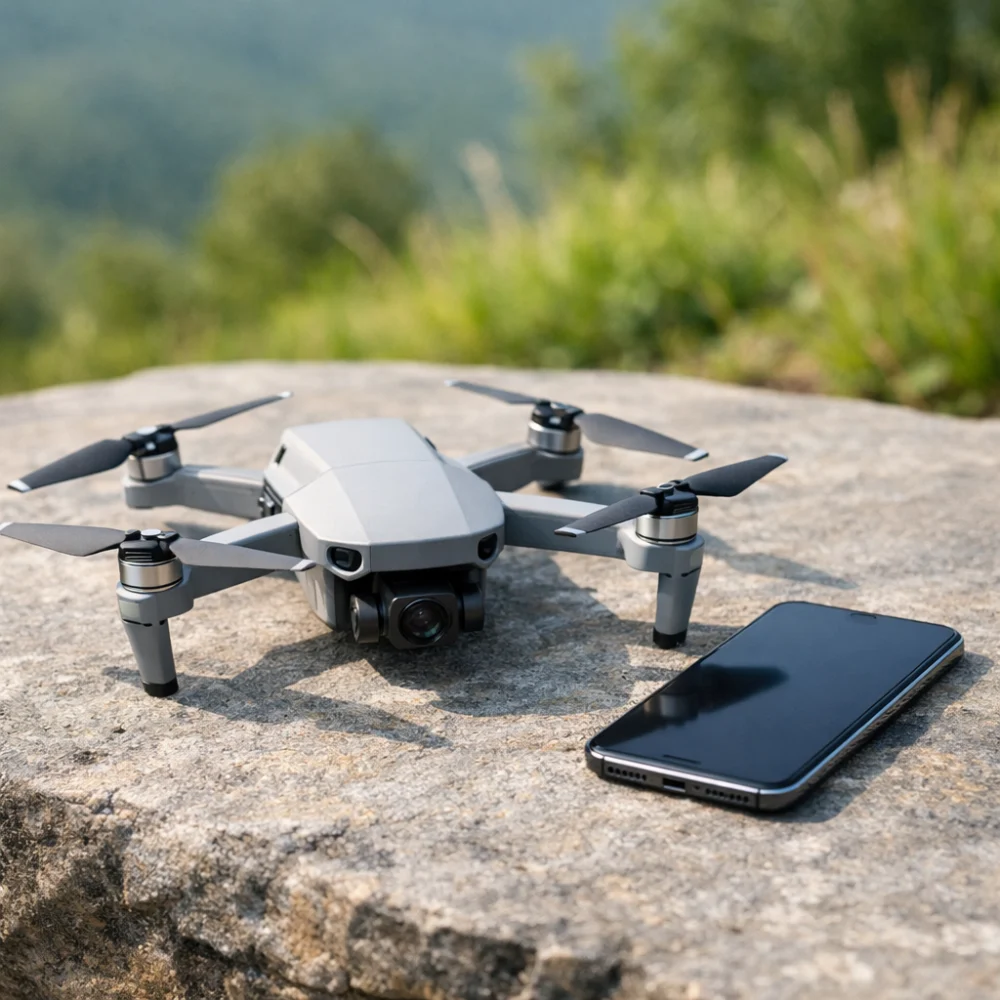
Camera drones can be a simple way to record travel, outdoor activities, property views or hobby flying from a new angle. They also come with more choice than many buyers expect, because camera quality, flight controls and beginner-friendly features vary a lot between models.
If you are comparing camera drones for the first time, it helps to separate the flying experience from the camera experience. A drone that is easy to fly is not always the one with the most capable camera, and a camera-focused model may ask a bit more of the pilot.
This guide focuses on the practical buying questions: what you want to capture, how confident you feel flying, and which features are worth paying attention to on the individual product page.
What should I look for in a camera drone?
Start with the balance between camera quality, flight stability and ease of use. The right choice is usually the one that matches your experience level and the kind of footage you want to take, rather than the one with the longest feature list. Specifications vary by model, so always check the individual product page before buying.
| Feature | What it means | Why it matters | What to check |
|---|---|---|---|
| Camera capability | The image or video recording features built into the drone | Determines how detailed and usable your footage may be | Resolution, lens style, and whether the listing describes live view or recording |
| Flight stability | How steady the drone is in the air | Helps with smoother flying and more controlled camera shots | Features such as altitude hold, stabilisation or GPS, where supplied |
| Ease of control | How simple the drone is to pilot and manage | Important for beginners and for flying in more confined spaces | App control, controller layout, beginner modes and return features |
| Range and connection | How the drone links to the controller or phone | Affects how reliably you can fly and view the camera feed | Connection method, live video support and any stated operating limits |
| Battery and charging | How long you can fly before recharging | Determines how much flying time you can expect in one session | Battery count, charging method and whether spares are included |
| Portability | How easy the drone is to carry and store | Useful if you plan to travel or take it outdoors often | Foldable design, case inclusion and packed size, where listed |
Key decision criteria
Camera quality
For many buyers, the camera is the main reason to choose this category, but camera quality is not just about headline resolution. The useful question is what kind of footage you want to capture and whether the drone is intended for casual clips or more careful framing. A better camera can be less useful if the drone is hard to keep steady in flight.
Flight stability
Stable flying matters because the camera can only do so much if the drone drifts or responds too sharply. Features that support steadier flight can make the drone easier to learn and easier to use for filming. If you expect smoother aerial shots, check what the product page says about stabilisation, altitude control or positioning aids.
Ease of use
Beginners often do best with a drone that keeps the controls straightforward. Helpful features may include simple take-off and landing, return functions, or app-based flying aids, but the exact setup varies widely. If you want a lower-stress first drone, weigh ease of use as carefully as camera quality.
Control range and signal type
Camera drones rely on the quality of their connection for control and, where provided, live video. A buyer who wants to fly farther away may care more about the control link than the camera alone. Check the product page for the stated connection method and any listed limitations, rather than assuming all camera drones behave the same way.
Battery time and spare batteries
Flight time strongly affects how satisfying a drone feels in practice. If the battery is short-lived, a second battery or spare charging option can matter more than a small feature difference elsewhere. Look for how many batteries are included and how they are charged, then decide whether that suits your intended use.
Types and variants within camera drones
Camera drones in this category tend to fall into a few practical groups.
- Beginner-friendly camera drones usually focus on easy controls and simple flight features. They suit first-time buyers, but they may offer fewer advanced camera or stabilisation features.
- Foldable travel drones are designed to be easier to store and carry. They suit people who want to take a drone out regularly, though portability does not always mean the most advanced camera.
- GPS or stabilised drones are often chosen by buyers who want steadier positioning and more confidence in flight. The trade-off is that they can be more involved to compare and may need closer attention to the product details.
- Camera-led hobby drones prioritise imaging and flight control for more deliberate use. They can be a better fit if camera results matter more than absolute simplicity.
Which camera drone suits which buyer?
| Buyer need | Features to prioritise | Why |
|---|---|---|
| First-time flying | Simple controls, return functions, altitude help | Makes the learning curve less steep |
| Casual family use | Easy setup, portable size, straightforward camera access | Supports quick use without a long setup |
| More serious filming | Stability aids, better camera handling, dependable connection | Helps produce smoother, more usable footage |
| Travel and day trips | Foldable design, compact storage, sensible battery planning | Makes it easier to bring the drone along |
| Gift buying | Beginner-friendly features and clear instructions in the listing | Reduces the risk of choosing something too complicated |
Common mistakes to avoid
- Choosing only by camera label. Camera quality is important, but flight stability and control ease can matter just as much to the final result.
- Assuming all drone cameras are comparable. Listings can describe very different camera and live-view setups, so read the individual product details closely.
- Overlooking battery practicality. A drone that is fun for a short period may feel limiting if charging takes longer than expected or only one battery is included.
- Buying a more advanced drone than you need. If you are new to flying, extra complexity can make the first experiences less enjoyable rather than more capable.
Safety and suitability notes
Camera drones should be chosen with where and how you plan to fly in mind. Indoor use, outdoor open spaces and close-range hobby flying can all place different demands on the drone, and the right choice depends on the situation. Be sure to check the product page for any stated suitability notes, and consider local rules and restrictions before flying.
Maintenance, storage and everyday ownership
Even a simple camera drone benefits from sensible storage and regular care. Batteries, propellers and carrying cases are all part of the ownership picture, so it is worth thinking about how the drone will be kept between flights and whether replacement parts or accessories are likely to matter to you. If a drone will be used occasionally, ease of charging and compact storage can be as important as camera features.
How to compare camera drone options efficiently
- Decide what matters most: camera quality, flight ease, portability or steadier flying.
- Shortlist drones that suit your experience level.
- Compare the product pages for camera, stability, connection and battery details.
- Check what is included in the box, especially batteries, controller and charging items.
- Choose the model whose trade-offs best match your intended use.
Camera drone buying checklist
- Does the camera level suit the footage you want to capture?
- Is the drone easy enough for your experience level?
- Does the product page mention useful stability or return features?
- Are battery and charging details clear?
- Is the drone portable enough for where you will use it?
- Have you checked any suitability notes before buying?
Frequently asked questions
What is the most important feature in a camera drone?
That depends on how you plan to use it. For some buyers, the camera matters most; for others, a steady, easy-to-fly drone gives better results overall. A balanced choice often matters more than one standout feature.
Are camera drones hard to fly?
Some are very approachable, while others need more practice. Beginner-friendly features can make a big difference, especially if you have not flown a drone before. Always check the product details rather than assuming all camera drones are similarly easy.
Do I need a GPS drone to get good footage?
Not necessarily. GPS can help with steadier positioning on some models, but useful footage also depends on the camera, the controls and how the drone responds in the air. If smoother flight matters to you, it is worth comparing the stability features listed on each product page.
Is a higher camera resolution always better?
Not on its own. Resolution is only one part of the picture, and a higher number does not guarantee better real-world results if the drone is unstable or difficult to manage. Look at the camera information as part of the whole package.
What should I check before buying a drone for a child or beginner?
Focus on simple controls, clear product information and forgiving flight features. It is also sensible to think about where the drone will be used and whether it is suitable for the intended pilot’s experience level. A straightforward model is often a better starting point than a more complex one.
Why do battery details matter so much?
Battery information affects how long you can fly, how often you need to recharge and whether a spare battery would be helpful. For many buyers, this is one of the biggest differences between a drone that feels usable and one that feels limited. Check the individual listing for the battery arrangement before deciding.

