
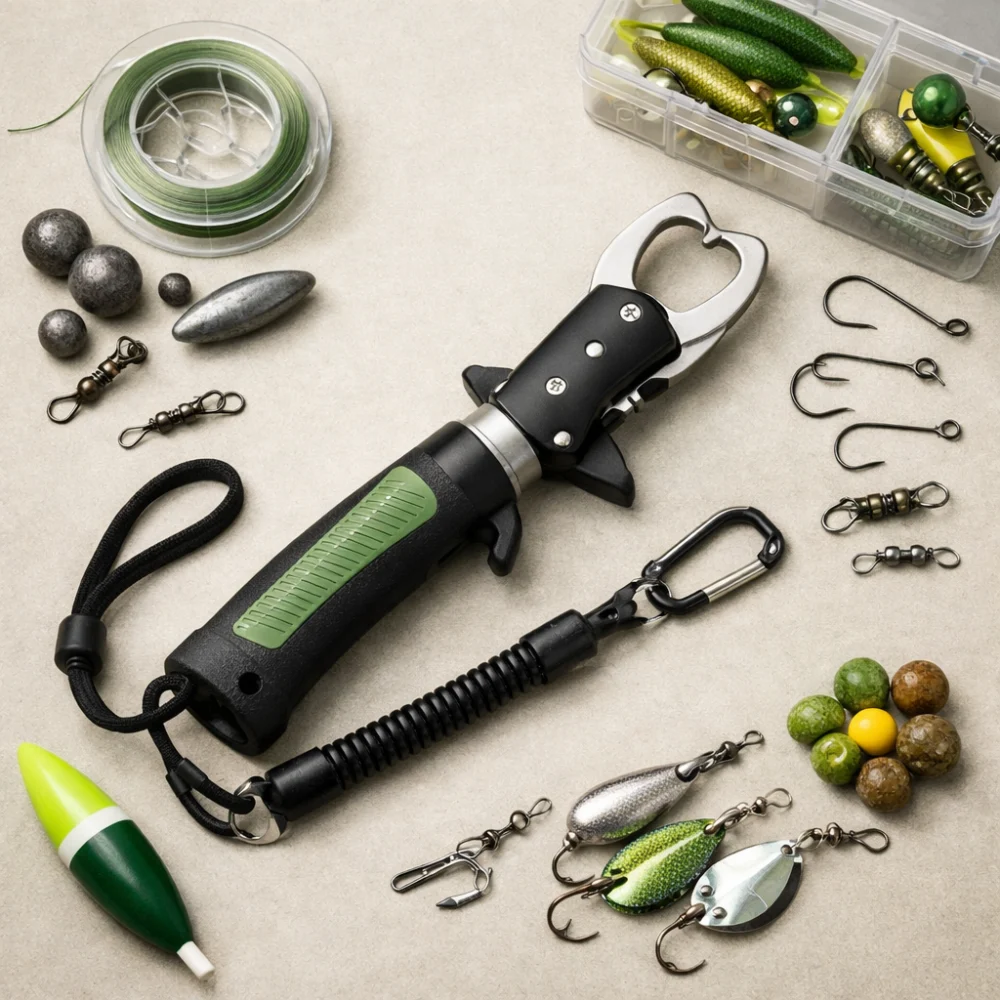
Fish grippers are a simple landing and handling tool used to hold a fish securely while you unhook it, photograph it or move it a short distance. They are most helpful when you want a firmer hold than bare hands can give, but they are not a substitute for careful handling or the right landing equipment.
For many buyers, the main question is not whether to buy a fish gripper, but which style is sensible for the species you target and how you plan to use it. The right choice usually comes down to grip design, ease of one-handed use, comfort in wet conditions and how much control you want over the fish once it is in hand.
Because designs vary, it is worth comparing the details rather than assuming all fish grippers behave the same way. Specifications vary by model, so always check the individual product page before buying.
What should you look for in a fish gripper?
The best starting point is the kind of control you need. A basic gripper may suit short handling tasks, while a model with extra features may be more convenient if you want added grip security or a more versatile tool. The main trade-off is usually between simplicity and extra functionality.
If you fish from the bank, a boat or a kayak, think about how easily you can operate the tool with one hand and how confidently it feels when wet. A fish gripper should support careful handling, not make it awkward.
| Feature | What it means | Why it matters | What to check |
|---|---|---|---|
| Grip style | The way the tool holds the fish | Decides how securely and comfortably you can control the fish | Whether it suits the fish you usually target and how you prefer to handle them |
| Handle comfort | The shape and feel in the hand | Affects control, especially with wet hands or in colder weather | Handle shape, any extra grip texture and whether one-handed use looks practical |
| Material choice | The main material used for the body and jaws | Influences durability, weight and resistance to corrosion | Product description and suitability for the water you fish in |
| Size and weight | How large and heavy the tool is | Changes portability and how easy it is to keep ready in a bag or pocket | Whether it feels manageable for your setup and your usual fishing method |
| Extra features | Added elements such as lanyards or measuring details | May improve convenience, but can also add complexity | Whether the extra feature is genuinely useful for your own fishing |
Key decision criteria explained
Handling control
A fish gripper should make the fish easier to manage, not harder. Some buyers want a simple hold for quick release work, while others want a more secure feel before unhooking or transferring the fish. The trade-off is usually between a straightforward tool and one that offers more control but may feel bulkier.
Comfort in use
Comfort matters more than many buyers expect, especially if you handle fish regularly. A tool that feels awkward in the hand can be tiring and may be harder to control when conditions are wet or cold. Look for a shape that seems easy to hold securely without forcing your wrist into an unnatural position.
Corrosion resistance and care
Fishing tools are often exposed to water, grit and dirt, so it is sensible to think about how the material will hold up over time. If you fish in saltwater or muddy conditions, choose a model that appears suitable for that environment and plan to rinse and dry it after use. The amount of maintenance varies by design and material.
Added functions
Some fish grippers are very basic, while others may combine several useful features. Extra functions can be convenient if you want fewer tools in your bag, but they are only worthwhile if you will actually use them. It is often better to choose a simpler model that feels reliable than a more complicated one with features you do not need.
Types and variants you may see
Fish grippers generally fall into a few practical styles. Some are compact hand tools for straightforward holding tasks, while others are paired with additional handling or unhooking features. There are also models aimed at different fish sizes or different levels of grip security, so the most suitable option depends on how and where you fish.
If you want the simplest possible option, look for a basic gripper that is easy to carry and quick to use. If you prefer fewer separate items in your kit, a multi-function version may appeal, but only if the added features do not make it cumbersome.
Which fish gripper suits which buyer?
| Buyer need | What tends to suit | Why |
|---|---|---|
| Occasional angler | A simple, easy-to-use gripper | It is usually enough for short handling tasks without adding unnecessary complexity |
| Frequent angler | A model that feels comfortable and dependable in the hand | Repeated use makes comfort, grip and ease of cleaning more important |
| Bank or boat fishing | Something manageable with one hand | It can be easier to control fish and tackle at the same time |
| Neat, compact kit | A lighter or more compact design | It is easier to store and carry alongside other fishing tools |
| Minimal-tackle approach | A gripper with a useful extra function only if it replaces another tool | It may reduce what you need to carry, but only if the feature is actually useful to you |
Common mistakes and misunderstandings
Choosing only on looks: a fish gripper should be judged on feel, control and practicality, not appearance alone. A neat design is less useful if it is awkward to hold or harder to clean.
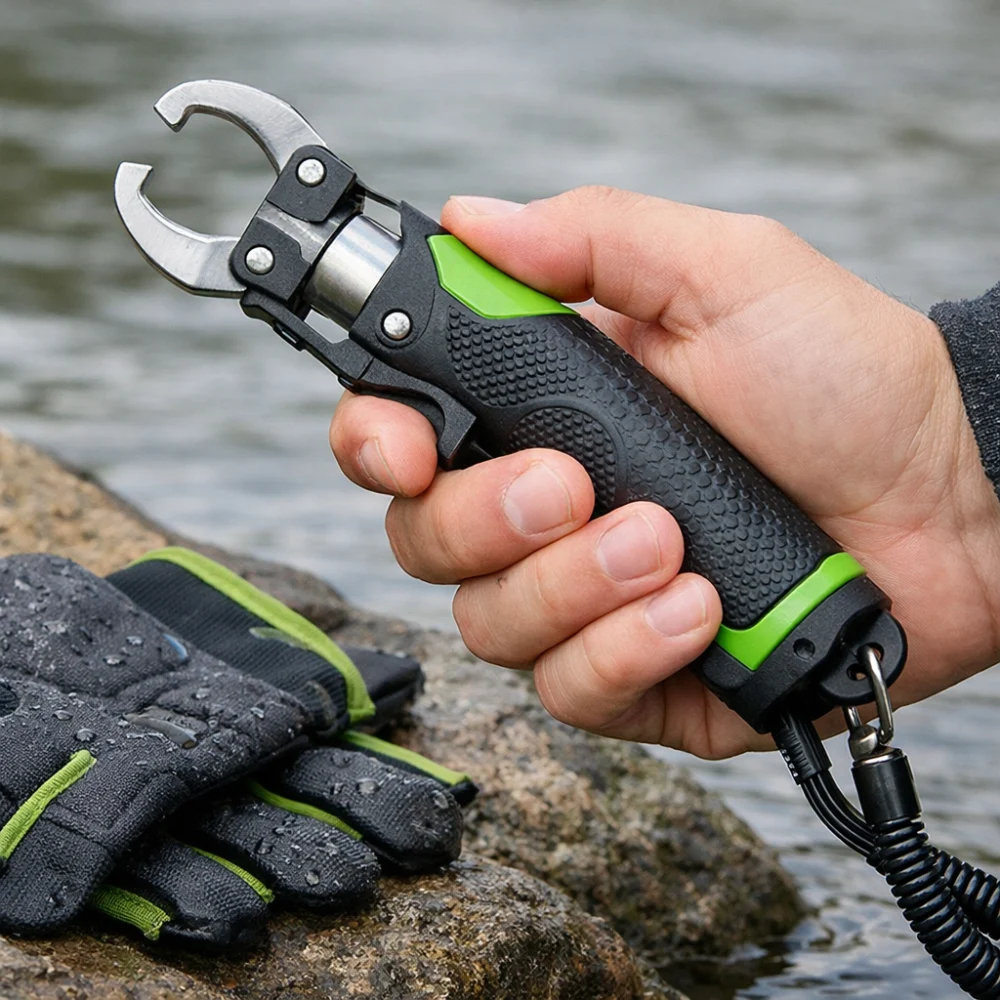
Assuming every model suits every fish: different species, sizes and fishing styles may call for different handling approaches. Check the product description and think about the fish you usually catch.
Overlooking maintenance: even a simple tool benefits from cleaning and drying after use. If you ignore that, wear and corrosion can become more of an issue.
Buying more features than you need: extra functions can be helpful, but they are not automatically better. Decide whether they solve a real problem in your own setup.
Safety and suitability caveats
Fish grippers are handling tools, so they should be chosen with care and used in a way that suits the fish, the water and your own experience. They are not a guarantee of safer handling or a replacement for sensible catch-and-release practice. If you are unsure whether a model suits a particular species or fishing environment, check the individual product information carefully.
Maintenance, storage and lifespan considerations
A fish gripper is usually easiest to look after when you rinse off dirt and moisture after use, then store it somewhere dry. That is especially relevant if you fish in saltwater or keep tackle in a damp bag. Over time, moving parts, surfaces and grips can all be affected by heavy use, so it is worth thinking about how easy the tool looks to clean and stow.
If a model includes any extra parts or accessories, consider whether they add to convenience or create more to keep track of. A straightforward design can sometimes be the most practical long-term choice.
How to compare options efficiently
- Decide how you will use the gripper most often, such as quick handling, unhooking or short transfers.
- Choose the style that matches your fishing routine and the fish you are likely to handle.
- Compare comfort, grip feel, material and any extra features that matter to you.
- Weigh convenience against simplicity and decide whether the added features are worth it.
- Check the individual product page for the details that matter before you buy.
Fish grippers buyer checklist
- Does the gripper suit the fish and fishing style you have in mind?
- Does it look comfortable enough to hold securely when wet?
- Is the size and weight practical for your kit?
- Does the material seem suitable for the conditions you fish in?
- Are any extra features genuinely useful to you?
- Will it be easy to clean, dry and store after use?
Frequently asked questions
Do I need a fish gripper for casual fishing?
Not always, but it can be useful if you want more control when handling a fish. If you only fish occasionally, a simple model may be enough, provided it suits the size and type of fish you usually catch. The main aim is practical handling rather than adding kit for its own sake.
Are fish grippers suitable for all species?
No single gripper suits every situation. The right choice depends on the size of the fish, how you intend to handle it and the conditions you fish in. Check the product details and judge whether the design looks appropriate for your target species.
What is the main difference between a basic and a multi-function model?
A basic gripper focuses on holding the fish, while a multi-function version may combine that with other useful features. The extra convenience can be helpful, but only if you actually need those functions. Simpler models are often easier to carry and use.
How important is the handle shape?
Very important if you expect to use the tool regularly. A comfortable handle can make the gripper easier to control, especially if your hands are wet or cold. It is one of the most practical details to check before buying.
Should I choose the lightest option?
Not necessarily. A lighter tool may be easier to carry, but it still needs to feel secure and comfortable in use. Balance portability against how stable and practical the gripper seems for your fishing style.
How do I look after a fish gripper after use?
Clean off dirt and moisture, then dry it before storage. That helps reduce wear and keeps the tool in better condition for longer. If you fish in harsher environments, regular cleaning becomes even more useful.

