
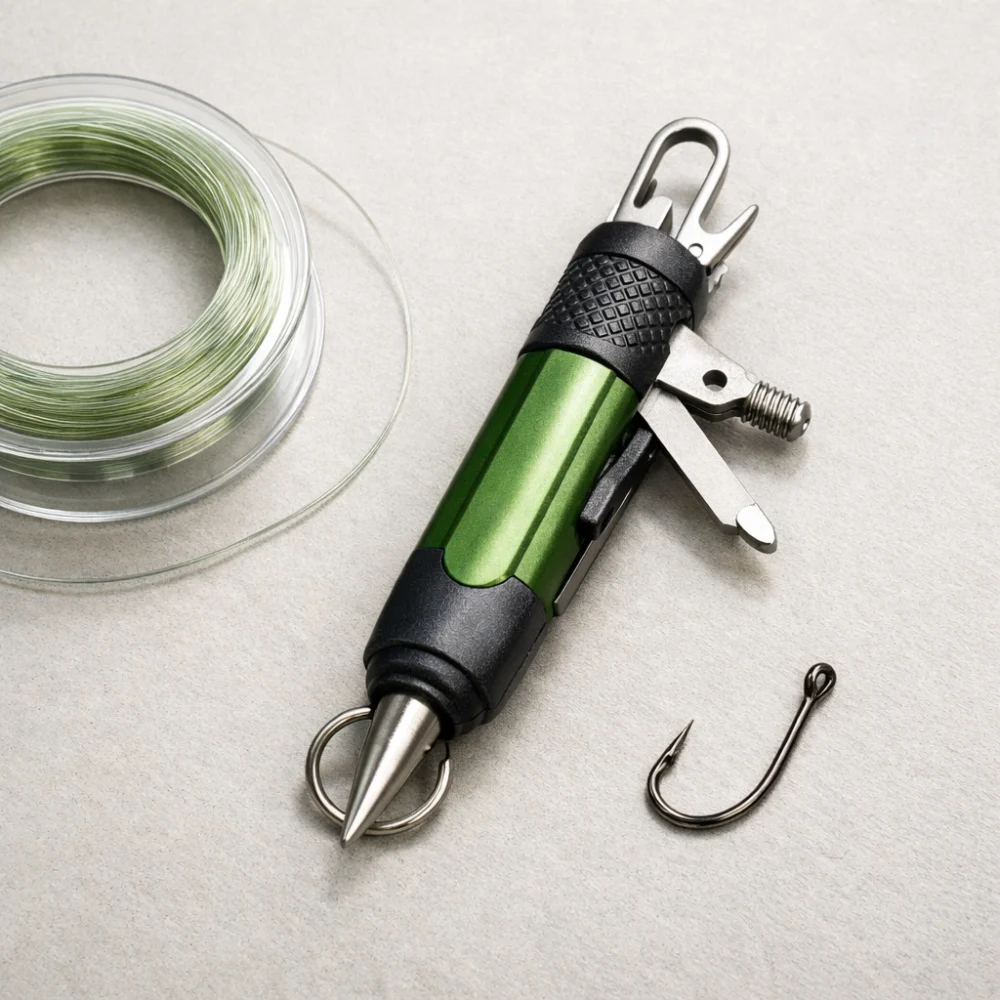
Fishing knot tools are designed to make tying, dressing or managing fishing knots easier and more consistent. They are often chosen by beginners who want extra confidence, but experienced anglers may also want a tool that saves time, helps with smaller hook eyes or reduces fiddly line handling.
This category is less about one universal gadget and more about finding a tool that suits your line type, hook size and usual fishing style. Some tools are simple knot aids, while others combine several small functions in one item.
If you are comparing options, it helps to think about how much help you want from the tool, how often you will use it and whether you need a compact accessory for the tackle box or something easier to grip at the water’s edge.
What should you look for in a fishing knot tool?
The best starting point is to match the tool to the kind of knotting help you actually need. A straightforward tying aid may be enough for occasional use, while a more versatile tool can suit anglers who often retie hooks, lures or leaders. The main trade-off is usually between simplicity and extra functions: simpler tools are easier to carry and use, while multi-purpose designs may do more but need a little more care and attention.
| Feature | What it means | Why it matters | What to check |
|---|---|---|---|
| Intended use | Whether the tool is mainly for knot tying, hook handling or line management | Different jobs need different shapes and levels of control | Read the product description to see what the tool is meant to help with |
| Ease of handling | How comfortable it is to hold and use with wet hands | A fiddly tool can be frustrating, especially when tying small tackle | Look for a design that seems easy to grip and manipulate |
| Line and hook suitability | How well the tool suits the tackle you normally use | Very fine or very small tackle can be harder to work with | Check the individual page for any stated size or use guidance |
| Extra functions | Any added features beyond knot tying | Extra functions can be useful, but only if you will actually use them | Decide whether a simple tool or a multi-use version makes more sense |
| Portability | How easy the tool is to carry in a bag, box or pocket | Compact tools are convenient for travel and quick changes | Consider size, attachment method and how you plan to store it |
| Durability and upkeep | The general robustness of the material and finish | Fishing tackle can be exposed to water, dirt and repeated use | Look for guidance on cleaning and storage, and check the materials described |
Key decision criteria explained
How much help do you want?
Some fishing knot tools are designed to guide the knotting process in a very direct way, which can be useful if you are new to fishing or want less finger strain. Others simply make a particular step easier without doing all the work for you. If you already tie knots confidently, a lighter or simpler tool may be enough.
What tackle will you use it with?
Think about the hooks, leaders, lures and line types you use most often. A tool that suits one style of fishing may feel less helpful in another. Specifications vary by model, so always check the individual product page before buying.
Do you need one tool or several functions?
Multi-function tools can save space, especially if you like to keep your kit compact. The trade-off is that each extra function adds another thing to assess for comfort and practicality. If your main need is simply tying knots more easily, a single-purpose design may be the clearer choice.
How will you carry and store it?
Fishing knot tools are often small, so portability matters more than buyers expect. A tool that is easy to locate in your tackle bag and simple to store can be more useful in practice than one with features you rarely use. If you fish in different conditions, convenience may matter as much as the tool’s shape.
Types and variants you may see
Within this category, you may see simple knot tying tools, more compact handheld aids and multi-use designs that combine knot help with other small fishing tasks. Some are aimed at beginners who want reassurance, while others are better suited to anglers who just want a quick and tidy way to manage repeated tying tasks.
There can also be differences in how the tool is held, how much control it gives you and whether it is meant to work as a straightforward aid or a more general accessory. The right version depends on whether you want guidance, speed, convenience or all three in a small package.
Which type suits which buyer?
| Buyer need | What to prioritise | Why it helps |
|---|---|---|
| Beginner angler | Simple operation, clear handling and a tool that supports confident knot tying | Reduces frustration when learning and re-tying tackle |
| Frequent sea or coarse angler | Practical grip, easy storage and a design that suits repeated use | Useful when tying knots often or working quickly at the water |
| Travel or light-kit angler | Compact size and simple carrying options | Keeps tackle minimal without adding unnecessary bulk |
| Gift buyer | General versatility and straightforward use | Makes the item easier to choose when you know the person fishes but not every detail of their kit |
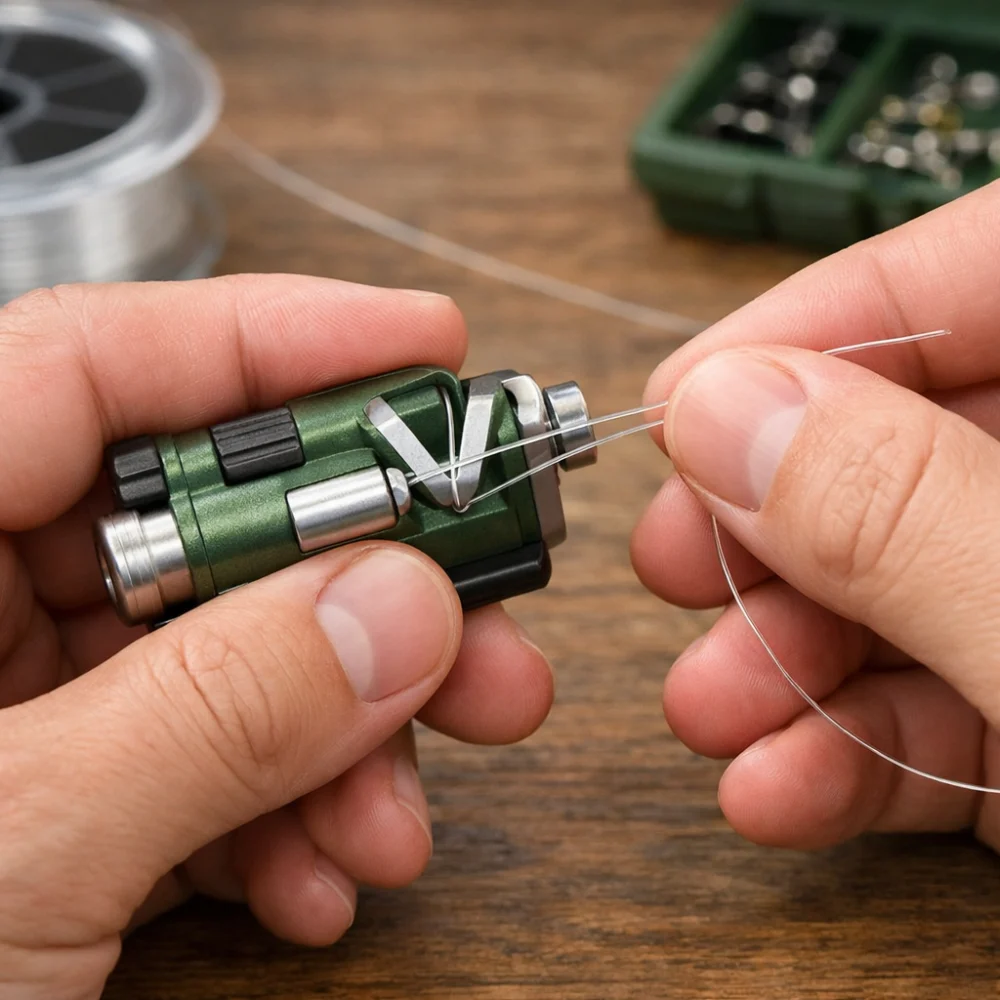
Common mistakes and misunderstandings
- Choosing by appearance alone. A neat-looking tool is not necessarily the easiest to use. Focus on what it is meant to do and whether that matches your tackle.
- Assuming all knot tools do the same job. Some are better for guiding a knot, while others help with hook handling or related tasks. Check the description carefully.
- Buying more functions than you need. Extra features can be useful, but they are not always an advantage if you only want a simple tying aid.
- Ignoring comfort and grip. A small tool that is awkward in the hand can be more frustrating than helpful, especially in cold or wet conditions.
Safety and suitability caveats
Fishing knot tools are generally straightforward accessories, but you should still make sure the tool suits the size of your tackle and the way you plan to use it. If the product is intended for a particular style of fishing or a particular line range, check that carefully before buying. For any tool with sharp or pointed parts, keep handling and storage sensible and in line with the product information.
Maintenance and storage considerations
Most fishing knot tools are easier to keep in good condition if they are rinsed or wiped clean after use and stored dry. That matters more if the tool is used near saltwater or kept alongside damp tackle. A simple storage habit can help preserve moving parts, finishes and general usability over time.
If a tool has multiple parts or a clip, cord or attachment point, check how it is meant to be carried and whether that suits the way you fish. A tool that is easy to find and quick to access is usually more practical than one that stays buried in the bottom of a bag.
How to compare options efficiently
- Decide whether you mainly need help learning knots, tying faster or handling tackle more comfortably.
- Choose the type of tool that matches that need rather than buying for extra features you may not use.
- Compare comfort, portability and any guidance on line or hook suitability.
- Think about whether a simple or multi-function design is the better trade-off for your kit.
- Check the individual product page for the details that matter most to your fishing setup.
Summary buyer decision checklist
- Does the tool suit the kind of knotting help you want?
- Is it comfortable and easy to handle with your usual tackle?
- Will it work well with the line, hooks or rigs you use most?
- Do you want a simple aid or a tool with extra functions?
- Is it easy to carry, store and keep dry between sessions?
- Have you checked the individual product page for model-specific details?
Frequently asked questions
Are fishing knot tools only for beginners?
No. Beginners often value the extra guidance, but experienced anglers may also use them to save time or make repetitive tying easier. The main benefit is convenience, not just learning support.
Do I need a multi-function tool?
Not necessarily. A multi-function design can be useful if you want to keep your kit compact, but a simpler tool may be better if you only need help with one task. It comes down to whether you value flexibility or straightforward use.
Will one knot tool work for every type of fishing?
Usually not. Different tackle, line sizes and fishing styles can change what is most practical, so it is better to match the tool to your usual setup. Check the product details for any stated suitability.
How important is size and grip?
Very important in practice. A tool that is easy to hold and control can make knot tying less fiddly, especially if conditions are wet or cold. Small accessories can be convenient, but only if they are still comfortable to use.
Should I choose the cheapest option?
Price matters, but the cheapest option is not always the most practical if it is awkward to use or not suited to your tackle. It is better to compare value in terms of ease, suitability and usefulness rather than cost alone.
What should I check on the product page before buying?
Check what the tool is designed to do, how it is intended to be used and whether any guidance is given for specific tackle. Specifications vary by model, so always check the individual product page before buying.

