
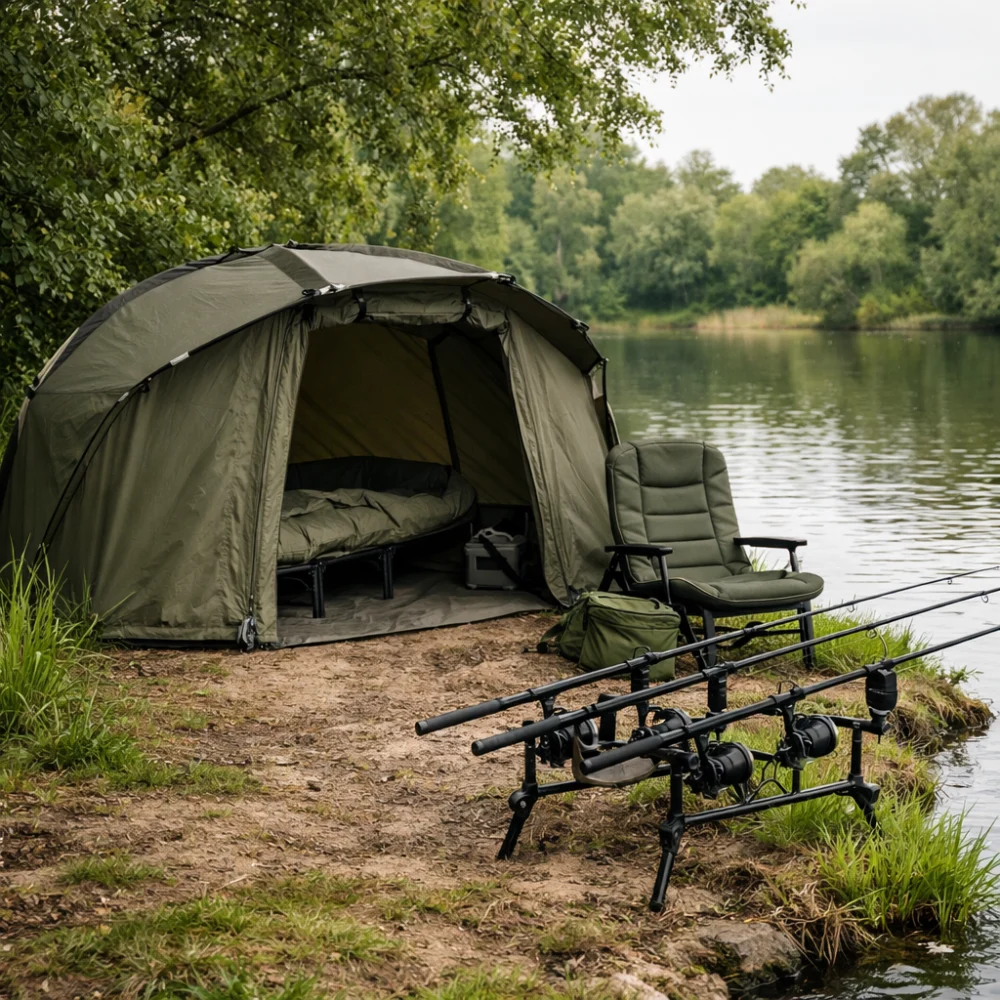
Fishing shelters and bivvies are designed to give anglers a more comfortable base on the bank, with protection from rain, wind and strong sun. The right choice depends on how long you stay out, how much kit you carry and how much cover you want.
Some buyers want a compact day shelter that is quick to put up and easy to move. Others need more enclosed cover for longer sessions, changeable weather or a more organised setup. The main decision is usually between speed, space, weight and the level of shelter you want.
If you are comparing options for the first time, it helps to think about the places you fish and how often you move swims. Specifications vary by model, so always check the individual product page before buying.
What should you look for in a fishing shelter or bivvy?
The best starting point is to match the shelter to your fishing sessions rather than to the biggest or most fully featured option. A simple day shelter may suit mobile sessions, while a more enclosed bivvy can make longer stays more comfortable. The main trade-off is usually between faster setup and greater coverage.
| Feature | What It Means | Why It Matters | What To Check |
|---|---|---|---|
| Coverage | How much of your setup is protected from rain, wind and sun | Affects comfort and how usable your swim stays in unsettled weather | Look at the overall shelter shape, side coverage and whether the design feels open or more enclosed |
| Size | How much room you have for yourself and tackle | Determines whether the shelter feels cramped or spacious enough for your style of fishing | Check the intended occupancy, internal layout and whether it fits the way you fish |
| Pitched weight and pack size | How easy it is to carry and transport | Important if you walk far, move swims often or keep gear to a minimum | Compare the packed dimensions, carry bag and how much bulk you are willing to manage |
| Setup speed | How quickly the shelter can be assembled and taken down | Useful for short sessions, changing weather or frequent swim changes | Check whether the design is described as quick erect, pop-up or more traditional |
| Weather protection details | Features that help manage rain, wind and condensation | These details can affect comfort more than the headline category name | Look for the groundsheet arrangement, panel design, pegging points and whether the shelter is more open or more sealed |
Key decision criteria explained
Day shelter or bivvy?
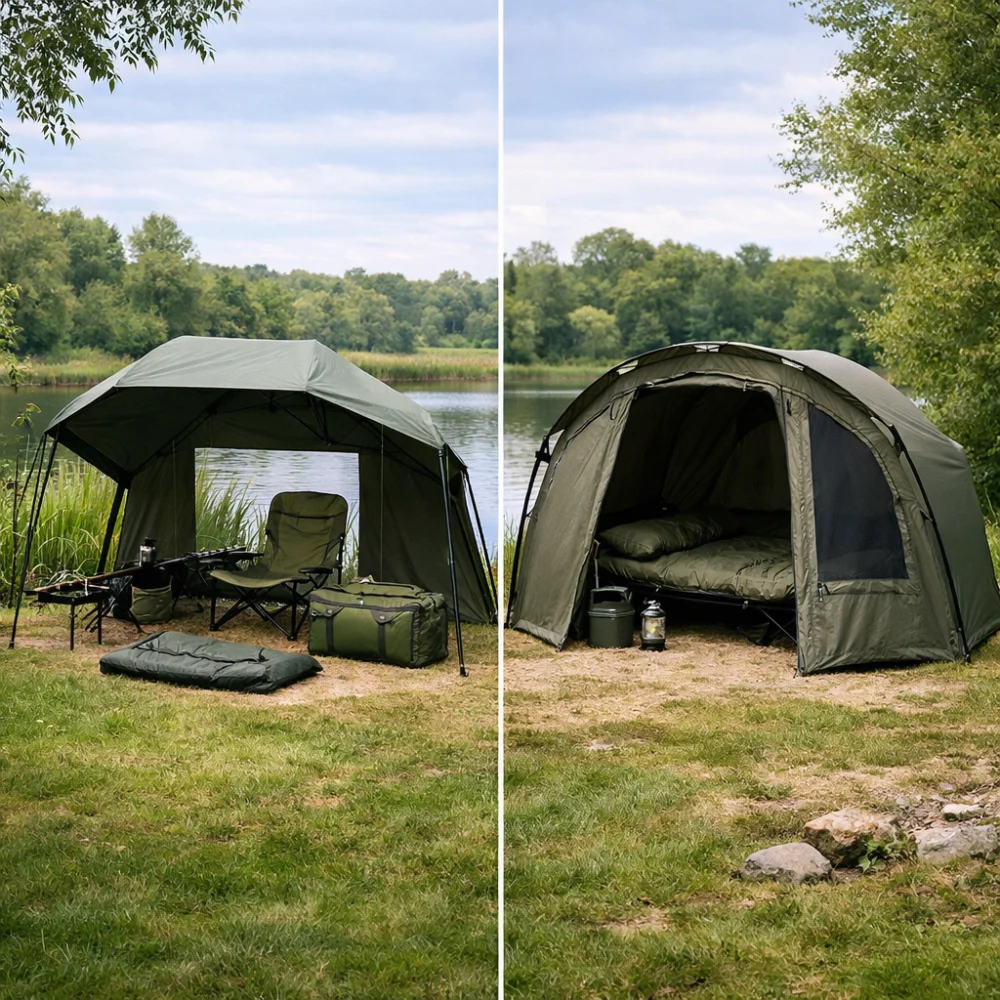
A day shelter is usually chosen for shorter sessions or when you want straightforward cover without committing to a larger enclosure. A bivvy is generally more associated with longer sits and a more enclosed feel. Neither is automatically better; the right choice depends on whether you value speed and flexibility or more substantial shelter.
Single angler or shared use
Some shelters are aimed at one angler with tackle close at hand, while others offer more room for additional kit or an occasional second person. More space can improve comfort, but it usually means more bulk to carry and more effort to pitch. If you fish alone most of the time, focus on how the shelter feels with your own chair, bedchair and bag layout.
Open front or more enclosed design
An open front can feel airy, give a better view of the water and make it easier to move in and out quickly. A more enclosed design can offer more shelter from wind-driven rain and can feel more protected when conditions turn. Think about whether you prefer visibility and ease of access, or more wraparound cover.
Carry weight and transport
If you walk a long way to your swim, even a modest difference in bulk can matter. A shelter that is easy to carry may be more practical than one with extra room you rarely use. For car-based fishing, the balance may shift towards comfort and weather protection instead.
Groundsheet and water management
Some anglers want a more contained base area, while others prefer a lighter, more open arrangement. The point is not just keeping feet dry; it is also about how the shelter handles muddy ground and wet conditions. Check how the floor area is arranged and whether the product page explains the intended setup clearly.
Types and variants within this category
Fishing shelters and bivvies often fall into a few broad styles.
- Day shelters are suited to shorter sessions and anglers who want quick cover with minimal fuss.
- Bivvies tend to suit longer sessions where more enclosed shelter and a steadier base are useful.
- Brolly-style shelters are often chosen when compactness and fast setup matter more than full enclosure.
- More tent-like shelters may suit anglers who want a roomier feel and broader weather protection.
These broad labels can overlap, so the product page matters more than the name alone. Specifications vary by model, so always check the individual product page before buying.
Which shelter suits which kind of angler?
| Buyer need | More suitable features | What to think about |
|---|---|---|
| Short sessions | Quick setup, compact pack size, simple design | Convenience may matter more than full enclosure |
| Longer sessions | More coverage, room for kit, weather protection | Comfort becomes more important than ultra-light carry weight |
| Frequent swim changes | Light carry, easy pitching, manageable bulk | Fast handling can outweigh extra space |
| Changeable weather | Better side coverage, more enclosed design, stable pegging options | Think about how sheltered you want to feel when conditions worsen |
| Minimal kit approach | Smaller footprint, simple build, less packaging bulk | Choose only the space you genuinely need |
Common mistakes and misunderstandings
Choosing by size alone. A larger shelter is not always the better buy if you carry your gear far or move swims often. Size can improve comfort, but only if you will use the extra room.
Assuming every bivvy offers the same level of weather protection. Shelter styles vary a lot in how open or enclosed they feel. Check the product description carefully rather than relying on the category name.
Overlooking packed size. A shelter can seem manageable in a photo but still take up more boot space than expected. Packed dimensions and carry format matter if you travel light.
Ignoring how you actually fish. If you mainly fish short daytime sessions, a heavy-duty enclosed design may be more than you need. If you stay out longer, a very basic shelter may feel limiting.
Safety and suitability caveats
Use the shelter for the type of fishing it is intended to support and check that the size suits your own setup. In windy or wet conditions, the practical details on the product page matter more than the category label. Do not assume every shelter includes the same floor arrangement, weather protection or setup method.
Maintenance, storage and lifespan considerations
A fishing shelter or bivvy will usually last longer if it is dried before storage and kept clean after muddy use. Mud, damp and grit can make packing less convenient and may shorten the life of fabrics or moving parts. If the product includes a bag, poles, pegs or panels, think about how easy those parts will be to keep together and transport neatly.
How to compare options efficiently
- Start with your most common fishing session: short, mobile or longer and more settled.
- Decide how much cover you really need from rain, wind and sun.
- Compare size, setup speed and packed bulk before looking at extras.
- Check whether the shelter layout suits your chair, tackle and movement around the swim.
- Read the individual product page for the details that can vary by model.
Summary buyer decision checklist
- Does the shelter suit the length of your usual sessions?
- Is the size right for one angler, shared use or extra kit?
- Will the packed size and weight suit how you travel to the water?
- Do you want a quicker, more open shelter or a more enclosed bivvy style?
- Have you checked the product page for the exact setup details and included parts?
- Will the design match the weather conditions and venues you fish most often?
Frequently asked questions
Is a bivvy the same as a fishing shelter?
Not exactly, although the terms are often used in overlapping ways. In buying terms, a bivvy usually suggests a more enclosed and session-focused shelter, while a fishing shelter can also cover lighter, more open designs. The product page description is the best guide to the actual style.
What is the main advantage of a brolly-style shelter?
A brolly-style shelter is often chosen for quick setup and compact carry. It can be a practical option if you want straightforward cover without carrying a larger enclosure. The trade-off is usually less overall space than a roomier bivvy.
Should I choose more space or less weight?
That depends on how you fish. If you stay in one place for longer, extra room can make the session more comfortable. If you move often or walk a long distance, lower weight and bulk may be more valuable than additional space.
Do I need full enclosure for all-weather fishing?
Not necessarily, but more enclosure can help in harsher conditions. What matters is how well the shelter matches the weather you expect and how comfortable you want the setup to feel. Check the product details rather than assuming all shelters protect you in the same way.
What should I check if I already own fishing gear?
Make sure the shelter suits the rest of your setup, especially your chair, bedchair or tackle storage if you use them. A shelter that sounds suitable on paper may feel cramped if it does not work with the way you organise your kit. Check the dimensions and intended use carefully.
Are larger shelters always better for longer trips?
Not always. Larger shelters can feel more comfortable, but they also tend to be bulkier and less convenient to handle. The right balance depends on how often you move, how much kit you carry and how much shelter you actually want.

