
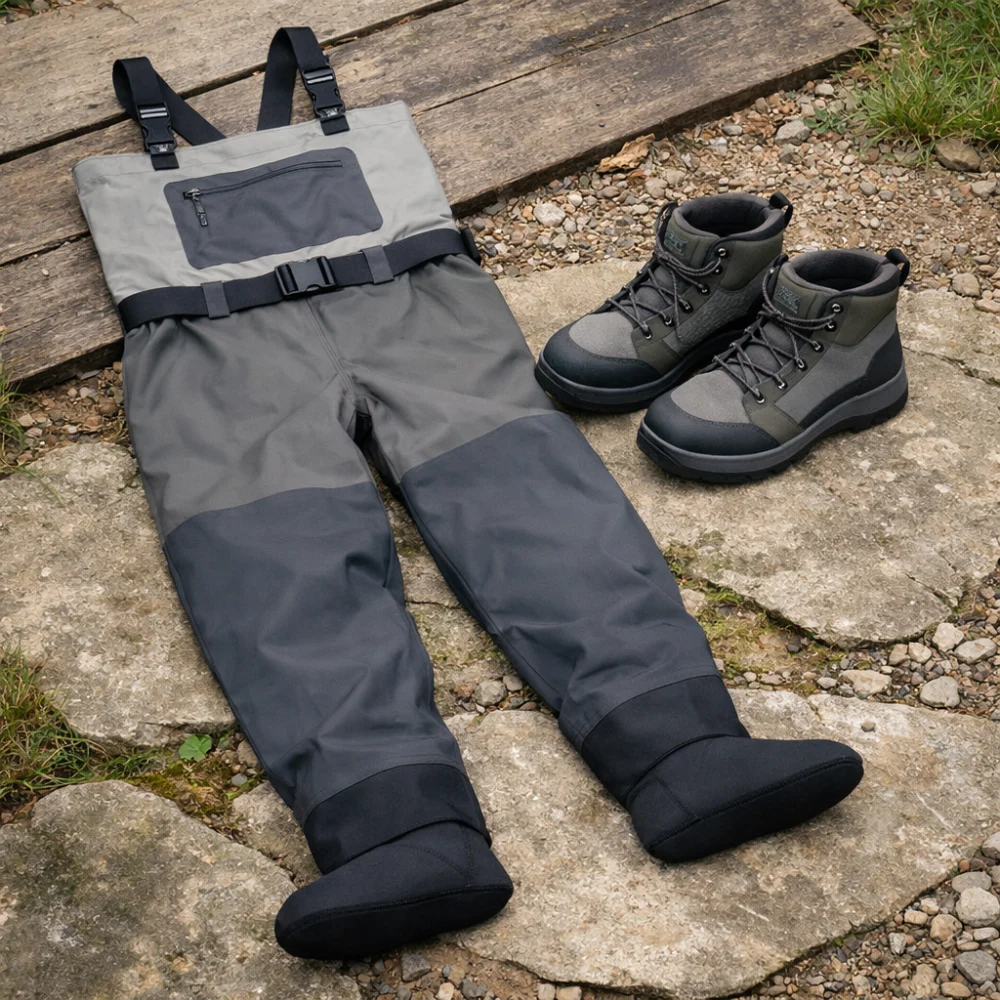
Fishing waders let you stand or move in shallow water while keeping your lower body drier than ordinary clothing would allow. They are useful for many kinds of angling, but the right choice depends on where you fish, how often you wear them and how much movement or warmth you need.
Because waders vary a lot by material, boot style and fit, it helps to compare the practical differences before deciding. A pair that suits a summer river session may not be the right choice for colder, rougher or more frequent use.
What should you look for when choosing fishing waders?
The starting point is the type of fishing you do and the conditions you expect to face. Breathability, toughness, ease of walking and how the waders fasten or fit around your boots can matter more than any single headline feature. The main trade-off is usually comfort and flexibility versus durability and water resistance, so it is worth deciding what matters most for your own use.
Specifications vary by model, so always check the individual product page before buying.
| Feature | What it means | Why it matters | What to check |
|---|---|---|---|
| Material | The main fabric or construction used for the wader | It affects weight, durability, flexibility and how warm the waders may feel | Look for the material description and whether it suits frequent use, warmer weather or tougher ground |
| Boot style | Built-in boots or separate stocking-foot feet worn with separate boots | It changes comfort, convenience and the footwear you need to wear with them | Check whether boots are included or whether you need compatible wading boots |
| Fit and size | How well the waders match your body shape and leg length | A poor fit can restrict movement or make them awkward to wear for longer sessions | Compare the sizing guidance carefully and check height and shoe size information where provided |
| Water coverage | How high the waders are designed to come up the body | It affects how much protection you get when standing in deeper water | Check the style and intended coverage rather than assuming all waders are the same |
| Breathability | How well moisture from inside can escape | It can improve comfort during active sessions or warmer weather | Look for clear product wording if comfort during movement matters to you |
| Ease of adjustment | Straps, belts and fastenings that help set the fit | It helps keep the waders secure and more comfortable to wear | Check the fastening details and whether adjustment is described clearly |
Key decision criteria explained
1. Match the material to how you fish
Different materials suit different priorities. Some buyers want something simple and robust for occasional use, while others prefer a lighter or more breathable feel for longer sessions. A heavier-feeling wader may be less comfortable to walk in, but it may suit rougher or more demanding use better than a lighter option.
2. Decide between built-in boots and stocking-foot styles
Booted waders are often easier to get ready to use because the footwear is already attached. Stocking-foot waders usually need separate boots, which adds another buying decision but can offer a more tailored footwear setup. The right choice depends on whether you value convenience or prefer to choose your boots separately.
3. Check fit carefully
Fit affects comfort, movement and how securely the waders sit while you walk or crouch. Too much extra room can feel awkward, while a tight fit may limit bending or make layering difficult in cooler weather. Check the size guidance against your own measurements rather than relying only on clothing size alone.
4. Think about warmth and season
Waders can feel quite different depending on the weather and how long you stay still. In warmer conditions, a more breathable option may be more comfortable. In cooler weather, room for suitable layers underneath can matter more than a very snug fit.
Product types and variants
Within fishing waders, the main choice is usually between booted and stocking-foot styles, with material and construction also shaping how they feel in use. Some options are aimed more at straightforward all-round use, while others are designed to feel lighter or more flexible.
- Booted waders: simpler to put on and use, with the boots attached. They suit buyers who want convenience and an all-in-one solution.
- Stocking-foot waders: worn with separate boots. They can suit buyers who want to choose footwear separately, but they add an extra purchase decision.
- Heavier-duty styles: generally chosen by buyers who prioritise toughness over lightness. They may feel less flexible, so comfort and movement are worth checking.
- Breathable styles: often preferred for active fishing or warmer days. They may feel more comfortable during movement, but they still need careful size checking.
Which waders suit different buyers?
| Buyer need | What to prioritise | Why |
|---|---|---|
| Occasional angler | Straightforward fit, simple design, practical comfort | You may value ease of use more than specialist features |
| Regular river angler | Comfort during movement, fit, suitable boot choice | Walking, crouching and standing for longer periods make comfort more important |
| Buyer fishing in colder conditions | Room for layering, appropriate coverage, secure fit | Comfort and warmth usually matter more than the lightest possible feel |
| Buyer wanting convenience | Booted style and easy adjustment | An all-in-one option can reduce setup time and extra gear choices |
| Buyer who already owns wading boots | Stocking-foot style | This can let you keep using boots you already trust, provided the sizing and fit work together |
Common mistakes to avoid
- Choosing by price alone: a lower-cost option may still be fine, but it should still match your intended use and fit well.
- Ignoring footwear needs: stocking-foot styles need separate boots, so remember the full setup cost and convenience.
- Assuming all sizes feel the same: waders need room for movement and, in some cases, layers underneath.
- Overlooking the fishing environment: rough ground, long walks and colder weather can change what feels suitable.
- Forgetting to check the product page details: small differences in construction or sizing can make a big difference to comfort.
Safety and suitability caveats
Waders are a practical fishing garment, not a guarantee of safety in water. Choose them for the depth, ground and conditions you expect to face, and do not assume every design is suitable for every venue. If you are unsure about fit or intended use, check the individual product page information carefully before buying.
Maintenance, storage and lifespan considerations
Good care can help waders stay usable for longer, but exact needs vary by model and material. After use, they are generally easier to manage if you let them dry properly before storage and keep them away from sharp objects or prolonged crushing. If you expect frequent use, think about how easy the waders will be to clean, dry and store between trips.
How to compare options efficiently
- Decide where and how often you will use the waders.
- Choose the style that fits your setup: booted or stocking-foot.
- Compare fit, comfort and adjustment features first.
- Check material and construction against the conditions you expect.
- Read the individual product page for the sizing and component details before ordering.
Fishing waders buyer checklist
- Have I chosen the right wader style for my fishing?
- Do I need built-in boots or separate wading boots?
- Will the size and shape allow comfortable movement and layering?
- Does the material suit my usual conditions and frequency of use?
- Are the fastening and adjustment details clear?
- Have I checked the individual product page for the exact specification?
Frequently asked questions
Are fishing waders all the same height and style?
No. Waders vary in how high they come up, how they fasten and whether they include boots. The right style depends on where you fish and how much convenience you want.
Do I need separate boots with all waders?
No. Some waders have built-in boots, while others are stocking-foot styles that need separate boots. Check the product description so you know what is included.
What is the main difference between breathable and heavier-duty waders?
Breathable styles are often chosen for comfort during movement or in warmer weather, while heavier-duty options may be preferred for tougher use. The best choice depends on whether comfort, convenience or durability matters more to you.
How important is sizing for waders?
Very important. Fit affects comfort, ease of movement and whether you can layer clothing underneath when needed. It is worth checking size guidance carefully rather than relying on your usual clothing size alone.
Can I use fishing waders for other outdoor tasks?
Some buyers use waders for tasks beyond fishing, but suitability depends on the model and the conditions involved. Check the product information to make sure the waders are appropriate for your intended use.
What should I do after buying them?
Plan how you will store and dry them after use, and keep them away from sharp or abrasive surfaces. Good handling matters because even suitable waders can wear faster if they are stored carelessly.

