
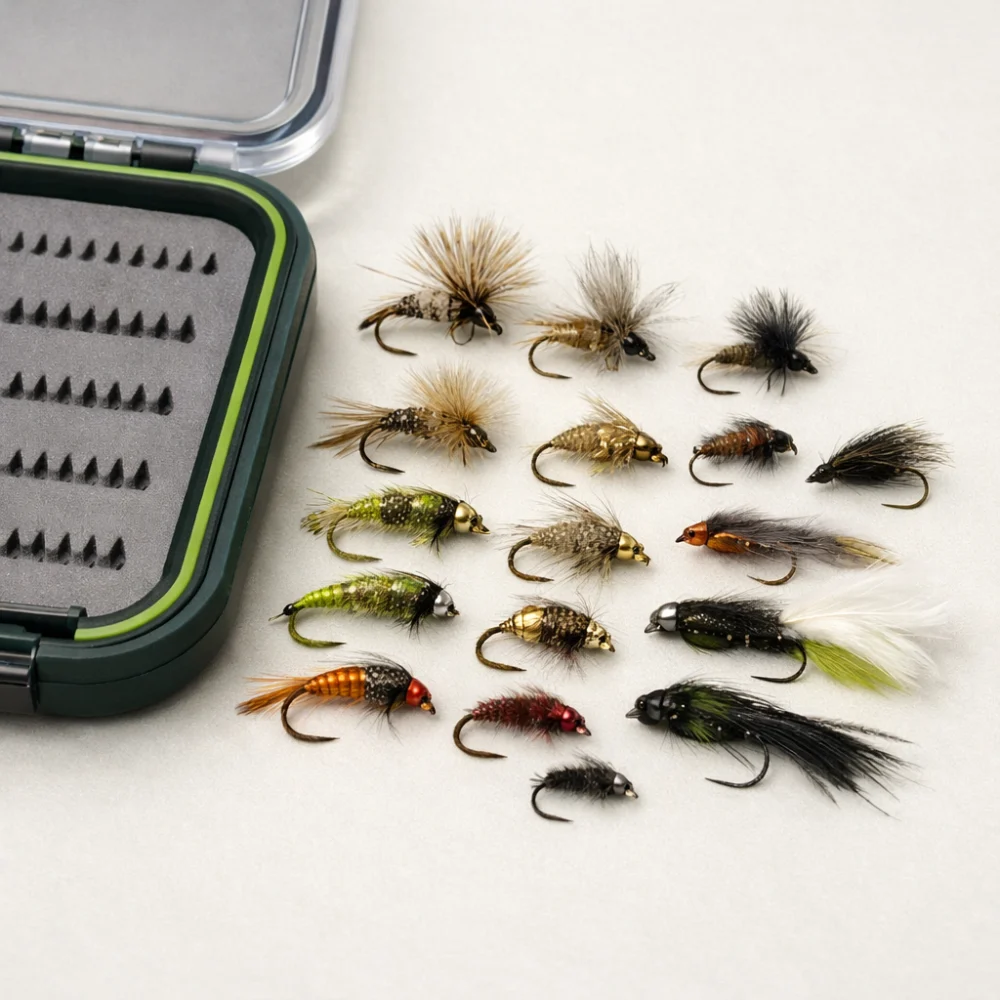
Fly fishing flies are the small, artificial patterns anglers use to imitate insects, baitfish and other food items. The right choice depends less on one “best” fly and more on where you are fishing, what species you are targeting and how you plan to present the fly.
If you are building a first selection, it helps to think in terms of pattern type, size, hook style and whether you need a single fly or a mixed selection. That makes it easier to choose flies that suit your water and avoid buying patterns that look useful but are not much help in practice.
Specifications vary by model, so always check the individual product page before buying.
What should you look for first when buying fly fishing flies?
Start with the fishing situation, then narrow the fly pattern to suit it. A fly that matches the likely food source and the depth or surface level you want to fish is usually more useful than a purely decorative pattern. After that, compare size, hook style and whether the fly is meant for trout, grayling, salmon, bass or another target species.
The main trade-off is between simplicity and specialism. Mixed assortments are convenient for beginners and general use, while individual patterns give more control if you already know what works on your water.
| Feature | What it means | Why it matters | What to check |
|---|---|---|---|
| Pattern type | The fly style, such as dry, nymph or streamer | Different patterns work at different levels in the water | Match the pattern to how you expect fish to feed |
| Size | The overall size of the fly | Size affects visibility, presentation and how natural the fly appears | Look for the stated hook size or size range |
| Hook style | The shape and intended use of the hook | Hook style influences presentation and suitability for the pattern | Check whether the fly is barbed or barbless if that matters to you |
| Target species | The fish the pattern is aimed at | Some flies are chosen to suit trout, while others suit different species or conditions | Check the product title and description for the intended use |
| Quantity | How many flies are included | Bundles can be good value, but they may include more variation than you need | Decide whether you want a single pattern or an assortment |
Key decision criteria explained
Pattern type
Fly patterns are usually grouped by how they fish rather than just how they look. Dry flies are designed for the surface, nymphs for subsurface feeding and streamers for larger moving targets in the water. The best choice depends on where the fish are likely to be feeding, not just on personal preference.
Size and proportion
Size is one of the easiest details to overlook. A fly that is too large may look unnatural in clear or pressured water, while one that is too small may not present well enough for the conditions. Look for the stated size range or hook size on the product page and choose a spread that suits your usual fishing waters.
Colour and visibility
Colour can help a fly stand out, but it is rarely the only factor. Natural shades often suit clear water and cautious fish, while brighter or more visible flies can be helpful in low light or coloured water. The useful question is not “Which colour is best?” but “Which colour is most suitable for the conditions I fish most often?”
Barbed or barbless
Some anglers prefer barbless hooks for easier unhooking, while others choose barbed hooks for different reasons. If this matters to you, check the individual product description carefully rather than assuming all flies are the same. Specifications vary by model, so always check the individual product page before buying.
Common fly types and how they differ
There are many pattern names in fly fishing, but most buying decisions fall into a few broad groups.
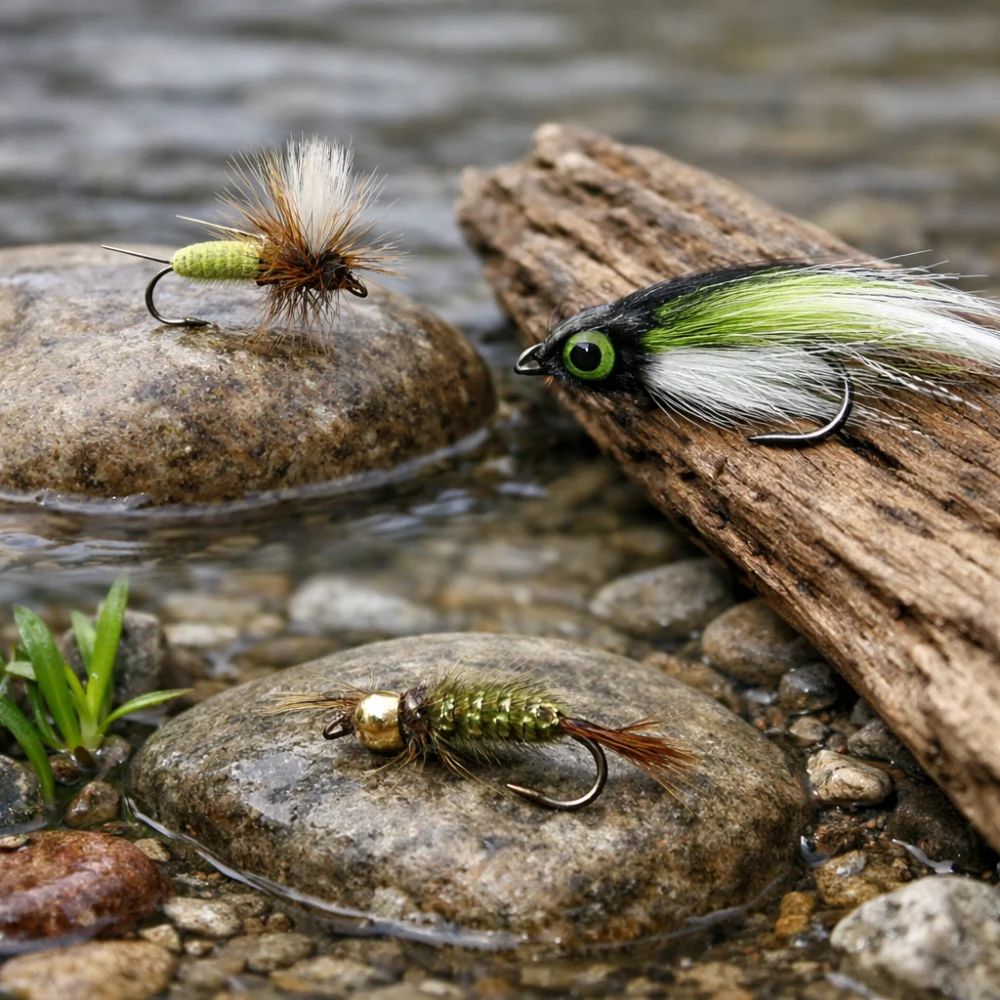
- Dry flies: Intended to fish on or near the surface and often chosen when fish are feeding upward.
- Nymphs: Designed to imitate underwater insects and are often useful when fish are feeding below the surface.
- Streamers: Built to suggest small fish or other moving prey and may suit more active retrieves.
- Assorted kits: Mixed selections that can be useful if you want variety or are building a basic fly box.
The right type depends on your fishing style and conditions. A mixed assortment can be practical, but if you already know the pattern family you need, single-pattern flies may be a better fit.
Which flies suit different buyers?
| Buyer need | Usually worth prioritising | Why |
|---|---|---|
| Beginner building a first fly box | Mixed assortment with a range of pattern types | It offers more ways to adapt while you learn what works locally |
| Angler targeting a known water or species | Specific pattern, size and presentation style | Focused choices can be more relevant than a broad mix |
| Replacement purchase | Same pattern family and similar size as before | Helps maintain consistency with flies that already suit your setup |
| Gift buyer | Broad assortment with clear use cases | It is safer when the recipient’s exact fishing preferences are unknown |
Common mistakes and misunderstandings
- Choosing by appearance alone: A realistic-looking fly is not automatically the right option. Match the pattern to the water and feeding level first.
- Ignoring size: Two flies can look similar but behave very differently if one is much larger or smaller.
- Buying too narrow a selection: A box of similar flies may be neat, but it may leave you unprepared for changing conditions.
- Assuming all flies suit all species: Some patterns are more relevant to particular fish or waters than others.
Safety and suitability caveats
Fly fishing flies are simple products, but suitability still matters. Check the hook style, pattern type and intended use before buying, especially if you have a particular preference for barbed or barbless hooks. If you are buying for someone else, a mixed selection is often safer than a highly specific pattern choice.
Maintenance, storage and lifespan considerations
Flies are small and easy to misplace, so storage matters as much as the fly itself. A fly box helps keep patterns organised, protects delicate materials and makes it easier to find the right option on the bank. Keeping flies dry after use also helps preserve their condition and reduces unnecessary wear.
If you buy in quantity, think about whether you will actually use the extra patterns before they are damaged or lost. A smaller, well-chosen set can be better value than a larger assortment that duplicates patterns you rarely fish.
How to compare options efficiently
- Decide where and how you usually fish.
- Choose the main fly family: dry, nymph, streamer or assortment.
- Check the size, hook style and intended species.
- Compare quantity against how often you fish and how varied your needs are.
- Read the individual product page for the exact pattern details before you buy.
Summary buyer decision checklist
- Does the fly type match the way you fish?
- Is the size suitable for your usual waters?
- Does the pattern suit the species you want to target?
- Do you want a single pattern or a mixed selection?
- Have you checked the hook style and any stated pattern details?
- Will the quantity suit how often you fish?
Frequently asked questions
What is the difference between a dry fly and a nymph?
A dry fly is intended to fish on the surface, while a nymph is designed for subsurface use. That difference matters because fish often feed at different levels depending on conditions. If you are unsure, start with the style that best matches how fish are behaving in your water.
Are mixed fly kits a good choice?
They can be, especially if you are starting out or need a general-purpose selection. The advantage is variety; the drawback is that you may get patterns you use less often. For a first purchase, that trade-off is often reasonable.
Do I need different flies for different species?
Sometimes yes, because species, water type and feeding behaviour can all influence what is suitable. A fly that works well for one situation may be less effective in another. Check the product description for the intended use rather than assuming one pattern covers everything.
How important is fly size?
Very important, because size affects both appearance and how the fly presents in the water. Even a good pattern can be less useful if it is the wrong scale for the conditions. If possible, compare the stated size with what you already know works.
Should I choose barbed or barbless flies?
That depends on your own preference and the type of fishing you do. Some anglers prefer barbless hooks for easier unhooking, while others prefer different handling characteristics. Check the individual product page because hook style can vary by model.
What is the safest buy if I am purchasing as a gift?
A mixed assortment is usually the easiest option when you do not know the recipient’s exact fishing preferences. It gives them more ways to try different patterns without locking them into one style. Keep the selection general rather than highly specialised.

