
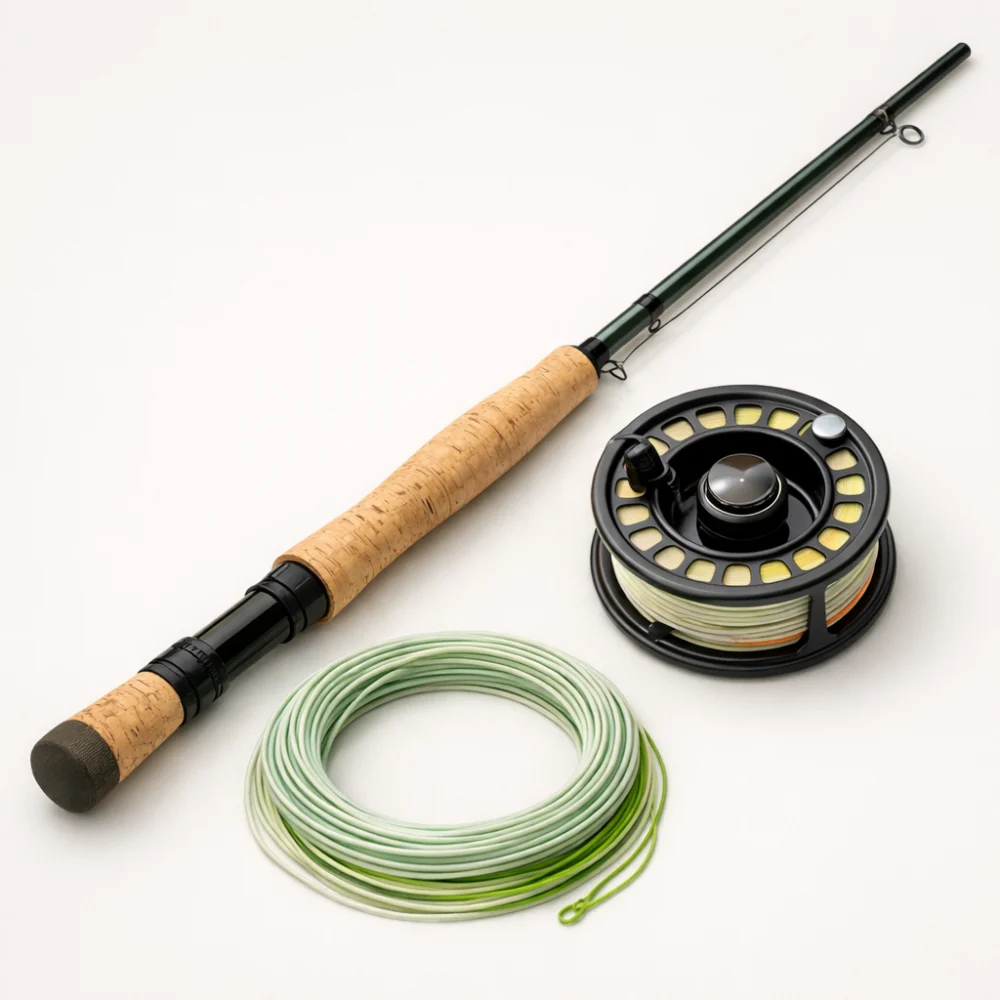
Choosing a fly fishing rod is mostly about matching the rod to how and where you fish. The right choice depends on the water you fish, the flies you plan to cast and how much control or distance you want from the line.
If you are new to fly fishing, the range of options can seem confusing at first. The main differences are usually not about one rod being universally better, but about how the rod feels, how it loads and what sort of fishing it makes easier.
This guide focuses on the decisions that matter before you buy, so you can compare rods more confidently and avoid paying for features you may not need.
What should you look for in a fly fishing rod?
A sensible starting point is to decide what kind of fishing you will do most often, then narrow the rod to a sensible line weight, length and action for that use. After that, look at build details such as section count, handle style and transport convenience. Specifications vary by model, so always check the individual product page before buying.
The main trade-off is usually between easy casting, precision and versatility. A rod that is very forgiving may suit learning and general use, while a more specialised rod can feel better for a specific style but be less adaptable elsewhere.
| Feature | What it means | Why it matters | What to check |
|---|---|---|---|
| Line weight | The rod is matched to a particular fly line weight range | It affects how the rod loads and how suitable it is for your fishing style | Match the rod to the sort of fishing you plan to do and the line system you intend to use |
| Length | How long the rod is overall | Longer rods may help with line control, while shorter rods can feel easier to manage in tighter spaces | Consider bankside room, casting space and the waters you visit most often |
| Action | How the rod bends when casting and under load | It changes casting feel, loop control and how much feedback you get | Look for whether the rod is described as faster, medium or slower and decide what feels manageable |
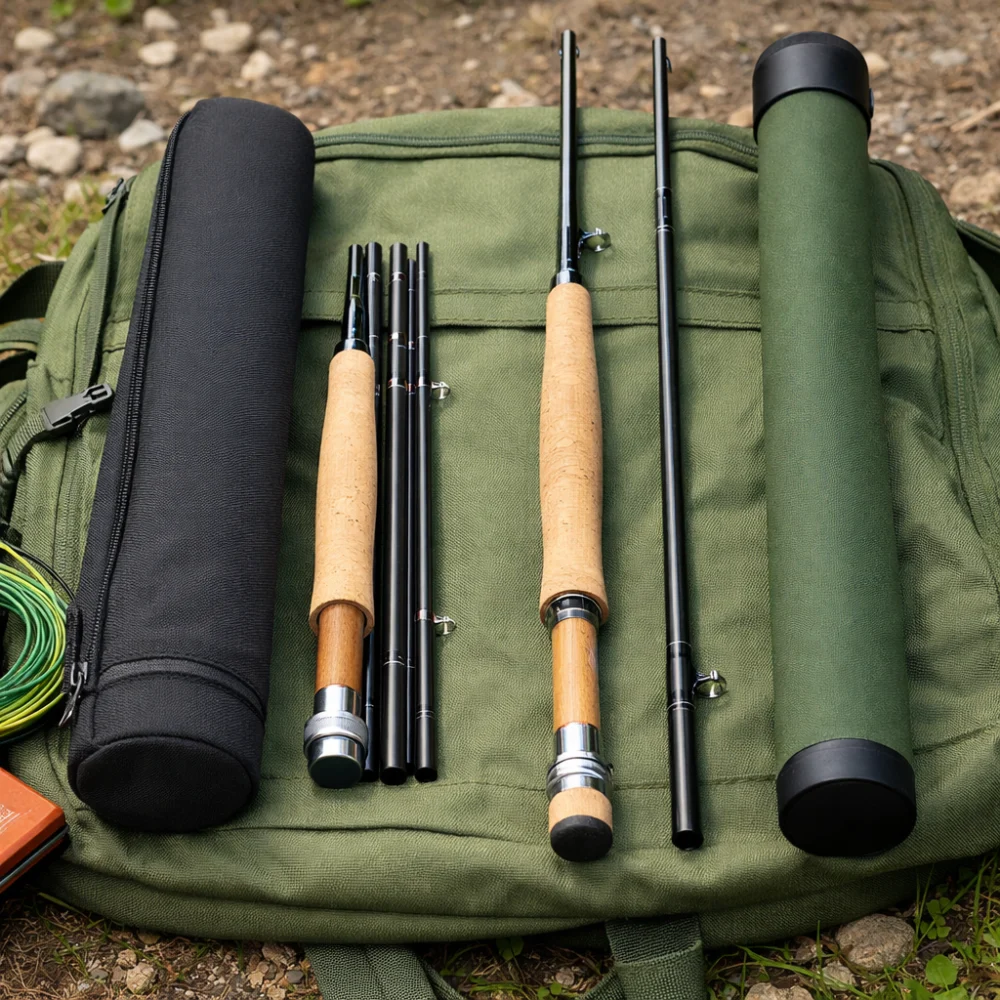
| Section count | How many pieces the rod breaks into | It affects transport and storage convenience | Check packed length and how easy it will be to carry or store |
| Build and fittings | General rod construction, guides, handle and reel seat | These details affect comfort, durability and balance | Review the product page for the materials and hardware used |
| Intended waters | The style of fishing the rod is aimed at | A rod designed for streams may feel quite different from one aimed at stillwaters | Look for the recommended use case rather than relying on the title alone |
Key decision criteria explained
Line weight
Line weight is one of the most important choices because it sets the overall character of the rod. Lighter setups are often chosen for smaller fish and finer presentations, while heavier setups are usually better when more distance, power or control is needed. The wrong match can make casting feel awkward, so this is worth checking carefully.
Rod length
Length affects both reach and handling. A longer rod can help with line management and mending, while a shorter rod may be easier in restricted spaces or when you want a more compact feel. Think about the rivers, stillwaters or bank margins where you will actually fish rather than choosing length in isolation.
Action and casting feel
Action is often misunderstood because faster does not simply mean better. A quicker action may suit anglers who want crisp loops and more power, while a more moderate action can feel smoother and be easier to load at shorter distances. The best choice depends on your casting style and how much feedback you prefer through the rod.
Number of pieces
More sections usually make a rod easier to transport, but some buyers prefer the feel or simplicity of a rod with fewer joints. For travel, storage and public transport, pack-down size may matter as much as on-water performance. If you move between venues often, this can be a practical deciding factor.
Handle and grip comfort
The grip is easy to overlook, yet it affects comfort during longer sessions. You want a handle shape and material that feel secure without being tiring to hold. If you fish for extended periods, this can matter nearly as much as the rod’s casting character.
Common rod types and how they differ
Fly fishing rods are often chosen less by a strict product type and more by the style of fishing they suit. Within the category, the most meaningful differences are usually about how specialised the rod feels.
- General-purpose rods may suit anglers who want one rod for a range of common situations. They are often a sensible starting point, but they may not feel as refined as a more focused option.
- Stream or lighter-fishing rods are often chosen for shorter casts, finer presentation and lighter setups. Their limitation is that they may feel underpowered when more distance or control is needed.
- Stillwater or more powerful rods are often selected for longer casts or more demanding conditions. Their limitation is that they can feel less delicate or less relaxed at short range.
Which rod suits different buyers?
| Buyer need | What to prioritise | Why it helps |
|---|---|---|
| Beginner | Moderate, forgiving rod behaviour and a sensible all-round setup | It can make learning easier and reduce the chance of choosing something too specialised |
| Travel or storage conscious | Pack-down convenience and section count | It is easier to carry, store and take to the water |
| Small streams and tighter banks | Shorter, more manageable rod length | It can be easier to cast where back-cast space is limited |
| More open water or distance work | Rod length and a more powerful casting feel | It may help with line control and longer presentations |
| Comfort-focused angler | Grip feel, balance and overall handling | It can reduce fatigue during longer sessions |
Common mistakes and misunderstandings
- Choosing by title alone: names and marketing language do not tell you enough. Check the actual line weight, length and intended use on the product page.
- Assuming faster action is always better: a quicker rod is not automatically easier. It depends on your casting style and the distances you usually fish.
- Ignoring transport needs: a rod that is awkward to store or carry may be less pleasant to use, even if it fishes well.
- Buying for rare trips rather than most trips: choose the rod that fits your regular fishing, unless you specifically need a specialist option.
Safety and suitability caveats
Fly fishing rods are generally straightforward to choose, but suitability still matters. Check that the rod matches the kind of fishing you actually do, especially if you are buying for a beginner, a gift or a second setup. If a rod seems unusually specialised, make sure you understand the trade-off before committing to it.
Specifications vary by model, so always check the individual product page before buying.
Maintenance, storage and lifespan considerations
Rod care is usually simple, but it still affects long-term value. Rinse and dry the rod after use if it has been exposed to water or grit, store it carefully, and keep sections protected during transport. If the rod comes with a tube or case, that can be a useful practical extra rather than just a convenience.
It also helps to think about how often you will use the rod and how much wear it will see. A well-chosen rod that is easy to store and transport is often more likely to be looked after properly.
How to compare options efficiently
- Decide where you will use the rod most often.
- Shortlist the line weight, length and action that fit that use.
- Check transport details such as section count and packed size.
- Compare comfort features like grip and overall handling.
- Read the product page carefully for the exact model details before you buy.
Summary buyer decision checklist
- Have I matched the rod to the fishing I do most often?
- Do the line weight and length suit my likely waters?
- Does the action sound manageable for my casting style?
- Will the section count and packed size work for transport and storage?
- Have I checked the individual product page for the exact model details?
Frequently asked questions
What is the most important factor when choosing a fly fishing rod?
For most buyers, the most important factor is matching the rod to the sort of fishing they actually do. Line weight, length and action together shape how the rod feels, so it is better to consider them as a group rather than focusing on one detail alone.
Is a longer fly rod always better?
No. A longer rod can help with line control and reach, but it may feel less convenient in tighter spaces or when you want a more compact setup. Choose length based on the waters and casting room you usually have.
Should beginners choose a fast-action rod?
Not necessarily. Some beginners find a more moderate rod easier to feel and control, while others prefer the crisp feel of a faster action. The best starting point is usually a rod that feels forgiving rather than overly specialised.
How important is section count?
Section count mainly affects portability and storage. If you travel frequently or have limited space, it may be worth prioritising. If transport is not a concern, other factors may matter more.
Can one fly rod cover every situation?
One rod can cover a range of common uses, but there is usually a compromise somewhere. A general-purpose rod can be convenient, yet a more specialised rod may work better for a specific style of fishing. That is why the usual waters and casting distances matter so much.
What should I check on the product page before buying?
Check the line weight, length, action, section count and any stated intended use. Also look for any details that affect transport, comfort or handling. That is often enough to tell whether the rod suits your needs.

