
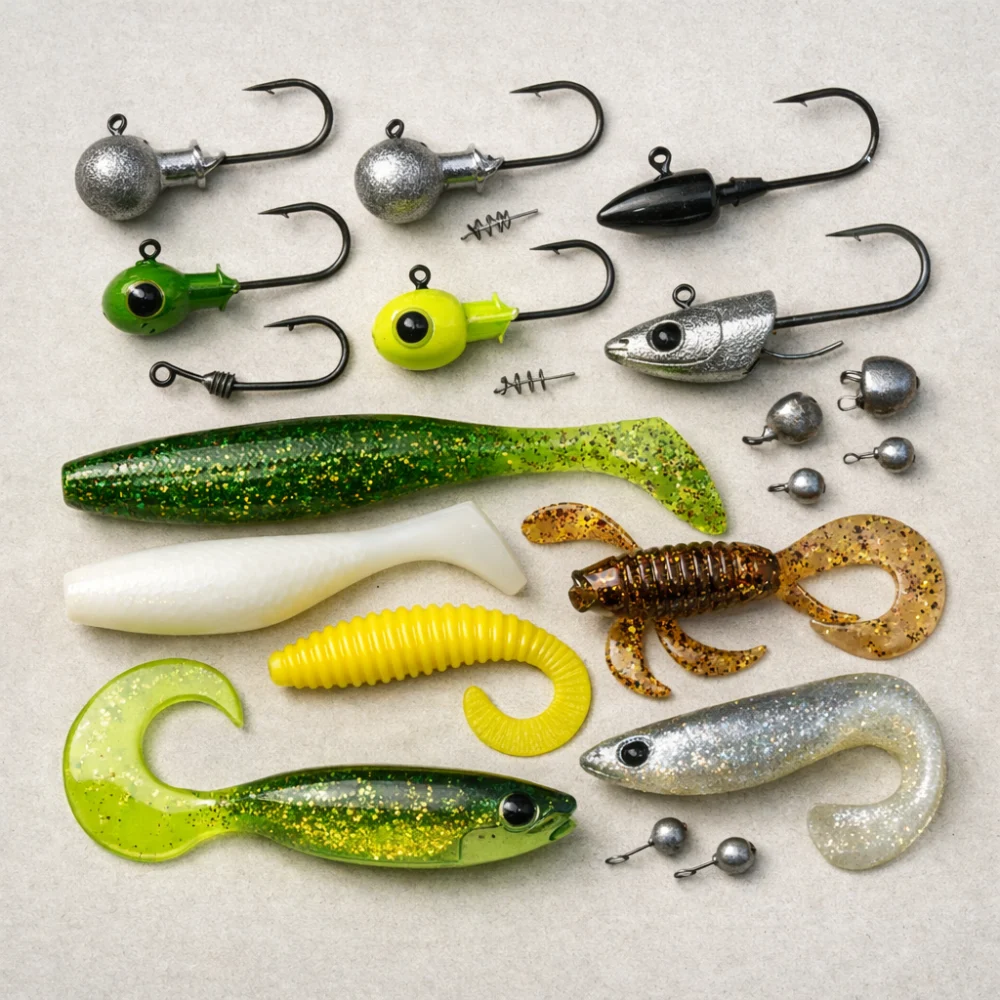
Jigs and jigheads are small but important parts of a lure fishing setup. They help give soft baits or jigs the right balance, sink rate and movement in the water.
If you are choosing between different options, the main question is usually not which one is “best”, but which one suits your bait, target species, venue and retrieve style. Small differences in weight, hook pattern and head shape can change how a lure fishes.
This guide focuses on the buying choices that matter before you add items to your tackle box. It stays within the category so you can compare the practical differences without getting lost in technical detail.
What should you look for first?
Start with the lure you want to fish and the depth or flow you are dealing with. Weight is often the first decision because it affects how quickly the lure reaches the right layer of water and how much control you have during the retrieve. After that, check hook size, gape and the way the jighead is shaped to hold the bait you plan to use.
The main trade-off is simple: lighter options usually give a slower fall and a more subtle presentation, while heavier options reach depth faster and stay in contact better in stronger flow or wind. Specifications vary by model, so always check the individual product page before buying.
Quick comparison of the main buying factors
| Feature | What it means | Why it matters | What to check |
|---|---|---|---|
| Weight | The mass of the jig or jighead | Controls sink rate and how the lure behaves on the drop and retrieve | Match it to depth, current, wind and the lure you want to fish |
| Hook size and shape | The pattern and proportions of the hook | Affects how securely the lure sits and how the rig suits the intended prey shape | Check hook gape, point orientation and whether it suits your bait size |
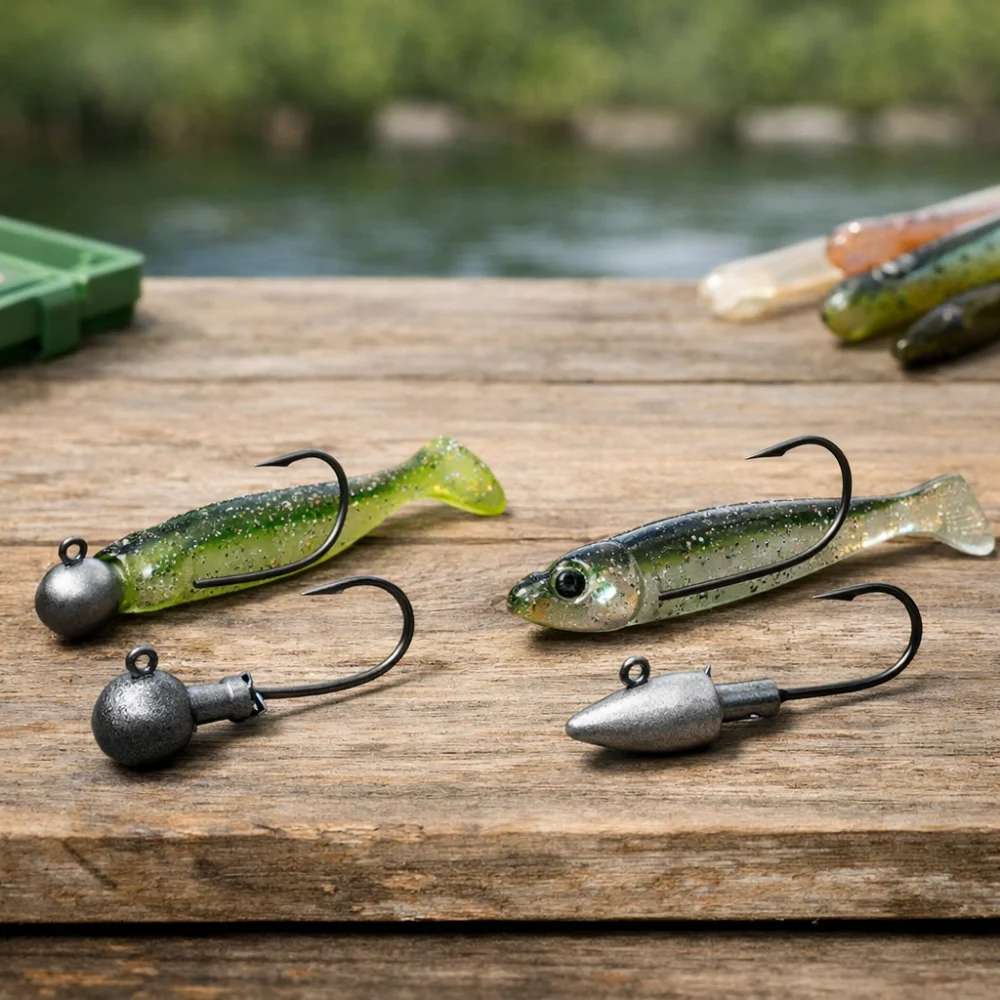
| Head design | The shape of the weighted head | Can influence movement, tracking and how the bait presents through weed or structure | Look for a shape that fits your venue and retrieve style |
| Compatibility with soft baits | How well the jighead works with your lure body | A poor match can make the lure look unbalanced or reduce action | Compare lure length, thickness and the way it mounts on the hook |
| Intended use | Whether it is for finesse, general lure fishing or tougher conditions | Helps narrow the choice to the right presentation style | Check the product description for the fishing situation it is designed around |
Key decision criteria
Weight and sink rate
Weight is one of the easiest features to misunderstand because a heavier jig is not automatically better. A lighter jighead can be better for shallow water, slower presentations and a softer fall. A heavier one can help you maintain contact in deeper water or when wind and flow make lighter tackle hard to control.
Think about where the lure needs to travel, not just how far you want to cast it. If the lure sinks too quickly, it may spend too little time in the strike zone. If it is too light, it may not fish properly at the depth you need.
Hook size and bait match
The hook needs to suit the soft bait or lure body you plan to use. If the hook is too small, the lure may not sit naturally. If it is too large, it can overpower the bait and affect the action.
Check the hook gape and the stated lure match where available. This is especially useful when comparing different jigheads that look similar at first glance but are aimed at different lure sizes.
Head shape and presentation
Head shape can affect how the lure tracks, how it drops and how it moves through water and cover. Some shapes are chosen for a steadier presentation, while others are better when you need the lure to move more cleanly through snags or vegetation.
Do not assume every jighead behaves the same just because the weight is similar. Shape can change the feel of the lure as much as the mass does.
Use case and venue
A setup for open water is not always the same as one for tighter swims, light lure fishing or faster flow. The venue influences whether you need subtlety, casting ease, bottom contact or a more direct feel through the rod.
If you fish more than one place, it can help to buy a small range of weights rather than only one option. That gives you flexibility when conditions change.
Common types and variants
Within this category, you are mainly choosing between different jig and jighead weights, hook sizes and head styles. Some options are aimed at finesse fishing with smaller soft lures, while others are better suited to larger baits or more demanding conditions.
You may also see products presented as jighead kits or mixed packs. These can be useful if you are still learning which weight range suits your fishing, but they may include sizes you use less often.
Which option suits which buyer?
| Buyer need | What to prioritise | Why it helps |
|---|---|---|
| Beginner building a first lure set | A few different weights and a sensible hook size range | Makes it easier to learn what works in different conditions |
| Finesse or light tackle angler | Smaller sizes, lighter weights and a neat bait match | Supports a more subtle presentation |
| Angler fishing deeper water or flow | Heavier options that help maintain control | Improves contact and keeps the lure in the intended zone |
| Buyer replacing lost terminal tackle | Match the jighead to the lure type already in use | Reduces guesswork and keeps the presentation consistent |
| Gift buyer | Versatile mixed selection rather than a single obscure size | Gives the recipient more chance of using the items |
Common mistakes and misunderstandings
Choosing weight without thinking about conditions: the same jighead can feel very different in shallow still water and in flow. Think about where it will be used, not just the number on the packet.
Matching hook size only by appearance: a jighead may look suitable but still sit poorly in a particular soft bait. Check the actual lure size and the way the hook will hold it.
Ignoring presentation style: some anglers only compare weight and forget that head shape and hook pattern also influence how the lure fishes. Those details matter when you want a bait to move naturally.
Buying one size for every situation: a single option can work in simple conditions, but it limits flexibility. A small range is often more practical than relying on one compromise choice.
Safety and suitability caveats
Jigs and jigheads are simple fishing components, but they still need to suit the intended use. Check the hook size, weight and lure match before you buy, especially if you plan to fish around weeds, snags or current.
Keep them stored safely with other tackle so hooks do not catch loose in bags or pockets. If you are buying for a younger angler or as a gift, make sure the items are appropriate for the intended setup and can be handled sensibly.
Maintenance, storage and lifespan considerations
These items usually need little maintenance, but storage matters. Keep them dry and organised so the hooks stay tidy and the finish does not deteriorate unnecessarily.
If you use them in saltwater, rinse and dry them according to the guidance on the individual product page or packaging where provided. Over time, hooks can dull or corrode, so it is sensible to inspect them before use and replace any damaged items.
How to compare options efficiently
- Decide where you will fish most often and what kind of presentation you want.
- Choose a weight range that suits the depth, flow and control you need.
- Check that the hook size and head shape suit the soft bait or lure you plan to use.
- Compare the options on the product page for the intended use and any relevant match guidance.
- Pick the simplest option that gives you the flexibility you are likely to need.
Summary buyer decision checklist
- Have I matched the jig or jighead to the lure I want to fish?
- Does the weight suit the depth, flow and retrieve style I expect to use?
- Is the hook size appropriate for the bait body?
- Does the head shape fit the venue and presentation I want?
- Would a small range of sizes be more useful than one single option?
- Have I checked the individual product page for the exact specification?
Frequently asked questions
What is the difference between a jig and a jighead?
A jig is usually used as a lure or lure component with its own action, while a jighead is a weighted hook designed to carry a soft bait. In everyday buying, the key point is how it will fish with the lure you intend to use. The exact design varies, so check the product details for the intended application.
Do I need different weights for different water depths?
Often, yes. Lighter options can be better for shallower or more delicate presentations, while heavier ones help in deeper water or stronger conditions. The right choice depends on how quickly you want the lure to reach the strike zone and how much control you want to keep.
How do I know which hook size to choose?
Use the lure body as your guide. The hook should hold the bait neatly without overwhelming it or leaving it badly balanced. If the product listing gives a lure size guide, that is usually the most useful starting point.
Are mixed packs worth considering?
They can be useful if you want to try different sizes without buying each one separately. They are especially helpful for newer anglers or anyone building a general lure fishing kit. Just make sure the mix includes sizes you are likely to use.
Can the same jighead work with every soft bait?
No, not reliably. Different soft baits vary in length, thickness and body shape, so a jighead that suits one lure may not suit another. Check the match between hook size, lure shape and the presentation you want.
What should I check if I fish both fresh water and saltwater?
Check the product page for any guidance on intended use and care. You should also think about corrosion resistance, storage and how often you are likely to rinse and dry your tackle after use. If the listing is not specific, stay conservative and follow the care advice provided with the item.
Why do some jigheads look similar but fish differently?
Small changes in weight distribution, hook shape and head design can change how the lure moves in the water. Two options may look close on the shelf but behave differently once cast, dropped and retrieved. That is why it helps to compare more than just the headline weight.

