
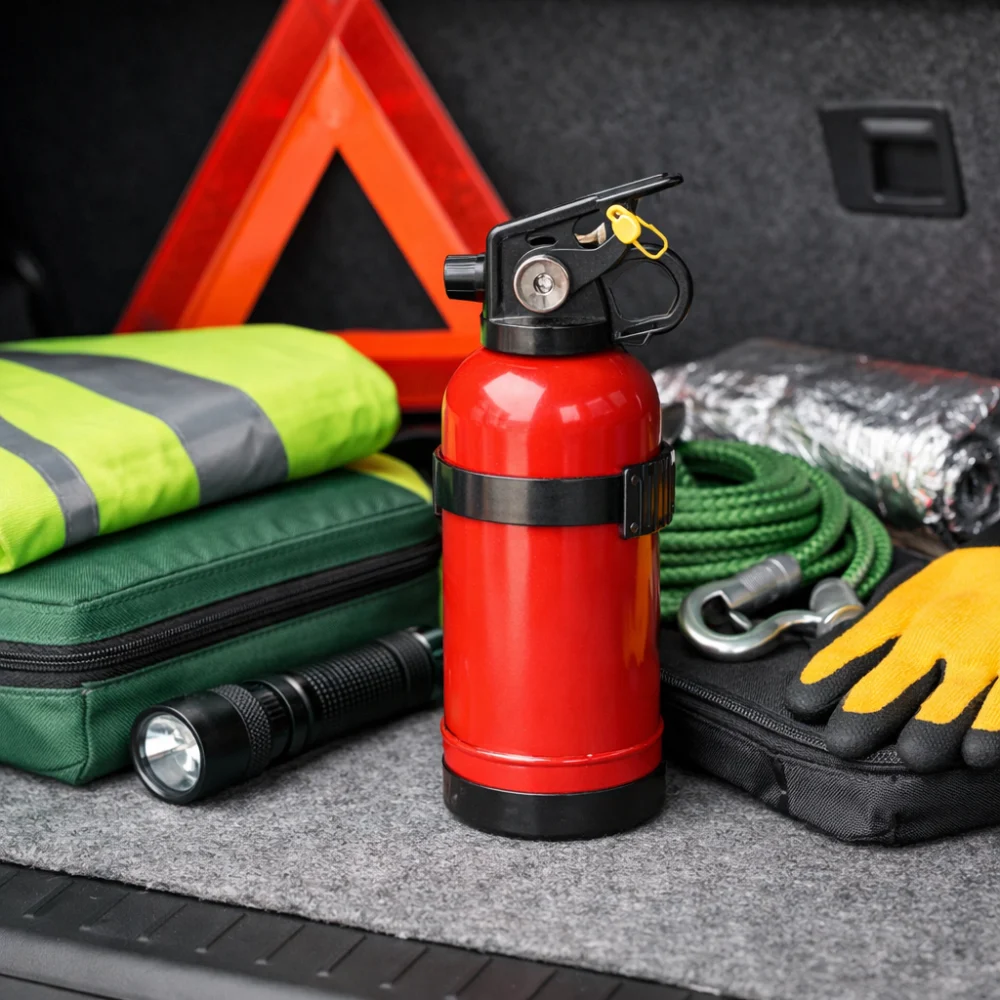
Fire extinguishers for camping and vehicle use are bought for peace of mind, but the right choice still depends on where you plan to keep it and what kind of fire risks you want to be ready for. A compact unit for a car or campervan is not the same decision as one for a caravan, boat or general travel kit.
This guide helps you compare the practical differences that matter most: extinguisher type, size, ease of storage, and what the label says about intended use. It is designed to help you narrow the choice before you look at individual product pages.
If you are buying one for a vehicle or touring setup, think first about access and suitability rather than trying to find the largest or most versatile option. The most useful extinguisher is the one you can store sensibly and reach quickly, with a type that matches the likely risks in your space.
What should I look for in a fire extinguisher for camping or vehicle use?
Start with the intended use, the extinguisher type and the practical size. For many buyers, the key trade-off is between a compact unit that is easier to store and a larger one that may offer more reserve capacity. You should also check how the product is described for use in cars, caravans, campervans, boats or domestic spaces, because those contexts are not always interchangeable. Specifications vary by model, so always check the individual product page before buying.
| Feature | What it means | Why it matters | What to check |
|---|---|---|---|
| Extinguisher type | The extinguishing medium and the way the unit is intended to tackle fire | Different fire risks call for different approaches, so the type affects suitability | Read the product description carefully and look for the intended use stated by the manufacturer |
| Size and portability | How easy the unit is to carry, store and reach | A compact extinguisher may fit better in a vehicle, while a larger one may be less convenient to stow | Check the size stated on the product page and consider where it will be mounted or stored |
| Intended environment | Whether it is aimed at vehicle, caravan, boat, home or multi-purpose use | The right environment helps narrow the choice quickly | Match the stated use to your actual setting rather than assuming one product suits every situation |
| Ease of use | How straightforward it is to handle and deploy in an emergency | Simple handling matters when time is limited | Look for clear product information and avoid assuming all units operate the same way |
| Storage and mounting | How the extinguisher is kept secure and accessible | Loose storage can be awkward in transit and may make the unit harder to reach | Check whether the product can be stored securely in your available space |
Key decision criteria explained
Type and intended fire risk
The type is usually the first thing to understand, because it affects what the extinguisher is designed to deal with. Buyers often see words such as powder, foam, spray or multipurpose, but the important point is not the wording alone; it is whether the product description matches your likely use. If you are unsure, compare the stated application carefully rather than relying on the general term on the front of the listing.
Size, weight and where it will live
In a vehicle or camper, storage matters as much as the extinguisher itself. A smaller unit may be easier to keep to hand, but it may also offer less reserve than a larger one. Think about the space you actually have, whether it will be mounted or stowed, and whether everyone who might need it can reach it quickly.
Clarity of the product information
Good product pages make it easier to see what the extinguisher is for, how it is used and where it is suitable. That matters because category-level descriptions can sound similar even when the details differ. If the information is vague, treat that as a sign to compare more closely before buying.
Multi-purpose versus more specific use
Some products are presented as multi-purpose options, which can be helpful if you want one item for a mixed environment such as a campervan or touring kit. The trade-off is that multi-purpose wording should still be checked against the actual product details, especially if you want it for a particular vehicle or location. A broader description is not a substitute for confirming the intended use.
Product types and variants
Within this category, the main differences are usually about extinguishing medium, size and whether the product is positioned for general or specific use. That means the decision is less about choosing between many subcategories and more about matching the product description to your situation.
- Compact extinguishers may suit smaller vehicles or tight storage spaces, but they can be less substantial than larger units.
- General-purpose or multi-purpose products may suit buyers who want one extinguisher for mixed travel use, provided the description fits the setting.
- Products described for car, caravan, campervan or boat use are worth checking closely if you want a unit intended for that environment specifically.
Because the details vary, it is better to focus on the stated use and the practical size than on assumptions from the product name alone.
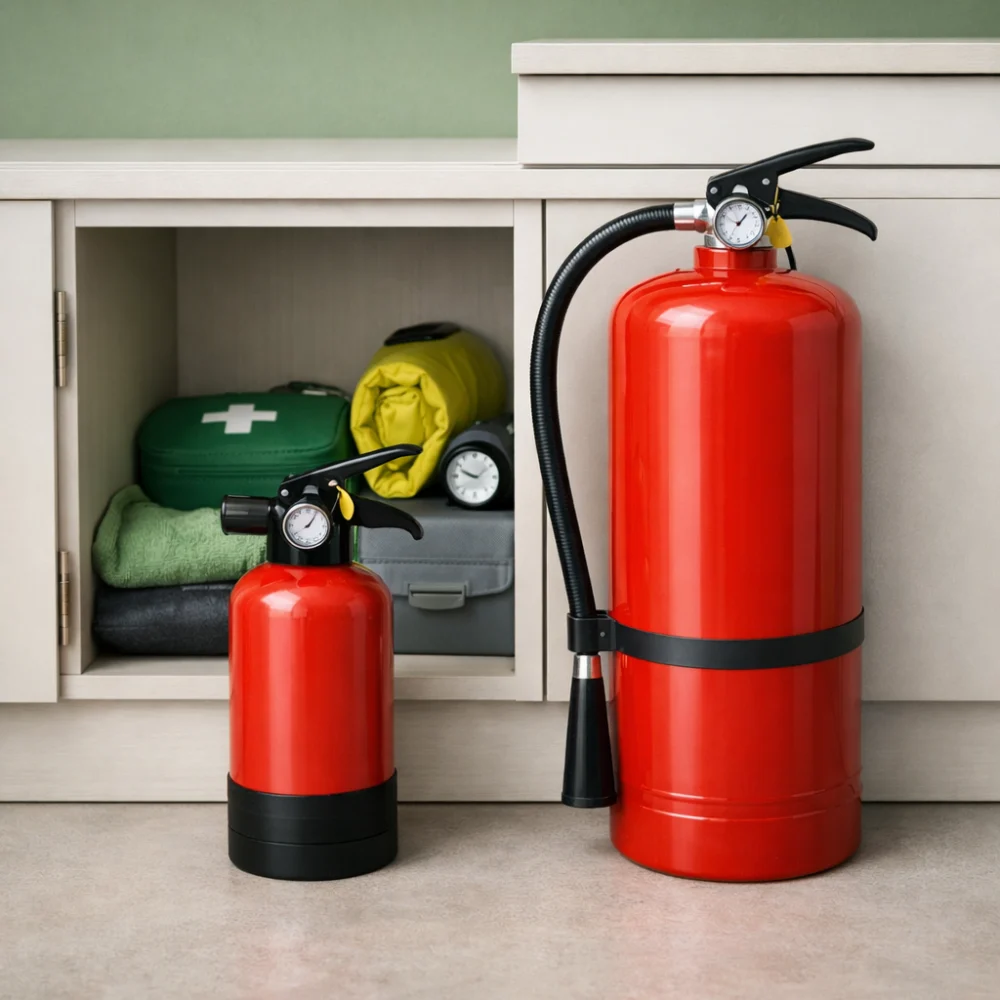
Which extinguisher suits different buyer needs?
| Buyer need | What to prioritise | Why |
|---|---|---|
| Car or everyday vehicle | Compact size, easy access, clear intended use | Space is limited and the unit needs to be reachable quickly |
| Caravan or campervan | Suitable storage, multi-purpose wording where appropriate, clear product information | Travel spaces often have mixed risks and limited storage |
| Boat or marine-style use | Product description that explicitly matches the environment | Conditions and storage expectations may differ from land-based use |
| Gift or precautionary purchase | Straightforward product details and easy-to-understand use case | The buyer may need reassurance that the choice is sensible without being overcomplicated |
Common mistakes and misunderstandings
- Buying on size alone. Bigger is not automatically better if the unit is awkward to store or difficult to reach.
- Assuming all extinguishers are interchangeable. The product description should match the environment and likely fire risk.
- Ignoring accessibility. A well-chosen extinguisher is less useful if it is buried in a locker or boot.
- Reading marketing terms too literally. Phrases such as multi-purpose or all-in-one still need checking against the detailed listing.
Safety and suitability caveats
Fire extinguishers are safety-related products, so the main buying question is whether the item is suitable for the place you want to keep it and the risks you expect. Do not assume one product covers every type of fire or every vehicle setup. If you are comparing similar options, check the product page carefully for the intended use and any relevant limitations before you decide.
Maintenance, storage and lifespan considerations
Before you buy, think about how the extinguisher will be stored and whether you are likely to keep it in the same place for long periods. A unit that is easy to access is usually more useful than one that is technically impressive but inconvenient to keep on board. You should also factor in any product-specific guidance on inspection or replacement, because ownership is not just about purchase day.
How to compare options efficiently
- Decide where the extinguisher will be kept: car, caravan, campervan, boat or another travel setting.
- Shortlist the type and size that fit your storage space and likely use.
- Compare the product description for intended environment and ease of access.
- Check the individual product page for any model-specific details that affect suitability.
- Choose the option that balances practical storage with the clearest match to your needs.
Summary buyer decision checklist
- Is the extinguisher intended for your actual use case?
- Will it fit the space where you plan to store it?
- Is the type described in a way that matches your likely fire risk?
- Is it easy to reach and use in an emergency?
- Have you checked the individual product page for model-specific details?
Frequently asked questions
Do I need a special extinguisher for a campervan?
Not necessarily a special one, but you should choose a product whose stated use matches a campervan or similar travel setup if that is what you are buying for. The main issues are storage, access and whether the description fits the risks in your space. Avoid assuming a general product is right without checking the listing carefully.
What is the main difference between compact and larger extinguishers?
Compact units are usually easier to store and place within reach, which matters in a vehicle or small interior. Larger units may offer more capacity, but they can be less convenient to stow. The better choice depends on how much space you have and how quickly you need to access it.
Are multi-purpose extinguishers a sensible choice?
They can be, especially if you want one unit for mixed travel use. The important thing is to read beyond the label and confirm the stated application on the product page. Multi-purpose wording should simplify the choice, not replace it.
Should I choose the same extinguisher for a car and a caravan?
Not automatically. A car may prioritise compact storage, while a caravan may allow more flexibility and may have different practical risks. Compare the stated use and the size that fits your actual space rather than assuming one option suits both.
What information matters most on the product page?
Look first at the intended use, the type, the size and any notes about suitability for the environment you have in mind. Those details usually tell you more than the product name alone. If the listing is unclear, compare another option with clearer information.
Is it worth buying the smallest option available?
Only if it still suits your intended use and remains easy to access. The smallest choice is not always the most practical, especially if you want the extinguisher to be straightforward to handle. Balance size against the space you have and the use you expect.

