
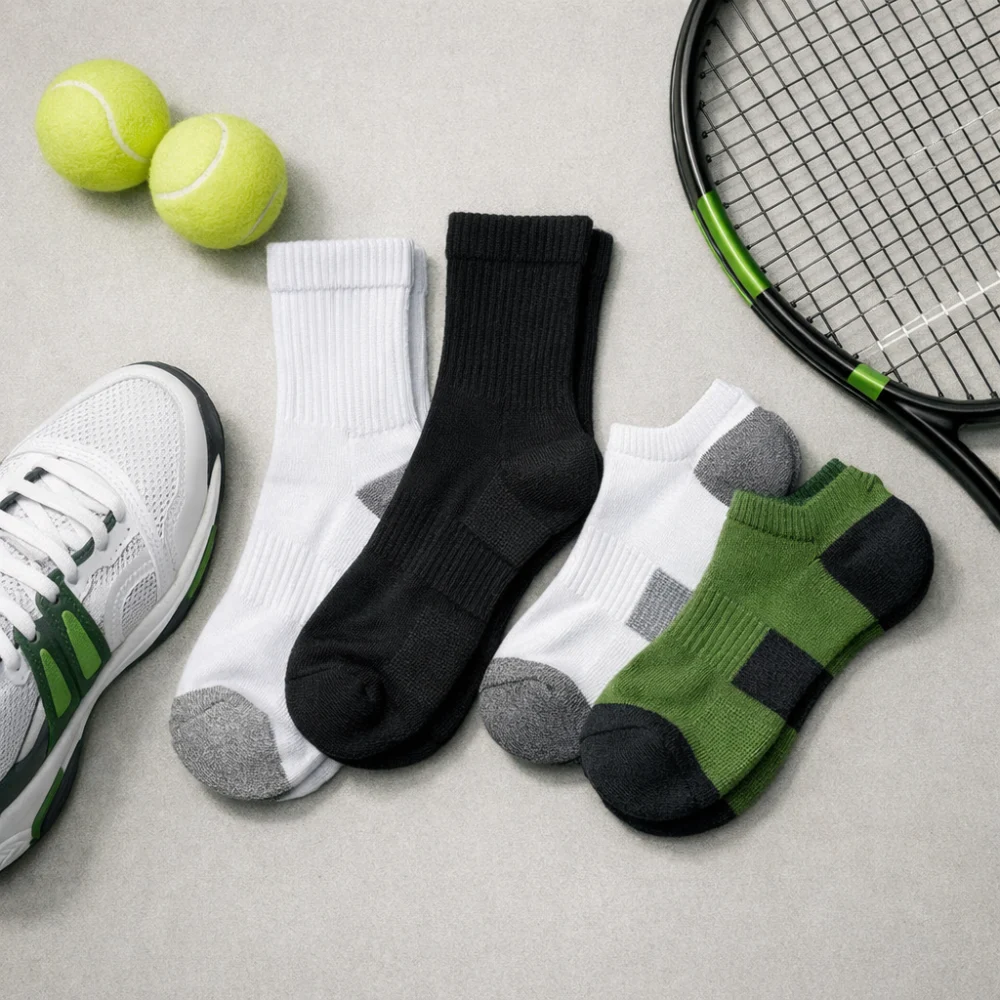
Men’s tennis socks can make a bigger difference to comfort than many buyers expect. The right pair helps with fit, feel inside the shoe and how well the sock stays in place during play.
This guide is for anyone comparing tennis socks for regular matches, practice sessions or general court use. It focuses on the buying choices that matter most, rather than on fashion details or one-size-fits-all advice.
If you are choosing between several pairs, start with how you play, how snug you like your socks to feel and whether you want more cushioning or a lighter feel.
What should you look for in men’s tennis socks?
The best starting point is a sock that matches your comfort priorities and shoe fit. A cushioned sock can feel more protective, while a lighter sock may feel less bulky inside a close-fitting trainer. The main trade-off is usually between softness and feel: more padding can add comfort, but it may also take up more room in the shoe.
Specifications vary by model, so always check the individual product page before buying.
| Feature | What it means | Why it matters | What to check |
|---|---|---|---|
| Length | How high the sock sits on the leg | Affects coverage, feel and personal preference | Look for the length that suits your shoes and the amount of coverage you want |
| Cushioning | Extra padding in key areas | Can improve comfort and soften impact | Check whether cushioning is light, medium or more substantial |
| Fit | How closely the sock follows the foot | A better fit helps reduce slipping and bunching | Compare sizing guidance and whether the sock is described as snug or more relaxed |
| Fabric blend | The mix of fibres used | Influences feel, stretch and moisture handling | Read the material description and consider what feels best for your skin and shoe fit |
| Seams and finish | How the sock is constructed | Can affect comfort during longer sessions | Check product details for features that reduce rubbing or pressure points |
Key decision criteria explained
Length and coverage
Tennis socks are commonly chosen for the level of coverage they give around the ankle and lower leg. Some buyers prefer a shorter feel for less fabric, while others want more coverage for comfort or personal preference. The important point is not which length is universally better, but whether it works with your shoes and the way you move on court.
Cushioning and underfoot feel
Cushioning matters because tennis involves repeated movement, sudden stops and a lot of time on your feet. More cushioning can feel softer underfoot, but it may also make the sock feel thicker in the shoe. If your footwear already fits closely, a slimmer sock may be the better match.
Fit and hold
A good tennis sock should stay in place without feeling restrictive. If the sock slides down, twists or bunches up, it can become distracting even if the material feels pleasant at first. Look for clear sizing guidance and a shape that suits your foot width and calf preference.
Fabric and feel
Fabric choice affects breathability, stretch and the overall feel against the skin. Some buyers prefer a softer, more cushioned handfeel, while others want a lighter, more minimal sock. Rather than focusing on fibre names alone, think about how the sock is likely to feel during a full session of play.
Common types and variants
Within this category, the main differences are usually about construction rather than dramatic style changes.
- Crew-length socks: useful if you want more coverage and a classic court feel.
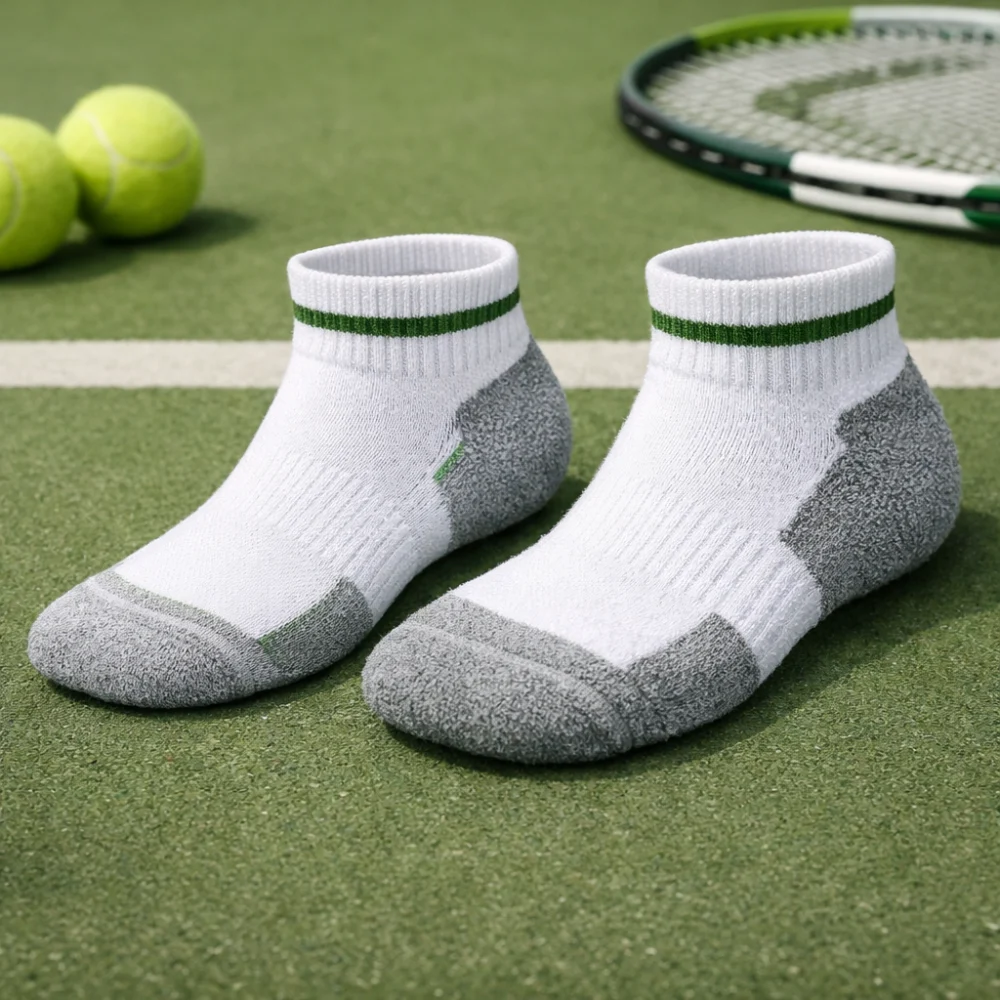
- Quarter or ankle-length socks: suit buyers who want a lower profile and less coverage.
- More cushioned socks: may suit players who prioritise comfort over a thinner feel.
- Lighter socks: may suit those who prefer less bulk in the shoe.
The right choice depends on how your shoes fit and how much padding you personally like. There is no single variant that suits every player.
Which socks suit different buyers?
| Buyer need | What usually matters most | Likely direction |
|---|---|---|
| Regular match play | Comfort over longer sessions and reliable fit | Choose a pair with balanced cushioning and secure hold |
| Hotter conditions | A lighter feel and less bulk | Consider a slimmer sock with less padding |
| Comfort-focused buyer | Soft feel and extra underfoot cushioning | Look for a more cushioned option |
| Close-fitting shoes | Space inside the shoe | Choose a lower-bulk sock that will not crowd the fit |
| Replacement for everyday sports wear | General comfort and durability expectations | Pick a practical pair with a fit you already know you like |
Common mistakes to avoid
- Choosing by looks alone – the important difference is usually in fit, cushioning and length.
- Ignoring shoe space – a thicker sock can change how your shoes feel.
- Assuming all sports socks feel the same – tennis-specific use often rewards a more secure, court-friendly fit.
- Overlooking sizing guidance – a better size match can matter as much as the material.
Safety and suitability considerations
For tennis socks, the main buying concern is suitability rather than risk. Check that the sock length, thickness and fit work with your shoes and the way you play. If you have a preference for added cushioning or a lighter feel, use that as part of the decision rather than assuming one construction suits every player.
Care, storage and lifespan
Socks are straightforward to care for, but their feel can change over time with washing and regular use. Keep them paired, follow the care guidance on the product page or label and store them dry with your other sportswear. If you want a pair to stay comfortable for longer, it is worth paying attention to fabric blend, construction and how the sock maintains its shape.
How to compare options efficiently
- Decide whether you want a lighter sock or more cushioning.
- Choose the length that suits your shoes and comfort preference.
- Check the sizing guidance and fit description carefully.
- Compare the material and construction for comfort and hold.
- Choose the pair that best matches your court use, not just the one with the most features.
Buyer checklist
- Does the sock length suit your shoes and preferred coverage?
- Will the level of cushioning feel right for your comfort needs?
- Is the fit likely to stay secure without bunching?
- Does the sock feel like the right thickness for your footwear?
- Have you checked the individual product page for the exact details?
Frequently asked questions
Are tennis socks different from regular sports socks?
They can be, mainly in how they balance fit, cushioning and court comfort. A tennis sock is usually chosen with repeated lateral movement and long periods on court in mind. That said, the right sports sock for you still depends on fit and feel rather than the label alone.
Should I choose more cushioning or a lighter sock?
Choose more cushioning if comfort is your priority and you like a softer feel underfoot. Choose a lighter sock if you prefer less bulk in the shoe. The best option depends on how your footwear fits and how much padding you personally like.
What sock length is most useful for tennis?
There is no single best length for everyone. Some buyers prefer crew-length coverage, while others like the lower profile of quarter or ankle styles. Pick the length that works with your shoes and the amount of coverage you want.
How important is the material blend?
It matters because it affects feel, stretch and comfort during play. Some blends feel softer or more cushioned, while others feel lighter. The material is worth checking, but it should be considered alongside fit and cushioning rather than on its own.
Can one pair of tennis socks work for training and matches?
Often yes, if the fit and comfort suit both uses. Many buyers want one reliable pair that feels comfortable across regular sessions. If your match wear needs are more specific, focus on the fit and cushioning that feels best during longer play.
What should I check if my shoes already fit closely?
Look carefully at thickness and cushioning, because a bulky sock can alter the fit. A slimmer option may be more comfortable if space inside the shoe is limited. It is sensible to compare the product description with how snug your shoes already feel.

