
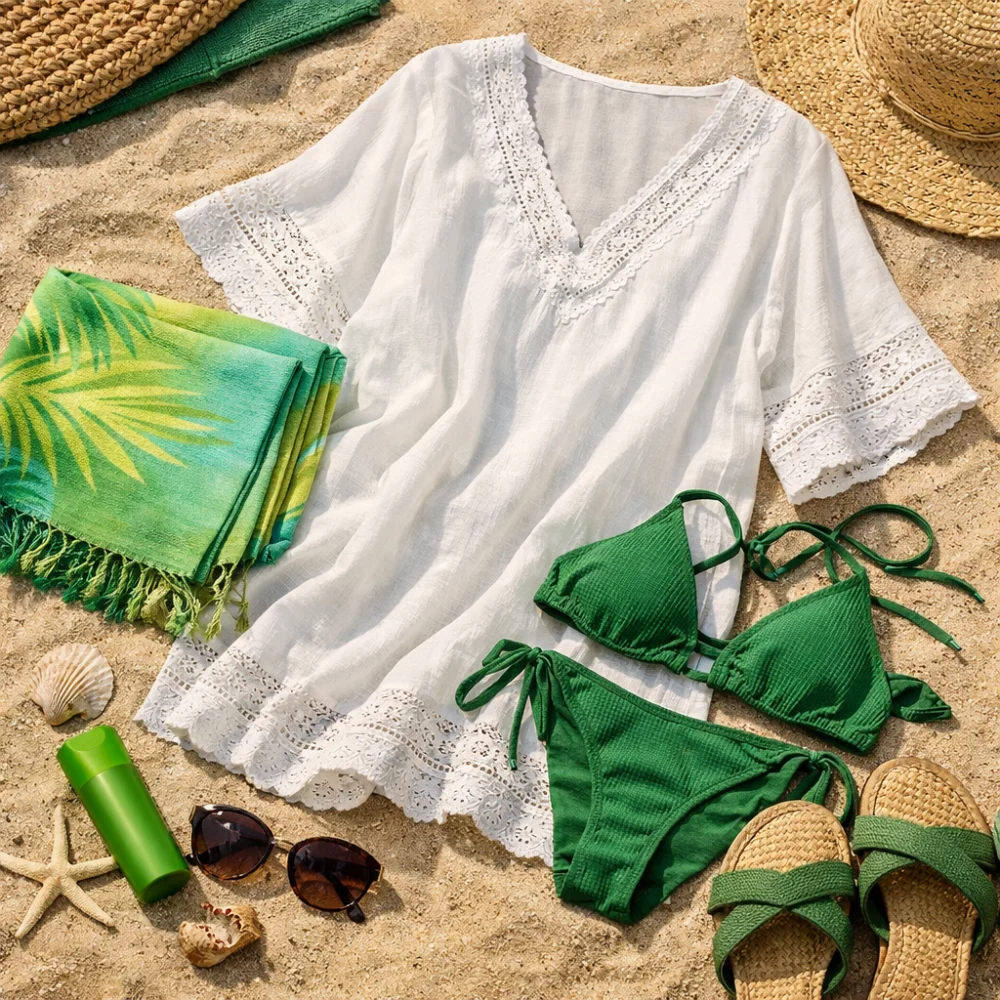
Women’s cover ups and sarongs are simple, useful layers for going from swimwear to relaxed outdoor wear. They can add a bit of coverage, help you feel more comfortable away from the water and make it easier to move between the beach, pool, café or resort.
The right choice depends on how you want to wear it, how much coverage you prefer and how easy it needs to be to pack, wash and rewear. Some buyers want a light wrap they can tie quickly over swimwear, while others prefer a shirt-style or dress-style layer that feels more like everyday clothing.
Because styles vary a lot within this category, it helps to focus on fit, fabric and fastening rather than the label alone. Specifications vary by model, so always check the individual product page before buying.
What should you look for in a women’s cover up or sarong?
Start with how you plan to use it. A sarong is usually the most flexible option if you want something light, compact and easy to style, while a cover up dress, shirt or kimono style can feel easier if you want more shape or more coverage without much effort.
The main trade-off is between simplicity and coverage. Smaller wraps pack easily and dry quickly, but they may need more adjusting. More structured cover ups are often easier to wear as an outfit layer, but they can take up a little more room and feel less minimal.
| Feature | What it means | Why it matters | What to check |
|---|---|---|---|
| Style | Wrap, shirt, dress, kimono or similar cover-up shape | Affects how much coverage you get and how easy it is to wear | Whether you want a simple tie-on layer or something that feels more like clothing |
| Coverage | How much of the body the garment helps cover | Changes comfort, modesty and how suitable it feels for different settings | Length, openness, sleeve style and how the garment fastens |
| Fabric | The material used for the garment | Influences comfort, drape, drying time and how it feels against swimwear | Whether you prefer a light, airy or more structured feel |
| Fit and sizing | How the garment is cut and worn on the body | Affects ease of movement and how confidently it can be layered | Size guidance, one-size styling and how loose or fitted the cut looks |
| Packability | How much space it uses in a suitcase or beach bag | Important for holidays and day trips | Whether the style looks easy to fold, roll or carry |
| Care | How the item is cleaned and stored | Helps with repeat use through the season | Washing guidance and whether the fabric seems easy to maintain |
Key decision criteria explained
Coverage and confidence
Think about where you will wear it. A beach-only wrap may only need to cover swimwear briefly, while a resort or poolside layer may need to feel comfortable enough for walking around, sitting down or stopping for food and drinks. The more varied the setting, the more useful a style with a little structure usually becomes.
Fabric and feel
Fabric changes the whole experience. Lightweight fabrics are often chosen for easy packing and an airy feel, while softer drapey fabrics can give a more relaxed look. If you are sensitive to cling, pay attention to whether the garment looks loose enough to sit comfortably over swimwear.
Length and shape
Length affects both coverage and styling. Shorter styles can feel breezier and more casual, while longer styles may feel more versatile for moving away from the beach. Shape matters too: a wrap that can be adjusted gives flexibility, whereas a fixed-shape cover up is often quicker to put on.
Fastening and wearability
Some styles rely on tying, while others use buttons, open fronts or simply drape over the body. A tie can offer flexibility, but it may need more adjusting. A buttoned or slip-on style can be easier if you want something quick and predictable.
Product types and variants
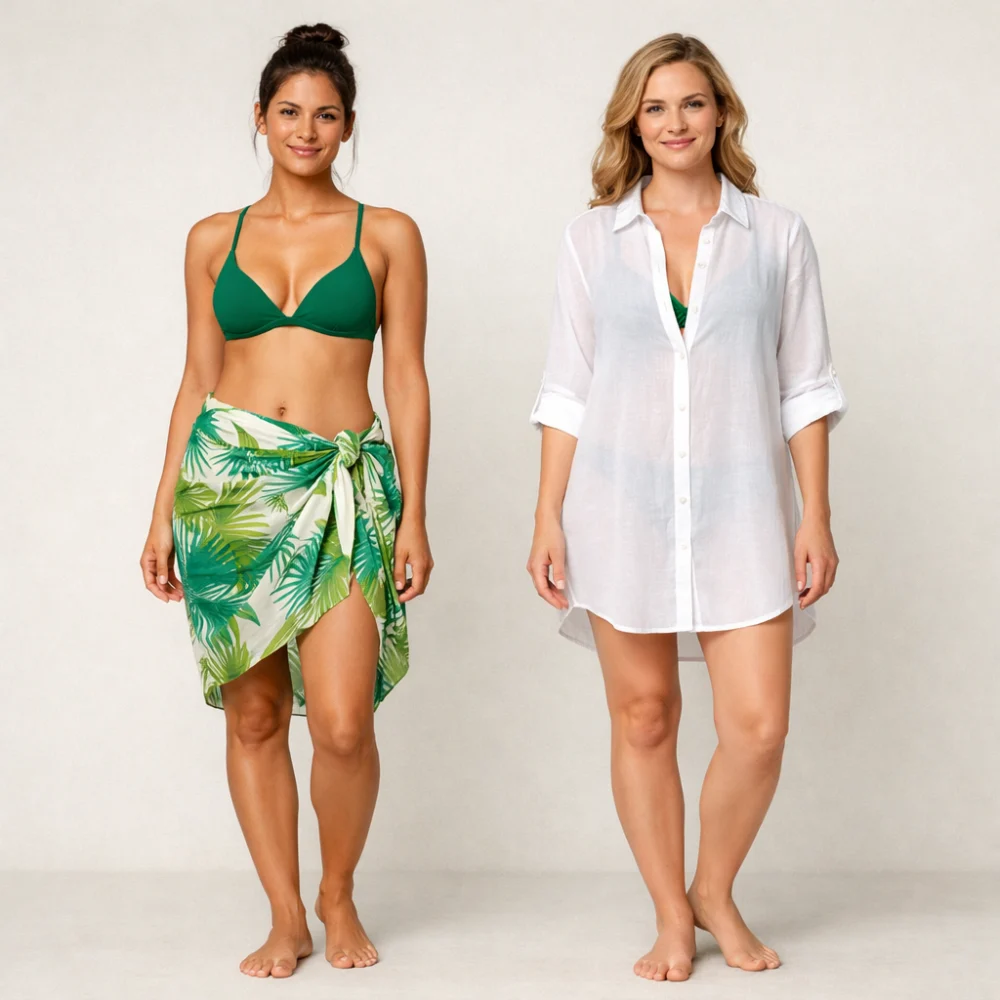
Within this category, the main choices are usually sarongs, wrap-style cover ups, shirt-style cover ups, dress-style cover ups and open-front layers such as kimonos. Each has a slightly different balance of coverage, ease and styling.
- Sarongs: Light, compact and easy to tie in different ways. They suit buyers who want minimal bulk and flexible styling.
- Wrap cover ups: Often more secure or more shaped than a simple sarong. They can be a good middle ground if you want straightforward wear with a bit more coverage.
- Shirt-style cover ups: Familiar and easy to throw on. They suit shoppers who want something casual and easy to wear beyond the beach.
- Dress-style cover ups: Useful if you want a simple outfit-like layer with more everyday appeal.
- Open-front styles: Good for layering over swimwear without much fuss, but they may provide less front coverage than other options.
Which type suits which buyer?
| Buyer need | What to prioritise | Likely good fit | Trade-off to accept |
|---|---|---|---|
| Travelling light | Small pack size and easy folding | Sarong or a very light wrap | Less structure and more adjusting |
| More coverage | Longer length and less open styling | Dress-style or shirt-style cover up | May take up more bag space |
| Quick throw-on use | Simple fastening and easy wear | Open-front or shirt-style cover up | May feel less versatile than a wrap |
| Flexible styling | Ability to tie or wear in more than one way | Sarong or wrap style | Can need a little practice to wear neatly |
Common mistakes and misunderstandings
- Choosing by looks alone: A style that looks good on its own may not suit how you actually move, sit or carry it. Check coverage, fastening and length as well as appearance.
- Assuming one size fits all situations: Some cover ups are deliberately loose, but that does not mean every cut will feel comfortable on every body or for every use.
- Overlooking fabric feel: The same general style can feel very different depending on the material. Consider whether you want something airy, soft, structured or easy to fold.
- Ignoring how it will be worn: A sarong is versatile, but if you want a piece that looks more like clothing for walking around, a more structured cover up may be a better fit.
Safety and suitability caveats
Choose a cover up or sarong that suits the setting you will use it in. A very light wrap may be fine for beachside wear but less suitable if you want more coverage for shared public areas or variable weather. If you are unsure how a style will fit, check the product page for the cut, fastening and sizing notes before buying.
Maintenance, storage and lifespan considerations
Most buyers will want something easy to rinse, wash and pack away between uses. How much care is needed depends on the fabric and construction, so it is worth checking the care information on each product page. If you plan to travel with it, consider whether the fabric is likely to crease easily and whether it will dry quickly enough for repeated use on holiday.
How to compare options efficiently
- Decide whether you want a wrap, sarong, shirt-style or dress-style cover up.
- Check how much coverage you need and where you will wear it.
- Compare the fabric feel, fastening and overall shape.
- Look at sizing guidance and how loose or fitted the style appears.
- Choose the option that balances comfort, packability and ease of wear for your plans.
Summary buyer decision checklist
- Have you decided how much coverage you want?
- Does the style suit the way you plan to wear it?
- Will the fabric feel comfortable over swimwear?
- Is the fastening easy enough for your needs?
- Does the size or cut look suitable for your body and setting?
- Will it pack and wash the way you want it to?
Frequently asked questions
What is the difference between a sarong and a cover up?
A sarong is usually a simple wrap that can be tied in different ways, while a cover up is a broader term for many beach layers, including dresses, shirts and open-front styles. If you want maximum flexibility, a sarong can be a good choice. If you want something that feels more like clothing, a cover up may suit you better.
How do I choose the right level of coverage?
Think about where you will wear it and how comfortable you want to feel moving around in it. A minimal wrap may be enough for the beach, but a longer or more structured style can feel more suitable for walking beyond the sand or poolside. The best level of coverage is the one that matches your setting, not just your swimwear.
Are one-size cover ups suitable for everyone?
Not always. One-size styles can be intentionally loose and flexible, but fit will still vary depending on cut, length and how the garment is meant to drape. Check the product page carefully if you want a particular amount of coverage or a neater silhouette.
Which fabric is easiest to travel with?
Lightweight fabrics are often easiest to pack, fold and carry in a beach bag or suitcase. If you want something for frequent holiday use, it may also help to consider how quickly the item dries and how much creasing you are happy to accept.
Can a cover up double as casual clothing?
Some styles can, especially shirt-style or dress-style options that look more like everyday pieces. A sarong is usually more obviously beach-focused. If you want a cover up you can wear away from the water, look for a cut and fabric that feel comfortable outside a purely swimwear setting.
What should I check before buying online?
Check the style, length, fastening, sizing guidance and care notes on the individual product page. Those details tell you far more than the category name alone. Specifications vary by model, so always check the individual product page before buying.

