
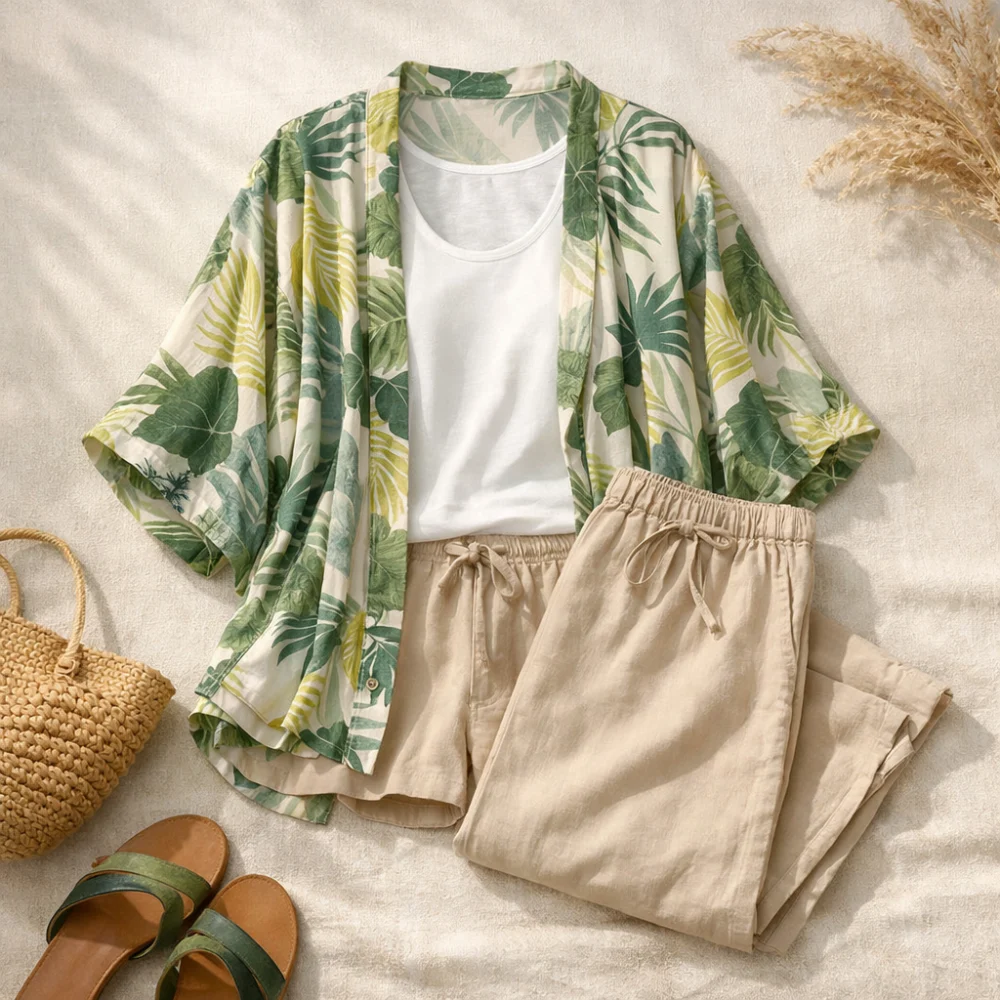
Women’s kimonos are a lightweight layer that can work as relaxed outerwear, a cover-up or an easy finishing piece over simple outfits. They are usually chosen for comfort, drape and style rather than structure, so the most important decision is how you want to wear one.
Because this category can include different lengths, fabrics and fits, it helps to think about where and when you will wear it. A kimono that feels ideal for the beach may not be the same one you would choose for everyday layering.
This guide focuses on the buying decisions that matter most: coverage, fabric feel, drape, sizing, ease of wear and how the garment will suit your intended use.
What should you look for in a women’s kimono?
The best starting point is to match the kimono to its main job. If you want something to throw on over swimwear or casual summer clothing, light weight and easy drape matter most. If you want a layer for more general wear, you may care more about length, coverage and how the kimono sits over other clothes.
The main trade-off is usually between airy, loose styling and a more covered, versatile look. Specifications vary by model, so always check the individual product page before buying.
| Feature | What it means | Why it matters | What to check |
|---|---|---|---|
| Length | How far the kimono falls on the body | Affects coverage, styling and how easy it is to layer | Product description, images and any fit notes |
| Fabric feel | Whether the material is very floaty, soft, smooth or more substantial | Changes comfort, drape and how formal or casual it looks | Fabric name and any care guidance on the product page |
| Sleeve shape | The cut and fullness of the sleeves | Influences movement, ease of layering and the overall silhouette | Garment photos and fit description |
| Open front or tie closure | Whether it is worn loose or secured at the front | Changes coverage and how neatly it stays in place | Photos and product details |
| Intended use | Whether it is better for casual wear, beach cover-up use or lounging | Helps narrow the right style quickly | Category wording and item description |
Key decision criteria
Coverage and length
Length is one of the simplest ways to compare kimonos. Shorter styles can feel lighter and easier for warm weather, while longer styles give more coverage and a more dramatic drape. Think about what you want to cover and what you plan to wear underneath.
Fabric and drape
Fabric affects both comfort and appearance. A lighter, floatier kimono usually feels less restrictive and works well in warm conditions, while a slightly more substantial fabric may hang differently and feel less sheer. If you care about modesty or layering, check whether the product description suggests a more transparent or more opaque finish.
Fit and movement
Many kimonos are designed to be loose and easy to wear, but that does not mean every cut will suit every shape or outfit. Look at sleeve width, shoulder shape and overall opening so you can judge whether it will sit neatly over dresses, tops or swimwear. A relaxed fit can be useful, but too much volume may feel less practical under a jacket or in windy conditions.
Closure style
Some kimonos are intended to stay open, while others use ties or other front fastenings. An open style is quick to wear and generally feels more casual. A tied style can give a little more shaping and confidence if you want extra hold or coverage.
Product types and variants
Within this category, the main variation is usually in how the kimono is styled rather than in technical features. You may see styles that work as beach cover-ups, lounge layers, robe-inspired pieces or cardigan-like outer layers. Each serves a similar purpose, but the best choice depends on how structured, covered or casual you want the look to be.
A beach or cover-up style is often chosen for easy throw-on wear and lighter coverage. A robe-like style may feel more relaxed at home. A cardigan-inspired kimono can suit everyday layering if you want something that works beyond holiday use.
Which kimono suits which buyer?
| Buyer need | What to prioritise | Why |
|---|---|---|
| Holiday or beach use | Lightweight feel, easy drape, quick layering | Comfort and convenience matter more than structure |
| Everyday layering | Versatile length, neat shape, less bulky fit | It needs to work with more than one outfit |
| More coverage | Longer length and wider drape | Helps if you want a more modest or relaxed silhouette |
| Simple comfort at home | Easy wear, soft feel, uncomplicated closure | Makes it practical for casual use |
Common mistakes to avoid
- Choosing by print alone. A pattern may catch your eye, but the cut and length often make a bigger difference to how wearable the kimono feels.
- Assuming one size fits every use. A loose style can be forgiving, but the overall proportions still matter for layering and coverage.
- Ignoring opacity. A very light fabric may look different in person, so check the product page carefully if coverage is important to you.
- Overlooking how it will be worn. A style that works over swimwear may not feel right over office clothes or heavier outfits.
Safety and suitability notes
Women’s kimonos are generally low-risk clothing items, but suitability still depends on the intended use. Check whether the garment is meant for outdoor wear, lounging or as a cover-up, and make sure the level of coverage suits your needs. If you want to wear it in changeable weather, remember that a lightweight layer is not the same as a warm outer layer.
Care, storage and long-term use
Care needs vary by fabric, so the washing and drying guidance on the product page is worth checking before you buy. Delicate, floaty fabrics may need gentler handling than everyday casual layers. If you plan to pack a kimono for travel, think about how easily it folds and whether it will crease.
How to compare options efficiently
- Decide where you will wear the kimono most often.
- Choose the length and level of coverage that suits that use.
- Compare fabric feel, drape and closure style.
- Check how the shape will layer over the clothes you already own.
- Read the individual product page for fit and care details before deciding.
Summary buyer decision checklist
- Does the length suit your intended use?
- Does the fabric feel appropriate for the season and occasion?
- Will the fit layer comfortably over what you plan to wear underneath?
- Do you want an open style or a tied front?
- Is the coverage level right for your needs?
- Have you checked the product page for care and fit information?
Frequently asked questions
Are women’s kimonos only for the beach?
No. Some are designed as cover-ups, but others work well as casual layering pieces over tops, dresses or simple outfits. The best use depends on the fabric, length and overall shape.
What is the main difference between a kimono and a cardigan?
A kimono usually has a looser, more flowing silhouette, while a cardigan often has a more familiar knitwear shape. The right choice depends on whether you want a softer drape or a more conventional layering piece.
How do I know if a kimono will be too sheer?
Check the product description, images and any fit notes carefully. If modesty or coverage matters, look for wording that suggests the fabric is more substantial rather than very lightweight.
Should I choose a short or long kimono?
Shorter styles are often easier for quick layering and warm weather, while longer styles usually give more coverage and a more dramatic look. Think about what you want it to cover and how often you will wear it.
Can one kimono work for both home and going out?
Sometimes, yes, if the fabric and shape are versatile enough. A more refined drape and a less robe-like finish usually make a style easier to wear in different settings.
What should I check if I am buying a gift?
Focus on easy-to-wear styling, versatile colour and a length that is likely to suit everyday use. Because fit preferences vary, a flexible, relaxed style is often easier to choose as a gift.

