
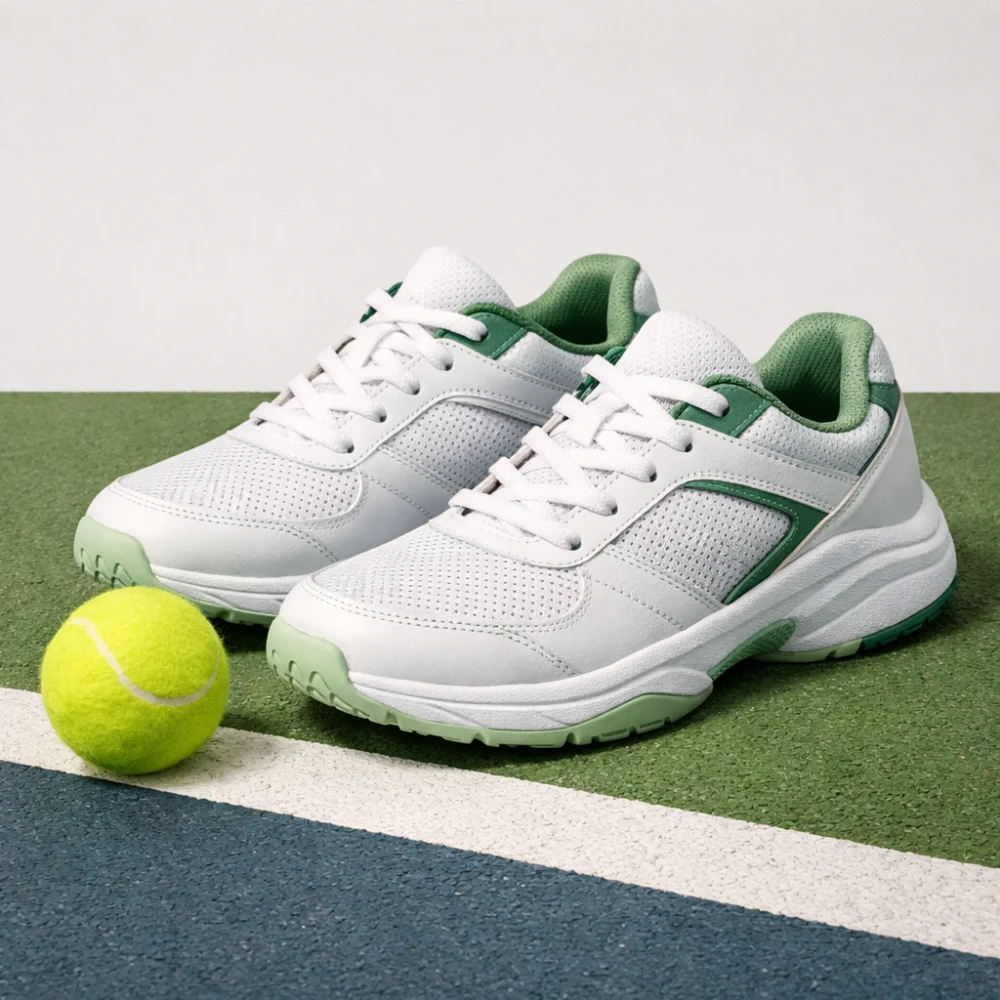
Choosing women’s tennis shoes is mostly about finding the right balance between court grip, lateral support, comfort and durability. The best starting point is the surface you play on most often, then the fit and feel that suit your foot shape and movement.
It also helps to separate genuine tennis footwear from casual court-inspired trainers. Shoes made for tennis are designed to support side-to-side movement and repeated stops and starts, while everyday shoes may feel fine for light wear but are not built around the same playing demands.
If you are buying for regular matches, practice sessions or club play, the details matter. If you only play occasionally, you may prioritise comfort and value more heavily, as long as the shoe still suits the court surface and the way you move.
What should you look for first in women’s tennis shoes?
Start with the court surface, because that affects grip, wear and how the outsole performs. Then look at fit, support and cushioning, since these have the biggest impact on comfort during longer sessions. If you are unsure between two options, choose the pair that suits your surface and feels secure in the midfoot and heel rather than the one that looks most versatile.
| Feature | What it means | Why it matters | What to check |
|---|---|---|---|
| Court surface | The type of court the shoe is designed to play on | Grip and outsole wear depend heavily on the surface | Check whether the shoe is suitable for the court you use most often |
| Fit | How securely the shoe sits on the foot | A stable fit helps reduce unwanted movement inside the shoe | Look at size guidance, width information and any notes on toe room |
| Support | How the shoe helps with side-to-side movement | Tennis involves quick changes of direction and frequent bracing | Check the upper structure, heel hold and overall stability cues on the product page |
| Cushioning | The level of underfoot softness and shock absorption | More cushioning can feel easier over longer sessions | Balance comfort against court feel and the amount of ground feedback you prefer |
| Outsole durability | How well the sole resists wear from repeated court use | Regular players need a shoe that copes with abrasion | Look for any surface-specific outsole details and material notes |
| Weight and feel | How light or substantial the shoe feels in play | Heavier shoes may feel more planted; lighter shoes may feel quicker | Consider your playing style and whether you prefer speed or a more grounded feel |
Key decision criteria explained
Court surface
The surface you play on most often is one of the most important filters. Hard courts, clay and indoor courts place different demands on the outsole, so the same shoe will not always feel equally suitable everywhere. Specifications vary by model, so always check the individual product page before buying.
Fit and width
A good tennis shoe should feel secure without pinching. The forefoot should allow natural toe spread, while the heel should stay steady when you stop and change direction. If you often find shoes too narrow or too roomy, pay close attention to the sizing notes and any width guidance provided.
Stability for lateral movement
Tennis is more side-to-side than straight-line running, so stability matters as much as softness. A shoe that feels supportive through the midfoot and heel can help you feel more controlled during rallies and recovery steps. The trade-off is that extra structure can feel less flexible at first.
Cushioning versus court feel
More cushioning can be kinder underfoot during long sessions or if you spend a lot of time on court. However, some players prefer a lower, firmer feel because it can make the shoe feel more responsive. The right choice depends on whether you value plush comfort or a more direct connection to the court.
Durability where it counts
Tennis footwear is exposed to repetitive abrasion, especially if you drag a toe or brake sharply. A durable upper and outsole can matter more than decorative design details. If you play frequently, compare the general construction notes rather than focusing only on appearance.
Product types and variants
Within women’s tennis shoes, the main differences are usually about performance emphasis rather than completely separate product families.
- Support-focused shoes suit players who want a more planted feel and extra confidence in quick direction changes.
- Comfort-focused shoes suit casual or moderate players who prefer a softer underfoot experience.
- Lighter-feeling shoes may appeal to players who value speed and agility, though they can feel less substantial.
- Surface-specific options are worth considering when you mainly play on one court type and want more appropriate traction and wear.
The most useful distinction is often not the brand or look, but how much support, cushioning and durability the shoe offers for your style of play.
Which shoe suits which buyer?
| Buyer need | What to prioritise | Why |
|---|---|---|
| Frequent club player | Durability, lateral support and reliable fit | Regular play places more demand on the outsole and upper |
| Occasional recreational player | Comfort, easy fit and sensible value | Light use may not require the most specialised construction |
| Player on a specific surface | Surface suitability first | Traction and wear are strongly linked to the court type |
| Player who prefers a softer feel | More cushioning, but still with stable support | Comfort matters, but tennis still needs side-to-side control |
| Player who likes a quicker feel | Lighter construction and responsive underfoot feel | A more agile shoe can suit fast movement, if the fit remains secure |
Common mistakes and misunderstandings
- Choosing by looks alone. A shoe can appear sporty without being well suited to tennis movement or your usual surface.
- Assuming all court shoes are the same. Tennis footwear varies in support, cushioning and outsole design, even when the styling looks similar.
- Ignoring fit issues. A shoe that is slightly unstable or tight at the start often becomes more noticeable during longer play.
- Overlooking your surface. A shoe that feels fine in the shop may wear differently depending on where you actually play.
- Confusing comfort with support. A soft-feeling shoe is not automatically the most stable option for tennis movement.
Safety and suitability caveats
Choose a shoe that suits your intended use and the court conditions you face most often. If you have specific foot comfort concerns or you are replacing shoes because of wear patterns, compare the product details carefully and avoid assuming that a general-purpose trainer will behave the same as tennis footwear.
It is also sensible to check whether the fit, width and support style suit you before you rely on the shoe for regular play.
Maintenance, storage and lifespan considerations
Tennis shoes usually last longer when they are allowed to dry properly between sessions and are stored in a cool, dry place. Regular cleaning can help preserve the upper and keep the outsole free from build-up that affects grip.
If you play often, expect wear to show first in the outsole and high-stress areas of the upper. That is another reason to choose construction that matches how frequently you play, rather than buying only for appearance.
How to compare options efficiently
- Decide where you will use the shoes most often.
- Choose the level of support and cushioning that fits your style of play.
- Check the fit guidance carefully, including any width or sizing notes.
- Compare durability and outsole details if you play regularly.
- Read the individual product page before deciding, especially if two shoes look similar but feel very different on court.
Summary buyer decision checklist
- Does the shoe suit the main court surface you play on?
- Does it feel secure at the heel and midfoot?
- Is the balance of cushioning and stability right for your playing style?
- Does the construction look durable enough for how often you play?
- Have you checked the product page for model-specific sizing and surface information?
Frequently asked questions
Can I use women’s tennis shoes for other sports?
They may be suitable for some court-based or indoor activities, but they are designed around tennis movement. If another sport has different traction or support needs, a dedicated shoe may be a better match. It is worth checking the demands of the sport rather than relying on the name alone.
How should tennis shoes feel when I try them on?
They should feel secure, with enough room for your toes to move naturally, but not so loose that your foot slides. A little firmness is normal because tennis shoes are built for control as well as comfort. If they feel unstable in the heel or too tight across the forefoot, consider a different fit.
Is more cushioning always better?
Not necessarily. More cushioning can improve comfort, but some players prefer a firmer, more responsive feel because it gives more court feedback. The best choice is the one that suits your comfort needs without reducing stability.
Do I need a specific shoe for indoor courts?
If you mainly play indoors, it makes sense to look for a shoe that suits that environment. Surface suitability affects grip and wear, so a shoe designed with your playing surface in mind is usually the safer buying choice. Always check the product page for the intended use.
What if I play only occasionally?
Occasional players may prioritise comfort and straightforward fit over the most specialised features. Even then, the shoe should still be appropriate for tennis movement and your usual court surface. A sensible balance of comfort and support is often enough.
Why do some tennis shoes feel stiff at first?
Many tennis shoes are built with structure for stability, so they can feel firmer than casual trainers. That structure helps during side-to-side movement and quick stops. If the shoe feels uncomfortably restrictive, though, it is worth rechecking the size and fit.
Should I replace tennis shoes when the tread starts to wear?
Wear on the outsole is a useful sign to watch, especially if you play frequently. Once grip or support begins to feel noticeably reduced, the shoe may no longer suit your needs as well as it did when new. The exact timing depends on usage and construction.

