
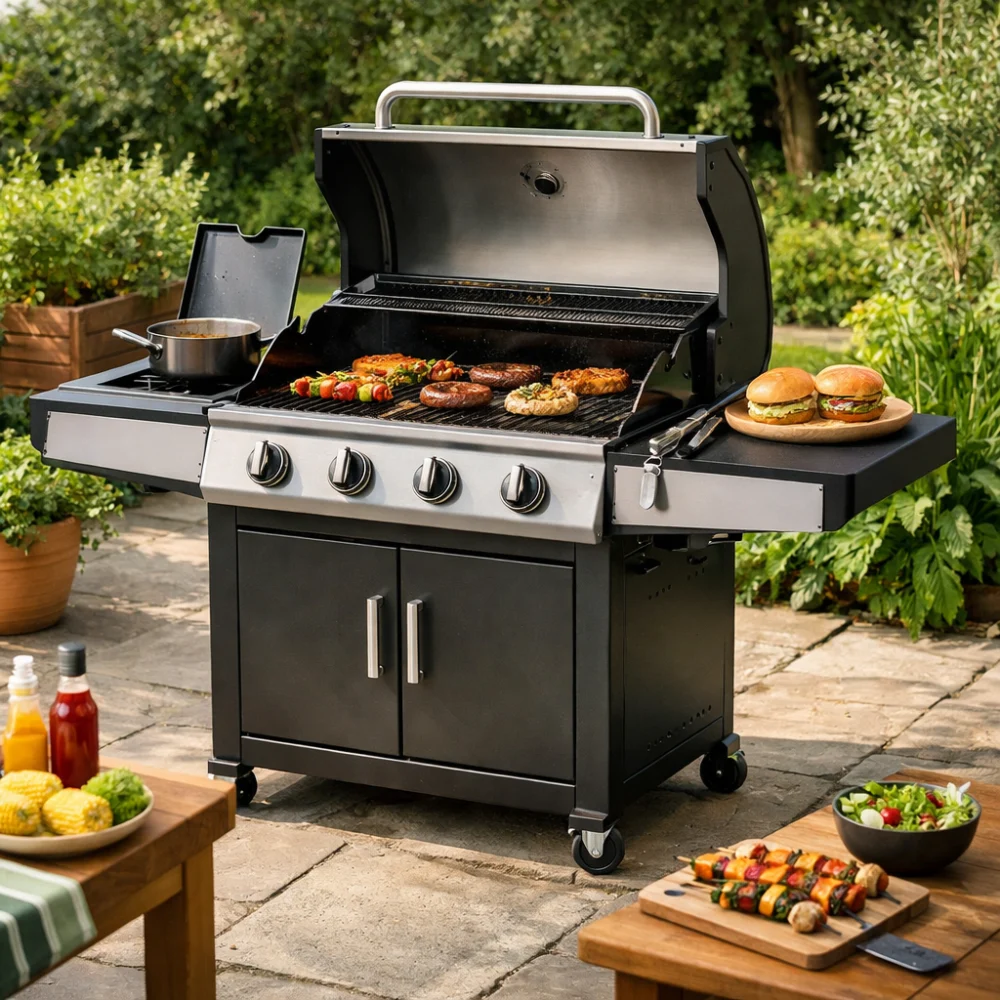
Choosing a garden BBQ is mostly about matching the cooker to how you like to eat outdoors, how much space you have and how much effort you want to spend getting started. Some buyers want a compact grill for occasional family meals, while others want a larger setup for regular entertaining.
It also helps to separate the cooking style from the appearance. A BBQ can look similar at first glance, but the practical differences in fuel, cooking area, heat control and cleaning can make a big difference once you are using it week after week.
This guide focuses on the choices that usually matter most when comparing BBQs for the garden, patio or terrace.
What should you look for in a garden BBQ?
The best starting point is to decide how you will actually use it. If you want quick weekend cooking and easy clean-up, a simpler BBQ may be the better fit. If you cook for larger groups or like more control over heat zones, you may prefer a model with more cooking space or more flexible controls. The main trade-off is usually between convenience, capacity and cooking style.
Specifications vary by model, so always check the individual product page before buying.
| Feature | What it means | Why it matters | What to check |
|---|---|---|---|
| Fuel type | The BBQ may run on charcoal, gas or another fuel approach | Affects start-up time, flavour preference and how much control you have while cooking | Which fuel the model uses and what that means for your routine |
| Cooking area | The space available for food on the grill or plate | Helps you judge whether it suits a couple, family meals or larger gatherings | The usable cooking surface rather than just the overall size |
| Heat control | How easily you can manage temperature during cooking | Useful for avoiding burnt food and for cooking different foods at the same time | Number of controls, adjustable zones and any temperature indicator provided |
| Portability | How easy it is to move, store or position | Important for smaller gardens, patios and occasional use | Weight, wheels, folding parts or compact design |
| Cleaning | How simple it is to clear ash, grease or food residue | Influences how often you will want to use it and how much maintenance it needs | Removable trays, access to the cooking surfaces and cleaning instructions |
| Build and materials | The materials used in the body, grates, plates or frame | Affects durability, care requirements and how the BBQ handles outdoor storage | Material descriptions and any storage or cover guidance |
Key decision criteria
Fuel and cooking style
Fuel choice shapes the whole experience. Charcoal is often chosen for a traditional barbecue feel, while gas is usually valued for easier ignition and quicker control. Some buyers are drawn to hybrid or specialist designs because they want more flexibility, but those options can also add complexity. The right choice depends on whether you value flavour, convenience or a balance of both.
Size and hosting needs
A BBQ that is too small can feel restrictive when guests arrive, while a larger model may take up more room than you want to give up. Think about whether you mainly cook for two, a family, or a larger group. It is often better to be honest about normal use rather than buy for a one-off occasion.
Cooking surface and layout
Not all cooking areas are arranged in the same way. Some BBQs are better for grilling on a standard grate, while others use plate-style surfaces or include extra zones for indirect cooking. That layout affects what you can cook comfortably and how much attention you need to give the food.
Heat management
Good heat control can matter more than raw size. If you like to sear meat, cook vegetables and keep some food warm at the same time, separate heat zones or a warming area can be useful. If you prefer simple cooking with fewer adjustments, a more straightforward design may be easier to live with.
Cleaning and storage
A BBQ that is easy to clean is more likely to get used regularly. Look at how ash, fat and residue are handled, and consider whether the unit will be left outside or stored away after use. Outdoor storage may make materials, covers and general weather resistance more relevant to your decision.
Common BBQ types and variants
Within garden BBQs, the main differences are usually about fuel and format rather than a completely different purpose.
- Charcoal BBQs appeal to buyers who want a classic barbecue style and do not mind a longer start-up routine.
- Gas BBQs suit people who want quicker ignition and more immediate control over heat.
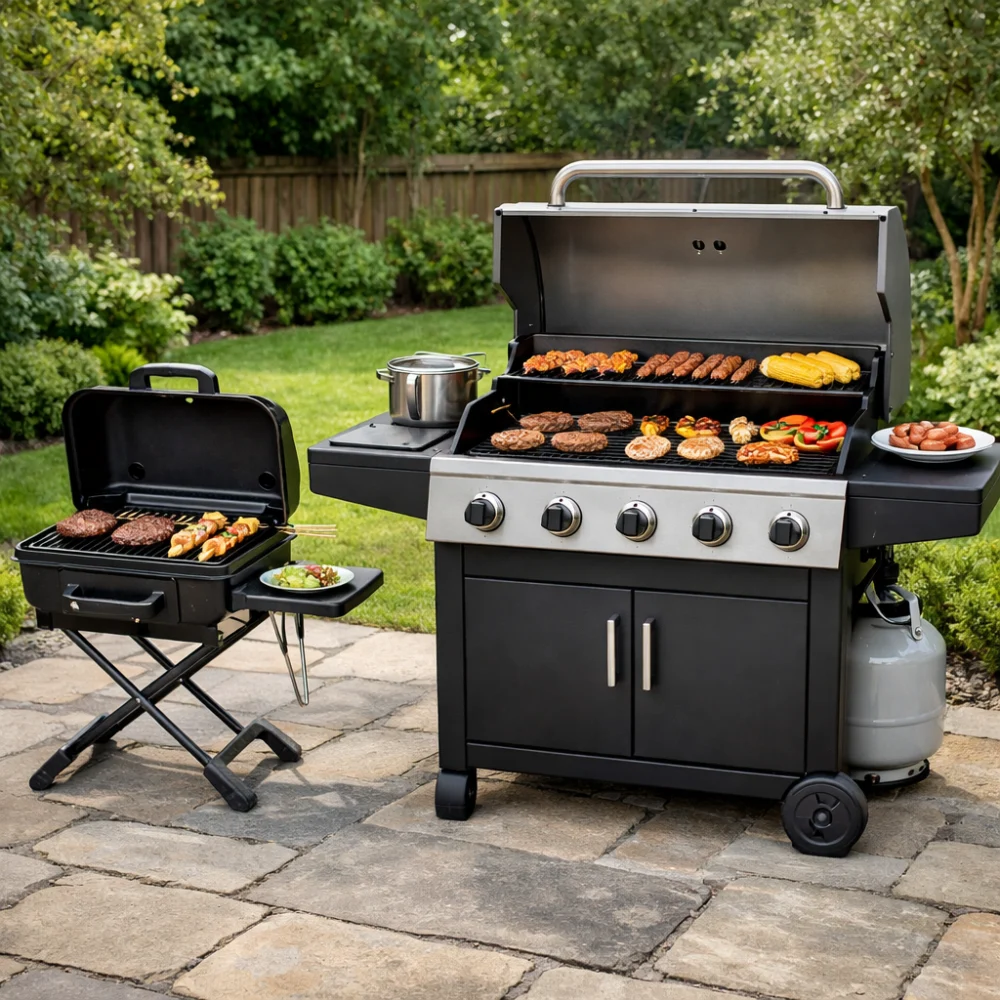
- Portable BBQs are useful where storage space is limited or the BBQ will be moved around often.
- Larger multi-burner or multi-zone BBQs are more suited to frequent entertaining and cooking several items at once.
The main limitation is that each style asks for something different from the user. A compact model may be easier to store but less flexible for bigger groups, while a larger BBQ may offer more cooking space but need more room and more cleaning.
Which BBQ suits different needs?
| Buyer need | Helpful characteristics | Why it may suit them | Possible compromise |
|---|---|---|---|
| Occasional family cooking | Simple controls, manageable size, easy cleaning | Keeps the purchase practical without adding unnecessary complexity | Less capacity for bigger gatherings |
| Frequent entertaining | More cooking space, stronger heat control, flexible layout | Makes it easier to cook several foods at once | Can take more space and be less portable |
| Small garden or patio | Compact footprint, storage-friendly design | Fits tighter spaces and is easier to put away | Reduced cooking area |
| Buyer who wants simple operation | Straightforward fuel system and easy access for cleaning | Can be quicker to set up and less fiddly in use | May offer fewer cooking options |
| Buyer comparing long-term ownership | Durable materials, practical storage advice, replaceable parts where relevant | Helps the BBQ stay usable across more seasons | May cost more up front or need more care |
Common mistakes to avoid
- Choosing by appearance alone. A stylish BBQ may still be awkward to clean or too small for regular use.
- Ignoring the cooking area. It is easy to underestimate how much space food takes once several items are on the grill.
- Overlooking storage needs. A BBQ that looks fine in the garden can still be awkward to move or keep covered.
- Assuming all fuel types suit the same routine. Different fuels change how quickly you can start cooking and how much control you have.
- Forgetting the cleanup step. If cleaning feels difficult, the BBQ may end up being used less often than planned.
Safety and suitability notes
A garden BBQ should always be chosen with its intended setting in mind. Consider where it will stand, how much room there is around it and whether the model is suitable for the type of outdoor space you have. If you plan to store it outside, check the product information for any storage guidance and make sure that matches your plans.
It is also sensible to check what comes with the BBQ and what may need to be bought separately, such as fuel, covers or accessories. Specifications vary by model, so always check the individual product page before buying.
Maintenance, storage and lifespan considerations
Basic care can make a noticeable difference to how long a BBQ remains pleasant to use. Cleaning after cooking, protecting it from the weather and storing it sensibly when not in use all help reduce wear. The exact care needed depends on the model, materials and fuel type, so it is worth checking the product information before you buy.
For some buyers, the most practical choice is the one that is easiest to keep in good condition rather than the one with the most features.
How to compare BBQs efficiently
- Decide how often you expect to cook and how many people you usually feed.
- Choose the fuel type and format that matches your cooking style.
- Compare the usable cooking area and layout, not just the overall size.
- Check how easy it is to clean, move and store.
- Review the individual product page for the model-specific details that matter to you.
Summary buyer decision checklist
- Does the BBQ suit the number of people you usually cook for?
- Is the fuel type right for your preferred cooking routine?
- Is the cooking area large enough for your normal use?
- Will it fit your available outdoor space?
- Is the cleaning and storage routine realistic for you?
- Have you checked the individual product page for model-specific details?
Frequently asked questions
What is the easiest type of garden BBQ to use?
For many buyers, the easiest option is the one that matches their usual routine with the least fuss. A simpler fuel setup, clear controls and easy cleaning often matter more than extra features. The most suitable choice depends on whether you value convenience, flavour control or portability.
How do I know what size BBQ I need?
Start with the number of people you usually cook for and how often you entertain. If you mostly cook for a small household, a compact model may be enough. If you regularly host friends or family, a larger cooking area is usually easier to live with.
Is charcoal better than gas?
Neither is automatically better; they suit different preferences. Charcoal often appeals to people who enjoy a more traditional cooking style, while gas is commonly chosen for speed and convenience. Your decision should come down to how you want to cook, not just the fuel itself.
Should I choose a portable BBQ?
A portable BBQ is worth considering if space is limited or you want something easier to move and store. It can be a good fit for occasional use, but the trade-off is usually a smaller cooking area. That makes it less suitable if you often cook for larger groups.
What should I check before buying a BBQ for outdoor storage?
Look at the material description, any care notes and whether the product information mentions storage or cover advice. If the BBQ will live outside, weather exposure and cleaning become more important. The key is to choose a model whose upkeep you can realistically manage.
Do extra features always make a BBQ better?
Not necessarily. Extra features can be useful, but they may also make the BBQ heavier, more expensive or more complicated to clean. It is often better to focus on the basics first: size, fuel, heat control and easy maintenance.

