
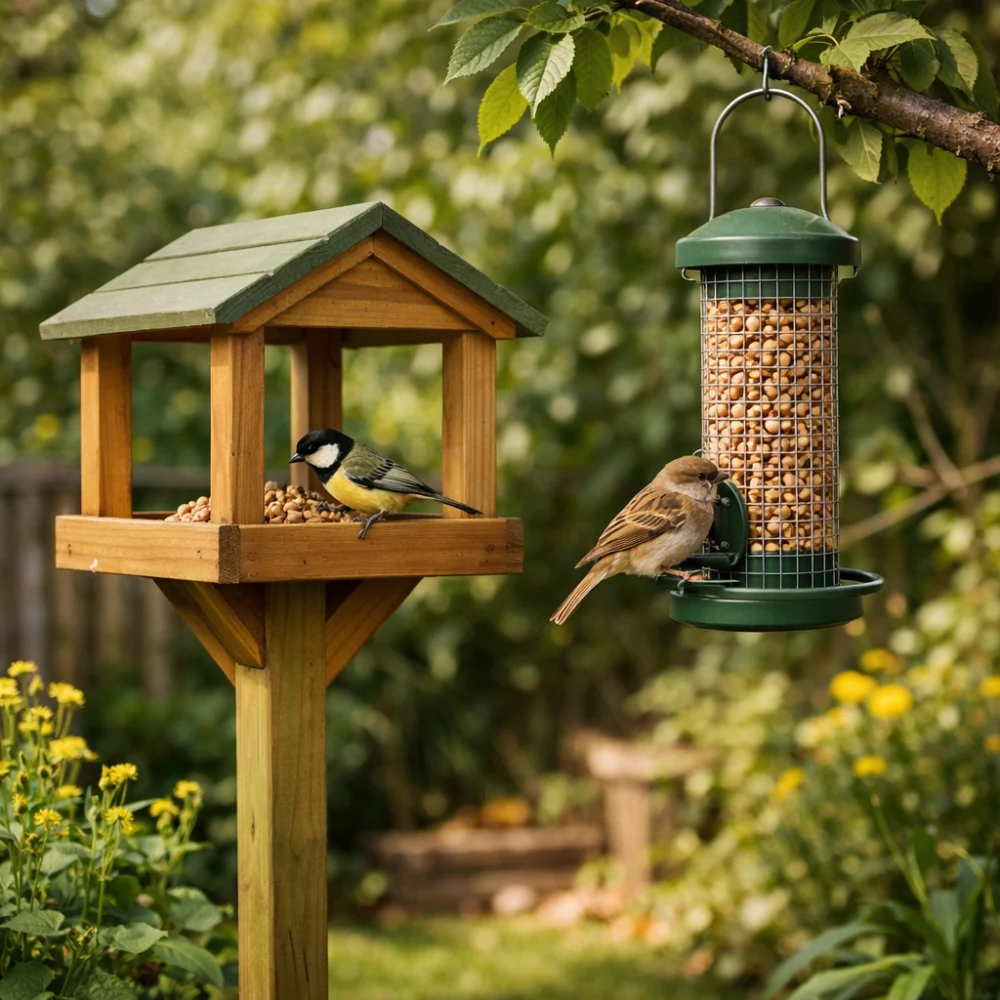
Bird tables and feeders are a simple way to offer food to garden birds, but the right choice depends on where you want to place it, how much space you have and how much maintenance you want to do. Some buyers want a freestanding table for a visible spot in the garden, while others prefer a hanging or window feeder that uses less ground space.
The main decision is usually not about looks alone. It is about access, stability, ease of cleaning and whether the design suits the birds you hope to see. A well-chosen option is easier to keep tidy and more likely to fit your garden layout.
Specifications vary by model, so always check the individual product page before buying.
What should you look for in a bird table or feeder?
Start with where it will go and how you plan to use it. A table is often better if you want a broader feeding surface and a more traditional garden feature, while a feeder may suit smaller spaces or specific food types. The most useful features are the ones that make the product stable, easy to refill and easy to clean.
| Feature | What It Means | Why It Matters | What To Check |
|---|---|---|---|
| Placement | Whether the product stands on the ground, hangs up or attaches to a window or structure | Determines where it can be used and how visible or accessible it will be | Space available, fixing method and whether the location is sheltered enough for regular use |
| Feeding style | Open table, tray, hopper-style feeder or multi-feeder arrangement | Different designs suit different feeding habits and different food types | Whether the design matches the birds and food you want to offer |
| Cleaning access | How easily the tray, base or feeding points can be reached and wiped down | Regular cleaning helps keep feeding areas more manageable | Removable parts, smooth surfaces and whether cleaning can be done without awkward dismantling |
| Weather exposure | How much shelter or cover the design gives the food | Rain and wind can affect how long food stays usable and how tidy the area remains | Roofing, drainage and whether the feeding area is likely to stay relatively dry |
| Capacity and refill frequency | How much food the product can hold and how often it may need topping up | Affects convenience and how closely you need to monitor supplies | Size of tray or holder and whether you prefer frequent small refills or less frequent top-ups |
| Stability and fixing | How securely the product stays in place | Important for safety, practicality and day-to-day use | Base design, stand type, hanging strength or suction approach where relevant |
Key decision criteria explained
Placement and space
Think first about the location. A bird table needs a clear, suitable space and usually benefits from a position that is easy for you to reach but not crowded by fences, walls or overhanging branches. Hanging feeders and window feeders can work better where ground space is limited, or where you want something closer to the house.
Open table or enclosed feeder
Open tables are straightforward and easy to view, but they leave food more exposed to the weather. Feeders can be neater and more targeted, although some are better suited to certain food formats than others. Choose the design that matches how tidy, sheltered or versatile you want the feeding point to be.
Cleaning and maintenance
Cleaning matters because food residue and damp can build up quickly. A design with simple access and removable parts can be easier to keep in good condition than one with small corners or fixed sections. If you want less faff, prioritise smooth surfaces and a layout that you can reach without strain.
Material and finish
Materials affect appearance, weight and upkeep. Wooden designs often suit traditional gardens, while metal or mixed-material designs may feel more contemporary and can be easier to wipe clean. The key is not the material alone, but how it is constructed and how much care it will need in your setting.
Types and variants within this category
Within bird tables and feeders, the most common variation is by format rather than by specialist function.
- Bird tables: A raised feeding surface that suits buyers who want a central garden feature and a broad place to offer food.
- Hanging feeders: A suspended option that can be useful where floor space is tight or you want a lighter-looking setup.
- Window feeders: A close-view option that attaches to glass and suits smaller spaces, although placement is more limited.
- Multi-feeder designs: Useful if you want to offer more than one type of food in one place, but they can be more involved to clean and refill.
Specifications vary by model, so always check the individual product page before buying.
Which type suits different buyers?
| Buyer need | What to prioritise | Why it helps |
|---|---|---|
| Small garden or limited outdoor space | Hanging or window-mounted options | They can use vertical space without needing a large footprint |
| Wanting a traditional garden feature | Freestanding bird table | It creates a visible focal point and a broad feeding area |
| Prefer easier cleaning | Simpler feeder with accessible parts | Less fiddly access usually makes routine care easier |
| Wanting to offer more than one food type | Multi-feeder or broader table design | It can give more flexibility, subject to the individual layout |
| Buying for close viewing | Window feeder | It keeps birds nearer to the home for observation |
Common mistakes to avoid
- Choosing by appearance alone: A design may suit the garden visually but still be awkward to clean or place well.
- Ignoring shelter: If the feeding area is too exposed, food may need changing more often and the setup may be less tidy.
- Overlooking access for cleaning: If you cannot reach key parts easily, regular upkeep is more likely to be skipped.
- Assuming all feeders suit the same food: Check the product layout and any guidance on the product page before choosing a feeder style.
Safety and suitability to check before buying
Look at where the product will stand, hang or attach, and make sure that location is appropriate for your garden. For freestanding tables, stability is a key consideration; for hanging and window options, check the fixing method and whether the intended position is practical. It is also sensible to think about whether the product will be easy to reach for refilling and cleaning without awkward stretching.
Maintenance, storage and lifespan considerations
Bird tables and feeders usually need regular basic care, especially if they are outdoors through changing weather. Cleaning, occasional drying and sensible storage when not in use can help reduce wear. Materials and construction will affect how much upkeep is needed, so compare how each product is assembled and whether any parts are easy to remove or wipe down.
How to compare options efficiently
- Decide where the product will go and how much space you have.
- Choose between a table, hanging feeder, window feeder or multi-feeder design.
- Check how easy it is to clean, refill and access.
- Compare the weather exposure, stability and fixing method.
- Review the individual product page for the details that matter most to your garden.
Summary buyer decision checklist
- Have you chosen the right format for your space?
- Will the product be easy to clean and refill?
- Is the fixing or base suitable for where you want to place it?
- Does the design provide the level of shelter you want?
- Have you checked the individual product page for model-specific details?
Frequently asked questions
Is a bird table better than a feeder?
Neither is always better. A bird table gives a broader open feeding area, while a feeder can be neater, more compact or better suited to a specific placement. The better choice depends on your space, the look you want and how much cleaning or refilling you are happy to do.
What is the easiest type to maintain?
That depends on the design, but simpler layouts with easy access are usually less troublesome. Look for products that are straightforward to wipe down and do not need awkward dismantling for routine cleaning.
Can I use a feeder in a small garden?
Yes, hanging and window options are often a practical way to use limited space. The key is to check where it will sit and whether you can reach it comfortably for refilling and cleaning.
Do I need a sheltered position?
A sheltered position can be helpful because it may reduce direct exposure to rain and wind. It is worth checking how open the feeding area is and whether the product design offers enough cover for your needs.
What should I check on the product page before buying?
Check the placement method, how the product is cleaned, how it is fixed or supported and whether the layout suits the kind of feeding you want. If any detail is unclear, compare a few options side by side before deciding.
Are window feeders suitable for everyone?
No. They are useful in the right setting, but they depend on a suitable glass surface and can be more limited in placement than freestanding or hanging options. They are best for buyers who want a compact, close-view solution.

