
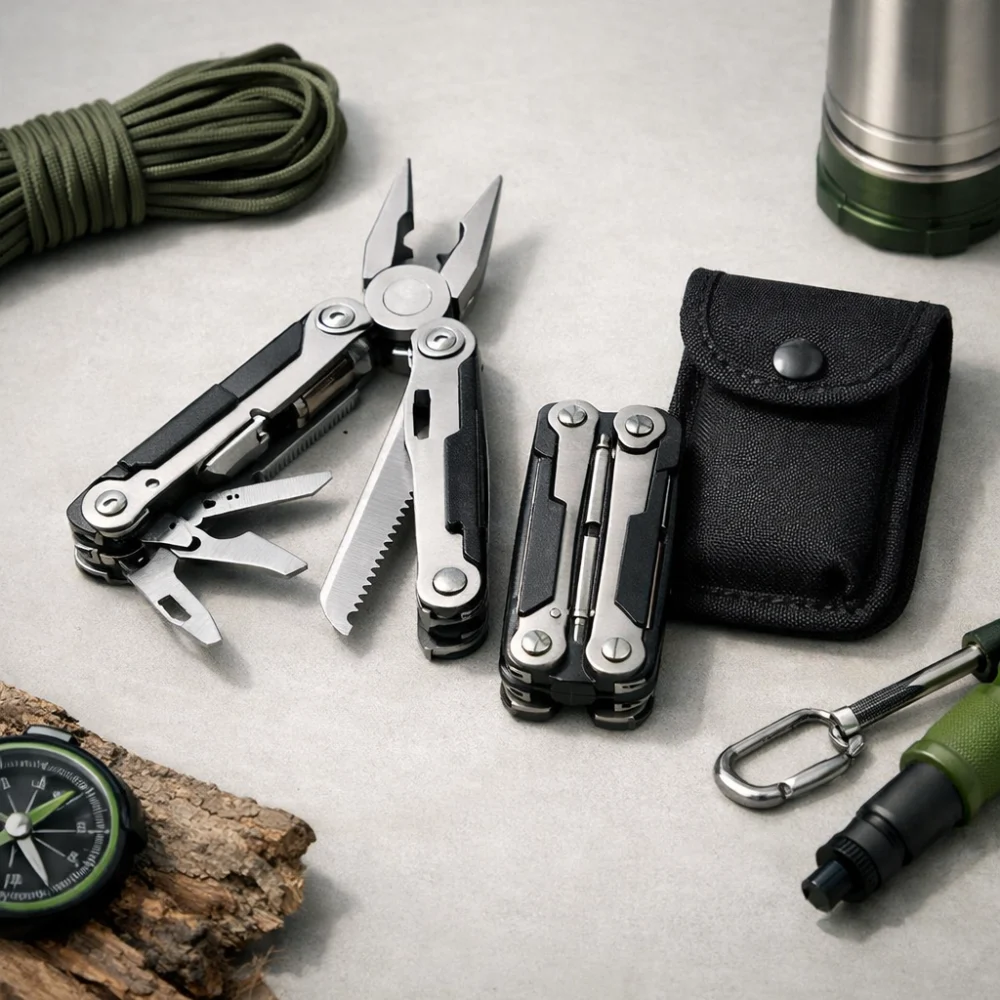
Leatherman multi tools are a practical choice when you want several useful tools in one folding format. They appeal to campers, DIY users, professionals and anyone who prefers carrying one compact item instead of a separate set of tools.
The right choice depends less on brand name and more on how you expect to use the tool. A buyer who wants a light everyday carry option will look for different trade-offs from someone who needs a sturdier tool for frequent workshop or outdoor use.
If you are comparing models for the first time, it helps to focus on size, tool selection, carry method and how often you will actually use the included functions. That makes the decision clearer than looking only at the number of tools listed.
What should you look for in a Leatherman multi tool?
Start with the tasks you want to handle most often, then compare the tool layout, size and carry style against that need. The most useful model is not necessarily the one with the most tools; it is the one whose main tools are easy for you to use and comfortable to carry.
Specifications vary by model, so always check the individual product page before buying.
| Feature | What It Means | Why It Matters | What To Check |
|---|---|---|---|
| Tool selection | The mix of blades, pliers, drivers, cutters and other built-in functions | Determines whether the tool matches the jobs you actually do | Look for the functions you will use regularly, not just a long list |
| Size and carry comfort | How large and heavy the closed tool feels in pocket, pouch or bag | Affects whether you will carry it consistently | Check the folded size, weight and whether you prefer pocket or sheath carry |
| One-hand access and ease of use | How quickly you can reach the tools and open them | Makes a difference in fast or frequent use | See whether the design suits your grip, left- or right-handed use and typical tasks |
| Construction and finish | Overall build style and materials used across the tool | Influences durability, feel and suitability for harder use | Review the product description for construction details and any included case or holster |
| Carry method | How the tool is stored or worn when not in use | Affects convenience and access | Check for pocket clip, sheath or pouch options if carry matters to you |
Key decision criteria explained
Tool count versus real usefulness
It is easy to assume more tools automatically means better value, but the better question is whether the included tools fit your routine. A compact model may suit occasional tasks, while a more feature-rich option can make sense if you regularly need several functions in one place. The trade-off is usually between portability and versatility.
Size, weight and how you plan to carry it
A tool that stays at home is less useful than a slightly simpler one that you are happy to carry. If you want something for pocket carry, pay close attention to size and weight. If you expect to keep it in a bag, vehicle or work kit, a larger format may be acceptable if it gives you the tools you need.
Tool access and comfort in use
Some buyers care most about how quickly they can reach a blade, driver or plier head. Others care more about comfort during longer tasks. The best choice depends on whether you need occasional convenience or regular hands-on use. Look at the product page for the tool layout and included accessories rather than assuming all models feel the same.
Carry accessories and storage
Many buyers overlook how the tool will be stored day to day. A sheath or pouch can matter if you do not want to carry it loose in a pocket or bag. If you already have a preferred organiser, make sure the dimensions and carry style suit your setup.
Types and variants within this category
Within Leatherman multi tools, buyers usually compare compact everyday carry styles against larger, more capable tools aimed at heavier use. Compact models can be easier to carry and quicker to keep on hand, while larger tools may offer more leverage or a broader tool set. The limitation of smaller models is that they may feel restrictive for frequent work tasks, while larger models can be less convenient to carry every day.
Some buyers also look for specialised layouts that prioritise particular uses, such as general outdoor tasks, workshop-style jobs or emergency-related functions. Those can be a good fit if the layout matches your needs, but they are not a shortcut to choosing wisely: the value still depends on whether the key tools are the ones you will actually use.
Which type suits which buyer?
| Buyer need | What usually matters most | Likely trade-off |
|---|---|---|
| Everyday carry | Comfort, compact size and easy access | Fewer functions or a simpler tool set |
| Camping and outdoor use | Useful all-round tools and dependable carry | Slightly more bulk if you want broader capability |
| Work or DIY | Practical tool selection and comfortable handling | Less emphasis on smallest possible size |
| Gift buying | Broad usefulness and a style that suits the recipient | You may need to choose more conservatively without knowing their exact needs |
Common mistakes and misunderstandings
- Choosing by tool count alone: a longer list does not help if the important tools are awkward to use or you never carry the item.
- Ignoring carry comfort: a multi tool that feels too bulky is often left behind, which makes it poor value in practice.
- Assuming all models suit the same tasks: some are better as compact everyday tools, while others are better for heavier or more frequent use.
- Overlooking the need for accessories: a sheath, pouch or clip may be part of what makes a tool practical for you.
Safety and suitability caveats
Multi tools are useful general-purpose items, but they are not the right substitute for every specialist tool. Check that the intended functions suit your use, and review the product page for any usage limits or included accessories. If you are buying for travel, work or a particular environment, make sure the tool fits the rules and expectations of that setting.
Maintenance, storage and lifespan considerations
Basic care can make a difference to how well a multi tool feels over time. Keep it clean, dry and stored in a way that protects the working parts from grit and moisture. If the model includes replaceable or accessory parts, it is sensible to note that up front so you understand the ongoing ownership cost and upkeep.
How to compare options efficiently
- Decide what you want the tool to do most often.
- Choose the size and carry style that you will actually keep with you.
- Compare the main tools, not just the total number of functions.
- Check whether the layout suits your preferred way of using a multi tool.
- Read the individual product page for the exact specifications before buying.
Summary buyer decision checklist
- Does the tool set match your main tasks?
- Will the size and weight suit the way you carry it?
- Do you prefer pocket carry, pouch carry or storage in a bag?
- Are the key functions easy for you to access and use?
- Have you checked the individual product page for the exact specification?
Frequently asked questions
Are Leatherman multi tools mainly for camping?
No. Camping is one common use, but many buyers choose them for everyday carry, DIY, work kits or general household tasks. The better question is whether the tool layout fits the jobs you expect to do.
Is a bigger multi tool always better?
Not necessarily. Larger tools may offer more capability, but they can also be less comfortable to carry. A smaller model is often the better choice if you want something you will actually keep with you.
Should I choose the model with the most tools?
Only if those extra tools are genuinely useful to you. It is often better to have a smaller set of tools that you use often than a larger set that adds weight without improving day-to-day usefulness.
What should I check before buying one as a gift?
Think about the recipient’s likely use, preferred carry style and whether they already own a similar tool. A practical gift usually works best when the size and tool mix match their routine rather than trying to cover every possible task.
Do I need a sheath or pouch?
Not always, but storage and carry accessories can make a big difference to convenience. If you do not want to carry the tool loose, check whether the product includes a suitable case or whether you will need one separately.
How can I tell if a model is suitable for frequent use?
Look beyond the headline tool count and consider the size, access and overall handling. A model intended for regular use should feel comfortable enough that you are willing to carry and use it often.

