

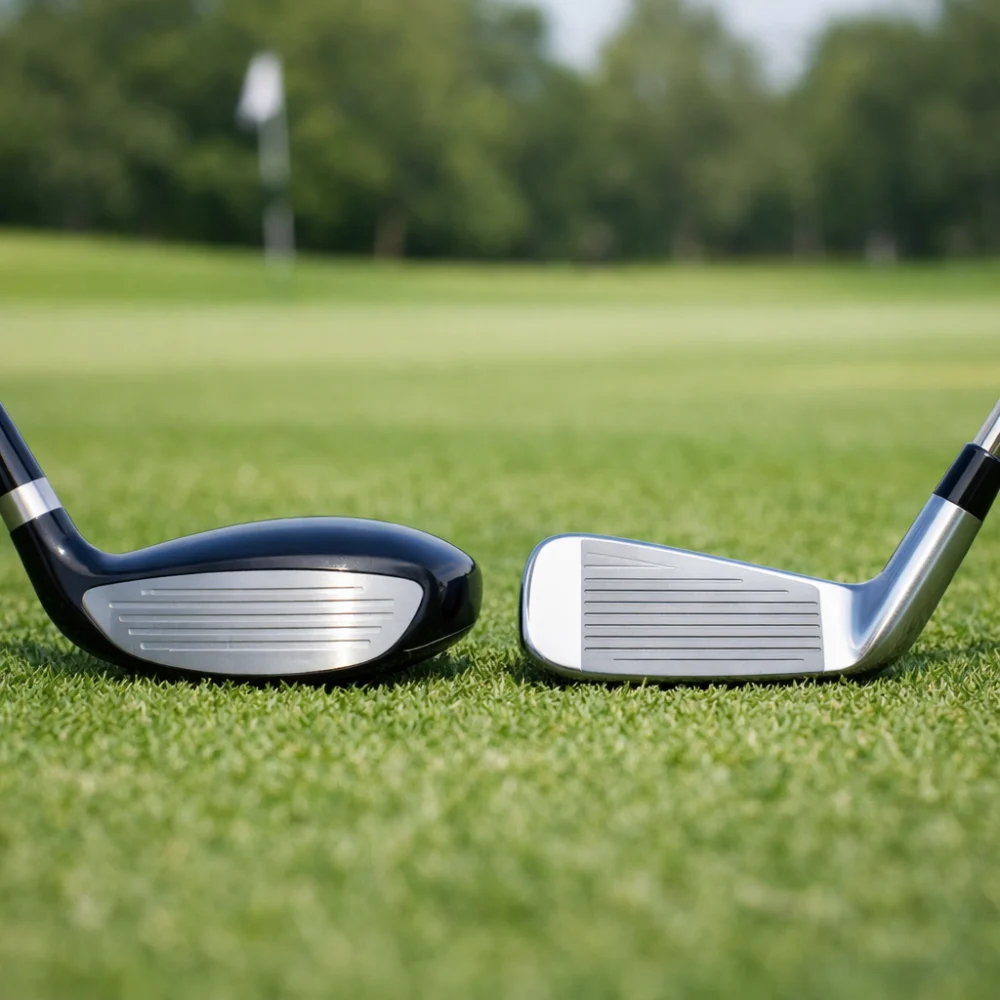
Hybrid golf clubs sit between irons and fairway woods, so they are often chosen by golfers who want a club that is easier to launch than a long iron but more controllable than a wood in some situations. They can also be used as replacements for specific irons in a set, depending on how a player likes to build their bag.
If you are weighing up your first hybrid or replacing an old one, the main challenge is matching the club to the shot shape, distance gap and feel you want. The right choice is usually less about brand and more about how the club fits the rest of your set.
What should you look for in a hybrid golf club?
The best starting point is to decide where the hybrid will sit in your bag and what problem it is meant to solve. A hybrid can help bridge the gap between irons and fairway woods, but the trade-off is that no single model feels ideal for every swing or course condition. Look first at loft, shaft type, handedness and how forgiving the club is likely to feel for your game.
| Feature | What it means | Why it matters | What to check |
|---|---|---|---|
| Loft | The angle of the clubface | It influences launch, distance gapping and how easy the ball may be to get airborne | Check the stated loft and compare it with the rest of your set |
| Shaft material | Usually graphite or steel, depending on the model | It affects feel, weight and how the club may suit your tempo | Read the shaft description and flex details on the product page |
| Flex | How much the shaft bends during the swing | It can influence timing, feel and consistency | Choose the flex that matches your swing characteristics and comfort |
| Handedness | Whether the club is made for right- or left-handed players | The wrong handedness will not suit your setup | Confirm the handedness before adding to basket |
| Club role | How the hybrid fits into the bag | It helps avoid duplicate distances or awkward gaps | Compare it with the irons or woods you already use |
| Forgiveness | How steady the club may feel on off-centre contact | Some golfers prefer a more forgiving option for confidence and consistency | Look for product descriptions that explain the intended use or player level |
Key decision criteria
Loft and distance gaps
Loft is one of the most important numbers to compare because it helps determine where the hybrid fits between your irons and woods. A lower loft may suit a longer gap-filling role, while a higher loft may be easier to launch and control. The main thing is to avoid buying a hybrid that overlaps too closely with another club you already carry.
Shaft material and feel
Many buyers focus on the head shape and overlook the shaft, but the shaft can have a big effect on how the club feels in motion. Graphite is commonly associated with a lighter feel, while steel may feel different in weight and feedback, but the right choice depends on the individual model and your preference. Specifications vary by model, so always check the individual product page before buying.
Flex and swing comfort
Flex matters because it affects how the shaft behaves during the swing. Too firm or too soft for the way you swing can make a club feel harder to time, even if the loft looks right on paper. If you are unsure, compare the flex description carefully and match it to the style of club you already get on with.
Forgiveness and ease of use
Hybrids are often bought because they can be easier to strike than a long iron, especially from the fairway or rough, but the amount of forgiveness still varies by model. Some are designed to be more game-improvement focused, while others may appeal to golfers who prefer a more compact shape or stronger control. Think about whether you want confidence and simplicity, or a more traditional feel.
Types and variants within this category
Within hybrid golf clubs, the main differences usually come from loft, handedness, shaft material and the intended player profile. Some are sold as individual clubs for filling a specific distance gap, while others may appear as part of a broader iron replacement approach. The category can also include models aimed at different comfort preferences, from easier-launching options to more control-led designs.
If you are comparing variants, focus on how each one changes the way the club fits your set rather than on the label alone. A club called a hybrid may still behave differently depending on head shape, loft and shaft choice.
Which hybrid suits which golfer?
| Buyer need | What to prioritise | Why |
|---|---|---|
| Replacing a hard-to-hit long iron | Easy launch, suitable loft and a comfortable shaft feel | Helps make the club easier to use in real rounds |
| Filling a distance gap in the bag | Careful loft comparison with existing clubs | Reduces overlap and keeps the set more balanced |
| Seeking more confidence from the turf | Forgiveness and a shape that inspires trust | Can make longer approach shots feel less demanding |
| Choosing for a newer golfer | Simplicity and general ease of use | Helps reduce the learning curve compared with more demanding long clubs |
| Upgrading from an older hybrid | Current loft, shaft and handedness first | Ensures the new club matches the way the rest of the bag is set up |
Common mistakes and misunderstandings
- Buying by name alone: two hybrids can look similar but play differently because of loft, shaft and head design.
- Ignoring set gapping: if the loft is too close to another club, the new hybrid may not add much value.
- Overlooking handedness: always confirm right- or left-handed orientation before ordering.
- Assuming every hybrid feels the same: some are easier to launch, while others are designed with a different balance of control and forgiveness.
- Focusing only on distance: a club that is easier to hit consistently is often more useful than one that promises more carry in theory.
Safety and suitability
Hybrid golf clubs are straightforward sporting equipment, but suitability still matters. Check that the club is intended for your handedness and that the loft, shaft and general setup suit the way you play. If you are buying for someone else, avoid assuming that one hybrid will automatically suit all golfers of a similar height or age.
Maintenance and storage
Most of the buying decision is about fit, but care also affects how long a club stays in good condition. A headcover, if supplied, can help protect the club in your bag, and keeping the club clean after use makes it easier to inspect for wear. Store it somewhere dry and check the product page for any care details that are specific to the model.
How to compare options efficiently
- Decide whether the hybrid is replacing an iron, filling a gap or giving you a more forgiving option.
- Check the loft and compare it with the rest of your set.
- Confirm the shaft material, flex and handedness.
- Think about whether you want an easier-launching feel or a more controlled one.
- Read the individual product page carefully before choosing.
Summary buyer decision checklist
- Does the loft fit the gap you want to cover?
- Is the club made for your handedness?
- Does the shaft type and flex sound suitable for your swing?
- Will it complement the rest of your bag rather than overlap with another club?
- Do you want maximum ease of use, more control, or a balance of the two?
- Have you checked the individual product page for the exact model details?
Frequently asked questions
What is a hybrid golf club used for?
A hybrid is usually chosen as a versatile club that can bridge the gap between irons and woods. It can be useful when you want a club that feels easier to launch than a long iron, while still offering more control than some longer clubs.
How do I know which loft to choose?
Start by looking at the clubs you already carry and identify where the gap is. The aim is to choose a loft that fits neatly into your set rather than creating overlap with another club.
Are hybrids only for beginners?
No. Many golfers use hybrids because they can make certain shots simpler, not just because they are new to the game. They can suit a wide range of players if the loft, shaft and feel match the rest of the bag.
Should I replace an iron with a hybrid?
That depends on how you like to play and where your current set leaves gaps. Some golfers prefer hybrids in place of harder-to-hit long irons, while others keep a more traditional iron setup.
Does shaft material matter?
Yes, because it affects the feel and overall behaviour of the club. The best choice is the one that suits your preference and complements the rest of the set, rather than one material being universally better.
What should I check before ordering?
Confirm the handedness, loft, shaft details and how the club will fit with the rest of your bag. It is also worth checking the product page for any model-specific notes so you know exactly what you are buying.

