

Golf club irons are the workhorse clubs in many bags, used for a wide range of approach shots, tee shots on shorter holes and recovery situations. Buying the right set or individual iron is less about chasing a universal “best” option and more about matching the clubs to your current swing, your preferred feel and the gaps in your bag.
Some buyers want a full iron set, while others only need a single replacement iron or one specialist club to complement an existing bag. The main challenge is that irons can look similar at a glance, yet differ in how forgiving they are, how they feel at impact and how much control they give you over distance and shot shape.
If you are comparing golf club irons for the first time, it helps to focus on how you play now rather than the image you want a club to project. Specifications vary by model, so always check the individual product page before buying.
What should you look for in golf club irons?
The best starting point is to decide whether you need a set or a single iron, then look at forgiveness, feel, loft and shaft details. From there, compare how the club is intended to perform for your level of consistency and the types of shots you most often face. The main trade-off is usually forgiveness versus precision: more forgiving irons can be easier to play, while more compact or specialist irons may offer finer control for some golfers.
| Feature | What It Means | Why It Matters | What To Check |
|---|---|---|---|
| Club format | A full set or a single iron | Determines whether you are replacing one club or building a gap across the bag | Confirm if the product is sold individually or as a set |
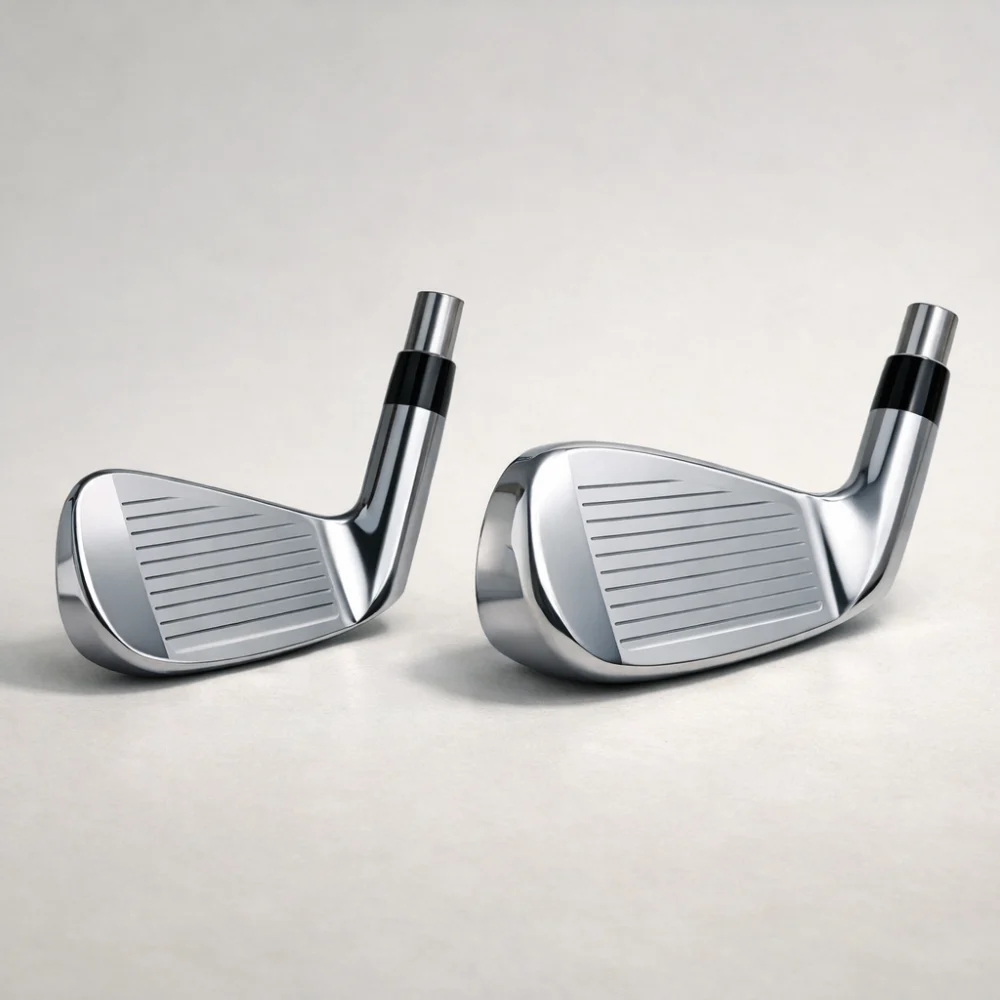
| Head style | The overall shape and profile of the iron | Affects confidence at address, forgiveness and how easy the club may be to use | Look at the product images and description for the intended style |
| Shaft type | The shaft material and flex options, where stated | Influences feel, timing and how the club loads through the swing | Check the exact shaft specification on the product page |
| Handedness | Right-hand or left-hand orientation | Essential for proper setup and playability | Make sure the listing matches the hand you use |
| Loft and number | The specific iron number and loft profile | Helps you fill distance gaps and choose the right shot for the job | Compare the numbered iron you need rather than assuming all irons play alike |
| Set make-up | Which irons are included in a set | Determines whether the set fits your current bag composition | Review the included club numbers carefully |
Key decision criteria explained
Set or single iron
Many buyers are either replacing one worn or lost iron or looking for a complete run of clubs. A single iron is useful when you only need one specific number, while a set is more efficient if you want consistency across several clubs. The key trade-off is flexibility versus continuity: buying one club solves a narrow need, but a set may give you a more uniform feel across the bag.
Forgiveness and playability
Forgiveness refers to how much help an iron gives on less-than-perfect contact. More forgiving irons may suit golfers who want an easier, steadier experience, while less forgiving designs may appeal to players who value a more direct response. The important question is not whether a club is “better”, but whether it matches how consistent you currently are.
Feel and feedback
Some golfers prefer clubs that give clear feedback at impact, while others want a softer, more confidence-inspiring feel. Feel is subjective, so product descriptions and category wording can only guide you so far. If you are choosing between similar options, think about whether you normally prioritise comfort, control or help on off-centre strikes.
Shaft details
Shaft choice can influence how an iron feels through the swing and how stable it seems at impact. The material and flex, where provided, are worth checking closely because they can affect timing and consistency. Do not assume a shaft that suits one golfer will suit another with a different tempo or swing preference.
Handedness and lie expectations
Handedness is a basic but essential check, and it is one of the easiest mistakes to avoid. Beyond that, golfers sometimes overlook that the club should suit their setup and natural stance. If the listing provides lie or fitting-related information, review it carefully rather than assuming every iron will sit the same way for every player.
Common iron types and variants
Within this category, the main variation is usually between individual irons and iron sets, rather than completely different product families. Some buyers also see specialist options such as driving irons or separate wedge-style irons, which are still part of the broader iron family but serve a narrower shot shape or distance role.
- Individual irons are useful for replacement or for filling a specific gap.
- Iron sets are better when you want a more complete, consistent progression across several clubs.
- Specialist iron-style clubs may suit golfers looking for a more specific role, but they usually require more careful selection.
The limitation of buying by type is that the same category can include clubs with very different intended use, so the product page matters more than the label alone.
Which iron suits which kind of buyer?
| Buyer need | What to prioritise | Why it helps |
|---|---|---|
| Replacing a lost or worn club | Exact iron number, handedness and shaft details | Helps keep the new club aligned with the rest of the bag |
| Building a first iron setup | Set make-up, forgiveness and ease of use | Makes it easier to learn with a more consistent group of clubs |
| Improving consistency | Head style, feel and shaft specification | Can support a more repeatable strike pattern |
| Looking for more control | Shot feedback, club role and exact loft | Helps you choose an iron that matches your preferred level of workability |
| Buying a gift | Handedness, set or single format and general skill level | Reduces the risk of choosing something awkward or unusable |
Common mistakes and misunderstandings
- Assuming every iron in a set is the same: the numbers, lofts and roles can differ significantly, so check the included clubs carefully.
- Buying by appearance alone: a sleek head shape may look appealing, but comfort, confidence and forgiveness matter more in practice.
- Ignoring handedness: this simple detail determines whether the club is usable at all.
- Overlooking the shaft specification: even when two irons look similar, the shaft can change how they feel and suit different swings.
- Choosing too specialised a club too soon: some specialist irons are better left for golfers who already know they want that specific role.
Safety and suitability caveats
Golf club irons are straightforward sporting equipment, but suitability still matters. Check that the club matches the golfer’s handedness, intended use and current ability level, especially when buying for someone else. If a product page mentions fitting-related details, review them carefully before ordering. Do not rely on a general impression from the category alone when the exact club is what makes the difference.
Maintenance, storage and lifespan considerations
Irons generally benefit from basic care rather than complex maintenance. Keeping the club heads clean, storing them safely in the bag and checking grips and shafts for visible wear can help you judge when replacement or upgrading makes sense. A club that is well looked after may remain usable for a long time, but the right time to change it depends on condition and whether it still suits your game.
How to compare golf club irons efficiently
- Decide whether you need a single iron or a set.
- Confirm the correct handedness and club number.
- Compare the head style, forgiveness level and feel.
- Check the shaft specification if it is listed.
- Review what the club is meant to do in your bag before you buy.
Summary buyer decision checklist
- Have you chosen between a single iron and a full set?
- Does the club match your handedness?
- Have you checked the exact iron number and included clubs?
- Does the head style suit your confidence and playing needs?
- Have you reviewed the shaft specification where provided?
- Does the club fit the role you want it to play in your bag?
Frequently asked questions
Should I buy a single iron or a full set?
Choose a single iron if you are replacing one club or need a very specific gap filled. Choose a set if you want a more even progression across several clubs and a consistent feel between them. The right answer depends on whether your current bag already covers most of your needs.
What matters most when choosing golf irons?
For most buyers, the most important factors are handedness, club format, forgiveness and shaft details if they are listed. Those are the features most likely to affect whether the club feels right and does the job you expect. A good fit matters more than chasing a club that sounds advanced on paper.
Are more forgiving irons always better?
Not necessarily. More forgiving irons can make off-centre strikes easier to live with, but some golfers prefer a more compact or responsive feel. The better choice is the one that matches your consistency and confidence level.
Do I need to match every iron in my bag to the same style?
Not always, but consistency across the clubs you use most can make the bag easier to manage. Some golfers prefer a mixed setup for specific roles, while others want everything to feel uniform. Check how each club fits into the larger set rather than judging each one in isolation.
Why does shaft specification matter?
The shaft can influence how the club feels and how stable it seems through the swing. Even when the club head looks similar, the shaft can make two irons feel quite different. If the product page provides shaft details, it is worth comparing them carefully.
Can I buy golf irons as a gift?
Yes, but it helps to know the golfer’s handedness, whether they want a single club or a set, and their general level of experience. Those details reduce the chance of choosing something impractical. If you are unsure, a more general gift choice may be easier than a highly specific iron.

