
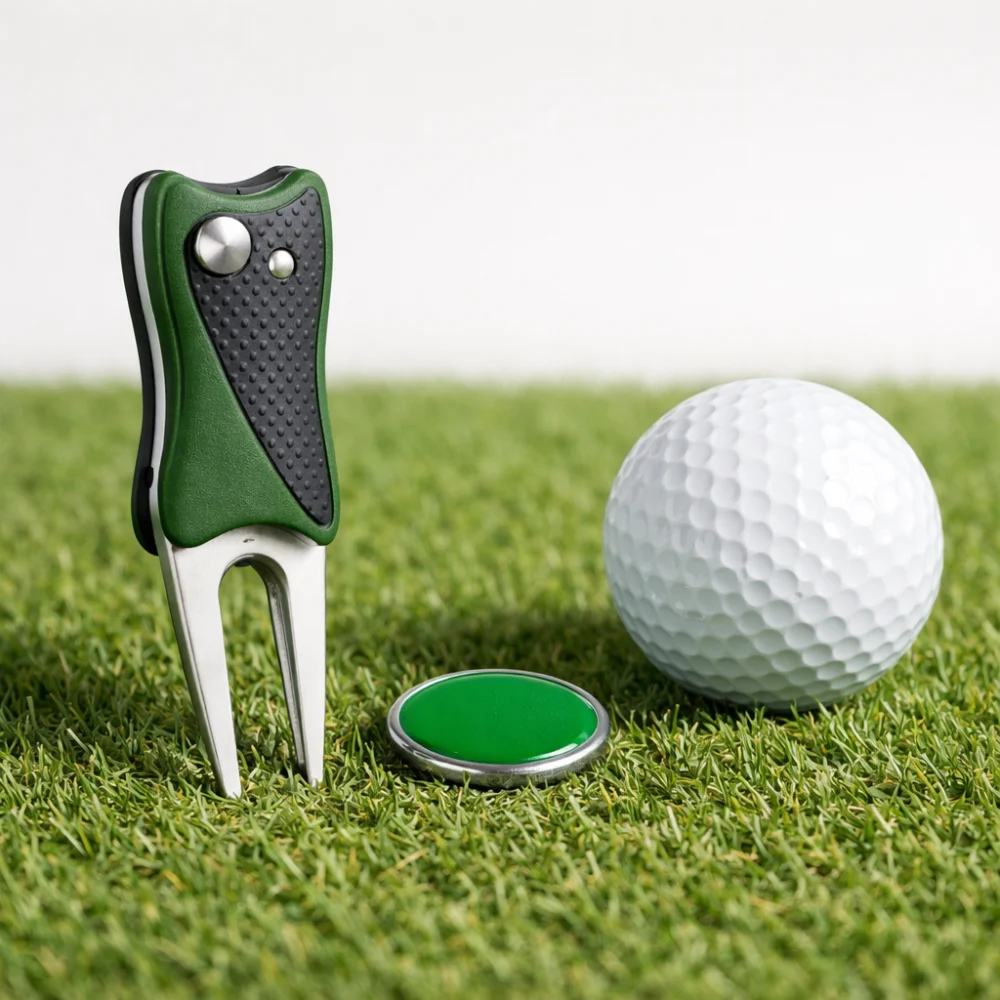
Golf divot tools are small accessories, but they still benefit from a sensible choice. Some buyers want a simple pitchfork for repairing marks on the green, while others prefer a foldable tool, a built-in ball marker or a design that is easier to carry in a pocket.
If you are replacing a lost tool, buying a gift or comparing options for regular rounds, the main decision is usually about practicality rather than complexity. The right choice is the one that feels comfortable to use, fits how you carry it and has the features you will actually use.
What should you look for in a golf divot tool?
Start with how you will use it: a basic tool suits golfers who only want a compact repair aid, while extra features may suit those who like to keep a marker attached. The main trade-off is simplicity versus convenience. Specifications vary by model, so always check the individual product page before buying.
| Feature | What it means | Why it matters | What to check |
|---|---|---|---|
| Tool style | Simple fork, foldable design or multi-function version | Affects how easy it is to carry and use | Whether you want the simplest form or extra convenience |
| Ball marker | Some tools include a marker, others do not | Can reduce the number of separate items you carry | Whether the marker is included and how it attaches |
| Size and pocketability | How compact the tool is when carried | Important for golfers who keep accessories in a pocket or pouch | Closed size, foldability and overall shape |
| Grip and handling | How comfortable it feels in the hand | Helpful if you want quick, easy use on the green | Shape, edges and whether the design looks easy to hold |
| Material and finish | The main material and surface finish | Influences feel, durability and appearance | Product description and any care notes on the listing |
| Accessory style | Plain or decorative appearance | Mostly a preference choice, useful for gifts or personal use | Whether the look matches your taste without affecting use |
Key decision criteria explained
Ease of carrying
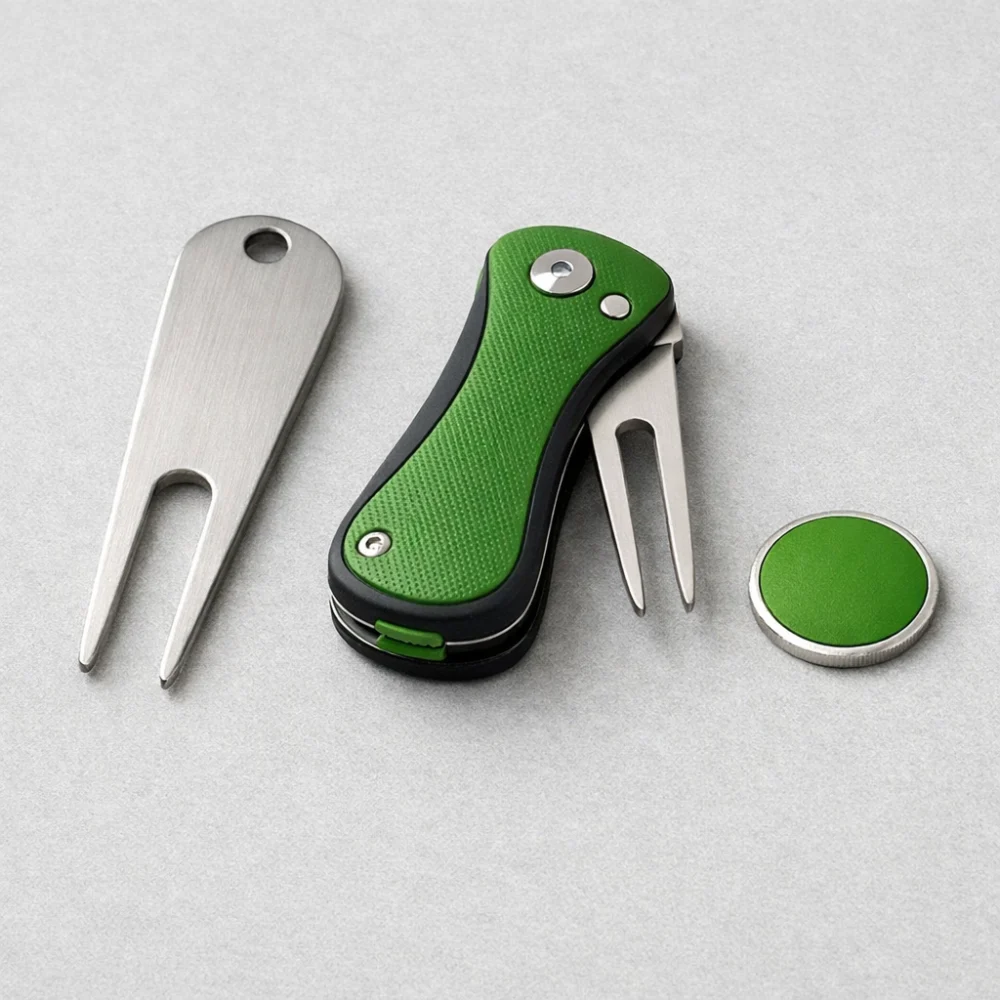
A divot tool is only useful if it is easy to keep with you. Compact designs suit golfers who want something discreet in a pocket, while foldable versions may appeal to those who want a tidier profile when not in use. The trade-off is that added mechanisms can make a tool feel less straightforward than a basic fork.
Built-in ball marker or separate marker
Many buyers like a tool that includes a ball marker because it keeps two common items together. That can be convenient, especially if you often misplace small accessories. If you already use a preferred marker, a plain tool may be enough and can keep the choice simpler.
Grip and handling on the green
You do not need a complicated design, but you may want something that feels secure and intuitive in hand. A tool that is awkward to open, hold or pocket can become annoying to use during a round. Look for a shape that seems practical rather than relying on appearance alone.
Material and finish
Material affects feel as much as appearance. Some buyers prefer a lighter tool, while others prefer a more solid feel. Finish can also matter if you want a more understated look or a giftable presentation, but it should be checked alongside usability rather than treated as the main feature.
Appearance and gifting
Golf divot tools are often bought as accessories or gifts, so style can matter. Decorative finishes, themed designs or a polished look may be useful if you are buying for someone else. For everyday use, though, a straightforward design is often the easiest choice.
Common types and variants
There is not a huge amount of variation in this category, but a few broad styles are worth comparing.
- Simple divot tool: A straightforward repair tool for buyers who want the essentials without extras.
- Foldable tool: A compact option that may feel easier to carry and protect in a pocket.
- Tool with magnetic ball marker: A convenient all-in-one style for golfers who want fewer loose items.
- Gift-style design: A more decorative option that prioritises appearance as well as function.
Which type suits different buyers?
| Buyer need | Helpful characteristics | Why it suits that need |
|---|---|---|
| Occasional golfer | Simple, compact, easy to understand | Low-fuss choice for basic use |
| Regular golfer | Comfortable handling, easy pocket carry, marker included if wanted | Makes repeated use more convenient |
| Gift buyer | Neat finish, thoughtful design, practical extra such as a marker | Feels more complete as a present |
| Buyer replacing a lost accessory | Familiar style, no unnecessary extras | Keeps the replacement easy and familiar |
| Minimalist carrier | Small footprint and simple function | Reduces clutter in a pocket or golf bag |
Common mistakes and misunderstandings
- Choosing on appearance alone: A nice finish is pleasant, but handling and carry convenience matter more for regular use.
- Assuming every tool includes a marker: Some do, some do not, so check the listing rather than assuming.
- Buying a bulky design without thinking about pocket carry: A tool that feels fine online may be less convenient during a round.
- Overcomplicating the choice: Most buyers only need a practical tool with a comfortable feel and any extra feature they will genuinely use.
Safety and suitability notes
Golf divot tools are simple accessories, but the shape and finish still matter to comfort and handling. If you are buying for someone else, avoid assuming they want decorative extras when a basic tool would be more useful. It is also worth checking the individual product information if you have any preference about size, folding design or included accessories.
Care, storage and everyday use
Most golf divot tools are easy to store with your other golf accessories, but small items can still be misplaced. A compact design may be easier to keep in a pocket or pouch, while a foldable style may feel tidier when carried with other kit. If the tool includes a magnetic marker or moving part, check the product page for any care notes that apply to that design.
How to compare options efficiently
- Decide whether you want a basic repair tool or one with an added ball marker.
- Think about how you will carry it and whether compactness matters.
- Compare the shape, handling and overall look.
- Check whether the design suits everyday use or gift buying.
- Read the individual product page for the exact included items and any model-specific details.
Summary buyer checklist
- Does the tool suit your usual way of carrying golf accessories?
- Do you want a built-in ball marker or a plain tool?
- Is the size and shape likely to feel comfortable in use?
- Does the finish or style match your preference or the gift occasion?
- Have you checked the individual product page for the exact contents and design?
Frequently asked questions
What does a golf divot tool do?
It is used to help repair marks left on the green after a shot lands. For buyers, the main question is usually which style is easiest to carry and use rather than whether it has a complicated function.
Do I need a foldable golf divot tool?
Not necessarily. Foldable designs can be convenient, but a simple fixed tool may be enough if you prefer something straightforward and compact.
Is a built-in ball marker worth having?
It can be useful if you like keeping two common accessories together. If you already carry a separate marker or do not use one often, a plain tool may suit you better.
What matters more: material or design?
For most buyers, practicality comes first. Material and finish matter for feel and appearance, but the shape, size and ease of carry often have a bigger effect on daily use.
Are golf divot tools good gift ideas?
They can be, especially when chosen with the recipient’s taste in mind. A neat, useful design is usually more suitable than something overly decorative if you are unsure.
How do I choose between similar-looking options?
Check what is actually included, how the tool opens or carries, and whether it has any feature you will use regularly. When options look alike, the small practical differences are often the most important.

