
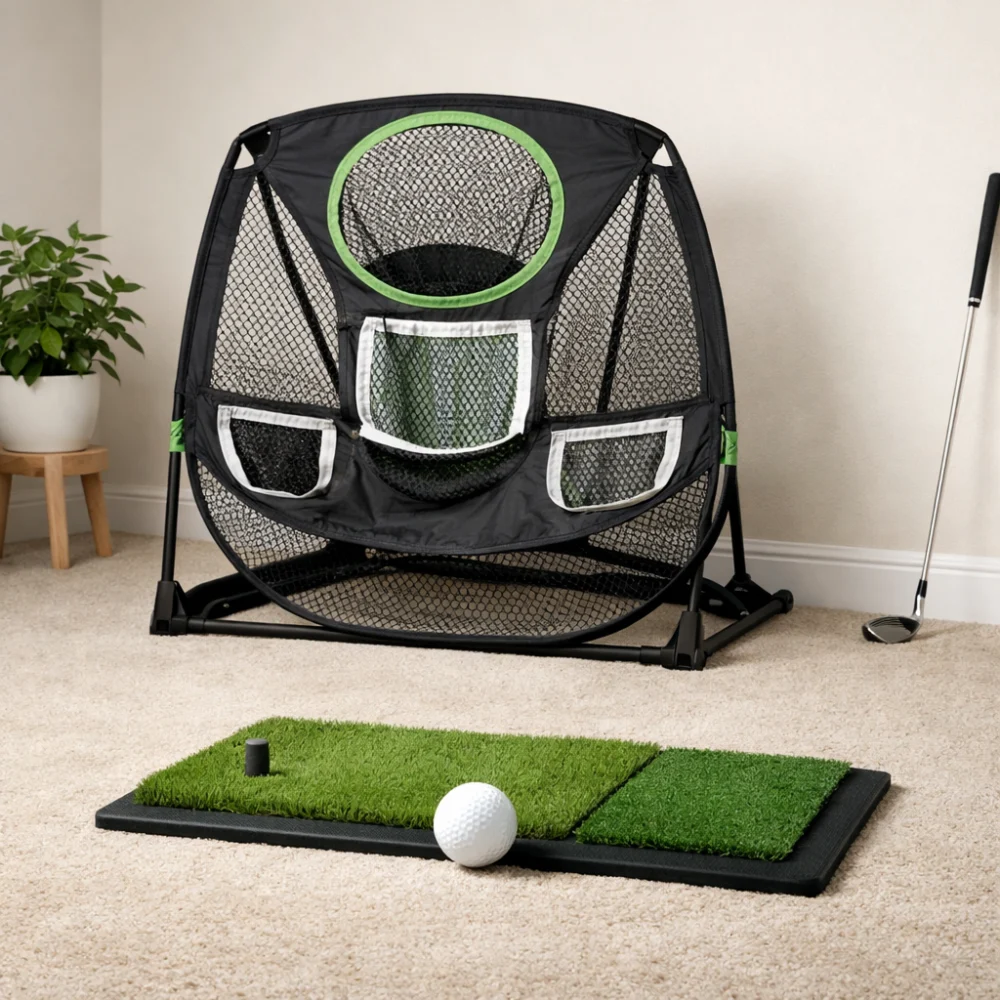
Golf chipping nets are a simple way to practise short-game accuracy at home, in the garden or in another suitable practice space. They are usually chosen by golfers who want a convenient target for repeated chip shots without setting up a full range session.
The main buying challenge is not just picking a net, but deciding how much target area, portability and included practice kit you need. Some options are aimed at quick casual practice, while others are better for more frequent drills or for buyers who want to combine a net with balls or a mat.
This guide focuses on the decision factors that help you narrow the choice sensibly, rather than on any one model.
What should you look for in a golf chipping net?
The best starting point is to match the net to your space and the kind of practice you want. A compact, easy-to-store net may suit occasional practice, while a larger target area can make it easier to repeat short shots and work on consistency. The most useful trade-off is usually between convenience and the amount of hitting area you get.
Specifications vary by model, so always check the individual product page before buying.
| Feature | What it means | Why it matters | What to check |
|---|---|---|---|
| Target size | The size of the netted area or target opening | A bigger target can feel more forgiving; a smaller one can encourage precision | Whether the size suits your practice space and confidence level |
| Portability | How easy the net is to move, fold and store | Important if you will set it up and put it away often | Whether it is described as foldable, pop-up or easy to carry |
| Included extras | Items such as a mat, balls or tee accessories | Can make the set more convenient for first-time buyers | Which extras are actually included, rather than assumed |
| Use setting | Whether it is suited to indoor or outdoor practice | Affects where you can use it and how much space you need | Any notes about indoor, outdoor or garden use |
| Set-up style | How the net opens, assembles or stands in place | Ease of set-up affects how likely you are to use it regularly | Whether the design looks suited to quick sessions or a more permanent setup |
| Durability cues | General indications of build and mesh robustness | Helpful if you expect frequent use | Material descriptions, frame design and any care notes on the product page |
Key decision criteria
1. Space and setup location
Start with where you will actually practise. A net for a small indoor area needs to be easier to place, store and move than one intended for a garden or garage. If your space is limited, a compact design may be more practical than a larger target, even if it feels less forgiving at first.
2. Practice goal
Think about what you want to improve. If you mainly want to build confidence with short chips, a straightforward target may be enough. If you want to work on repeatability and shot control, you may prefer a design that gives you a clear aim point and room to practise multiple distances.
3. Portability and storage
Many buyers underestimate how often a practice aid gets moved. If you will pack it away after use, look for a net that is described as foldable or easy to store. A more substantial design may be fine if you have a fixed practice area, but it can be less convenient for casual sessions.
4. Extras and bundle value
Some listings include a mat, practice balls or other accessories. These can be useful if you are starting from scratch, but only if the extras are actually relevant to how you practise. It is better to value a simple, well-sized net than to choose a bundle for items you may not use.
5. Indoor versus outdoor use
A net that works well in the garden may not suit a spare room, and vice versa. Indoor use tends to make portability and compact storage more important, while outdoor use may place more weight on stability and practical set-up. Check the product details for any stated use setting rather than assuming it will suit every environment.
Common types and variants
Within this category, the main differences are usually about form and convenience rather than radically different product types.
- Pop-up or quick-setup nets suit buyers who want a practice aid that is easy to deploy and put away.
- Larger practice nets may suit golfers who want a more generous target or a fuller short-game station.
- Bundle sets combine the net with extras such as a mat or practice balls, which can be helpful for a new setup.
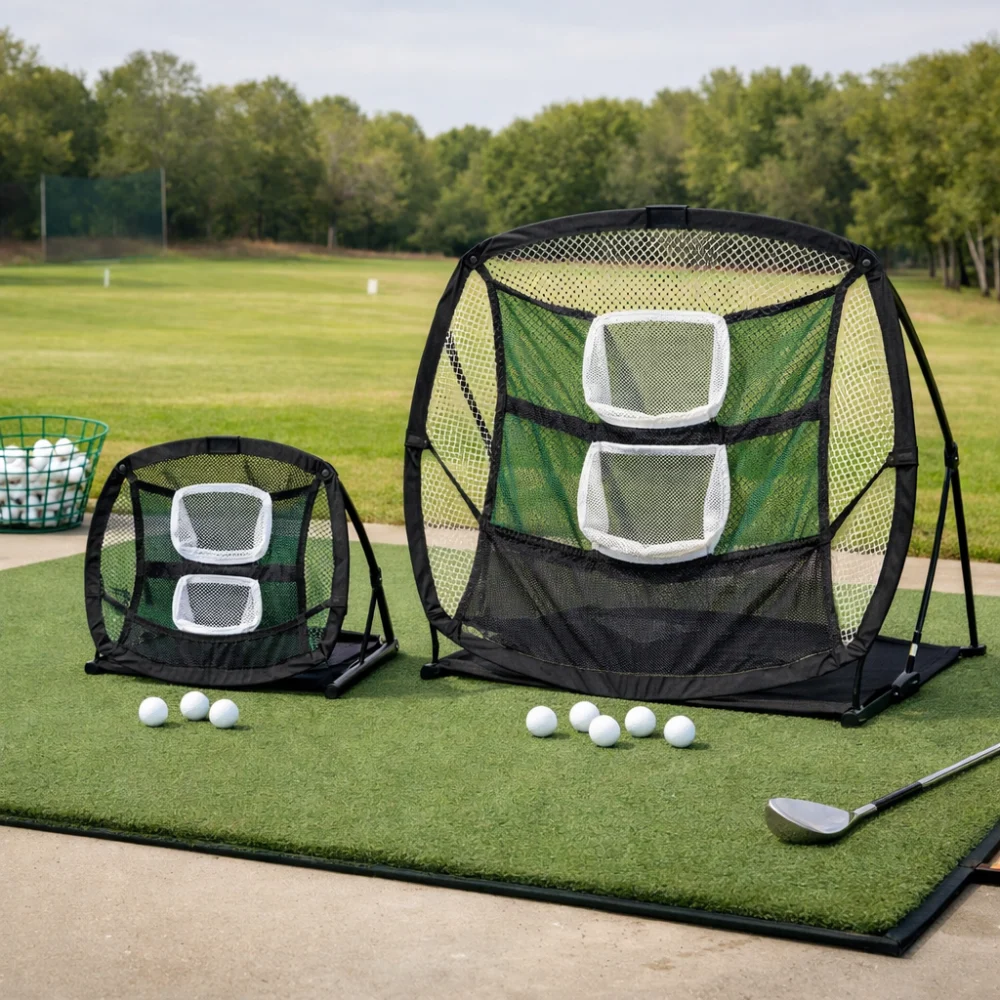
The right choice is usually the one that fits your available space and how often you will use it. A more complex setup is not automatically better if it makes practice less convenient.
Which type suits different buyers?
| Buyer need | Better fit | Reason |
|---|---|---|
| Occasional practice | Compact, easy-to-store net | Simple setup makes it more likely you will use it regularly |
| Frequent home drills | More robust net with a clear target area | Useful when repeated practice is the main goal |
| Beginners | Forgiving target and simple setup | Helps build confidence without overcomplicating the setup |
| Gift buyers | Bundle with useful extras | Can feel more complete if the recipient is starting from scratch |
| Small-space buyers | Compact or foldable design | Storage and quick packing away matter more in tight spaces |
Common mistakes to avoid
- Choosing by bundle alone: extras can be helpful, but the net itself should still suit your space and practice style.
- Ignoring storage: a net that is awkward to pack away may end up unused.
- Assuming every net suits every space: indoor and outdoor use can call for different levels of portability and setup convenience.
- Overlooking the target size: a very small target may be frustrating if you are still developing consistency.
Safety and suitability caveats
Golf chipping nets are generally straightforward practice items, but the surrounding space still matters. Make sure the area you plan to use is suitable for the shot type, with enough room for safe practice and to avoid damage to nearby objects. If the listing does not clearly explain indoor or outdoor suitability, check the product page carefully before buying.
Maintenance, storage and lifespan
General care is usually simple: keep the net clean, dry it if it has been used outdoors in damp conditions, and store it somewhere it will not be crushed or snagged. If the product includes a frame, mat or carry bag, those parts can affect how convenient long-term ownership feels. A well-cared-for net is more likely to remain easy to use, but durability still depends on the specific build and how often it is used.
How to compare options efficiently
- Decide where you will use the net most often.
- Choose the size and setup style that fits that space.
- Compare the included extras only after the basic fit is right.
- Check whether portability or a more stable setup matters more to you.
- Read the individual product page for the specific contents and any use notes.
Summary buyer decision checklist
- Does the net fit the space where you will practise?
- Is the setup style convenient for how often you will use it?
- Is the target size appropriate for your confidence and practice goal?
- Do any included extras actually help your setup?
- Is it suitable for indoor, outdoor or both kinds of use?
- Have you checked the individual product page for the exact contents and details?
Frequently asked questions
Do I need a large chipping net?
Not necessarily. A larger target can feel more forgiving, but a smaller net may be fine if you want a compact setup or if your space is limited. The better choice depends on whether you value ease of use or a more demanding target.
Are bundles with mats and balls worth it?
They can be useful if you are setting up from scratch or want a more complete practice station. However, the value depends on whether you will use those extras and whether the main net still suits your space and practice style.
Can I use a chipping net indoors?
Some can be used indoors, but you should only do so if the product is suitable for that setting and you have enough safe space. Indoor use usually makes compact storage and easy set-up more important.
What matters more: portability or sturdiness?
That depends on how you plan to use it. If you will move it often, portability may matter more; if it will stay in one place, a more substantial design may be more convenient. The trade-off is usually convenience versus a more fixed practice feel.
How do I know if a net is right for a beginner?
Look for a design that is simple to set up and not overly restrictive. A beginner often benefits from a clear, forgiving target and a setup that does not take much effort to use.
Should I choose a chipping net with a carry bag?
A carry bag can be helpful if you plan to store the net away between sessions or take it to another location. It is less important if the net will stay assembled in a dedicated practice area.

