
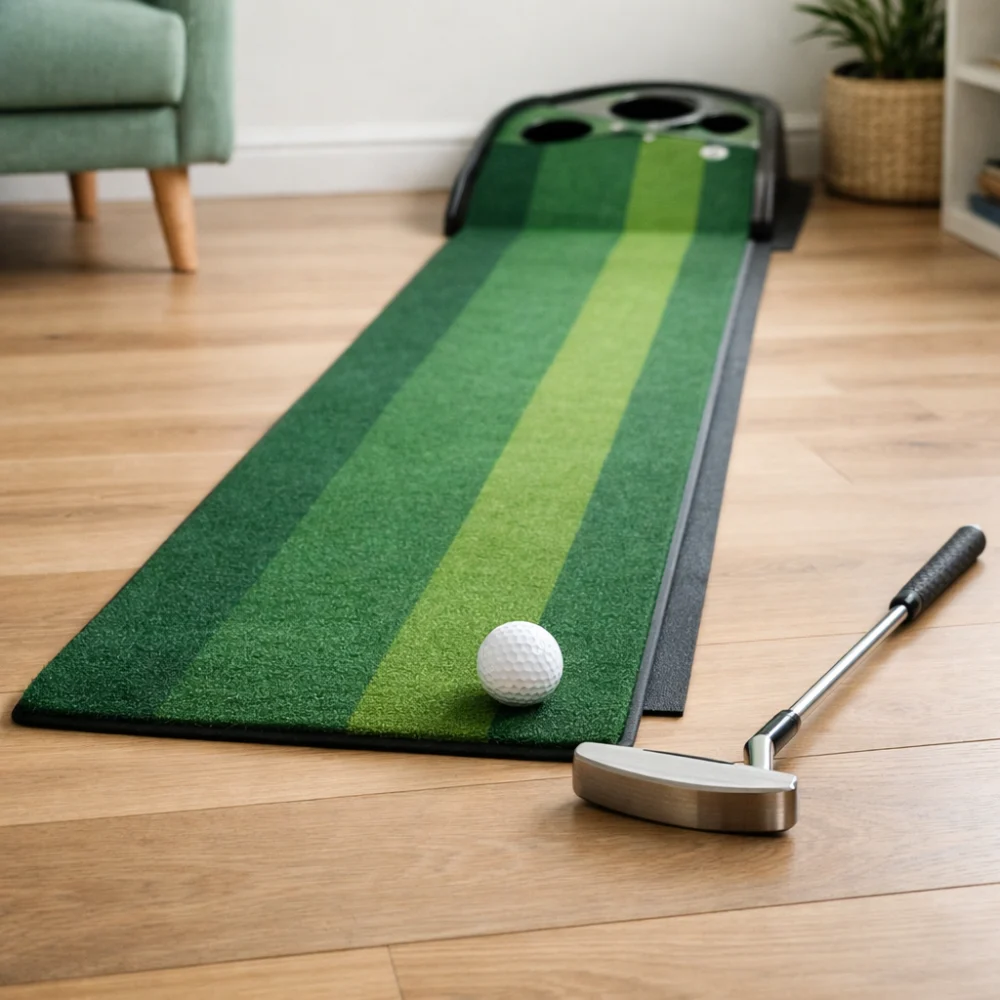
Golf putting mats are for practising short putts at home, in a garage, or in another space where you want a simple way to work on stroke repeatability. They are often chosen by golfers who want regular practice without going to a course or driving range.
The useful buying questions are usually practical: how much room do you have, how realistic do you want the roll to feel, and do you want a basic mat or one with added training features? The right answer depends on how you plan to use it, not just on size or appearance.
Because these products vary widely in layout and features, it helps to compare them by surface quality, length, alignment aids, return systems and storage. Specifications vary by model, so always check the individual product page before buying.
What should you look for in a golf putting mat?
The best starting point is to match the mat to the space and type of practice you actually want to do. A longer mat can give you more useful repetition, while a compact mat may be easier to store and bring out often. Add-on features can be helpful, but only if they support your practice rather than making setup awkward.
| Feature | What It Means | Why It Matters | What To Check |
|---|---|---|---|
| Putting surface | The material and finish the ball rolls on | It affects feel, consistency and how close the practice comes to real putting | Look for a surface description and whether the mat is aimed at smooth home practice or more realistic roll |
| Mat length and width | The overall footprint of the mat | It affects the type of putts you can practise and how much room you need | Check whether the mat suits your floor space and whether it can be used with the stroke length you want |
| Alignment aids | Printed or built-in guides for aim and stroke setup | These can help with routine practice and aim consistency | See whether the markings suit your practice style and are easy to see without being distracting |
| Ball return or ball stop | A way to keep practice moving by bringing the ball back or controlling where it finishes | It can reduce bending and speed up repetition | Check if the return is manual or automatic and whether it adds bulk or setup time |
| Storage and portability | How easy it is to move, roll up or pack away | This matters if the mat will be used in a shared room or only occasionally | Look for folding, rolling or compact storage information and think about where it will live when not in use |
Key decision criteria
Putting feel and surface consistency
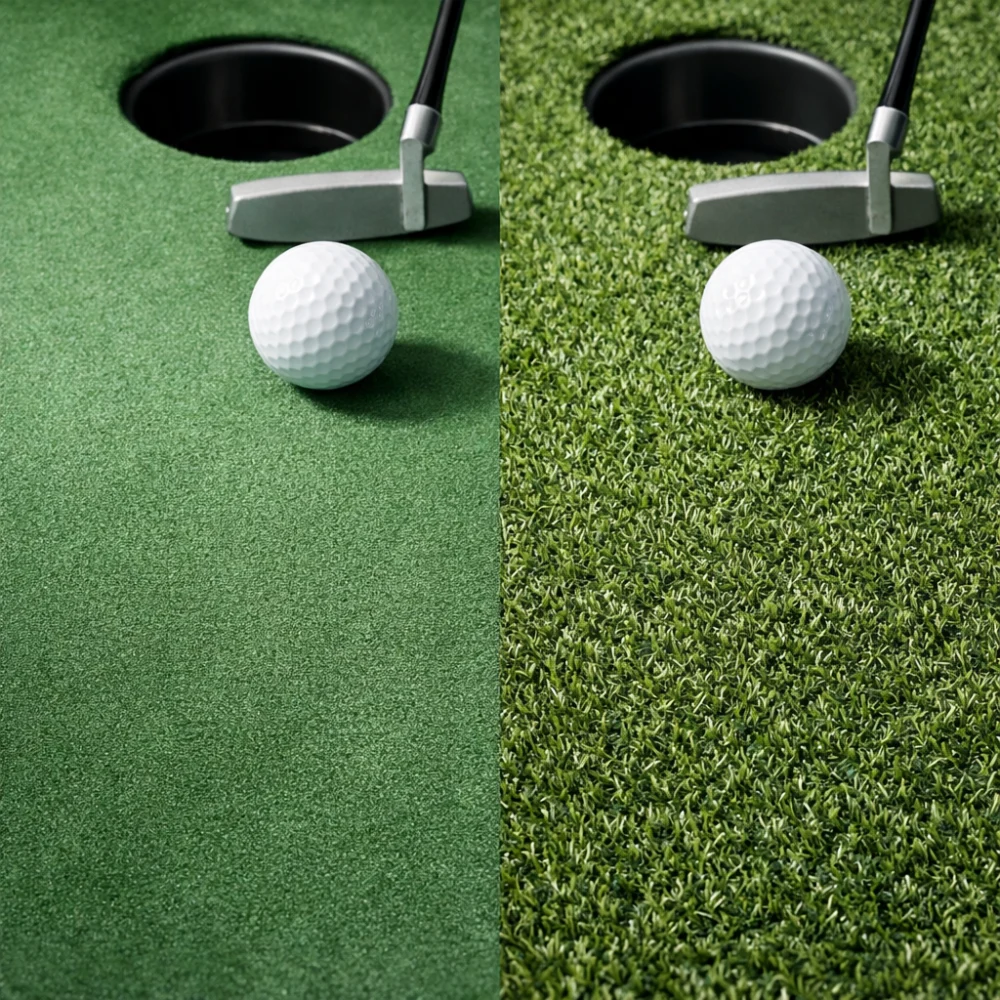
For most buyers, the surface is the most important factor. A smoother, more consistent roll can make practice feel more controlled, while a less refined surface may be fine for casual use but less useful for stroke feedback. The trade-off is often between realism, durability and cost, so it helps to decide whether you want a simple practice aid or something that feels closer to a green.
Length, pace of practice and available space
A longer mat generally gives you more room to practise pace control and repeat a stroke without feeling cramped. Shorter mats can still be useful for start-line work and routine practice, especially where storage space is limited. Measure the space you actually plan to use, including room for standing comfortably behind the ball and for any return mechanism.
Training aids and extra features
Some putting mats are kept deliberately simple, while others add holes, gates, alignment lines or return features. These extras can be useful if you like structured drills, but they are not automatically better for everyone. Extra features are worth paying attention to only if they support the kind of practice you will genuinely repeat.
Build and setup convenience
Practical details matter because a mat that is awkward to lay out or store may get used less often. Consider whether it sits flat, whether it is easy to position and whether it will stay in place on your floor. If you plan to put it away after each session, convenience is part of the value.
Types and variants of putting mat
There are a few common styles of putting mat, and each suits a different kind of practice.
- Simple practice mats: Good for occasional use and straightforward putting practice. They are usually the easiest to understand and store, but may offer fewer training cues.
- Mats with alignment aids: Useful if you want visual guidance for aim, setup or stroke path. Their limitation is that the markings may be more helpful for drills than for a more natural practice routine.
- Mats with ball return: Suited to higher-repetition practice and reducing interruptions. The trade-off is that these designs may be bulkier or more complex to set up.
- Longer training mats: Better for golfers who want to work on distance control as well as aim. They need more room and are less suited to very small spaces.
Which putting mat suits your needs?
| Buyer need | What to prioritise | Why |
|---|---|---|
| Casual home practice | Simplicity, easy storage and a surface that rolls consistently enough for regular use | You are more likely to use it if setup is quick and the mat is easy to keep out of the way |
| Structured drill practice | Alignment aids, target holes or gates, and a layout that supports repeatable routines | Helpful if you want to work on start line and stroke discipline |
| Frequent repetition | Ball return or a layout that keeps the ball in play | Useful when you want more putts in less time |
| Limited space | Compact size and straightforward storage | A mat that fits your room is more likely to stay in regular use |
| More realistic practice | Surface quality, mat length and consistent roll | These factors affect how transferable the practice feels |
Common mistakes to avoid
- Choosing only by size: A mat can be large without being especially useful. Think about the drills you want to practise and whether the layout supports them.
- Assuming extra features make practice better: Ball return systems and printed guides can help, but they are not essential for every golfer. A simpler mat may be the better choice if you want fewer distractions.
- Ignoring storage space: A mat that is awkward to store can end up unused. Consider where it will go between sessions.
- Overlooking surface consistency: The way the ball rolls is central to the value of a putting mat. Check the product description carefully rather than relying only on images.
Safety and suitability considerations
Putting mats are generally low risk, but suitability still matters. Make sure the mat will be used on a stable surface and in a space where you can swing and move comfortably without obstruction. If the mat uses a return mechanism or other added feature, check that it suits the intended indoor space and the user who will be practising.
Care, storage and lifespan factors
Most putting mats are easiest to keep in good condition when they are stored flat or rolled as intended by the design, and when dirt or dust is kept off the surface. If a mat has alignment printing or a return feature, avoiding rough handling can help it stay useful for longer. It is worth checking whether the product page mentions folding, rolling or any special setup guidance that affects everyday use.
How to compare options efficiently
- Start with the space you have and the kind of practice you want to do.
- Choose the mat type that fits that use, such as simple practice, alignment-focused or return-assisted.
- Compare the surface description, size and any training aids.
- Weigh convenience against realism and decide which matters more for your routine.
- Check the individual product page for the final details before you buy.
Summary buyer checklist
- Does the mat fit your available space?
- Is the putting surface suited to the kind of practice you want?
- Do you want a simple mat or one with alignment or return features?
- Will it be easy to store and bring out regularly?
- Does the layout support the drills you actually plan to repeat?
- Have you checked the individual product page for the model-specific details?
Frequently asked questions
Are putting mats good for beginners?
Yes, they can be a straightforward way to practise at home without needing much space or equipment. A beginner may benefit most from a mat that is easy to set up and gives clear feedback on aim and contact.
Do I need a long putting mat?
Not always. A shorter mat can be useful for basic stroke and alignment practice, while a longer one is better if you want more room for pace control and extended reps. The right length depends on your space and the type of drills you want to do.
What is the advantage of a ball return?
A ball return can make practice more continuous because you spend less time retrieving the ball. That can be helpful for repetition, but it may also add bulk or reduce simplicity, so it is most useful if you expect to practise often.
How important is the surface on a putting mat?
Very important. The surface affects how the ball rolls and how useful the practice feels, especially if you want consistency. If the roll matters to you, give surface description and user-facing details more weight than decorative features.
Can a putting mat replace practice on a real green?
It can support regular practice, especially for short-distance work and stroke habits, but it will not replicate every condition found outdoors. It is best treated as a convenient practice aid rather than a complete substitute for course putting.
What should I check before buying for a shared room or flat?
Focus on storage, setup ease and noise or movement during use. A compact mat with simple handling may be more practical if the space is shared or needs to be cleared away often.

