
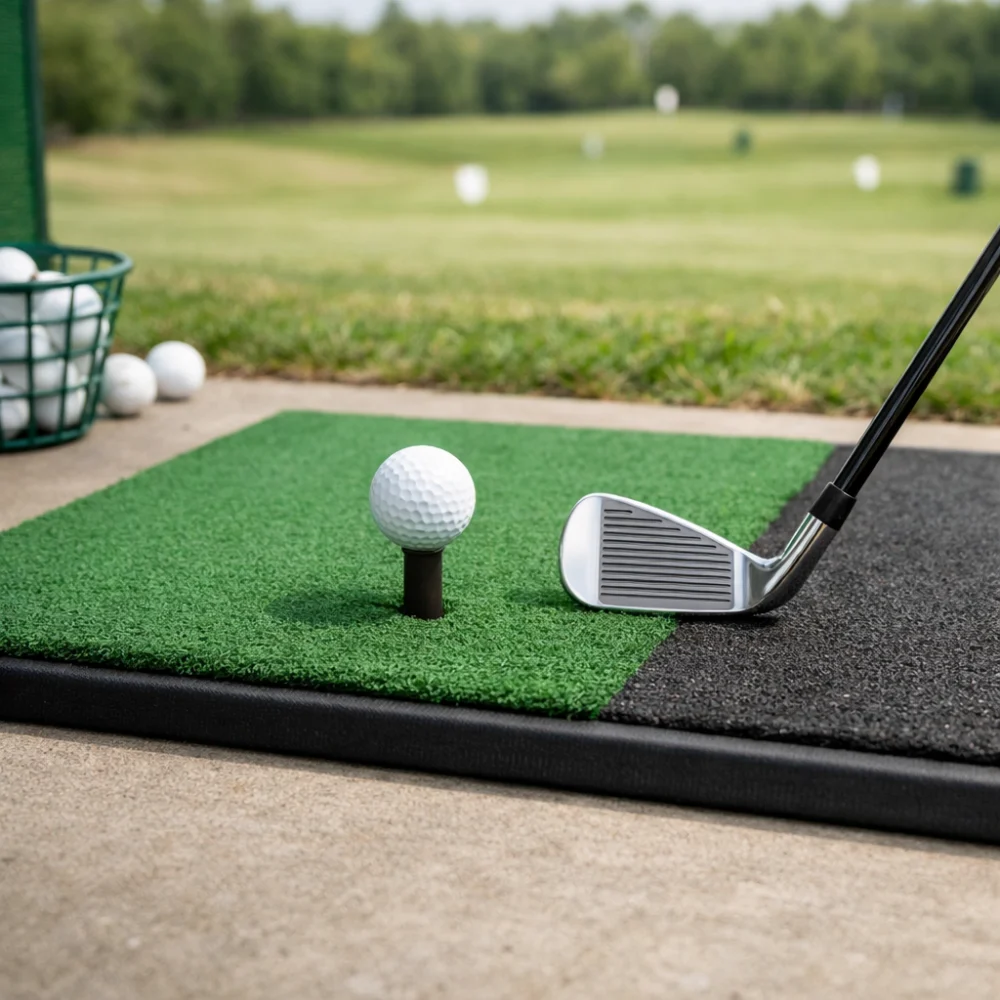
Golf driving range mats are designed to give golfers a repeatable surface for practising full swings, chipping and tee shots away from the course. They are used in gardens, practice bays, coaching spaces and driving ranges, so the right choice depends on where you will use it and how often.
Buyers usually want one of two things: a mat that feels closer to turf, or a mat that stands up well to regular use. Those goals can overlap, but they are not always the same, so it helps to compare surface feel, size, support and how the mat handles tees before choosing.
Specifications vary by model, so always check the individual product page before buying.
What should you look for in a golf driving range mat?
Start with the way you plan to practise. A casual home user may prioritise portability and easy storage, while a more frequent user may care more about stability and wear resistance. The most useful mats are the ones that match your space, your swing and how much friction or give you want underfoot.
The main trade-off is usually between realism and hard-wearing convenience. A softer, more turf-like feel may be more comfortable and familiar, while a tougher mat may be better for repeated sessions and shared use.
| Feature | What it means | Why it matters | What to check |
|---|---|---|---|
| Surface feel | How the mat reacts when the club strikes it | It affects comfort, confidence and how closely practice feels to turf | Look for wording about pile height, turf style or intended use |
| Size | The amount of hitting area available | It affects stance room, shot variety and whether the mat suits a bay or home setup | Check the usable hitting area, not just the overall outline |
| Base and stability | How well the mat stays in place | It influences safety, repeatability and whether the mat shifts during use | See whether the mat has a heavy base, backing or non-slip support |
| Durability | How well the mat copes with repeated strikes | It matters if several people will use it or you practise often | Look for descriptions of reinforced construction or hard-wearing materials |
| Tee compatibility | Whether it accepts tees or tee holders | It changes how you practise full shots and driver work | Check if the mat has built-in tee slots or if separate tees are needed |
| Portability | How easy it is to move and store | Important for home users, temporary setups and smaller spaces | Check weight cues, foldability and whether it can be packed away easily |
Key decision criteria explained
Surface and hitting feel
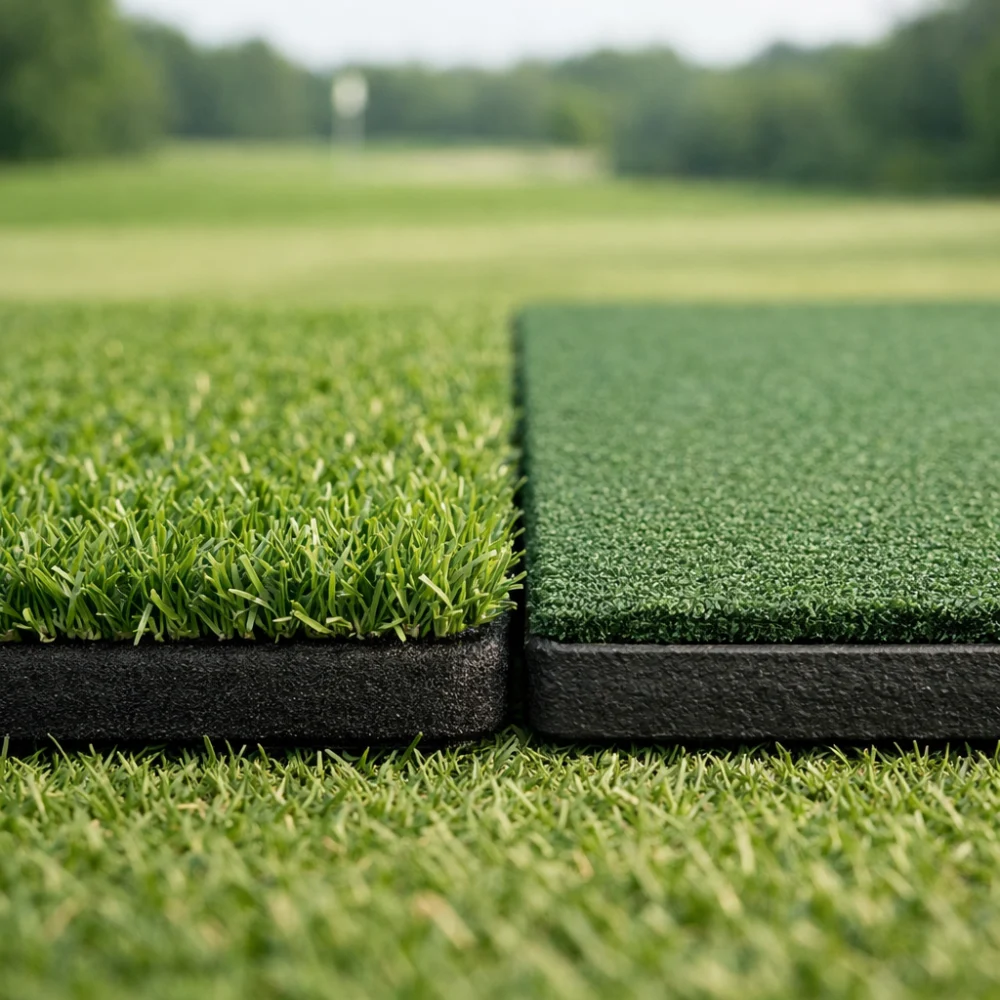
The surface is one of the most important parts of the buying decision because it affects how the mat feels when the club meets the ground. Some mats are better for general practice, while others are made to feel more like a turf strip or a specific practice surface. If you mainly want a simple way to hit balls at home, comfort and consistency may matter more than a highly specific feel.
Size and practice space
Think about how much room you have for your stance, swing and any ball collection or netting system you use alongside the mat. A larger mat can be more forgiving and versatile, but it may be less convenient to move or store. Smaller mats are easier to place in limited spaces, although they may suit simpler drills rather than full setups.
Stability and backing
A mat that moves or lifts can interrupt practice and make the experience less repeatable. Stable backing is especially useful on smooth floors, artificial surfaces or hardstanding, where a lightweight mat may shift more easily. If you plan to use the mat outdoors, it is also worth checking whether the backing is suitable for the surface you have in mind.
Durability and frequency of use
If the mat will be used often, or by more than one golfer, durability becomes more important than a low initial outlay. Repeated use can flatten surfaces over time, so the construction and intended use matter. A more robust mat may cost more in practical terms, but it can be the better fit if you want regular practice rather than occasional sessions.
Tee use and practice style
Some buyers mainly want to practise iron shots off the mat, while others want to work on driver or tee-shot routines. That difference affects whether you need a mat with built-in tee support or one that works with separate tees. If tee height matters to your routine, check how the mat handles it rather than assuming all mats behave the same way.
Types and variants you may see
Golf driving range mats are not all the same, even when they serve a similar purpose. The main differences are usually about how they are built and how they are intended to be used.
- Portable practice mats: Compact and easy to move, these suit home users, occasional practice and smaller spaces. Their main limitation is that they may offer less coverage or stability than larger options.
- Heavier-duty range mats: Designed for more repeated use, these are better suited to busy practice areas or shared setups. They may be less convenient to store or carry.
- Training or drill mats: These may support swing work, short-game drills or tee practice in a more focused way. Their limitation is that they may feel more specialised than a general-purpose mat.
Specifications vary by model, so always check the individual product page before buying.
Which mat suits which buyer?
| Buyer need | What to prioritise | Why |
|---|---|---|
| Occasional home practice | Portability, simple storage and a manageable size | You may want something easy to set out and put away without needing a permanent space |
| Regular practice sessions | Durability and stability | Frequent use makes construction and backing more important than convenience alone |
| Driver and tee-shot work | Tee compatibility and a surface that supports repeated tee use | That makes it easier to practise the shots you actually plan to repeat |
| Shared or coaching use | Hard-wearing build and enough hitting area | Multiple users and varied drills usually demand more robust performance |
| Limited storage space | Smaller size and easy handling | A mat that is awkward to store is less likely to be used regularly |
Common mistakes to avoid
- Choosing by size alone: A larger mat is not automatically better if it is awkward to store or heavier than you want to move.
- Ignoring the surface feel: Two mats with similar uses can feel very different at impact, which affects comfort and practice confidence.
- Assuming all tees will work the same way: Tee compatibility can vary, so check whether you need separate rubber tees or a built-in tee holder.
- Overlooking the base: A mat that shifts underfoot can be frustrating even if the hitting surface looks suitable.
- Buying for occasional use as if it were for daily use: If you practise often, durability should carry more weight in the decision.
Suitability and practical caveats
Choose a mat that matches the surface where you will use it, whether that is grass, a hard floor, a bay or another practice area. Some mats are more forgiving on one surface than another, so it is worth checking the product details carefully.
If you plan to use it alongside balls, tees or a practice net, make sure the whole setup fits your space and your routine. The mat is only one part of the practice area, and an otherwise good choice can feel awkward if it does not suit the rest of the setup.
Maintenance and storage considerations
Most buyers will want a mat that is easy to clean and simple to store between sessions. If the mat is used outdoors, think about where it will be kept when not in use and whether it needs to stay dry or protected from the elements. A mat that is easy to handle is more likely to be used regularly, especially for home practice.
If several people share the mat, check whether the surface is designed for frequent use and whether replacement or additional accessories might be needed later. That can affect long-term value more than the initial purchase decision.
How to compare options efficiently
- Decide how you will use the mat most often: occasional practice, regular practice or shared use.
- Choose the right type first, then narrow by size, stability and tee compatibility.
- Compare the surface feel and backing so you understand the practical trade-offs.
- Check the product page for any details that affect fit, use and storage.
- Pick the mat that suits your actual space and practice routine, not just the largest or most rugged-looking option.
Summary buyer decision checklist
- Does the mat suit your main practice style?
- Is the size practical for your available space?
- Will the surface feel comfortable and appropriate for repeated use?
- Does it stay stable on the surface where you will place it?
- Is it suitable for the tee or drill setup you plan to use?
- Will it be easy to store or move when not in use?
- Have you checked the individual product page for the exact details?
Frequently asked questions
What is a golf driving range mat used for?
It gives golfers a consistent surface for practising shots without relying on natural turf. That makes it useful for home practice, coaching areas and range setups. The exact feel and durability vary from one mat to another.
Are larger mats always better?
Not necessarily. Larger mats can give you more room and a more versatile setup, but they are usually harder to move and store. The better choice is the one that fits your space and how often you will use it.
Do I need a mat with a built-in tee holder?
Only if your practice routine depends on tee shots or you want a neater all-in-one setup. Some users are happy with separate tees, especially for simple iron practice. Check the product details rather than assuming tee support is included.
Can I use a driving range mat indoors?
Some buyers do, but it depends on the mat and on the space available. You will need enough room for the swing, plus any ball collection or safety setup you are using. It is sensible to check the mat’s size and backing before placing it on an indoor surface.
How do I know if a mat will suit regular use?
Look for signs that it is intended for repeated use, such as stronger construction or descriptions that suggest durability. Frequent practice places more demand on the surface and backing, so durability matters more than convenience alone. Specifications vary by model, so always check the individual product page before buying.
What matters more: the surface or the backing?
Both matter, but in different ways. The surface affects how the mat feels and how you practise, while the backing affects stability and comfort. If the mat moves around, the rest of the design matters less.
How should I compare two similar mats?
Compare size, surface feel, backing, tee compatibility and how easy each one is to store. If those points are close, think about how often you will use the mat and whether the setup is for one person or several. That usually reveals which option is the more practical fit.

